Choosing the right colorant for polyethylene products involves more than comparing bright sample chips. Global buyers need consistent shade, reliable dispersion, stable processing, and clear technical documentation. This guide introduces 10 Best PE Plastic Colorants for packaging, household goods, agricultural film, containers, and injection-molded parts.
A suitable Pe Plastic Colorant should perform well across common polyethylene grades, including HDPE, LDPE, and LLDPE. Its performance depends on pigment concentration, carrier compatibility, processing temperature, and the final product’s thickness. A blue tone that looks accurate in a thick cap may appear weaker in thin film. Small details matter.
Color consistency matters.
The selection also considers weather resistance, heat stability, migration data, and batch-to-batch control. Buyers should review technical data sheets, safety documents, color indexes, and application test results before placing large orders. Food-contact, toy, agricultural, and export applications may require different compliance checks. Requirements vary by destination and product use, so supplier claims should never replace independent verification.
No ranking is perfect. A low-cost masterbatch may suit ordinary crates but fail under strong sunlight. A premium pigment may offer excellent durability while increasing production costs. Practical experience shows that testing the colorant on the actual resin, machine, and processing conditions provides the most dependable answer. The following options are compared through performance, documentation quality, supply reliability, customization support, and value for international purchasing teams.
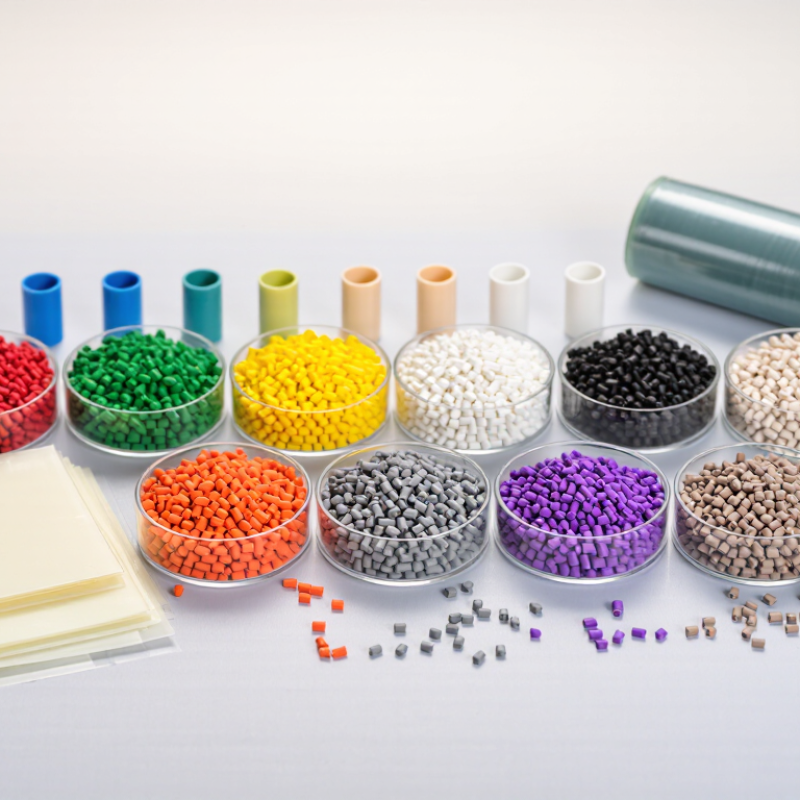
PE colorants work best when dosage and carrier chemistry are considered together. A common masterbatch range is 1–5% by weight. For example, 2% means adding 2 kilograms of masterbatch to 100 kilograms of polyethylene. Lower dosages suit pale shades and transparent products. Stronger colors may need 3–5%. The final shade depends on pigment strength, film thickness, and processing temperature.
Carrier compatibility is equally important. A polyethylene carrier usually blends smoothly with HDPE, LDPE, and LLDPE grades. Poor compatibility can create streaks, specks, weak weld lines, or uneven gloss. Check melt flow behavior before production. A carrier with a very different flow rate may disperse poorly, especially in thin film. Dry blending alone is not enough. Use a small trial run.
In practical testing, start near 2% and adjust gradually. I have seen a 1% dosage look acceptable in pellets but appear too weak in finished film. One test can mislead. Compare molded samples under consistent lighting. Review color strength, migration resistance, heat stability, and surface appearance. Ask for technical data, safety documentation, and batch consistency records. A cheaper concentrate may require higher dosage, increasing the real cost. There is no universal best loading. Product design, equipment, and resin grade still decide the result.
Global buyers need more than a bright color chip. PE colorant selection should begin with a measurable scorecard. For each candidate, record ΔE against an approved plaque under controlled lighting. Use the same resin grade, melt history, plaque thickness, and instrument settings. Small changes can distort results. Set the acceptance limit before testing, not after seeing results. Tint strength shows efficiency, but concentration alone can mislead. Compare equal loading levels and inspect dispersion through molded plaques. Record MFR before and after let-down. An unexpected shift may indicate carrier incompatibility or poor thermal stability.
For outdoor applications, request staged UV evidence at 500, 750, and 1,000 hours. Measure ΔE, surface chalking, gloss loss, and cracking after each interval. A color that survives 500 hours may fail at 1,000. That gap matters in roofing, agricultural film, and outdoor containers. Do not accept one accelerated test as a lifetime guarantee. Exposure equipment, cycle settings, polymer thickness, and pigment loading change outcomes. Ask for raw data, specimen photos, and test dates. Independent verification is preferable when the order is large.
Our early scorecards overvalued initial brightness. They missed a modest MFR change that later affected processing consistency. Now, we weight ΔE, tint strength, MFR stability, and UV retention separately. Keep a small production trial before approving a full shipment. Check feeding, filtration pressure, color variation, and molded-part odor. Some results remain uncertain. Weathering data cannot replace local field exposure. Still, a transparent scorecard makes supplier comparisons more defensible.
10 Best PE Plastic Colorants for Global Buyers
Carbon black remains a strong choice for PE pipes, films, and outdoor parts. It delivers deep black, UV protection, and electrical conductivity at controlled loadings. Rutile TiO₂ offers high opacity and weather resistance, while anatase TiO₂ suits less demanding indoor products. PlasticsEurope reported global plastics production of about 400.3 million tonnes in 2022. That scale makes pigment consistency commercially important.
Ten practical options include carbon black, rutile TiO₂, anatase TiO₂, phthalocyanine blue, phthalocyanine green, quinacridone red, azo yellow, iron oxide red, iron oxide yellow, and ultramarine blue. Organic pigments usually provide brighter shades and strong tinting strength. Inorganic pigments often offer better heat, light, and chemical stability. Iron oxides are useful for earthy colors and usually tolerate PE processing temperatures well. Color choice is only half the decision.
Processing experience matters. Many PE applications run near 180–230°C, so thermal stability and dispersion must be tested together. Smithers has forecast continued growth in global masterbatch demand, driven by packaging, construction, and consumer products. However, published forecasts differ by region and methodology. Treat them as planning evidence, not certainty. A pigment can look perfect in a plaque, then streak inside a thin film. Test twice. Buyers should check carrier compatibility, moisture, migration, odor, and batch-to-batch color difference. Some bright organic shades can lose performance outdoors. That uncomfortable detail deserves attention before purchase.
Choosing PE plastic colorants for global markets requires more than checking shade, dispersion, and price. FDA compliance depends on the intended food-contact use and the applicable sections of 21 CFR, not a vague “FDA approved” claim. For the European Union, Regulation (EU) No 10/2011, overall migration limits, specific migration limits, and good manufacturing practice require careful review. A red masterbatch for a milk pouch may need different evidence from one used in an outdoor pipe.
Request a current declaration of compliance, full composition disclosure, and migration test conditions from the supplier. Check lead, cadmium, mercury, and hexavalent chromium levels, especially in inorganic pigments and recycled-content systems. The OECD Global Plastics Outlook reported that global plastic waste more than doubled from 2000 to 2019, increasing pressure on traceable and safer material choices. Recycled PE can also carry unknown legacy additives. That risk is easy to underestimate.
REACH screening should cover substances of very high concern, restrictions, and communication duties. RoHS limits ten restricted substances in relevant electrical and electronic products, including lead, mercury, and certain flame retardants. ECHA’s 2023 enforcement project reported non-compliance in 18% of inspected products, showing that paperwork alone is not reliable evidence. Keep batch records, supplier declarations, and laboratory reports together. Test the finished colored PE when exposure, heat, or recycling history changes. A certificate may still be incomplete. I have seen technically attractive colorants fail because the test specimen did not represent the final product.aval
For global buyers, the “best” PE colorant depends on supply control, not shade alone. PlasticsEurope reports 413.8 million tonnes of global plastics production in 2023. That scale makes repeatable sourcing important. Compare each supplier’s MOQ, lead time, and Incoterm in one quotation sheet. Practical benchmarks often show MOQs from 25 kg to 500 kg, with standard colors shipping within 7–21 days. Custom shades may require 20–45 days. These figures are not universal. Confirm them in writing.
Tips: Request a 1 kg lab sample and a production-batch sample. Ask for resin type, pigment loading, carrier content, and processing temperature. Specify FCA, FOB, CIF, or DDP under Incoterms 2020. The named delivery term should match your customs responsibility and landed-cost model. A low unit price can become expensive after inland freight, insurance, duties, and testing.
Batch-to-batch color control needs measurable acceptance limits. ISO/CIE 11664-6:2022 defines the CIEDE2000 color-difference method, while ASTM D2244 supports instrumental color evaluation. Set a target ΔE00, such as 0.8 or 1.0, only after visual trials. Different surfaces can make identical readings appear different. Request retained plaques, instrument records, and a corrective-action process. One overlooked detail is dispersion testing. Poor dispersion may create streaks after extrusion, even when the laboratory ΔE passes. That risk deserves more attention.
Common choices include carbon black, rutile TiO₂, anatase TiO₂, blue, green, red, yellow, iron oxide, and ultramarine pigments. Organic pigments create brighter shades and stronger tinting. Inorganic pigments often provide better heat, light, and chemical stability.
Carbon black suits pipes, films, and outdoor components. It creates deep black shades and can improve UV protection. Controlled loadings may also provide electrical conductivity. Dispersion still needs testing.
Rutile TiO₂ offers higher opacity and better weather resistance. It suits demanding outdoor products. Anatase TiO₂ may fit less demanding indoor applications. The cheaper option is not always the safer option.
Some organic pigments tolerate PE processing near 180–230°C. Performance depends on the specific pigment and exposure conditions. Bright outdoor shades may fade sooner. Test heat and light stability together.
Check carrier compatibility, moisture, migration, odor, dispersion, and batch color variation. Test the pigment in the actual resin and process. A perfect plaque can mislead. Test twice.
Poor dispersion can create visible streaks, even when laboratory color values pass. Thin films often reveal defects more clearly than plaques. Check mixing, pigment loading, and extrusion conditions. Color is only half.
Compare minimum order quantity, lead time, delivery terms, and total landed cost. Standard colors may ship within 7–21 days. Custom shades may need 20–45 days. Confirm every figure in writing.
Set a measurable color-difference limit after visual trials. Request retained plaques and instrument records for each batch. Review corrective actions when results exceed the limit. Identical readings may still look different on different surfaces.
Choosing the right Pe Plastic Colorant requires more than comparing shades and prices. This guide explains how masterbatch dosage, typically 1–5%, and carrier compatibility affect dispersion, processing stability, and final color consistency. It also introduces a practical buyer scorecard covering color difference (ΔE), tint strength, melt flow rate (MFR), and UV durability testing over 500–1,000 hours. The selection includes carbon black, titanium dioxide, organic pigments, and inorganic pigments for different performance and appearance requirements.
For international purchasing, compliance is equally important. Buyers should verify FDA and EU food-contact suitability where applicable, along with REACH, RoHS, and heavy-metal restrictions. Supplier evaluation should include minimum order quantities, production lead times, Incoterms, technical documentation, and batch-to-batch ΔE control. By balancing color performance, polymer compatibility, regulatory requirements, and supply reliability, global buyers can select a PE colorant that delivers consistent results across applications and production locations.