2026 Best PE Pigment Masterbatch Suppliers for Global Buyers

Time:2026-09-19 Author:Oliver
0%

Global buyers are reassessing color consistency, supply security, and regulatory readiness in polyethylene packaging and industrial applications. Pe Pigment Masterbatch remains a practical route for producing uniform shades while reducing pigment-handling risks during extrusion, blow molding, and film production. However, supplier selection cannot rely on color charts alone. A masterbatch may look excellent under showroom lighting yet shift noticeably in a 40-micron film.

Industry reports support this broader market direction. Smithers’ masterbatch market analysis identifies packaging, agriculture, and consumer products as major demand areas, with sustainability and processing efficiency shaping future purchasing decisions. Grand View Research also reports continued growth in the global masterbatch market, driven by plastics consumption, lightweight packaging, and color performance requirements. These reports provide useful market signals, but they do not replace plant-level validation. Public data rarely isolates Pe Pigment Masterbatch with complete precision.

For the 2026 supplier landscape, global buyers should examine pigment dispersion, carrier compatibility, let-down ratio, batch-to-batch stability, and technical documentation. Suppliers should also demonstrate experience with REACH, RoHS, food-contact requirements, and region-specific packaging rules where applicable. A reliable producer can provide samples, test certificates, safety documentation, and traceable production records. Still, no supplier ranking is perfect. Local resin grades, screw design, film thickness, and processing temperature can change the final result. This guide therefore evaluates leading suppliers through evidence, not promotional claims, while recognizing that lower cost can sometimes hide higher rejection rates. Performance must be tested in real production.
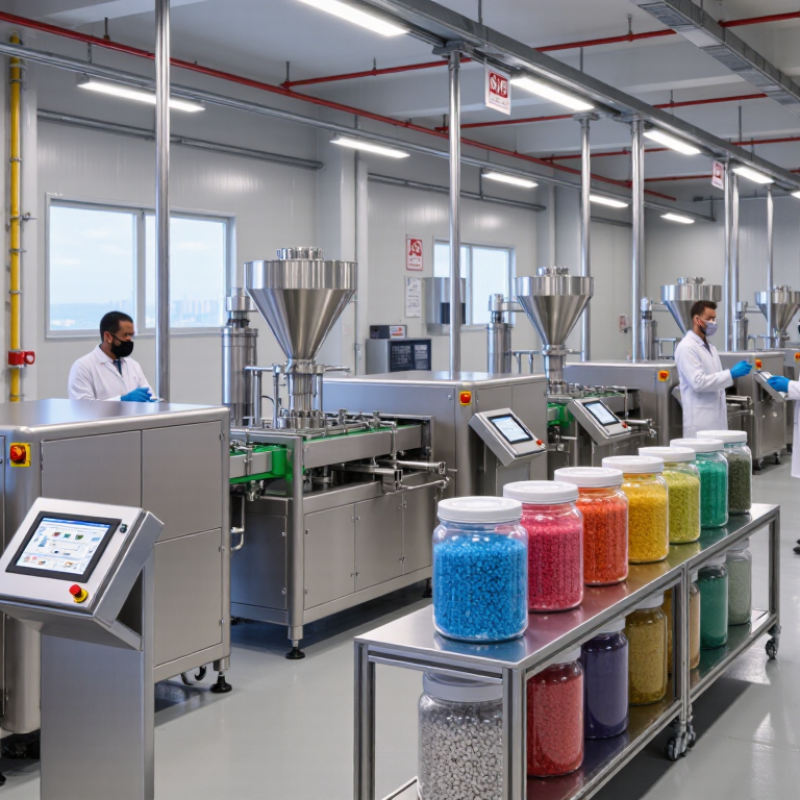
2026 Best PE Pigment Masterbatch Suppliers for Global Buyers

What PE Pigment Masterbatch Is and Why It Matters in 2026

What PE Pigment Masterbatch Is and Why It Matters in 2026

PE pigment masterbatch is a concentrated blend of pigments, additives, and polyethylene carrier resin. Manufacturers dilute it into natural or colored PE during extrusion, film blowing, injection molding, or rotational molding. A reliable grade should disperse evenly, maintain shade consistency, and avoid blocking or weak spots in thin film. The details matter. A tiny agglomerate can become a visible streak in a shopping bag.

Demand remains closely tied to packaging. PlasticsEurope’s Plastics—The Fast Facts 2024 reported that packaging represented about 40% of European plastics demand in 2022. Smithers’ 2024 masterbatch market assessment also expects continued global growth through 2028, supported by flexible packaging, agriculture films, and consumer products. These figures explain why buyers need more than a bright color. They need stable processing, documented pigment composition, and repeatable batch performance.

In 2026, supplier evaluation should include dispersion testing, heat stability, color-difference data, and recommended let-down ratios. Food-contact or toy applications require documented compliance for the target market. Recyclability also deserves practical attention, because excessive pigment loading can complicate sorting or reprocessing. Black is not always simple. Some carbon-based systems can affect near-infrared sorting. That assumption is often missed. I would request a production trial using the buyer’s actual resin, screw settings, film thickness, and cooling conditions. Laboratory results alone can look reassuring, yet factory behavior may differ.

Key Criteria for Evaluating Global PE Pigment Masterbatch Suppliers

2026 Best PE Pigment Masterbatch Suppliers for Global Buyers

Key Criteria for Evaluating Global PE Pigment Masterbatch Suppliers

Global buyers should evaluate PE pigment masterbatch suppliers through measurable evidence, not attractive color cards. PlasticsEurope reported global plastics production at 413.8 million tonnes in 2023. This scale increases pressure on color consistency, processing efficiency, and supply reliability. Ask for batch-to-batch ΔE data, carrier resin details, pigment loading, and recommended let-down ratios. A supplier avoiding these details deserves caution.

Processing data must match your actual equipment. Review melt flow rate using ISO 1133, dispersion under your extrusion conditions, and moisture control records. A stable masterbatch should run cleanly at the intended temperature and screw speed. Request samples in production-scale trials, not only laboratory plaques. Small tests can look excellent. Factory behavior may differ.

Regulatory and sustainability evidence also matters. The OECD Global Plastics Outlook estimated that only 9% of plastic waste was recycled in 2019. Buyers should therefore examine recycled-content compatibility, restricted-substance declarations, and documentation for the destination market. Check weathering performance against ISO 4892-3 when outdoor durability matters. Verify color retention after heat, light, and storage exposure. A certificate alone is not proof. Supplier audits should review calibration, traceability, complaint handling, and backup capacity. No audit is perfect. I would still record every weakness, including slow replies or unclear technical language. Landed cost should include freight, testing, rejected batches, and inventory risk—not merely the quoted price.

This buyer-focused benchmark shows the recommended weighting of key criteria when evaluating PE pigment masterbatch suppliers for global procurement. Product consistency, dispersion performance, regulatory compliance, and thermal and light stability typically receive the greatest consideration because they directly affect finished-product quality, production efficiency, and market access.

Leading Supplier Profiles and Their Product Capabilities

Global buyers are evaluating PE pigment masterbatch suppliers more carefully in 2026.

Grand View Research valued the global masterbatch market at approximately USD 12.3 billion in 2023. Its forecast also indicates steady growth through 2030. This demand favors suppliers with stable production, documented testing, and regional delivery experience.

Strong supplier profiles usually show clear PE carrier compatibility. They provide pigment loading data, recommended let-down ratios, melt-flow results, and color references. Leading producers also support film, pipe, injection molding, and rotational molding applications.

Their laboratories should measure dispersion, moisture, ash content, migration risk, and color difference. Delta E testing matters. Small shade changes can create visible defects in thin packaging film.

Smithers reports continued pressure for recyclable, lightweight, and resource-efficient plastic products. Therefore, suppliers increasingly offer concentrated formulations that reduce dosing and material waste. Reliable technical teams can adjust formulations for recycled PE, though results may vary between batches. That limitation deserves attention.

No supplier is perfect. Buyers should request production samples, safety documentation, compliance statements, and a batch traceability record before signing long-term agreements. Sales promises are not enough. A practical audit remains essential.

How to Compare Quality, Pricing, Compliance, and Delivery

2026 Best PE Pigment Masterbatch Suppliers for Global Buyers

Comparing PE pigment masterbatch suppliers requires more than checking the lowest price. Color strength, dispersion, carrier compatibility, and dosing accuracy directly affect production waste. A stronger masterbatch may reduce the let-down ratio, lowering the real cost per finished kilogram. Request trial samples, color difference data, moisture results, and batch-to-batch consistency records. Laboratory testing should follow recognized methods, such as ISO 1133 for melt flow and ISO 787 methods for pigment testing.

Compliance also needs practical verification. The OECD Global Plastics Outlook reported 353 million tonnes of plastic waste in 2019, with only 9% recycled. This pressure makes restricted-substance control and recyclability claims increasingly important. Ask for current safety data sheets, regulatory declarations, heavy-metal screening, and food-contact documents when relevant. Do not accept a generic certificate. The exact pigment, carrier, destination market, and application must match.

Tips: Compare total delivered cost, not the quoted kilogram price. Include dosing, rejected rolls, testing, customs, and emergency freight. For delivery, review production capacity, safety stock, export experience, and written lead-time commitments. PlasticsEurope reported global plastics production at about 400 million tonnes in 2022, showing how strongly supply continuity matters. Still, delivery promises can fail during pigment shortages. A useful scorecard may assign 40% to quality, 25% to compliance, 20% to delivery, and 15% to price. The weighting is not perfect. Recheck it after a pilot order.

Best Practices for Selecting and Purchasing from Global Suppliers

Selecting a PE pigment masterbatch supplier requires more than comparing price per kilogram. Check pigment dispersion, carrier compatibility, dosage guidance, and production consistency. Ask for a recent certificate of analysis, safety data sheet, and technical data sheet.

A practical audit should examine batch records, color measurement methods, and retained samples. Request a trial lot before signing a large contract. Test it in your actual extrusion or injection process. Watch for filter pressure, surface specks, color drift, and changes in melt flow. Small details matter.

Confirm the supplier’s quality system, export experience, packaging strength, and lead-time records. For global shipments, clarify pallet dimensions, moisture protection, labeling, and customs documents. Verify compliance with the regulations relevant to your finished product and destination market. Do not rely on a generic compliance statement.

My own supplier comparisons have sometimes favored a low quote too quickly. That was a mistake. A cheaper masterbatch can increase scrap, cleaning time, and customer complaints. Ask how the supplier handles nonconforming batches and corrective actions. Their answer reveals practical reliability.

Keep communication technical and documented. Define color tolerance, sample approval, delivery terms, payment conditions, and replacement procedures in writing. A video factory tour helps, but it cannot replace independent testing. When possible, compare two production batches, not only one polished sample. The imperfect sample often tells you more.

2026 Best PE Pigment Masterbatch Suppliers for Global Buyers - Best Practices for Selecting and Purchasing from Global Suppliers
Evaluation Dimension Buyer-Relevant Data Typical Technical Reference Documents or Tests to Request Purchasing Best Practice
Polymer Compatibility Carrier resin suitable for the buyer's polyethylene process and end product. LDPE, LLDPE, HDPE, or a polyethylene-compatible carrier; select according to film, extrusion, injection, blow-moulding, or rotational-moulding requirements. Technical data sheet, carrier-resin declaration, recommended processing temperature, and application-specific trial results. Match the masterbatch carrier with the base resin to reduce dispersion problems, gels, plate-out, and mechanical-property loss.
Pigment Loading Concentration of colour pigment or carbon black in the masterbatch. Often supplied in concentrated grades; the exact loading depends on pigment type, colour strength, opacity target, and processing method. Certificate of analysis, pigment-loading statement, colour-strength data, and recommended let-down ratio. Compare products by colour performance at the same dosage rather than by pigment percentage alone.
Recommended Let-Down Ratio Masterbatch addition rate required to achieve the target shade, opacity, or functional effect. Common commercial starting points are approximately 1%–5%, but dark, opaque, translucent, and special-effect colours may require different levels. Application guide, dosage range, laboratory colour panels, and production trial report. Confirm the dosage under actual screw speed, melt temperature, resin grade, film thickness, and output conditions.
Colour Consistency Ability to maintain a stable shade between production lots and across different processing conditions. Use an agreed colour standard and measurable colour-difference limit; CIELAB and Delta E are widely used for colour control. Approved colour sample, spectrophotometer report, batch-to-batch colour records, and retain-sample policy. Define the illuminant, observer angle, substrate, film thickness, and acceptable Delta E before placing a volume order.
Dispersion Quality Uniform distribution of pigment throughout the polyethylene matrix. Good dispersion should minimise streaks, specks, agglomerates, filter plugging, and visible colour variation. Microscopic dispersion images, film or plaque samples, filtration-pressure data, and production trial observations. Evaluate dispersion in the buyer's actual equipment because a laboratory sample may not represent production performance.
Thermal Stability Resistance of the pigment system to colour shift, degradation, or volatile formation during processing. Confirm stability against the buyer's actual melt-temperature profile; polyethylene processing commonly varies by resin and application. Thermal-stability test method, processing-temperature range, heat-history results, and visual colour comparison after processing. Request testing at the highest expected processing temperature and residence time, not only at nominal conditions.
Weather and Light Resistance Retention of colour during exposure to sunlight, UV radiation, moisture, and outdoor conditions. Required performance depends on product life, geography, exposure angle, and whether the application is indoor, outdoor, or agricultural. Accelerated-weathering report, lightfastness rating where applicable, pigment identification, and exposure conditions. For outdoor products, specify the expected service life and test method instead of relying only on general claims such as “UV resistant.”
Regulatory Compliance Conformity with the legal and customer requirements of the destination market and end-use sector. Requirements may include food-contact, toy, packaging, electrical, agricultural, or general industrial regulations. Declaration of compliance, safety data sheet, restricted-substance statement, heavy-metal statement, and supporting test reports. State the destination country, end use, and applicable regulation in the purchase specification before quotation.
Heavy Metals and Restricted Substances Control of regulated metals, aromatic amines, phthalates, PAHs, and other restricted substances where relevant. Limits depend on the applicable law, customer standard, and final product category. Independent laboratory report, restricted-substance declaration, raw-material control procedure, and batch traceability records. Use recent third-party testing for high-risk applications and require notification before any formulation change.
Migration and Odour Risk Potential transfer of colourants or volatile substances into adjacent materials, food simulants, or enclosed spaces. Risk is influenced by pigment chemistry, additives, dosage, processing temperature, and final application. Migration test report where applicable, odour/VOC data, formulation statement, and production-process controls. Do not approve a grade for sensitive applications using colour performance alone; complete the required end-use testing.
Physical Form and Packaging Pellet size, pellet uniformity, fines content, moisture protection, and packaging configuration. Pelletised products should be free-flowing and compatible with the buyer's gravimetric or volumetric dosing system. Packaging specification, net-weight tolerance, moisture statement, pallet details, and storage instructions. Check whether packaging can withstand long-distance sea or road transport and local warehouse conditions.
Quality-Control System Consistency of incoming raw materials, production batches, laboratory testing, and release procedures. Relevant controls may include colour strength, moisture, ash, melt-flow behaviour, dispersion, bulk density, and visual appearance. Quality manual summary, certificate of analysis template, calibration records, change-control procedure, and nonconformance process. Approve a control plan with measurable specifications and define corrective-action response times.
Production Capacity Ability to supply the required volume without compromising colour consistency or delivery reliability. Assess normal monthly capacity, available extrusion lines, laboratory capacity, peak-season loading, and backup production arrangements. Capacity statement, production schedule, business-continuity plan, and reference lead-time records. Separate verified available capacity from theoretical equipment capacity when planning annual supply.
Minimum Order Quantity Smallest order accepted for standard grades, custom colours, and new formulations. MOQ varies by colour complexity, packaging format, production setup, and whether a grade is standard or customised. Commercial quotation, sample policy, development-charge schedule, and repeat-order terms. Request separate pricing for laboratory samples, pilot batches, standard production, and custom colour development.
Lead Time and Supply Planning Time from approved purchase order to dispatch, including production, testing, documentation, and export preparation. Lead time depends on stock status, colour development, order size, season, port congestion, and destination requirements. Written lead-time commitment, production milestone plan, shipping documents list, and escalation contact. Maintain safety stock for critical colours and obtain advance notice for holidays, maintenance shutdowns, and raw-material shortages.
Trade and Logistics Capability Ability to support international shipment, customs clearance, export documentation, and agreed delivery terms. Confirm Incoterms, port of loading, transport mode, pallet dimensions, HS classification, and document language. Pro forma invoice, packing list, certificate of origin when required, SDS, export experience, and freight quotation. Compare total landed cost, including freight, insurance, duties, taxes, inspection, storage, and handling charges.
Technical Support Availability of colour-matching, processing advice, troubleshooting, and on-site or remote support. Useful support includes formulation guidance, dosage optimisation, dispersion troubleshooting, and production-trial assistance. Technical service scope, response-time commitment, sample-development process, and troubleshooting records. Choose a supplier able to communicate in the buyer's working language and provide documented corrective actions.
Supplier Qualification Assessment of manufacturing capability, quality reliability, compliance maturity, financial stability, and communication. Use a weighted scorecard covering technical, regulatory, commercial, logistics, and service performance. Factory audit checklist, certifications, customer references where permitted, insurance details, and business-continuity evidence. Qualify at least two technically approved supply sources for strategic colours or high-volume polyethylene products.
Sample Approval Process Structured path from laboratory sample to pilot batch and full production approval. Recommended stages: specification review, sample evaluation, machine trial, pilot validation, first-article approval, and periodic review. Approved sample card, trial protocol, colour acceptance criteria, batch-release form, and retained reference sample. Do not treat a free sample as production approval; document the exact resin, dosage, process conditions, and test results.
Commercial Evaluation Effective cost at the required colour performance and dosage, rather than price per kilogram alone. Effective colour cost can be estimated as: masterbatch price × addition rate, adjusted for scrap, downtime, testing, freight, and rejected product. Formal quotation, payment terms, validity period, price-adjustment mechanism, and total-landed-cost calculation. Compare equivalent performance specifications and include quality risk, delivery reliability, and technical support in the decision.
Buyer Note: The ranges and practices above are general industry references rather than guarantees for any individual supplier or product. Final acceptance should be based on application-specific trials, current regulatory requirements, approved specifications, and verified batch documentation.

FAQS

What technical data should buyers request from a PE pigment masterbatch supplier?

Request ΔE records, carrier resin details, pigment loading, and recommended let-down ratios.

Why are production-scale trials more useful than laboratory samples?

Factory equipment may use different temperatures, screw speeds, and cooling conditions.

How can buyers evaluate color consistency between batches?

Request batch-to-batch ΔE records and physical color references.

Which processing details should match the buyer’s equipment?

Compare melt flow results with the planned extrusion or molding process.

What compliance documents should a buyer check?

Request safety data sheets, restricted-substance declarations, and heavy-metal screening.

How should outdoor durability be evaluated?

Request weathering results using a recognized light and moisture exposure method.

How should the real cost of masterbatch be calculated?

Include dosing rate, freight, testing, customs, rejected rolls, and inventory risk.

What should a supplier audit examine before a long-term agreement?

Review calibration records, batch traceability, complaint handling, and backup capacity.

Conclusion

This guide explains what PE Pigment Masterbatch is and why it is increasingly important in 2026 for manufacturers seeking consistent color, efficient processing, and improved production control. It outlines the key factors global buyers should consider when evaluating suppliers, including pigment dispersion, carrier compatibility, color accuracy, technical support, production capacity, and batch-to-batch consistency. The article also reviews common supplier capabilities without focusing on specific brands, helping readers understand how product ranges and customization services may meet different application requirements.

It further provides a practical framework for comparing quality, pricing, compliance documentation, minimum order quantities, lead times, packaging, and international delivery performance. By following these best practices, buyers can assess supplier reliability, request meaningful samples, confirm testing standards, and negotiate clear commercial terms. The goal is to support informed purchasing decisions and help companies select a PE Pigment Masterbatch supplier that delivers stable performance, transparent service, and dependable long-term cooperation.


Oliver

Oliver

Oliver is a seasoned marketing professional with a wealth of expertise in driving brand awareness and engagement. With a deep understanding of our company's product offerings, he consistently delivers high-quality content that enriches our professional blog. His insights not only shed light on......