Choosing the right Pe Color Concentrate in 2026 requires more than comparing price lists. Global buyers must connect color performance with resin compatibility, processing conditions, compliance documentation, and supply reliability. A concentrate that performs well in one polyethylene film may fail in injection molding or blow molding. Small differences matter. Melt flow index, pigment loading, dispersion, and carrier resin can affect shade, strength, and surface appearance.
Experienced sourcing teams normally begin with a clear technical brief. It should state the PE grade, processing temperature, dosage range, target color, packaging format, and expected annual volume. Request a recent certificate of analysis, safety data sheet, technical data sheet, and batch traceability records. Samples should be tested on the actual production line, not only in a laboratory. Check color variation under different lighting. Inspect pellets for dust, moisture, and inconsistent size. These details often reveal weak process control.
Reliable suppliers should explain pigment selection and regional documentation requirements without making vague promises. Confirm whether the product suits your destination market and intended application. Requirements can differ for food-contact packaging, toys, agricultural films, and industrial products. Independent testing may be worthwhile. It adds time, but it can prevent costly rejected shipments. Still, no sourcing checklist is perfect. A supplier may pass one audit and disappoint during peak season. Keep backup sources, review corrective actions, and reassess performance after scale-up. Color is visible, but reliability is built quietly.
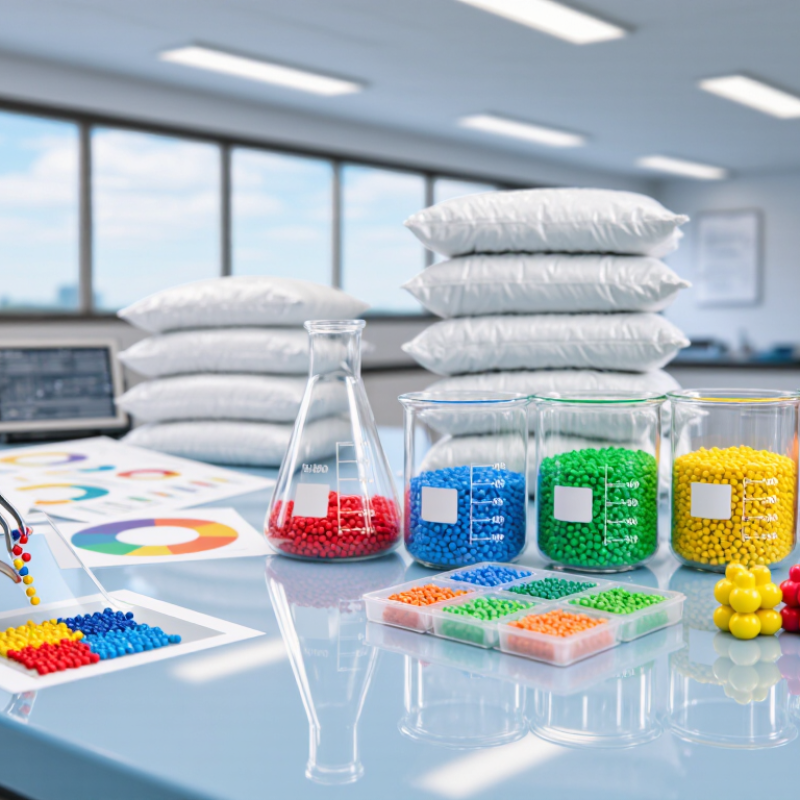
2026 How to Choose PE Color Concentrate for Global Sourcing?
Polyethylene color concentrate is a high-pigment mixture dispersed in a PE carrier resin. It adds consistent color during film, pipe, packaging, and injection molding production. Within the 400+ Mt global plastics market, even small dosage errors can create visible shade differences and material waste. A suitable concentrate should match the base resin, processing temperature, melt flow, and final application. Pigment dispersion matters more than a bright laboratory sample.
Experienced buyers should request technical data, safety documentation, pigment details, and batch-based certificates of analysis. Check the recommended let-down ratio and test it on the actual production machine. Evaluate color strength, moisture, plate-out, odor, migration behavior, and light stability. A concentrate that performs well in one PE grade may fail in another. That detail is often missed.
Tips: Start with a small production trial, not only a molded plaque. Compare samples under factory lighting and natural daylight. Record screw speed, temperature, dosage, and cooling conditions. Ask for retained samples from each batch. Check supply continuity, packaging quality, lead time, and customs documentation before approving a global source. Cost per kilogram can mislead; cost per finished tonne is more useful. A perfect match rarely exists. Recheck the specification when recycled PE enters the formula, because color response may change unexpectedly.
It is a high-pigment mixture dispersed in a polyethylene carrier resin. It adds color during film, pipe, packaging, and injection molding production.
Match the concentrate with the base resin, melt flow, processing temperature, and final application. The laboratory shade alone is not enough. Processing conditions matter more.
Good dispersion creates an even shade and reduces streaks, spots, and material waste. A bright sample may still perform poorly on a production machine. That assumption can fail.
Test color strength, moisture, plate-out, odor, migration behavior, and light stability. Use the actual production machine. A molded plaque is only a starting point.
Record dosage, screw speed, temperature, and cooling conditions for every trial. Compare samples under factory lighting and natural daylight. Small dosage errors can change the final shade.
Yes, recycled PE can change color response, melt behavior, and shade consistency. Recheck the specification when recycled material enters the formula. Unexpected changes happen.
Request technical data, safety documents, pigment details, and batch-based certificates of analysis. Also check packaging quality, lead time, customs documents, and supply continuity. Keep retained samples from each batch.
Confirm the exact applicable food-contact status and testing conditions. For European markets, review EU 10/2011 declarations and migration results. Check polymer type, food categories, time, and temperature.
Confirm testing for lead, mercury, cadmium, and hexavalent chromium. Review the laboratory, detection limit, production date, and batch number. Ask about SVHC reporting thresholds and evaluation dates.
Not always. Compare cost per finished tonne, not only cost per kilogram. A small production trial costs more initially. Skipping it may cost more later.
Choosing the right Pe Color Concentrate is essential for achieving consistent results in the global plastics market, which exceeds 400 million metric tons annually. Buyers should first confirm that the concentrate’s carrier resin is compatible with the target PE grade and evaluate its melt flow rate using ISO 1133 data. This helps ensure smooth processing, reliable dispersion, and stable production performance across different equipment and applications.
A practical evaluation should also establish a suitable let-down ratio, commonly within the 1–5 wt% range, while comparing pigment loading, opacity, color strength, ΔE consistency, and resistance to UV exposure. Suppliers should provide clear technical data and test results to support quality decisions. For products intended for regulated applications, documentation should verify compliance with FDA requirements, EU 10/2011, REACH obligations, and applicable heavy-metal restrictions. By reviewing performance, processing compatibility, durability, and regulatory documentation together, buyers can make a more reliable and cost-effective sourcing decision.