Top 10 Plastic PE Masterbatch Manufacturers Worldwide?

Time:2026-09-24 Author:Charlotte
0%

Plastic PE Masterbatch helps manufacturers add color, improve processing, and achieve consistent properties in polyethylene products. It appears in everyday items such as packaging film, storage containers, pipes, and household goods. A small pellet can influence shade, surface finish, and production stability. The details matter.

This guide explores ten manufacturers with international reach, offering a practical starting point for buyers comparing suppliers. Company size alone tells little. Formulation range, dispersion quality, technical support, production capacity, and delivery reliability can matter more to a specific project. A film producer may prioritize clean dispersion and low contamination, while a pipe manufacturer may focus on durability and long-term color consistency. Different needs. Different priorities.

No single list can suit every buyer, and rankings may change as markets and product portfolios evolve. That is worth remembering. Supplier information should be checked directly, including current grades, documentation, sample availability, and compatibility with the intended resin and process. Even a well-known manufacturer may not offer the best fit for every application. This overview is designed to support informed comparison, not replace trials or technical evaluation. Real production conditions can reveal issues that a brochure cannot. A careful shortlist, followed by sample testing and clear discussions with suppliers, is a more dependable route to choosing Plastic PE Masterbatch.
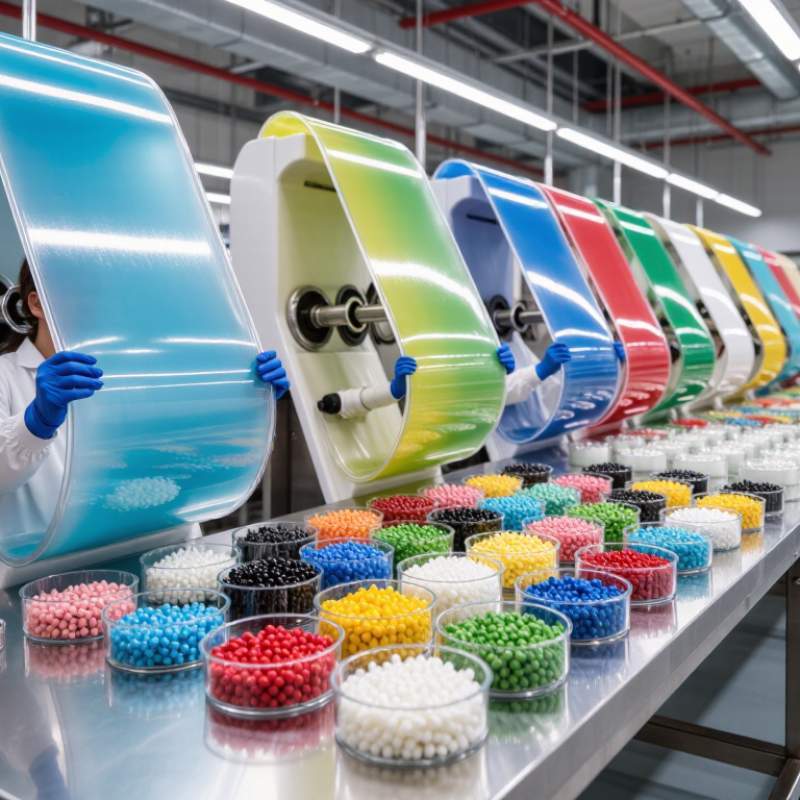
Top 10 Plastic PE Masterbatch Manufacturers Worldwide?

What Polyethylene Masterbatch Is and How It Is Produced

Polyethylene masterbatch is a concentrated blend of pigments, additives, and a PE carrier resin. It is not finished plastic. Instead, processors dilute it during extrusion or injection molding. The carrier must match the target resin, such as LDPE, HDPE, or LLDPE. Compatibility affects mixing, surface quality, and final performance.

Production begins with precise weighing and controlled premixing. A twin-screw extruder then melts the carrier and disperses colorants or additives under heat and shear. The compound is cooled, strand-cut, and screened into uniform pellets.

Manufacturers normally test color strength, moisture, dispersion, filtration pressure, and dosing accuracy. A 1–5% addition rate is common, but the correct level depends on pigment strength and application. Small errors can create visible streaks.

The market is substantial. PlasticsEurope reported approximately 400.3 million tonnes of global plastics production in 2022, showing the scale of potential masterbatch use. MarketsandMarkets estimated the global masterbatch market at about USD 12.4 billion in 2023, with continued growth projected through 2028. These figures include several polymer types, not polyethylene alone. That distinction matters. A supplier may appear technically strong, yet weak PE dispersion can cause die build-up or uneven film color. Laboratory results also cannot fully predict production behavior. Real-world trials remain essential, especially when recycled PE, thin films, or high-speed extrusion is involved.

Key Criteria for Comparing PE Masterbatch Manufacturers

When comparing PE masterbatch manufacturers, start with measurable performance, not catalogue size. PlasticsEurope reported global plastics production of 400.3 million tonnes in 2022, showing the scale of quality variation buyers must manage. A credible supplier should provide batch-level data for pigment concentration, moisture, melt flow rate, and dispersion. Ask for film or injection samples using your actual PE grade. A glossy sample can hide weak dispersion.

Test results matter more than promises.

Grand View Research estimated the global masterbatch market at approximately USD 12.8 billion in 2023, with continued growth through 2030. This expansion increases supplier choice, but it also makes comparison harder. Evaluate let-down ratio, color strength, thermal stability, odor, migration resistance, and processing consistency. Check whether the manufacturer operates controlled laboratories and retains reference samples. ISO 9001 certification supports traceability, although certification alone proves little about formulation skill. Technical support should include extrusion guidance, troubleshooting, and documented corrective actions.

Cost deserves a wider calculation. Include scrap, screen changes, rejected rolls, energy use, and production downtime. Sustainability claims need evidence, such as recycled-content verification or life-cycle data. One weakness in many purchasing reviews is overvaluing price during the first trial. I have found that a slightly higher concentrate can reduce dosing errors and stabilize film thickness. No scorecard is perfect. Recheck performance after storage, seasonal temperature changes, and repeated production runs.

Top 10 Plastic PE Masterbatch Manufacturers Worldwide? — Key Criteria for Comparing PE Masterbatch Manufacturers

Use these criteria to compare suppliers consistently. This guide presents evaluation factors rather than a ranked list of companies; requirements and test methods should be matched to the intended polymer, process, end use, and destination market.

No. Comparison criterion What to evaluate Evidence to request Why it matters
1 Polyethylene carrier compatibility Confirm whether the carrier resin is suitable for the target PE grade and process, such as LDPE, LLDPE, or HDPE. Check compatibility with the intended extrusion, film, injection-molding, or blow-molding application. Technical data sheet identifying the carrier type, recommended polymers, and processing applications; trial results using the customer’s resin and equipment. A suitable carrier helps the concentrate blend into the base resin and can reduce defects or inconsistent performance.
2 Pigment or additive concentration Review the declared active content and the recommended let-down ratio for the intended color or additive effect. Compare products only when dosage and test conditions are comparable. Product specification, recommended dosage range, and sample evaluation at the proposed let-down ratio. Concentration affects dosage, cost-in-use, color strength, and the final properties of the finished article.
3 Dispersion and filter performance Assess the distribution of pigment or additives and the likelihood of agglomerates, gels, or screen-pack pressure rise under relevant processing conditions. Documented dispersion or filtration test method, test conditions, results, and representative production-trial data. Poor dispersion can cause visible specks, streaks, film defects, or interruptions during processing.
4 Melt flow and processability Compare melt mass-flow rate data and processing guidance with the target application. Check test temperature and load because results are meaningful only when conditions are stated. Test report referencing an applicable method, such as ISO 1133 or ASTM D1238, with temperature and load specified. Melt flow influences how a concentrate feeds and disperses in a particular process; matching values alone does not guarantee compatibility.
5 Color consistency and weatherability For color products, compare color against an agreed reference and check batch-to-batch variation. For outdoor use, assess the required light and weather exposure performance. Color measurement conditions and agreed tolerance, such as a stated CIEDE2000 ΔE method; relevant accelerated-weathering or exposure results for the application. Consistent color and suitable durability help maintain appearance across production runs and the product’s service environment.
6 End-use and regulatory suitability Verify that the specific formulation and intended use meet applicable requirements. Food-contact, potable-water, medical, toy, and electrical applications may have distinct rules. Current declarations or compliance documentation for the exact grade and intended market; confirmation of applicable restrictions and conditions of use. Compliance depends on formulation, use conditions, and jurisdiction. A general claim or certificate does not automatically establish suitability for every application.
7 Quality management and batch control Review the supplier’s quality-control process, traceability, change control, handling of non-conforming product, and consistency checks for released batches. Quality-system documentation, sample certificates of analysis, lot-traceability information, and documented complaint or corrective-action procedures. Defined controls make specifications easier to verify and support investigation if a production issue occurs.
8 Technical service and customization Assess support for color matching, dosage optimization, troubleshooting, and trials on the relevant process. Clarify how formulation changes are reviewed and communicated. Written technical-support scope, trial protocol, response process, and documented product-change notification practice. Practical support can help resolve processing issues and adapt a grade to the customer’s material and production conditions.
9 Supply reliability and lead time Compare quoted lead times, order flexibility, packaging options, inventory arrangements, and procedures for managing shortages or demand changes. Written lead-time and order terms, delivery-performance records where available, and a clear escalation or continuity plan. Reliable supply planning reduces the risk of production delays and supports more predictable purchasing.
10 Total cost and sustainability information Compare total cost at the validated dosage, including freight, handling, yield, and process effects. Request environmental information relevant to the product and application. Comparable quotations and dosage assumptions; product-specific environmental data or supporting documentation for any sustainability claims. Purchase price alone may not reflect cost-in-use. Environmental claims should be supported by clearly defined, verifiable information.

Regional Overview of the Global PE Masterbatch Industry

The global PE masterbatch industry is shaped by regional demand, production costs, and polymer access. Asia-Pacific remains the largest manufacturing center, supported by strong packaging, film, pipe, and agricultural applications. Plants in this region often operate high-throughput twin-screw lines and offer broad color portfolios. Demand differs.

European producers generally compete through formulation precision, recyclability support, and strict quality control. Their laboratories often test melt flow, dispersion, moisture, and color stability before shipment. Customers may require documentation for packaging contact, recycled content, and regional chemical regulations. Compliance affects purchasing decisions.

North America shows steady demand from flexible packaging, construction, and rotational molding. Local suppliers often emphasize technical service and shorter delivery times. Latin America is developing, but currency pressure and uneven infrastructure can influence inventory planning. The Middle East benefits from polymer availability, while Africa has a smaller yet expanding conversion base.

A credible top-ten comparison should examine more than sales claims. Production capacity, export reach, application expertise, and independent quality records matter. Regional rankings can change quickly. That is the difficult part. Smaller compounders may outperform larger suppliers in niche applications, although public data rarely captures this advantage. In practice, processors should request trial batches, inspect dispersion under magnification, and compare performance on their own equipment. Supplier reputation helps, but repeatable testing is stronger evidence.

Top 10 Plastic PE Masterbatch Manufacturers Worldwide — Regional Overview of the Global PE Masterbatch Industry

Regional plastics production share provides a practical demand-context proxy for polyethylene masterbatch applications.

Asia represents the largest regional demand base, led by China and other Asian markets. North America and Europe remain important technology-intensive markets for packaging, automotive, construction, and consumer-product applications. The figures show regional plastics production shares rather than individual company or brand performance.

Data source: PlasticsEurope, Plastics — the Fast Facts 2023, global plastics production by region, 2022.

Ten Notable PE Masterbatch Manufacturers Worldwide

Ten Notable PE Masterbatch Manufacturers Worldwide

The most notable PE masterbatch manufacturers serve packaging, agriculture, construction, and consumer goods markets. They differ in scale, regional reach, and technical specialization. Strong suppliers usually control pigment dispersion, carrier compatibility, moisture, and melt flow. Their laboratories often test color strength, filtration pressure, dosing stability, and pellet consistency. Some also develop white, black, additive, filler, and custom-effect concentrates for polyethylene processing. A global reputation helps, but it does not guarantee the best production result.

Experienced buyers should compare technical data, not impressive claims. A reliable manufacturer provides a clear COA, safety documentation, recommended let-down ratios, and batch traceability. Trial samples should run on the customer’s actual extruder, film line, blow-molding machine, or injection equipment. Small changes in resin grade can affect shade, gloss, sealing, and mechanical strength. This is where many evaluations become imperfect. A sample may perform well in a laboratory but behave differently after several hours of continuous production.

Tips:

Check the carrier resin before comparing prices. Confirm pigment loading and additive compatibility. Request heat-stability data for the processing temperature. Inspect pellets for dust, agglomerates, and uneven size. Keep a retained sample from every approved batch. Also, review regional compliance requirements for the intended application. The cheapest concentrate can create higher costs through scrap, filter blockage, or unstable color. Better decisions come from repeatable trials, transparent records, and direct technical communication.

How to Select a Manufacturer for Specific Applications

Selecting a PE masterbatch manufacturer should begin with the application, not the catalog. Film, pipe, rotational molding, and injection parts need different dispersion, carrier compatibility, and thermal stability. A black masterbatch for outdoor pipe may require weathering data, while packaging film demands controlled odor and migration documentation. Ask for the exact PE grade, melt flow range, processing temperature, and target dosage. Small details matter. Test locally.

A credible supplier should provide technical data sheets, safety documents, batch traceability, and recent test reports. Check carbon black dispersion under microscopy, color strength, moisture, ash, and pellet consistency. Request samples from at least two production lots, not one polished sample. Run them on your own extruder at normal and maximum shear. Record pressure changes, filter residue, surface streaks, and final color. A manufacturer that explains failures is often more dependable than one promising perfect results. Ask for evidence.

Evaluate production capability beyond sales claims. Review compounding equipment, laboratory calibration, quality-control frequency, and complaint response time. Confirm whether the supplier can maintain shade consistency across larger orders. For regulated applications, verify current conformity statements for your destination market and material-contact requirements. Price deserves attention, but cheap concentrate can increase scrap, downtime, and cleaning labor. I have seen a low-cost batch pass a bench test and fail during continuous film production. That mistake changed our evaluation process. Still, test plans can be too narrow; humidity, recycled content, and storage time may expose weaknesses later. Choose a manufacturer willing to document those risks and adjust the formulation with measured evidence.

FAQS

Which region has the largest PE masterbatch manufacturing base?

Asia-Pacific leads, supported by strong demand for packaging, film, pipe, and agricultural products. Many plants use high-throughput twin-screw lines.

How do European producers commonly compete?

They focus on precise formulations, recyclability support, and strict quality checks. Laboratories may test melt flow, dispersion, moisture, and color stability.

What should buyers compare when evaluating suppliers?

Review production capacity, export reach, application expertise, and independent quality records. Public rankings can miss smaller specialists.

Does a supplier’s reputation guarantee good production results?

No. A sample can look good in a lab yet perform differently after hours on a film line.

What documents should a reliable manufacturer provide?

Ask for a clear certificate of analysis, safety documents, recommended let-down ratios, and batch traceability.

Why should samples be tested on actual processing equipment?

Resin grade and machine conditions can change shade, gloss, sealing, and mechanical strength. Run a trial on your own line.

What details should buyers inspect in the pellets?

Check for dust, clumps, and uneven pellet size. Keep a retained sample from each approved batch.

Why is the cheapest concentrate not always the best choice?

It may cause scrap, blocked filters, or unstable color. That cost adds up.

What should buyers confirm before choosing a concentrate?

Check the carrier resin, pigment loading, additive compatibility, and heat stability at the planned processing temperature. Some details still need real-world testing.

Conclusion

Plastic Pe Masterbatch is a concentrated blend of pigments, additives, and polyethylene carrier resin used to provide color, performance, and processing benefits in plastic products. It is typically produced by accurately weighing and dispersing selected ingredients, melting and mixing them under controlled conditions, then cooling and pelletizing the compound for consistent use. When comparing manufacturers, buyers should consider raw material quality, dispersion uniformity, color accuracy, production capacity, technical support, quality control, customization options, and environmental practices.

The global PE masterbatch industry includes established production regions across Asia, Europe, North America, and other developing markets, each offering different advantages in cost, technology, logistics, and application expertise. A review of ten notable manufacturers can help illustrate the diversity of capabilities without focusing on any single brand. Ultimately, selecting the right supplier depends on the intended application, such as packaging, films, pipes, agricultural products, consumer goods, or industrial components, as well as required properties, regulatory expectations, delivery reliability, and total cost.


Charlotte

Charlotte

Charlotte is a seasoned marketing professional with a deep understanding of the company's portfolio and a passion for elevating its presence in the market. With a keen eye for detail and a commitment to excellence, she ensures that our professional blog is regularly updated with insightful articles......