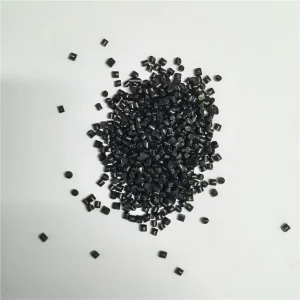
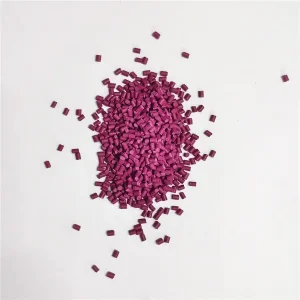
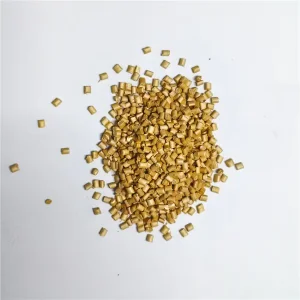
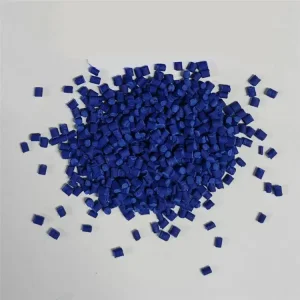
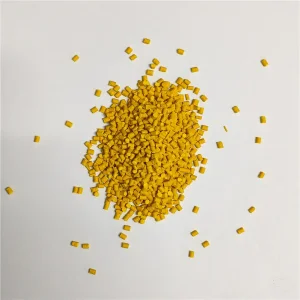
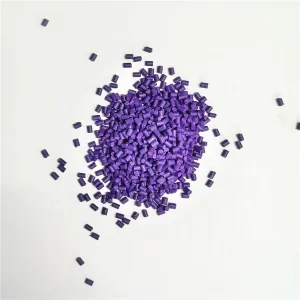
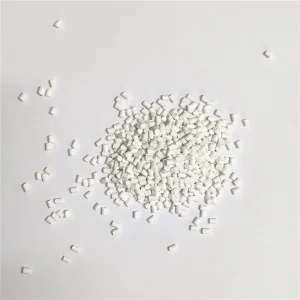
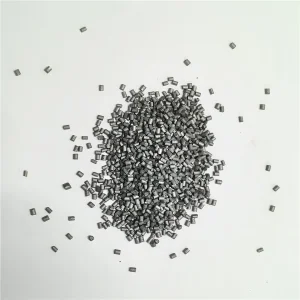
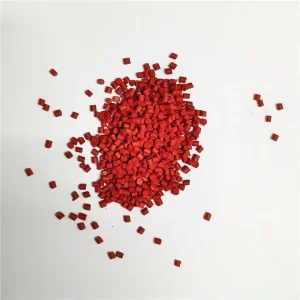
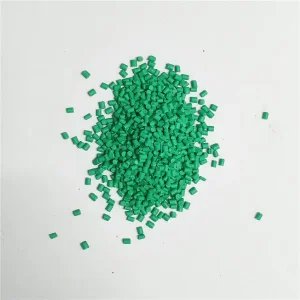
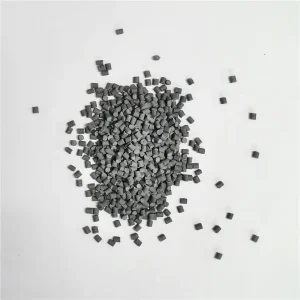
Direct-from-factory high-concentration masterbatches engineered for blown film, injection molding, and continuous extrusion processes.
An authoritative technical evaluation of economic scale, raw material leverage, and chemical dispersion mechanics in modern masterbatch production.
In the competitive landscape of global polymer processing, procurement directors and materials engineers often navigate a complex trade-off between unit cost reduction and strict mechanical integrity. Search queries centered around "Cheap Bulk Products Factories & Manufacturer" frequently reflect an imperative to secure cost-efficient inputs without compromising processability, thermal stability, or optical density. In plastic manufacturing, true commercial value is not merely dictated by raw price-per-kilogram; rather, it is established through the compound’s Let-Down Ratio (LDR), melt flow synchronization, carrier compatibility, and overall yield performance on high-speed automated extrusion lines.
Changzhou Jiazhou Plastic Products Co., Ltd. operates at the center of this industrial dynamic. Leveraging 16 years of compounding expertise across a 6,000 m² state-of-the-art facility in Jiangsu, China, Jiazhou bridges high-concentration chemical engineering with large-scale manufacturing economics. By utilizing high-shear twin-screw co-rotating extruders and automated micro-pelletizing systems, the company produces color and filler masterbatches that optimize cost efficiency for high-volume conversion operations.
Information Gain Insight: Sourcing "cheap bulk masterbatch" directly from direct-synthesis manufacturers yields up to a 28% reduction in raw material expenditure compared to distributor markups. However, optimization requires alignment between the Melt Flow Index (MFI) of the masterbatch carrier resin and the virgin polymer matrix to eliminate phase separation, screw slip, and surface pinholes during film blowing or injection molding.
The global masterbatch market relies on advanced formulation engineering to deliver specialized color functionality and functional cost-reduction across diverse polyolefin matrix systems (HDPE, LDPE, LLDPE, PP, and EVA).
Utilizing high-grade PE carrier resins engineered with optimized Melt Flow Index (MFI) parameters ensuring instantaneous wetting and seamless dispersion throughout virgin or recycled polyolefin melts.
Advanced wet-compounding techniques achieve micro-pigment particle de-agglomeration, supporting pigment concentration levels up to 50% while lowering the overall required Let-Down Ratio (LDR).
Thermal stabilizer packages enable masterbatches to withstand continuous processing temperatures up to 260°C without color shift, thermal degradation, or VOC off-gassing.
Achieving uniform opacity and vibrant tinting strength requires mitigating pigment agglomeration. During high-speed screw extrusion, sub-micron organic and inorganic pigments naturally aggregate due to inter-particle van der Waals forces. Jiazhou’s manufacturing lines incorporate specialized hyper-dispersants and low-molecular-weight PE waxes. These surface-active coupling agents lower interfacial tension between the hydrophilic pigment surfaces and the hydrophobic polyolefin polymer melt.
Consequently, converters utilizing Jiazhou masterbatches achieve superior opacity at reduced addition rates (typically 1% to 3%), preventing common issues such as filter pack clogging, melt fracture, die build-up, and localized stress concentrators in final extruded films or molded components.
Ensuring lot-to-lot color precision, compliance with global environmental mandates, and physical property maintenance through rigorous spectral and rheological testing.
Every masterbatch batch is verified using computerized spectrophotometers under D65, A, and F11 illuminants. Color matching adheres strictly to CIELAB space standards, enforcing a strict tolerance of ΔE < 0.5 against target master samples, preventing hue drift across continuous manufacturing runs.
Melt Flow Index testing is conducted in accordance with ASTM D1238 standards. Controlling the flow rate of the masterbatch ensures that blending with host resins does not induce shear heating variation, barrel surge, or dimensional instability in high-speed extrusion profiles.
Modern international procurement requires adherence to health, safety, and environmental standards. Jiazhou’s color and filler masterbatches undergo regular third-party testing to comply with international regulations including EU RoHS (Restriction of Hazardous Substances Directive 2011/65/EU) and REACH (EC 1907/2006). Formulations designated for food-contact applications utilize pigments that conform to FDA 21 CFR standards and European Commission Regulation (EU) No 10/2011, ensuring they are free from heavy metals (Lead, Cadmium, Hexavalent Chromium, Mercury), polybrominated biphenyls (PBBs), and harmful phthalates.
Delivering targeted chemical formulations tailored to specific plastic processing machinery and end-use operational environments.
Process Context: Ultra-thin LDPE/LLDPE shopping bags, agricultural mulch film, co-extruded multi-layer barrier films, and heavy-duty mailing bags.
Technical Requirement: High pinhole resistance, bubble stability, and non-migration properties. Masterbatches feature ultrafine pigment particle size (< 2 microns) to avoid tear initiation under longitudinal and transverse stretching.
Process Context: Industrial crates, automotive interior trim components, consumer electronics housings, houseware containers, and caps/closures.
Technical Requirement: Low warpage, excellent dimensional stability, and rapid cycle times. Masterbatch formulations incorporate organic pigments with non-nucleating properties to prevent differential shrinkage during mold cooling.
Process Context: HDPE agricultural irrigation pipes, corrugated conduit, construction profiles, and outdoor cable ducting.
Technical Requirement: Long-term weatherability and UV stability. Incorporates high surface area Carbon Black (P-type/N220 grade) or specialized light stabilizers (HALS) to protect polymer chains against photo-oxidative degradation.
Navigating international supply chain logistics, raw material hedging, and market-specific regulatory compliance for seamless B2B masterbatch procurement.
Procuring bulk industrial consumables from direct manufacturing plants requires a clear understanding of international shipping logistics, customs tariff classifications, and localized regulatory frameworks. Masterbatch products exported from Changzhou Jiazhou Plastic Products Co., Ltd. are classified under HS Code 3206.49.00 (Other Coloring Matter and Preparations) or HS Code 3824.99.99 depending on carrier base and functional filler concentration.
Conforming to US EPA regulations and EU REACH SVHC (Substances of Very High Concern) lists. Products entering European markets include full documentation and safety data sheets (SDS) structured according to the Globally Harmonized System (GHS), detailing physical hazard profiles, chemical CAS registration numbers, and transport safety metrics.
Optimized freight logistics supporting FCL (Full Container Load) and LCL (Less than Container Load) shipping routes from Shanghai and Ningbo ports. Masterbatches are packaged in moisture-proof 25kg PE/PP woven bags or 1,000kg industrial jumbo bags lined with aluminum-foil barriers to prevent moisture absorption during maritime transit across humid tropical zones.
Pioneering advancements in sustainable polymer additive integration, circular economy alignment, and AI-assisted color formulation matching.
Integration of Post-Consumer Recycled (PCR) polyolefin carriers into standard masterbatch matrices, enabling plastic converters to satisfy mandatory corporate recycled content quotas.
Implementation of machine-learning spectral algorithms that calculate exact pigment blending ratios in real-time, reducing shade matching turnaround times from days to hours.
Development of Near-Infrared (NIR) reflective Black Masterbatches, enabling automated optical sorting machinery at recycling facilities to detect and segregate black plastic waste streams.
Commercialization of 100% bio-based carrier matrices (PLA, PHA) compounded with organic non-toxic pigments for industrial composting and fully biodegradable plastic applications.
Addressing core engineering questions regarding masterbatch selection, addition rates, cost structures, and plant capabilities.
Explore our extensive range of high-performance color concentrates, manufactured to high international quality standards for global export.