Comprehensive Technical Analysis, Polymer Rheology Innovations, Chinese Supply Chain Efficiency, and Precision Sourcing for Global Buyers
Direct Factory Supply for High-Concentration & High-Dispersion Masterbatches
Understanding the Macro-Demand, Supply Dynamics, and Cost Benchmarks of Dark Green PE Masterbatch
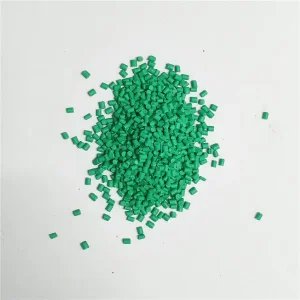
In modern industrial polymer processing, the global market for Dark Green PE Masterbatch has evolved from basic aesthetic coloration into a highly technical, functional additive segment. Polyethylene (PE) serves as the primary matrix resin for over 45% of global plastic converter lines—spanning blown film, blow molding, pipe extrusion, and injection molding. Dark green formulations, heavily reliant on high-purity Phthalocyanine Green G (Pigment Green 7) combined with specialized inorganic matrix correctors, are indispensable across agriculture, municipal infrastructure, outdoor logistics, and specialized packaging.
However, global procurement officers and polymer chemical engineers face a structural dilemma: balancing rigorous performance metrics (such as pigment dispersion, Melt Flow Index (MFI) matching, and heat stability up to 260°C) against soaring raw material costs. Traditional Western chemical compounders often demand exorbitant premiums for proprietary color formulations. Conversely, leading China dark green PE masterbatch factories and manufacturers have optimized their manufacturing cost curves through massive vertical integration, localized raw material sourcing, and continuous twin-screw compounding automation.
The Engineering Architecture Behind High-Dispersion Dark Green Masterbatches
Achieving flawless dispersion requires carrier resin matching. Top manufacturers utilize virgin LDPE, LLDPE, or HDPE matrix resins with precise Melt Flow Index (MFI) values (typically 12g/10min to 25g/10min) tailored to match or slightly exceed the host polymer's flow rate, eliminating melt fracture or surface streaks during extrusion.
Cheap, low-tier masterbatches suffer from pigment agglomeration, leading to filter clogging during film blowing. Factory compounding uses high-shear, co-rotating twin-screw extruders to reduce Phthalocyanine Green aggregate sizes down to < 2 microns, ensuring smooth surface finish and uniform opacity.
For outdoor agricultural and packaging applications, masterbatch formulations integrate Hindered Amine Light Stabilizers (HALS) and primary/secondary antioxidants (Irganox 1010 / Irgafos 168), preventing photo-oxidative degradation and tint fading under prolonged UV exposure.
| Parameter | Standard Grade | High-Concentration Grade | Testing Protocol / Benchmark |
|---|---|---|---|
| Pigment Content (%) | 20% - 35% | 40% - 50% | ISO 3451-1 Ash / TGA Test |
| Melt Flow Index (MFI) | 5 - 12 g/10min | 15 - 30 g/10min | ASTM D1238 (190°C / 2.16kg) |
| Heat Resistance (°C) | 220°C | ≥ 260°C | DIN EN 12877-2 Standard |
| Light Fastness (Blue Wool Scale) | Grade 6 | Grade 7 - 8 | ISO 105-B02 Sunlight Exposure |
| Moisture Content (%) | < 0.15% | < 0.05% | Karl Fischer Titration Method |
| Filter Pressure Value (FPV) | < 1.5 bar/g | < 0.5 bar/g | EN 13900-5 Dispersion Test |
How Dark Green PE Masterbatch Powers Essential Global Industries
Extensively used in horticultural shade nets, greenhouse film covers, and drip irrigation lines. Dark green pigments filter specific light wavelengths to control plant transpiration while providing long-term outdoor weatherability against intense UV degradation.
Civil engineering applications demand dark green HDPE geomembranes for landfill capping, artificial lake liners, and mining tailing ponds. The masterbatch ensures high Environmental Stress Crack Resistance (ESCR) and chemical inertness against acidic soil conditions.
Blow-molded and injection-molded municipal waste containers utilize dark green formulations to signify organic/recyclable waste streams. High structural integrity and scratch resistance prevent optical fading under harsh washdown chemicals.
Form-Fill-Seal (FFS) heavy-duty sacks for chemical fertilizers and plastic pellets require dark green barrier films. The masterbatch provides complete opacity, pinhole-free film blowing down to 25 microns, and high dart impact resistance.
Why Sourcing Directly from Changzhou & Jiangsu Manufacturing Hubs Delivers Unmatched Value
In global procurement terminology, the word "cheap" often carries a negative connotation of compromised quality. However, in the context of Chinese masterbatch manufacturing—specifically within the Changzhou plastic industrial cluster—cheap represents structural cost efficiency rather than sub-standard formulations.
Pioneering Next-Generation Eco-Friendly Masterbatch Innovations
Traditional dark pigments often contain carbon black traces that blind Near-Infrared (NIR) sorting systems at municipal recycling plants. Next-gen dark green masterbatches utilize NIR-transparent green/yellow formulations, enabling 100% circular sorting of post-consumer plastics.
In response to global carbon neutrality mandates, forward-thinking manufacturers are transitioning from fossil-based LDPE to sugarcane-derived Bio-PE and certified Post-Consumer Recycled (PCR) carriers, significantly lowering Scope 3 embodied carbon.
Standard pellets (~3mm) are giving way to ultra-uniform micro-pellets (< 1.2mm). Micro-pellets dramatically enhance dosing accuracy in high-speed micro-injection molding machines and thin-gauge agricultural film blowers.
Meeting Strict Environmental Guidelines for European, North American, and Asian Import Standards
Strictly zero heavy metals (Lead, Cadmium, Mercury, Hexavalent Chromium) or restricted phthalates.
Fully verified against the European Chemical Agency's Substances of Very High Concern list.
Select food-grade dark green formulations compliant with FDA 21 CFR 177.1520 regulations.
End-to-end quality management system with full batch sample retention for up to 3 years.
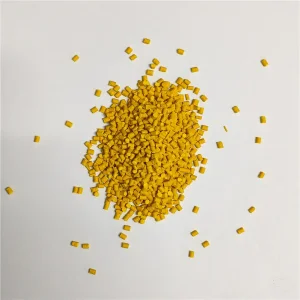
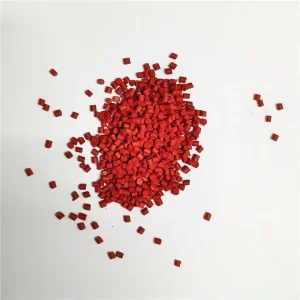
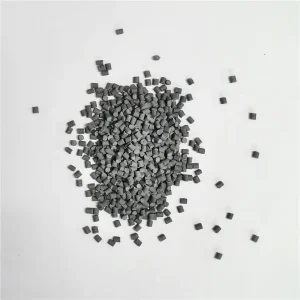
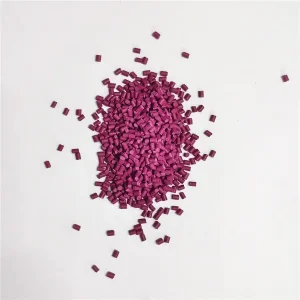
Explore Other High-Performance Color Masterbatches Supplied Directly by Factory
Technical & Procurement Insights for B2B Plastic Converters and Sourcing Managers
The standard let-down ratio typically ranges from 1% to 4% depending on the wall thickness of the end product and required opacity. For film blowing applications (e.g., 30-50 micron agricultural films), a 2% to 3% dosage provides full opacity and rich color saturation. For thick-walled injection molding products (e.g., waste bins or crates), a 1.5% to 2% dosage is usually sufficient.
Leading Chinese factories utilize automated loss-in-weight feeding systems paired with double-stage twin-screw extruders. Every production batch undergoes rigorous colorimetric inspection using X-Rite spectrophotometers under CIELAB color space standards. A strict ΔE ≤ 0.4 limit relative to the master target standard is enforced before release.
While PE carrier masterbatches are broadly compatible with Polypropylene (PP) in non-critical injection molding applications due to similar polyolefin characteristics, using PE in PS or ABS is generally discouraged due to phase incompatibility. For optimized mechanical performance and clarity in PP films, we recommend matching with a PP-carrier masterbatch or a universal carrier system.
When stored in its original unopened moisture-proof packaging in a cool, dry, and ventilated warehouse (away from direct sunlight and heat source), the shelf life is up to 24 months. If opened, ensure the moisture barrier inner liner is tightly resealed to prevent ambient humidity absorption prior to processing.
For standard dark green grades, the MOQ starts as low as 500 kg. For custom Pantone or RAL shade matching, our R&D lab delivers matched physical plaques within 3 to 5 working days. Full container load (FCL) order lead time is typically 10 to 14 days from sample approval to ocean port dispatch.