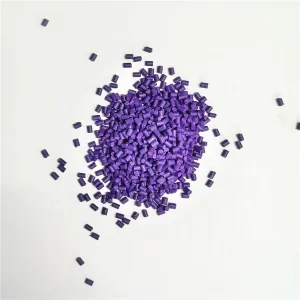
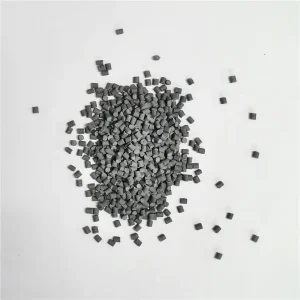
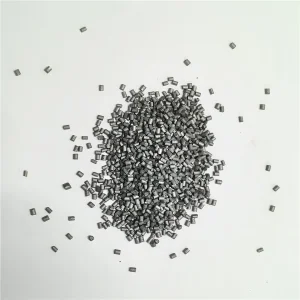
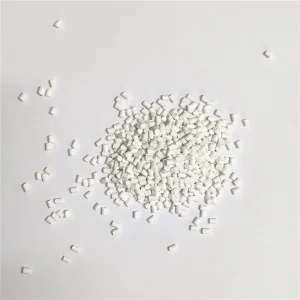
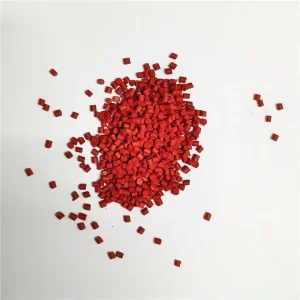
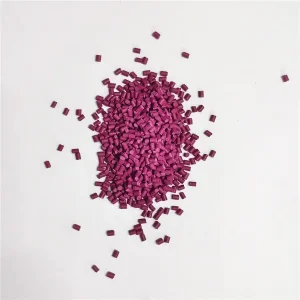
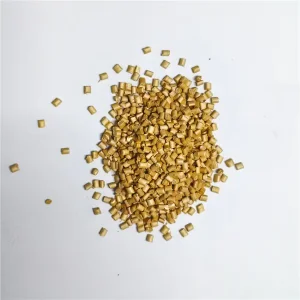
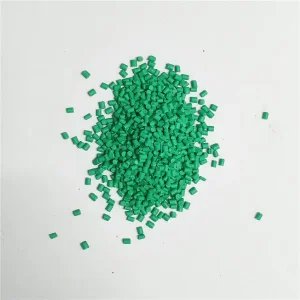
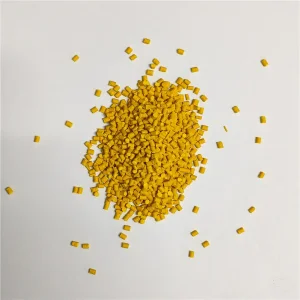
Engineered with sub-micron pigment dispersion, superior heat stability up to 260°C–300°C, and exceptional Pressure Filter Values (FPV) for fiber spinning and extrusion.
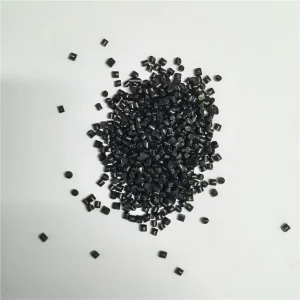
A comprehensive study on balancing unit-cost reduction with high melt-spinning performance, pressure filter stability, and color consistency in synthetic fiber manufacturing.
In the synthetic textile and non-woven manufacturing sectors, polyolefin fiber drawing represents one of the most mechanically demanding melt-extrusion processes. Whether producing high-tenacity Linear Low-Density Polyethylene (LLDPE) monofilaments, High-Density Polyethylene (HDPE) agricultural shade nets, carpet backing, FIBC container bags, or spunbond non-woven fabrics, the inclusion of masterbatches introduces complex rheological dynamics. Sourcing a cheap fiber drawing PE masterbatch without compromising filament spinnability requires an advanced understanding of pigment particle size distribution, carrier resin Melt Flow Index (MFI) matching, and Pressure Filter Value (FPV) control.
Historically, plastic converters faced a direct trade-off: ultra-low-cost masterbatches often suffered from coarse pigment agglomerates, unreacted inorganic fillers, or incompatible low-molecular-weight waxes. These impurities lead to spinneret hole clogging, frequent strand breakages, rapid filter pack pressure buildup, and non-uniform filament tensile strength. Modern masterbatch engineering, spearheaded by specialized manufacturers like Changzhou Jiazhou Plastic Products Co., Ltd., has dismantled this trade-off by utilizing continuous high-shear twin-screw compounding, organic pigment surface functionalization, and precise carrier matching to deliver cost-effective, premium-grade fiber masterbatches.
In fiber drawing applications, standard blown film or injection molding grade masterbatches fail quickly. Fiber spinning packs feature fine wire mesh filters (ranging from 15 to 45 microns). Standard masterbatches cause rapid melt filter clogging. Fiber-grade PE masterbatches engineered by Jiazhou undergo rigorous EN 13900-5 FPV testing, maintaining an FPV of ≤ 0.8 to 1.2 bar/gram. This guarantees continuous extrusion runs exceeding 48–72 hours without filter screen pack blowouts.
Fiber drawing requires precise viscosity alignment. The masterbatch PE carrier resin must possess an MFI identical to or slightly higher than the matrix polymer (typically 12 to 30 g/10min at 190°C/2.16kg) to ensure instantaneous melt homogenisation without phase separation.
Raw organic and inorganic pigments (Carbon Black, TiO2, Phthalocyanines) are milled and surface-treated with hyper-dispersants, reducing particle size down to d90 < 1.0 μm. This prevents mechanical stress concentrators in thin monofilaments.
Synthetic fiber extrusion occurs under high shear and elevated temperature. Formulations integrate primary (phenolic) and secondary (phosphite) antioxidants to suppress thermal-oxidative polymer degradation and preserve fiber tenacity.
| Technical Parameter | Standard Commodity PE Masterbatch | Jiazhou Fiber-Drawing PE Masterbatch | Impact on Fiber Drawing Lines |
|---|---|---|---|
| Pressure Filter Value (FPV) | > 5.0 bar/g (Unfiltered) | ≤ 0.8 – 1.2 bar/g | Prevents premature filter pack clogging and machine shutdown. |
| Max Pigment Particle Size (d90) | > 5.0 μm to 15 μm | < 1.0 μm | Eliminates filament breakage & maintains high tensile strength. |
| Carrier Melt Flow Index (MFI) | 2 – 8 g/10min (Broad) | 15 – 35 g/10min (Tailored) | Ensures rapid mixing at high spinning speeds (>3000 m/min). |
| Thermal Stability Rating | 200°C – 220°C | 260°C – 300°C | Prevents color fading, gas marks, and polymer yellowing. |
| Spinning Breakage Rate | High (> 5 breaks per hour) | Ultra-Low (< 0.1 breaks per ton) | Maximizes overall equipment effectiveness (OEE) & reduces scrap. |
Analysis of international buyer preferences, circular economy compliance, and total cost of ownership (TCO) optimization.
The global polyolefin masterbatch market is undergoing structural shifts driven by economic pressures and stringent environmental mandates. Procurement executives across Europe, Southeast Asia, North America, and the Middle East are no longer searching merely for the lowest "price-per-kilogram" tag; they are evaluating suppliers based on Total Cost of Ownership (TCO) and Information Gain regarding long-term polymer processing stability.
Key global procurement drivers include:
HDPE monofilaments for green-house shading, hail-protection nets, and weed-barrier fabrics requiring extreme lightfastness (Blue Wool Scale 7-8) and UV resistance.
PP/PE raffia tapes for FIBC jumbo bags, cement sacks, and tarpaulins demanding high tensile retention after hot-stretching (draw ratios 1:5 to 1:8).
Spunbond/Meltblown nonwovens for protective gowns and hygiene products requiring skin-contact safety, non-toxic formulations, and REACH compliance.
Combining state-of-the-art twin-screw compounding with automated spectrophotometer color matching for international OEM and direct fiber producers.
Established in 2010, Changzhou Jiazhou Plastic Products Co., Ltd. operates a specialized 6,000 m² chemical compounding plant in Changzhou, Jiangsu Province, China. Positioned in the heart of China’s advanced polymer industrial cluster, Jiazhou operates multiple high-shear continuous twin-screw extrusion lines dedicated exclusively to PE color masterbatches, white masterbatches, black masterbatches, and functional filler masterbatches.
All Jiazhou PE fiber drawing color masterbatches are formulated without heavy metals (Lead, Cadmium, Hexavalent Chromium, Mercury) and strictly comply with EU RoHS Directive 2011/65/EU, SVHC REACH regulations, and FDA food-contact standards for packaging applications.
We provide global plastic extrusion plants with comprehensive technical assistance. Our polymer engineers assist with temperature profile optimization, screw design advice, and purging procedures to transition seamlessly to Jiazhou masterbatches without production line stoppage.
Strategically located near Shanghai Port, Jiazhou delivers streamlined export logistics. Masterbatches are moisture-sealed in 25kg heavy-duty PE bags with aluminum foil lining or 1-ton bulk bags, ensuring zero moisture absorption during long ocean transit.
Pioneering Next-Generation Solutions for Sustainable, Micro-Denier Synthetic Yarns.
As synthetic fiber manufacturing advances toward micro-denier filaments (less than 1.0 dpf) and circular polymer ecosystems, masterbatch technology must evolve rapidly. Jiazhou's R&D department is focusing on three key technology pillars:
Developing specialized compatibilizers and chain extenders integrated into masterbatches to allow seamless fiber drawing using up to 50% recycled PE/PP resin streams without strand breaking.
Combining color tinting, permanent anti-static properties, anti-bacterial nano-silver, and infrared reflection into a single masterbatch pellet for high-value technical textiles.
Leveraging neural networks to predict pigment metamerism under varying illuminants (D65, TL84, CWF) and automatically adjust pigment loading for instant digital shade matching.
Addressing Common Engineering, Commercial, and Sourcing Questions for Fiber-Grade PE Masterbatches.
Fiber-grade masterbatches require an exceptionally fine pigment dispersion (d90 < 1 micron) and an ultra-low Pressure Filter Value (FPV ≤ 0.8 to 1.2 bar/g). Standard film or injection masterbatches contain larger agglomerates (5 to 15 microns) which immediately clog spinneret filter packs (20-40 micron mesh) and cause strand breakages during drawing.
We achieve cost leadership through raw material scale integration in Changzhou, fully automated continuous twin-screw compounding extruders that minimize energy consumption per ton, and high-concentration formulations. High pigment loading allows plastic converters to lower their Let-Down Ratio (LDR) down to 1%–2%, significantly cutting the effective cost per ton of finished fiber.
Depending on the required color opacity, filament denier, and pigment concentration, typical LDR ranges from 1.5% to 3.0%. For dark shades (like Black or Navy Blue), 1.0% to 2.0% is often sufficient. Our engineering team provides custom addition rate recommendations for each specific melt-spinning line.
When formulated correctly with matching carrier MFI and sub-micron dispersion, Jiazhou masterbatches preserve over 95%–98% of virgin polymer tensile strength and elongation at break. Poor quality masterbatches with undispersed filler agglomerates create micro-voids during stretching, severely reducing yarn tenacity.
Yes. Our state-of-the-art color laboratory utilizes computer spectrophotometers to match any physical fiber sample, RAL, or Pantone code within 3 to 5 working days. Sample masterbatch batches are provided with full laboratory FPV test reports prior to mass production.
Masterbatches should be stored in a cool, dry, well-ventilated warehouse away from direct sunlight and moisture. Unopened original bags have a shelf-life of 24 months. Although PE is non-hygroscopic, pre-drying for 2 hours at 70°C–80°C is recommended if bags have been exposed to high humidity environments before spinning.
Premium quality color concentrates engineered for extrusion, blown film, injection molding, and monofilament fiber spinning.
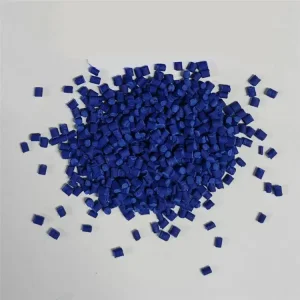
Whether you require cheap fiber drawing PE masterbatch for agricultural monofilaments or specialized custom shades for spunbond nonwovens, Changzhou Jiazhou Plastic Products provides factory-direct pricing, certified performance, and technical expertise.