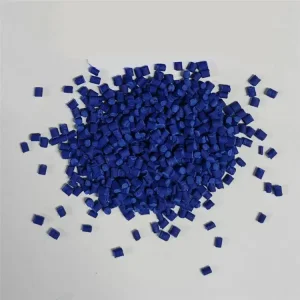
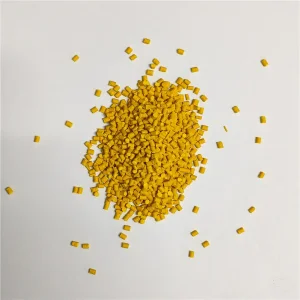
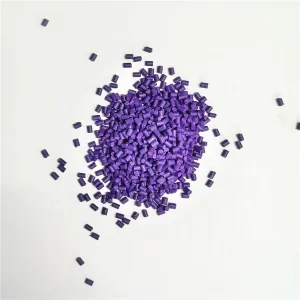
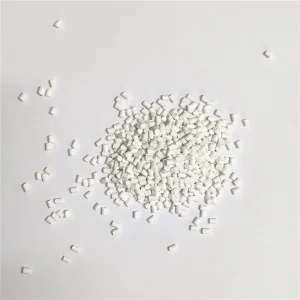
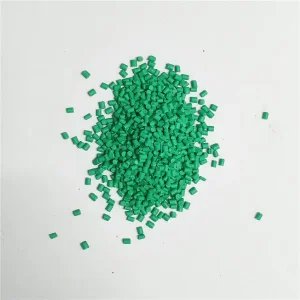
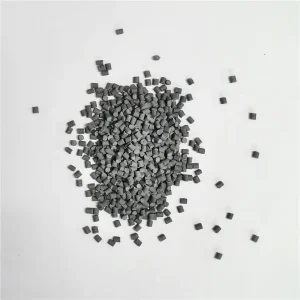
High-concentration, food-compliant masterbatches engineered for blown film extrusion, injection molding, and continuous high-speed plastic conversion.
Deconstructing the macro-economic forces, regulatory shifts, and technical mandates driving the search for high-performance yet cost-competitive food-grade white masterbatch.
The flexible food packaging market is projected to surpass USD 250 billion by 2028. White masterbatch accounts for over 40% of global color masterbatch volume, primarily due to its role as a fundamental opacity block and visual substrate for multi-color flexographic and rotogravure printing in food bags.
In B2B procurement queries, the search term "cheap" rarely denotes inferior quality. Instead, search intent mining reveals buyers seek uncompromising unit cost efficiency derived from high Titania concentration (60%–70% TiO2 loading), lower addition ratios (down to 1%–2%), and zero machine downtime due to screen pack clogging.
Global regulatory compliance (FDA 21 CFR 177.1520, EU No 10/2011, and China GB 4806.6) mandates strict limits on heavy metals, low-molecular-weight volatiles, and non-intentional added substances (NIAS). Leading factories must balance low cost with absolute chemical purity.
Understanding the molecular architecture and manufacturing physics behind premium food-grade white masterbatch for blown film blowing.
For high-opacity food bag blown films, Rutile Titanium Dioxide is essential. Rutile possesses a higher refractive index (2.73) compared to Anatase (2.55), delivering superior light scattering efficiency. This allows film converters to achieve complete opacity (light blockage) at reduced film gauges (down to 12–15 µm). Advanced suppliers treat the TiO2 surface with alumina, silica, and organic silane titanate coupling agents to prevent moisture absorption, voiding, and lacing during high-temperature cast and blown extrusions.
The carrier resin must perfectly match the matrix polymer of the food bag—typically Low-Density Polyethylene (LDPE), Linear Low-Density Polyethylene (LLDPE), or High-Density Polyethylene (HDPE). A specialized virgin LLDPE carrier with an MFI of 20 to 30 g/10min (190°C/2.16kg) ensures rapid melting and uniform pigment shear breakdown within the extruder barrel without lowering the mechanical tear and impact resistance of the final film shell.
In high-speed monolayer and multi-layer co-extrusion lines (e.g., ABA or ABC food pouches), un-dispersed pigment agglomerates lead to film blowouts, pinholes, and poor barrier properties against oxygen and moisture. Leading factories implement strict quality control utilizing Filter Pressure Value (FPV) testing according to EN 13900-5. A certified FPV of < 0.15 bar/gram ensures smooth flow through fine 325-mesh extruder screens, granting stable bubble geometry and uniform seal strength.
Comparing initial masterbatch purchasing costs against long-term extrusion productivity, scrap rates, and dosage optimization.
| Performance Parameter | Low-Grade "Cheap" Masterbatch | Standard Commercial Grade | Jiazhou Optimized Food-Grade White |
|---|---|---|---|
| TiO2 Content (%) | 20% – 40% (High Calcium Carbonate Filler) | 50% – 60% Rutile TiO2 | 60% – 70% Pure Rutile TiO2 |
| Carrier Base | Recycled PE / Off-spec Wax blends | Standard Virgin LLDPE | High-Flow Virgin LLDPE + Polyolefin Additive |
| Recommended Let-down Ratio | 4% – 8% | 2% – 4% | 1% – 2.5% |
| Filter Pressure Value (FPV) | > 0.8 bar/g (Frequent clogging) | 0.3 – 0.5 bar/g | < 0.15 bar/g (Ultra-clean) |
| Food Contact Certification | Uncertified / Non-food grade fillers | Basic FDA Compliance | FDA 21 CFR, EU 10/2011, REACH, RoHS |
| Overall Cost Impact per Ton Film | High (High scrap rate + high dosage) | Moderate | Lowest Total Cost of Ownership (TCO) |
High-dispersion white masterbatches reduce film web breaks by up to 85%, dramatically decreasing resin scrap during extruder start-ups and continuous runs.
By maximizing rutile TiO2 loading to 70% with titanate surface treatments, converters can drop masterbatch addition rates from 4% down to 1.5%, saving substantial freight and storage overhead.
Abrasive calcium carbonate filler contamination in low-grade masterbatches wears down expensive twin-screws and die heads. Pure Rutile formulations protect extrusion machinery capital investments.
How Changzhou Jiazhou Plastic Products Co., Ltd. leverages smart manufacturing technologies and strategic logistics to deliver global cost advantages.
Our Industry 4.0 production lines utilize multi-component loss-in-weight gravimetric feeders. This ensures micro-precise metering of titanium dioxide pigments, additives, and virgin PE carriers, eliminating batch-to-batch color variance and maintaining delta E (ΔE) < 0.5.
Utilizing co-rotating twin-screw extruders with specialized screw elements (mixing, kneading, and degassing zones), our compounding process breaks down TiO2 agglomerates to primary particle sizes (~0.25 µm), maximizing opacity while degassing moisture and volatiles.
Situated in Changzhou, Jiangsu, Jiazhou operates within China's primary chemical and plastic refining corridor. Direct access to major petrochemical producers and close proximity to Shanghai Port ensures stable raw material pricing and rapid ocean freight dispatch to over 100 countries.
Tailored white masterbatch formulations engineered for distinct global food packaging conversion processes.
Engineered for high-speed blown film lines producing ultra-thin HDPE/LLDPE grocery bags. Delivers high tensile strength, excellent printability for store branding, and high opacity even at film thicknesses below 15 microns.
Optimized for co-extruded barrier structures used in vacuum meat packaging, snack food bags, and dairy films. Concentrates the white masterbatch in specific skin or core layers to lower costs while preventing pinholing and maintaining gas barrier performance.
Formulated with specialized cold-crack resistant PE carrier resins and UV/thermal anti-oxidant packages. Retains film elasticity, puncture resistance, and bright white aesthetics under deep-freeze temperatures (-30°C).
Navigating future regulatory landscapes and sustainable plastics initiatives in global food contact materials.
As global regulations (such as EU packaging waste directives) enforce minimum recycled plastic targets, white masterbatches must act as opacity boosters to mask grey/yellow tint variations inherent in PCR polyolefin streams. High-concentration TiO2 formulas enable converters to achieve pristine white aesthetics despite 30%–50% PCR content.
With impending global bans on Per- and Polyfluoroalkyl Substances (PFAS), modern food-grade white masterbatches are transitioning to PFAS-free processing aids. Jiazhou's next-generation formulations utilize non-fluorinated processing additives to eliminate melt fracture (sharkskin) during blown film extrusion while strictly adhering to eco-compliance mandates.
Resolving critical processing, compliance, and procurement questions related to food-grade blown film white masterbatches.
Explore our broader range of high-concentration color and additive solutions for blown film extrusion and plastic injection molding.