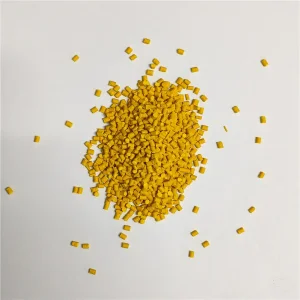
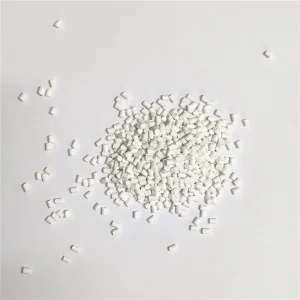
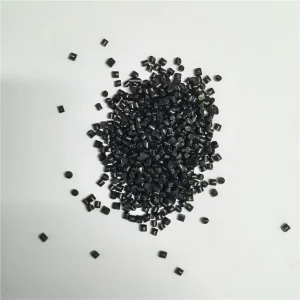
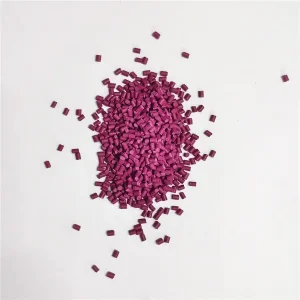
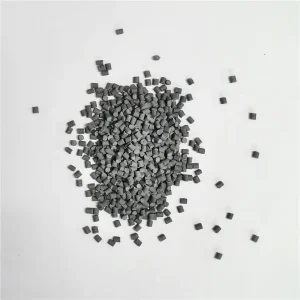
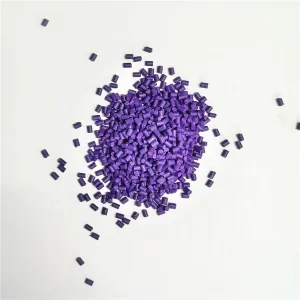
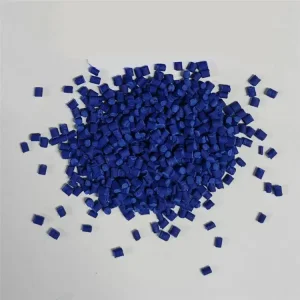
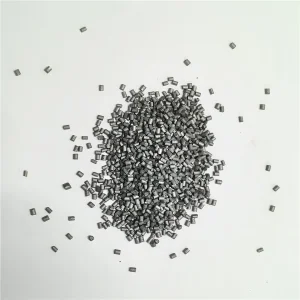
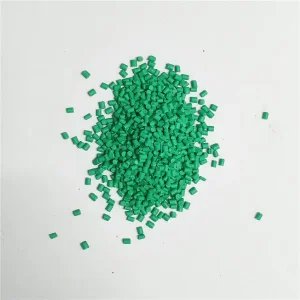
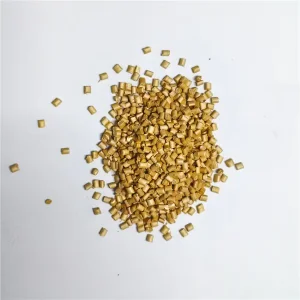
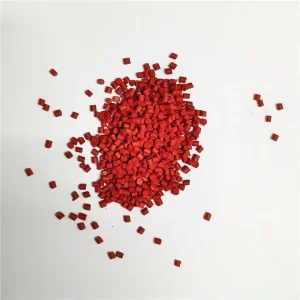
Explore our high-concentration, eco-friendly color and filler masterbatches for blown film, extrusion, and injection molding.
An authoritative analysis on cost efficiency, polymer rheology, carbon black dispersion, and global manufacturing competitiveness.
In modern thermoplastic processing, achieving intense tinting strength, optical density (jetness), and long-term UV resistance while managing total cost of ownership (TCO) remains a paramount objective for converters worldwide. Carbon black black PE masterbatch acts as the primary functional additive for polyethylene matrices including LLDPE, LDPE, HDPE, and EVA resins.
Historically, low-cost masterbatches compromised heavily on dispersion, leaving micro-agglomerates that caused surface defects, pinholes in thin films, and severe tensile degradation in extruded pipes. Modern manufacturing innovations from leading Chinese factories have fundamentally changed this dynamic. By utilizing specialized twin-screw extrusion technology and advanced dispersion aids, factory-direct manufacturers now produce cheap high carbon black PE masterbatches loaded with 30% to 50% furnace carbon black without sacrificing processability.
Our formulations are compliant with global regulatory directives including EU REACH (EC No. 1907/2006), RoHS 3 (Directive 2015/863), and FDA 21 CFR 177.1520 for indirect food contact applications. Through rigorous Filter Pressure Value (FPV) testing according to EN 13900-5, our PE masterbatch maintains an ultralow melt resistance shift, safeguarding continuous production lines.
By combining high-structure carbon black grades (DBP absorption > 110 cm³/100g) with precisely tailored polyethylene carriers, factories achieve optimal rheological balance, lowering processing torque and enhancing energy efficiency during film blowing and profile extrusion.
Key drivers shaping procurement strategies across packaging, infrastructure, automotive, and agricultural sectors.
Global infrastructure projects demand extended outdoor service lives for HDPE geomembranes, geotextiles, and agricultural drip irrigation tubes. Carbon black remains the most effective UV absorber available, neutralizing harmful photo-oxidation by converting solar radiation into thermal energy. Formulations with sub-25nm particle sizes are seeing rapid adoption worldwide.
With regulations mandating minimum recycled content in consumer packaging, polymer processors face significant color instability in PCR resin feeds. High-jetness black masterbatch serves as the primary masking agent, allowing manufacturers to incorporate up to 80% recycled PE scrap while maintaining pristine surface aesthetics.
Volatile crude oil and chemical feedstock prices have compelled procurement executives to shift away from expensive European and North American suppliers toward direct-source Chinese factories capable of offering low-cost high-concentration grades with strict lot-to-lot quality guarantees.
| Performance Parameter | Standard Commercial Grade | High-Jetness Premium Grade | P-Type Cable & Pipe Grade |
|---|---|---|---|
| Carbon Black Concentration (%) | 30% – 40% | 40% – 50% | 35% – 45% |
| Primary Particle Size (nm) | 30 – 50 nm | 15 – 22 nm | 20 – 25 nm |
| DBP Absorption (cm³/100g) | 65 – 85 | 110 – 130 | 100 – 120 |
| Carrier Resin Compatibility | LDPE / LLDPE | Virgin LLDPE / EVA | PE 100 Grade / HDPE |
| Melt Flow Index (190°C / 2.16kg) | 5 – 15 g/10min | 2 – 8 g/10min | 1 – 5 g/10min |
| Target Industrial Applications | Garbage bags, agricultural film, mulch | Automotive interior, high-gloss sheets | Pressure pipes, cable sheathing, geotextiles |
Why sourcing direct from established Changzhou masterbatch manufacturers delivers unmatched economic and technical benefits.
Modern masterbatch production in Jiangsu, China has evolved from manual batch processing to fully integrated, continuous automated twin-screw extrusion systems equipped with gravimetric loss-in-weight feeders. This guarantees microscopic carbon dispersion, preventing agglomerate formation down to less than 5 microns. Real-time viscosity feedback loops adjust screw speed and barrel temperature zones automatically, reducing color drift across production lots to under ΔE 0.3.
Located in the heart of China’s chemical manufacturing hub, factories benefit from immediate proximity to world-class petrochemical complexes producing virgin polyethylene carrier resins (LLDPE, LDPE, HDPE) and furnace carbon black plants. This eliminates international raw material freight markups, enabling manufacturers to pass significant cost savings directly to overseas buyers without degrading polymer quality.
Every production batch undergoes comprehensive quality control testing before shipment. In-house testing facilities utilize X-ray Fluorescence (XRF) for inorganic content analysis, Differential Scanning Calorimetry (DSC) for thermal stability evaluation, and Filter Pressure Value (FPV) melt rigs to verify particle dispersion. Batch certificate of analysis (COA) documents accompany all ocean shipments.
With multi-line production facilities spanning over 6,000 square meters, Chinese manufacturers offer rapid color matching within 72 hours and custom carrier formulation (e.g., PP, PE, PS, ABS matching). Flexible minimum order quantities (MOQ) combined with monthly output capacities exceeding thousands of metric tons guarantee rapid turnarounds for peak procurement seasons.
Engineered to excel in demanding processing conditions across global manufacturing sectors.
Essential for agricultural silages, heavy-duty shipping sacks, courier express bags, and garbage liners. High dilution rates (1.5% – 3% let-down ratio) provide complete opacity, high tear resistance, and smooth surface gloss without pinhole defects.
Formulated for gas distribution pipes, water supply lines, and electrical cable sheathing. Provides long-term protection against thermal oxidation and UV degradation, meeting strict ISO 4427 and EN 12201 pipe performance standards.
Delivers deep jet-black aesthetics, high gloss, and structural integrity for automotive trim, battery cases, electronic housings, and heavy industrial crates. Maintains mechanical impact strength at sub-zero temperatures.
Designed for landfill containment liners, mining leach pads, and water reservoirs. High chemical inertness prevents migration under exposure to acidic or alkaline leachate solutions.
Specialized ultra-dispersed micro-pellet grades for spunbond PP and PE non-woven fabrics, offering uniform filament coloration without filter clogging or spinning breakage.
High tinting strength allows plastic reprocessors to turn off-color post-industrial trim and post-consumer scrap into uniform, high-value black pellets for secondary product lines.
Comprehensive array of high-concentration color and functional masterbatches direct from our factory.
Comprehensive technical and commercial answers for plastics procurement professionals and process engineers.
Cost efficiency is achieved through direct upstream chemical sourcing in China, automated twin-screw continuous production lines, and optimized carbon black loading (up to 50%). By maximizing tinting strength, converters can use lower let-down ratios (LDR as low as 1% to 2%), significantly reducing production cost per ton while maintaining high jetness and physical mechanical properties.
Smaller carbon black particle sizes (under 25 nm) provide superior UV protection and deeper black color (jetness). However, smaller particles require sophisticated twin-screw shear compounding to disperse properly. Our masterbatches utilize advanced surface-active dispersion aids to ensure zero pinholes, low filter pressure values (FPV), and bubble stability during high-speed film blowing.
The standard let-down ratio ranges from 1% to 4% depending on the end-use wall thickness and required opacity. For ultra-thin garbage bags or agricultural mulch film, an LDR of 1.5% to 2.5% is common. For heavy-duty pipe extrusion or automotive injection molding requiring intense jetness and UV stability, an LDR of 3% to 5% is recommended.
Yes. We offer specialized food-contact grade black masterbatches formulated with high-purity furnace carbon black that meets low polycyclic aromatic hydrocarbon (PAH) requirements. These grades comply fully with FDA 21 CFR 177.1520 and EU Commission Regulation (EU) No 10/2011.
Carbon black naturally possesses a high surface area that can attract ambient humidity. Our factories utilize sealed desiccant compounding systems, high-vacuum degassing zones on the extruder barrel, and heavy-duty moisture-proof aluminum foil packaging. This maintains masterbatch moisture content below 0.1%, eliminating surface silver streaks or voiding in molded components.
Yes. Polyethylene (PE) carrier resin exhibits high multi-polymer compatibility and can be seamlessly blended with Polypropylene (PP), EVA, and LLDPE matrices without causing phase separation, delamination, or loss of mechanical impact strength in the final product.
Every shipment is accompanied by a Certificate of Analysis (COA) detailing Melt Flow Index (MFI), Density, Moisture Content, Carbon Black Loading Percentage, and Filter Pressure Value (FPV). Third-party test reports for RoHS, REACH, and Heavy Metal Content (EN 71-3) are provided upon request.
Standard masterbatch formulations are maintained in inventory for immediate dispatch. Customized color matching and high-volume orders are produced and packaged within 7 to 14 business days. Convenient port access in Shanghai/Ningbo allows fast sea freight transit to North America, Europe, Southeast Asia, and the Middle East.