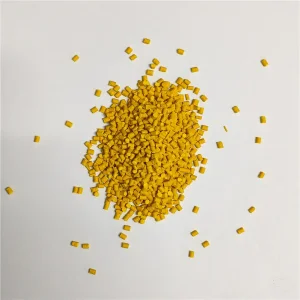
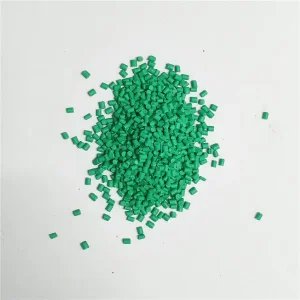
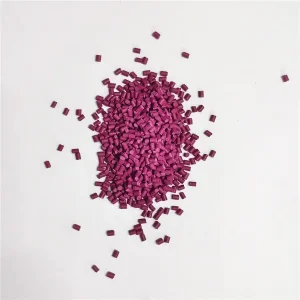
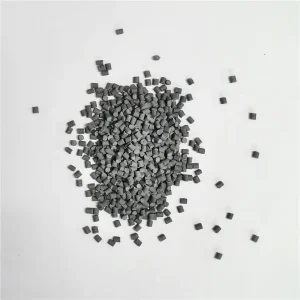
Explore our top-tier high-concentration polyethylene masterbatch formulations optimized for high-gloss blown film, precision injection molding, and continuous profile extrusion.
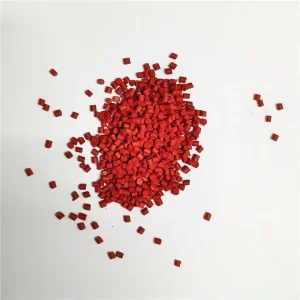
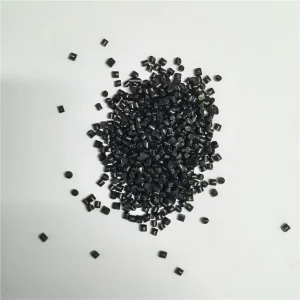
In modern thermoplastic processing, sourcing cheap high gloss PE masterbatch companies & suppliers requires balancing economic performance with precise chemical engineering. Polyethylene (PE)—encompassing Low-Density Polyethylene (LDPE), Linear Low-Density Polyethylene (LLDPE), and High-Density Polyethylene (HDPE)—demands carrier resin compatibility, controlled pigment shear dispersion, and specialized additive integration to achieve a surface gloss rating exceeding 85 GU (Gloss Units at 60° angle).
Achieving high surface gloss at a competitive price point is not merely a matter of cheap raw materials; it relies on optimizing twin-screw extrusion shear rates, choosing micro-sized organic/inorganic pigment crystals, and selecting low-molecular-weight PE wax matrix dispersants. Leading global masterbatch suppliers achieve cost-efficiency through high-volume automation, direct petrochemical feedstock integration, and advanced rheology control.
Global plastics conversion faces increasing margin pressure. Polymer processors are seeking high-concentration color concentrates that maintain high opacity, mechanical integrity, and vibrant aesthetics without raising unit production costs. High gloss PE color masterbatches provide turn-key compounding solutions across multi-layer film co-extrusion, thin-wall injection molding, and blow-molded containment systems.
The Melt Flow Index (MFI) of the PE masterbatch carrier must precisely match or slightly exceed that of the virgin base resin (typically ranging from 2 to 20 g/10min at 190°C/2.16kg). Proper melt viscosity matching prevents phase separation, pinholes, and flow lines, ensuring a mirror-like high gloss finish.
Utilizing non-bleeding organic pigments combined with Hindered Amine Light Stabilizers (HALS), our masterbatch formulations prevent pigment migration in flexible packaging films while providing up to Level 7-8 Blue Wool Scale lightfastness under harsh UV exposure.
Agglomerates larger than 5 microns scatter light irregularly, dulling the plastic surface. High-torque twin-screw compounding disintegrates pigment clusters into sub-micron particles, maximizing specular light reflection for maximum gloss.
| Masterbatch Grade Type | Carrier Resin | Pigment Content (%) | MFI (190°C/2.16kg) | Heat Resistance (°C) | Primary Application |
|---|---|---|---|---|---|
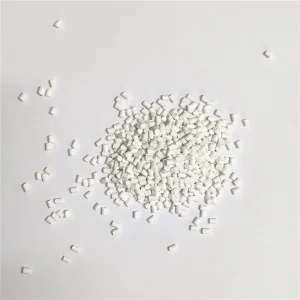
| High Gloss PE White | LDPE / LLDPE | 50% - 70% TiO2 | 12 - 25 g/10min | 260°C | Lamination Film, Milk Bags, Cosmetic Tubes |
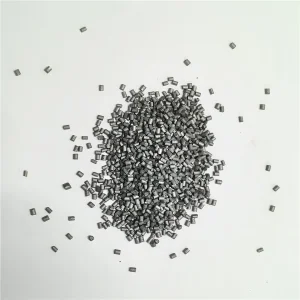
| High Concentration Black | HDPE / LLDPE | 30% - 50% Carbon Black | 8 - 18 g/10min | 280°C | Geomembranes, Agricultural Pipe, Drip Tape |
| Anti-Migration Yellow | PE Universal | 25% - 40% Organic | 15 - 30 g/10min | 240°C | Shopping Bags, Extrusion Blow Bottles |
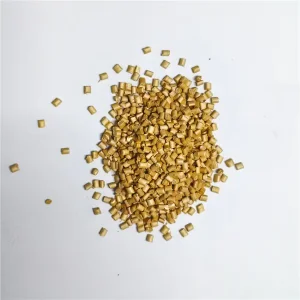
| Metallic Silver / Gold | LLDPE | 15% - 30% Metallic | 10 - 20 g/10min | 240°C | Luxury Packaging, Appliances, Toys |
| Weather-Resistant Color | PE / PP Carrier | 20% - 45% Organic/Inorg | 10 - 25 g/10min | 260°C | Outdoor Furniture, Crates, Automotive Parts |
The global masterbatch market is estimated to reach over USD 16 Billion by 2030, driven largely by the expansion of flexible packaging in Asia-Pacific, North America, and Europe. Polyethylene remains the largest single resin carrier segment due to its versatility, recyclability, and wide processing window.
When evaluating cheap high gloss PE masterbatch suppliers, B2B procurement managers must look at total operating cost rather than initial price per kilogram. Low-quality masterbatch causes screen pack clogging, die buildup, and high scrap rates. A high-dispersion masterbatch allows let-down ratios (LDR) down to 1%–2%, saving up to 15% in net colorant spend.
Manufacturing hubs in China, specifically in industrial regions like Changzhou, Jiangsu, combine automated continuous twin-screw extrusion systems with localized supply chains for titanium dioxide (TiO2), carbon black, and specialized additives. This creates an unassailable pricing and production lead-time advantage for international OEM clients.
Modern regulatory frameworks demand PIR (Post-Industrial Recycled) and PCR (Post-Consumer Recycled) PE resin compatibility. Advanced high gloss PE masterbatches are formulated with compatibilizers that bridge interfacial tension between virgin and recycled polymer chains, restoring high surface gloss to recycled plastic goods.
International compliance is paramount when exporting plastic components to regulated markets in North America, Europe, and the Asia-Pacific region. Professional PE masterbatch suppliers maintain dedicated technical support teams for rapid color-matching, regulatory paperwork verification, and trial run optimization.
100% free of heavy metals (Pb, Cd, Hg, Cr VI), polybrominated biphenyls (PBB), and polybrominated diphenyl ethers (PBDE). Full documentation provided for European market entry.
Formulated using non-migratory additives and food-grade carriers suitable for direct food packaging, blow-molded milk containers, and beverage caps.
Equipped with Datacolor spectrophotometers, our labs deliver custom color samples in 3 to 5 business days, ensuring exact color matching within ∆E < 0.8.
Our High Concentration PE Masterbatches are engineered to perform across diverse industrial converting processes, guaranteeing zero bubble rupture in thin films and high surface gloss in molded components.
Ideal for agricultural mulch films, express courier bags, shopping bags, and industrial stretch wrap. Provides smooth melt flow, eliminates die-droop, and creates high gloss surfaces on LLDPE/LDPE blown film lines running up to 300 m/min.
Utilized for household containers, plastic toys, appliance housings, and bottle caps. Enhances surface gloss, eliminates weld lines, and shortens cooling cycle times due to high nucleating efficiency.
Engineered for HDPE water supply pipes, corrugated conduits, and agricultural drip irrigation tubing. Provides high thermal stability (up to 260°C-280°C) and excellent UV protection against outdoor weathering.
As the plastics industry shifts towards carbon neutrality and higher automation, the technical evolution of PE masterbatch manufacturing focuses on three main pillars:
Integrating machine learning algorithms into spectrophotometric color formulation to predict pigment interactions, thermal degradation behavior, and metamerism indices instantly, reducing custom sample turnaround to under 24 hours.
Developing masterbatch lines utilizing 100% bio-derived PE carriers made from sugarcane ethanol, offering a net-zero carbon footprint while maintaining identical processing temperatures and high surface gloss properties.
Incorporating nano-silica and sub-micron wax complexes to reduce melt viscosity, lower extruder torque energy consumption by 8-12%, and achieve ultra-high gloss ratings exceeding 95 GU on blown film surfaces.
Explore our full line of specialized colorants engineered for heat stability, anti-fading performance, and high gloss finish.
Technical responses curated by senior plastic compounding engineers addressing key user intent search queries regarding high gloss PE masterbatch procurement, processing parameters, and troubleshooting.
Surface gloss depends on how uniformly light reflects off the polymer surface. High quality PE masterbatches increase surface gloss by utilizing carrier resins with compatible melt flow indices and incorporating micro-milled pigment particles (<1.5 µm). When pigments are fully dispersed without agglomeration, the surface micro-roughness of the molded plastic decreases, yielding a smooth, mirror-like finish (Gloss Unit > 85 GU).
Standard dosage ranges from 1% to 4% depending on film thickness and desired color opacity. For thin-walled blown film applications (15–30 microns), a 2% to 3% addition rate is typically recommended. For heavy injection molding components, a 1% to 2% dosage provides complete hiding power and vibrant gloss while maintaining mechanical tensile strength.
Direct powder blending suffers from severe dust contamination, poor pigment dispersion, variable color batch consistency, and equipment wear. Pre-dispersed PE color masterbatch encapsulates pigments within a polymer matrix, ensuring clean factory handling, rapid automated dosing, consistent color rendering, and superior melt homogenization.
Color migration occurs when low-molecular-weight organic dyes dissolve into surrounding plastic or contact substrates. Our anti-migration formulations select high-molecular-weight organic pigments with high solvent resistance. Outdoor lightfastness is enhanced by combining inorganic pigments like Titanium Dioxide or Cadmium/Iron Oxides with specialized Hindered Amine Light Stabilizers (HALS) and UV absorbers.
While PE carrier masterbatches exhibit moderate compatibility with Polypropylene (PP), using them in polar resins like PS or ABS can lead to delamination and reduced surface gloss due to phase incompatibility. We offer universal carrier systems or dedicated resin-matched masterbatches (e.g., PP-based or EVA-based carriers) for optimal structural bonding and gloss retention.
Cost-efficient suppliers leverage automated high-capacity twin-screw compounding lines, direct volume sourcing of petrochemical resin carriers, and localized pigment manufacturing ecosystems. By optimizing formulation economics and reducing energy consumption per ton produced, reputable suppliers deliver competitive wholesale prices while satisfying rigorous ISO, REACH, and RoHS quality benchmarks.