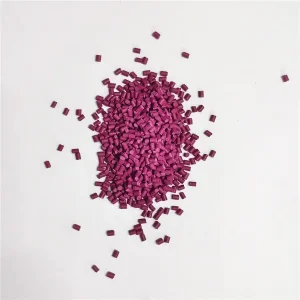
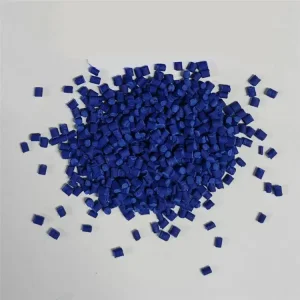
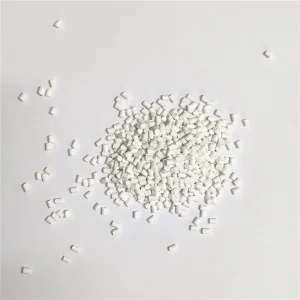
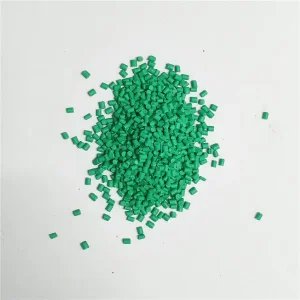
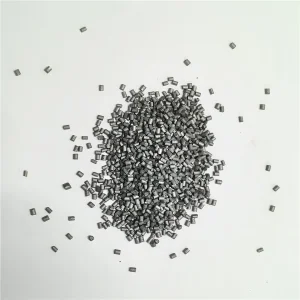
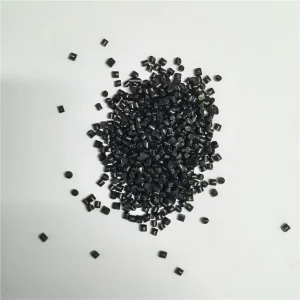
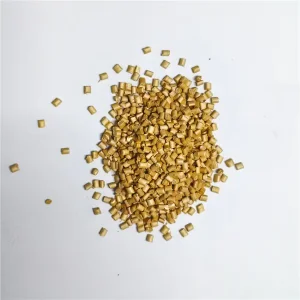
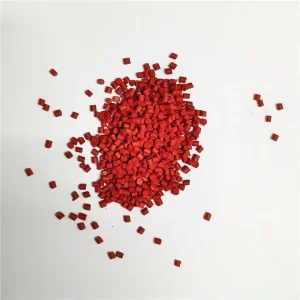
Direct supply solutions designed for high concentration, anti-fading performance, and process optimization.
Deconstructing the commercial tension between unit price reduction, high TiO2 loading, and polymer processing stability.
In the global polymer manufacturing sector, procurement strategies for high-opacity white polyethylene (PE) masterbatch have evolved beyond simple transactional purchasing. Modern procurement directors, plastics compounding engineers, and supply chain managers are tasked with navigating complex multi-objective optimization problems. The demand for cheap high whiteness white PE masterbatch requires a granular understanding of how pigment volume concentration (PVC), organic surface treatments, and carrier resin melt flow indices (MFI) directly govern financial performance and factory yield.
Procurement teams seek high tinting strength to lower the Let-down Ratio (LDR) from 4% down to 1.5%. Achieving equivalent opacity with lower dosing significantly lowers unit packaging costs without compromising film tear resistance or sealability.
High TiO2 loading increases shear viscosity during extrusion. Engineers require highly dispersed masterbatch formulations containing specialized processing aids (PPA) to prevent die lip buildup, melt fracture, and gauge variation during high-speed film blowing.
Sourcing cheap white masterbatch must not trigger compliance failures. Leading buyers mandate strict adherence to FDA 21 CFR 177.1520 for food contact packaging, EU REACH SVHC restrictions, and heavy-metal-free certifications for international export markets.
Bridging raw material economics with precision masterbatch compounding.
To achieve high whiteness ($L^* > 96.5$, $b^* < 1.2$) under economical manufacturing budgets, white masterbatch manufacturers utilize high-grade Rutile Titanium Dioxide (TiO2) processed via the chloride route, blended with ultra-fine Calcium Carbonate ($CaCO_3$) or Talc modifiers when cost reduction demands outweigh ultimate UV opacity. Below is an engineering comparison matrix for evaluation during masterbatch selection:
| Masterbatch Grade Code | TiO2 Concentration | Carrier Resin Type | Recommended LDR (%) | Filter Pressure Value (EN 13900-5) | Primary Industrial Application |
|---|---|---|---|---|---|
| PE-WHITE Ultra 70 | 70% Rutile (Chloride) | LLDPE (MFI 20 g/10min) | 1.0% – 2.0% | < 0.8 bar/g | Ultra-thin lamination film, liquid packaging |
| PE-WHITE Prime 60 | 60% Rutile (Sulfate/Chloride) | LDPE (MFI 12 g/10min) | 2.0% – 3.0% | < 1.2 bar/g | General blown film, courier bags, shopping bags |
| PE-WHITE Mold 50 | 50% Rutile + Micro CaCO3 | HDPE / LLDPE Blend | 3.0% – 5.0% | < 2.0 bar/g | Injection molded crates, buckets, household goods |
| PE-WHITE Pipe 40 | 40% Rutile TiO2 | HDPE (MFI 0.7 g/10min) | 2.5% – 4.0% | < 1.5 bar/g | Drip irrigation pipe extrusion, profile sheets |
Unregulated suppliers often cut costs by substituting Rutile TiO2 with coarse, non-surface-treated Calcium Carbonate ($CaCO_3$). While this lowers the price per kilogram of masterbatch, it drastically increases the density (g/cm³), impairs melt dispersion, accelerates screw wear, and reduces film impact strength. Optimal procurement evaluates cost per square meter of finished plastic product, rather than price per kilogram of raw masterbatch.
Advanced chemistry designed to maximize refractive index, light scattering, and thermal resistance.
Titanium dioxide ($TiO_2$) has a refractive index of 2.73 (Rutile phase), providing unmatched light scattering capability. To prevent photo-catalytic degradation under UV radiation, leading PE masterbatch compounding facilities employ silica-alumina ($SiO_2/Al_2O_3$) hydrophobic shell passivations. Furthermore, organo-silane coating agents are applied to ensure complete compatibility with non-polar polyethylene chains, avoiding agglomoration during melt mixing.
A common defect in high-percentage white masterbatch is carrier mismatch. Formulations utilizing Linear Low-Density Polyethylene (LLDPE) carriers with a high Melt Flow Index (MFI range: 20 to 50 g/10 min at 190°C/2.16kg) allow high pigment loading while maintaining low melt viscosity. This guarantees rapid, uniform dispersion into base polymers including LDPE, LLDPE, HDPE, and PP.
During high-temperature processing (up to 260°C–300°C in cast extrusion or injection molding), thermal degradation can cause severe yellowing ($b^*$ axis shift). Incorporating binary antioxidant packages—combining primary hindered phenols with secondary phosphite esters—neutralizes free radicals and prevents degradation of both the PE matrix and organic dispersion wax additives.
To achieve an ultra-clean "bluish-white" visual hue desired in premium consumer packaging, advanced formulations add trace optical brighteners (such as OB-1 or OB). These fluorophores absorb ultraviolet light (360 nm) and re-emit visible blue wavelengths (440 nm), counteracting natural polymer yellowing and significantly boosting perceived brightness.
Analyzing key manufacturing hubs, twin-screw extrusion parameters, and quality assurance standards.
China’s Yangtze River Delta manufacturing cluster—specifically Changzhou in Jiangsu Province—has emerged as a global center for precision masterbatch compounding. By integrating localized titanium dioxide supply chains with advanced co-rotating twin-screw extruder technology ($L/D$ ratios ranging from 40:1 to 48:1), high-volume manufacturers deliver significant cost advantages to international buyers across North America, Europe, Southeast Asia, and the Middle East.
Utilizing high-torque side feeders and multi-stage degassing systems to prevent voids and moisture inclusion in masterbatch pellets, ensuring zero porosity in end-use films.
Every production batch undergoes spectrophotometric analysis under D65 standard illuminant conditions. Color tolerance is strictly controlled within $\Delta E \le 0.5$ against master samples.
Microscopy inspection guarantees that 99.9% of $TiO_2$ agglomerates are sheared below 5 microns, eliminating pinholes, fisheyes, and streaking in thin film blowing ($<15\,\mu\text{m}$).
Ensuring seamless integration with global factory lines and international trade standards.
International procurement requires zero compliance risk. Quality-driven suppliers implement rigorous batch testing to certify that white masterbatches adhere strictly to global regulatory frameworks:
To minimize supply disruption and streamline regional conversion, experienced compounding facilities provide tailor-made localization support:
Explore our full range of color and specialized functional masterbatch products designed for industrial processing.
Expert insights addressing key processing challenges, testing standards, and cost optimization strategies.
Rutile $TiO_2$ features a higher refractive index (2.73) compared to Anatase (2.55), delivering approximately 20-30% greater opacity and hiding power. Furthermore, Rutile exhibits far superior weatherability and UV protection. Anatase is typically used only in non-critical indoor packaging where ultimate cost reduction overrides UV opacity requirements.
Filter Pressure Value (tested per EN 13900-5) measures masterbatch dispersion quality. An FPV below 1.0 bar/g indicates excellent dispersion with minimal pigment agglomeration. High FPV values lead to frequent screen pack clogging, die lines, micro-pinholes, and film breakage during ultra-thin film blowing ($<15\,\mu\text{m}$).
Yellowing typically results from thermal degradation of low-grade waxes, insufficient antioxidant protection, or chemical reactions between phenolic antioxidants and surface titanate treatments under high thermal shear ($>250^\circ\text{C}$). Utilizing secondary phosphite antioxidants and passivated Rutile grades effectively mitigates this issue.
LDR depends on the targeted opacity, wall thickness, and masterbatch $TiO_2$ concentration. Formula: $\text{LDR (\%)} = (\text{Target } TiO_2 \% \text{ in final product} / \%\, TiO_2 \text{ in masterbatch}) \times 100$. For example, achieving a 3% active $TiO_2$ target using a 60% masterbatch requires an LDR of $(3 / 60) \times 100 = 5\%$.