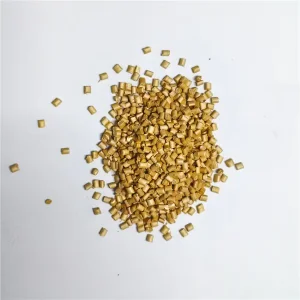
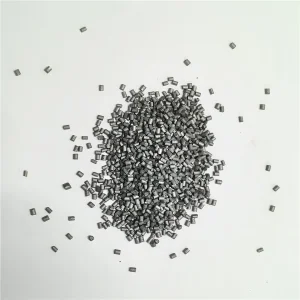
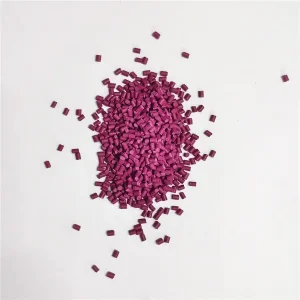
Engineered with premium imported pigments and virgin polyethylene carriers for maximum tinting strength, thermal resistance (260°C+), and non-migration stability.
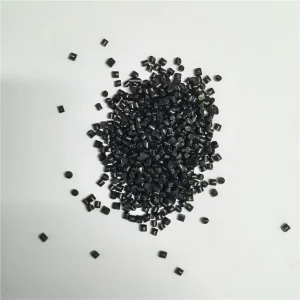
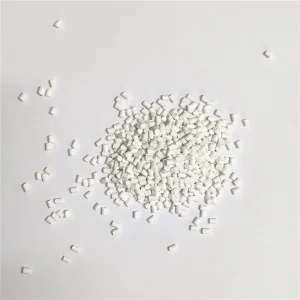
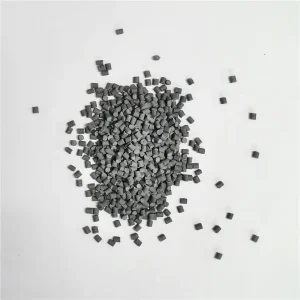
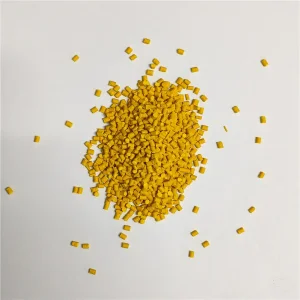
Analyzing procurement dynamics, raw material economics, and quality benchmark metrics for high-grade polyethylene coloring solutions.
The global thermoplastic market has transitioned into an era where aesthetic precision, thermal durability, and cost efficiency must converge seamlessy. Polyethylene (PE) masterbatches formulated with imported organic and high-purity inorganic pigments represent the pinnacle of polymer colorization. Industrial converters operating across North America, Europe, the Middle East, and Southeast Asia are increasingly moving away from raw pigment powders due to environmental dust hazards, dispersion inconsistencies, and machine downtime.
Utilizing high-tinting-strength organic chromophores (phthalocyanines, quinacridones) and stable inorganic oxides imported from global chemistry leaders, ensuring low filter value (DFV) and zero agglomeration.
Formulated with active pigment loadings ranging from 30% to 50% in low-density (LDPE) or linear low-density (LLDPE) carriers, reducing let-down ratios (LDR) down to 1%–2% in end-user processing.
Engineered to withstand prolonged thermal degradation during high-speed blown film blowing, cast extrusions, and high-pressure injection molding without color shifting or gas generation.
In international B2B polymer procurement, "cheap" does not infer inferior chemical integrity. Rather, it reflects optimized manufacturing scale, localized raw material synthesis in Chinese chemical hubs, and streamlined twin-screw extrusion efficiency. By pairing high-performance imported pigments with cost-advantaged domestic carrier resins and efficient Chinese processing plants, global buyers achieve up to 30% total cost of ownership (TCO) reduction.
Unpacking the technological and logistical advantages of Changzhou Jiazhou Plastic Products Co., Ltd. and the Chinese masterbatch manufacturing ecosystem.
Achieving ultra-fine pigment dispersion requires high-shear twin-screw co-rotating extruders fitted with multi-stage mixing elements. Our Changzhou facility leverages precision loss-in-weight feeders to ensure batch-to-batch color tolerance within ΔE < 0.5. Microscopic dispersion testing guarantees that pigment particles are thoroughly de-agglomerated down to sub-micron dimensions, preventing pinholes and film breakage during ultra-thin blowing (down to 8 microns).
Located in Jiangsu province, the heart of China’s advanced polymer and chemical cluster, our factory maintains direct raw material pipelines for PE carriers, dispersant waxes, and functional additives. This proximity eliminates supply chain friction, allows rapid custom color matching (pantone/RAL within 72 hours), and provides structural cost savings that are passed directly to enterprise purchasers.
Matching specific Masterbatch formulations with industrial processing machinery for optimal surface finish and mechanical performance.
| Application Sector | Recommended Masterbatch Type | Carrier Resin Grade | Pigment Loading | Key Technical Requirement |
|---|---|---|---|---|
| Agricultural Film Blowing | PE Black / Green Masterbatch | LLDPE / LDPE Blend | #40% – 50%High UV Resistance, Anti-aging, Pin-hole Free | |
| Food Packaging & Courier Bags | PE White / Custom Color Masterbatch | Pure Virgin LDPE | 50% TiO2 / 30% Pigment | RoHS / FDA Compliance, High Opacity, Non-toxic |
| Industrial HDPE Pipe & Profiles | PE Black / Blue / Yellow Masterbatch | HDPE Carrier (MFI matched) | 35% – 45% | Hydrostatic Pressure Resistance, Carbon Black Dispersion |
| Consumer Injection Molding | Gold / Silver / Metallic Masterbatch | Universal PE / PP Carrier | 20% – 40% | High Gloss, Zero Surface Weld-lines, Heat Stability 260°C |
| Geotextile & Non-Woven Extrusion | PE Grey / Purple Masterbatch | High MFI LLDPE | 30% – 40% | Filterability (Low DFV), Non-fading, Migration Proof |
For courier bags, shopping bags, and greenhouse membranes. Masterbatches must feature ultra-low moisture content (<0.1%) to eliminate bubbles and maintain film tensile strength.
For automotive interiors, crates, and home appliances. Requires high melt flow index (MFI) compatibility so pigment distributes rapidly across complex mold cavities without warping.
For corrugated pipes, sheet extrusion, and cable sheathing. Focuses on severe environmental stress crack resistance (ESCR) and long-term color retention against sunlight.
Key parameters for international sourcing managers, ESG compliance considerations, and sustainable plastic coloration trends.
When enterprise procurement teams source PE masterbatch from overseas factories, evaluating supplier authority and product integrity is essential. Key technical verification steps include:
The global masterbatch market is experiencing structural growth driven by sustainable manufacturing initiatives. Modern factories are now engineering Post-Consumer Recycled (PCR) compatible masterbatches designed to restore color purity and mechanical resilience in degraded recycled PE feeds. Furthermore, low-temperature compounding technology is reducing carbon emissions during production while preserving heat-sensitive organic pigments.
Our OEM technical team uses spectrophotometer-assisted computer color matching (CCM) to match physical plastic samples, Pantone codes, or RAL color standard chips within 3 to 5 business days, delivering exact color tolerance (ΔE < 0.3) for global automotive and consumer product manufacturers.
Expert answers to critical engineering, procurement, and logistical questions regarding imported pigment PE masterbatches.
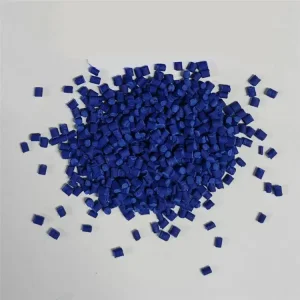
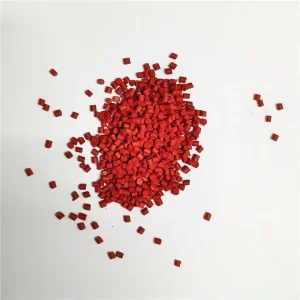
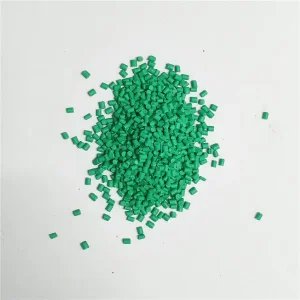
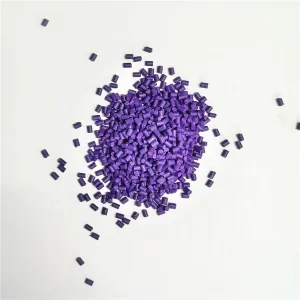
Explore our comprehensive palette of functional colorants engineered for injection molding, extrusion, and blown film processing.