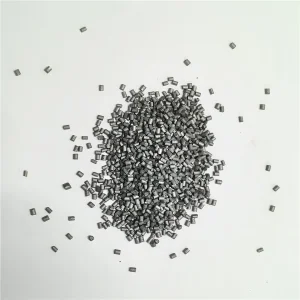
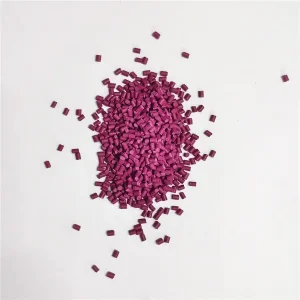
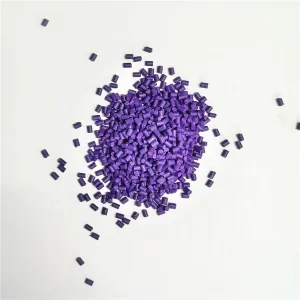
Explore our high-concentration Polyethylene masterbatch offerings specifically engineered for extrusion, blow molding, and chemical container manufacturing.
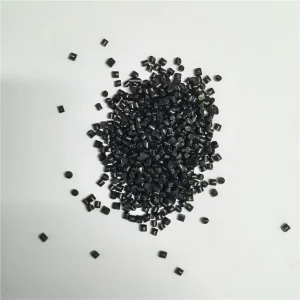
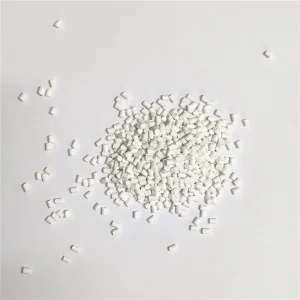
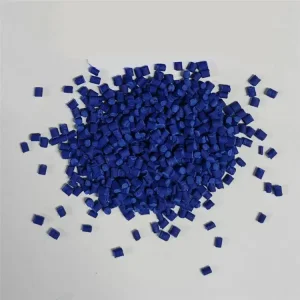
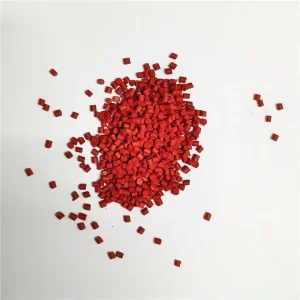
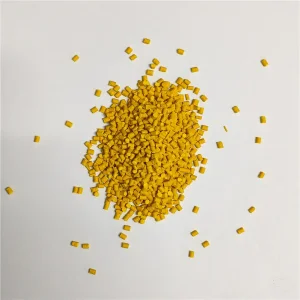
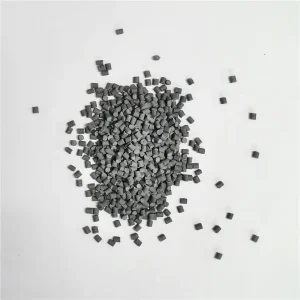
Understanding the balance between cost optimization, pigment dispersion, Rheological stability, and Environmental Stress Crack Resistance (ESCR) in industrial container manufacturing.
Industrial chemical packaging—ranging from 5-liter hazardous liquid pails to 200-liter open-head drums and Intermediate Bulk Containers (IBCs)—demands extraordinary structural integrity. Polyethylene (PE) chemical bucket black masterbatch serves as both a primary pigment system and a essential structural protector against photo-oxidation, environmental degradation, and chemical permeation.
Chemical pails manufactured from High-Density Polyethylene (HDPE) or Linear Low-Density Polyethylene (LLDPE) are subjected to severe internal stress from aggressive solvents, agrochemicals, lubricants, and surfactants, while simultaneously enduring physical impacts, stacking pressure, and direct solar ultraviolet (UV) radiation during outdoor storage.
In global procurement, searching for cheap PE chemical bucket black masterbatch companies and factories can carry hidden processing hazards. Inadequate compounding or the use of low-grade furnace black with unrefined recycled carriers frequently causes micro-pinholes, phase separation, brittle container walls, and catastrophic crack failure along mold parting lines.
True cost optimization—achieved by leading Chinese manufacturing hubs—does not compromise physical metrics. It relies on advanced twin-screw compounding efficiency, economies of scale in raw carbon black sourcing, high pigment loading (up to 50%), and automated let-down control, yielding a low total cost of ownership (TCO) with exceptional field reliability.
Achieving standard opacity in a thin-walled bucket requires a carbon black particle size between 20nm and 25nm. However, chemical packaging requires a strict balance: finer particle sizes increase jetness and UV absorption but increase compound viscosity and risk agglomeration, which reduces Environmental Stress Crack Resistance (ESCR). Premium factory compounding ensures particle dispersion below 5 microns (ISO 18522 compliant).
A deep technical breakdown of carrier resin selection, carbon black morphology, stabilization additives, and rheological processing aids.
Industrial chemical pails utilize specific ASTM grades of Carbon Black. High-durability containers utilize P-type (Pigment grade) furnace black characterized by low structure and controlled surface area (BET 110–140 m²/g).
To avoid phase separation and interfacial tension during high-speed injection or blow molding, the carrier polymer must match the virgin resin matrix. Specialized factories utilize virgin LLDPE/HDPE combinations with a high Melt Flow Index (MFI 12–20 g/10min).
Standard black masterbatches only supply pigment. Chemical bucket grade masterbatch includes multi-functional additive systems that protect the polymer matrix under chemical stress.
| Property / Parameter | Standard Chemical Bucket Grade | Heavy-Duty UN-Certified Grade | Testing Standard Method |
|---|---|---|---|
| Carbon Black Concentration | 40% ± 1.5% | 50% ± 1.0% | ASTM D1603 / ISO 6964 |
| Carrier Resin Type | LLDPE / HDPE Blend | 100% Virgin LLDPE (High MFI) | ISO 11357 |
| Carbon Black Particle Size | 22 nm – 28 nm | 18 nm – 22 nm | ASTM D3849 (TEM Analysis) |
| Melt Flow Index (MFI 190°C / 2.16kg) | 8.0 – 15.0 g/10min | 12.0 – 22.0 g/10min | ASTM D1238 / ISO 1133 |
| Heat Resistance Temperature | 240°C – 260°C | 260°C – 300°C | EN 12877-2 |
| Moisture Content | < 0.08% | < 0.03% (Vacuum Sealed) | Karl Fischer / ASTM D6869 |
| Let-Down Ratio (LDR) | 2.0% – 4.0% | 1.0% – 2.5% | Factory Processing Standard |
| Regulatory Compliance | RoHS, REACH, EU 10/2011 | UN Dangerous Goods, FDA Food Grade | SGS / TÜV Rheinland Verified |
An in-depth analysis of supply chain integration, compounding technology, scale economies, and quality assurance in Chinese manufacturing centers like Changzhou.
Chinese factories, particularly located in chemical packaging clusters like Jiangsu (Changzhou), benefit from direct pipeline integration with primary petrochemical refineries (Sinopec, PetroChina) and top-tier carbon black producers. This localized supply chain eliminates international transport surcharges on raw pigments and carrier polymers, providing a structural 15-25% baseline cost advantage over European and North American compounders.
Modern Chinese masterbatch manufacturers operate high-torque, co-rotating twin-screw extruders equipped with gravimetric loss-in-weight feeders and underwater pelletizing systems. Continuous high-shear mixing ensures that carbon black agglomerates are completely dispersed down to the sub-micron level, eliminating physical defects in high-speed blow-molded chemical buckets.
China's masterbatch suppliers excel in custom formulation agility. Whether an international bucket manufacturer requires a 1.5% LDR for automated injection molding machines or a 3% LDR with incorporated slip agents for blow-molded agrochemical containers, Chinese engineering labs formulate and deliver sample batches within 3–5 business days.
How specialized black masterbatch formulations prevent catastrophic container failures, ESCR degradation, and process downtime.
The Challenge: Chemical buckets carrying solvents, detergents, or industrial surfactants are highly vulnerable to stress cracking. Poor masterbatch carriers or large carbon black agglomerates act as stress concentration points, leading to sudden wall rupture.
The Masterbatch Solution: High-grade PE chemical bucket masterbatches utilize high-molecular-weight virgin carrier resins and ultra-fine dispersion technology. By eliminating agglomerates greater than 5 microns, the masterbatch preserves the intrinsic ESCR properties of the base HDPE resin (ASTM D1693 tested > 1000 hours).
The Challenge: Micro-moisture absorbed by low-quality black masterbatch turns into steam bubbles during 220°C–260°C plasticization, producing microscopic pinholes in blow-molded container walls.
The Masterbatch Solution: Premium factories implement double vacuum degassing during compounding and package final masterbatch pellets in moisture-impermeable aluminum-foil vacuum bags, keeping moisture content strictly under 0.03% (300 ppm) to ensure leak-proof container walls.
The Challenge: Organic and inorganic pigments can alter the crystallization behavior of HDPE, causing anisotropic shrinkage, lid mismatch, and stacking instability in 20L chemical pails.
The Masterbatch Solution: Formulated with non-nucleating Carbon Black grades and specialized crystal-modifying additives, chemical-grade black masterbatches ensure uniform dimensional shrinkage during rapid cooling cycles in high-tonnage injection molds.
The Challenge: Chemical pails stored in outdoor industrial yards suffer intense ultraviolet degradation, causing polymer chain scission, color fading, surface chalking, and impact strength loss.
The Masterbatch Solution: Incorporating fine-particle furnace black (< 20nm) at a recommended 2.5% let-down ratio provides full opacity and UV absorption across UV-A and UV-B spectrums, guaranteeing over 5–10 years of outdoor service life under harsh weather conditions.
Essential testing protocols and international certifications required when auditing masterbatch suppliers for dangerous goods packaging.
Chemical containers designed to hold hazardous materials (Class 3, 6, 8, 9) must satisfy UN Recommendations on the Transport of Dangerous Goods. Masterbatches must be free of toxic heavy metals, lead, cadmium, hexavalent chromium, and mercury to pass international maritime (IMDG Code) and air transport (IATA) safety inspections.
Global suppliers must provide third-party SGS / TÜV laboratory analysis confirming zero presence of banned Polybrominated Biphenyls (PBBs), Polybrominated Diphenyl Ethers (PBDEs), and phthalates (DEHP, BBP, DBP, DIBP). Raw materials must be fully registered under EU REACH SVHC guidelines.
To verify absolute dispersion quality, reputable factories evaluate masterbatches via EN 13900-5 Filter Pressure Value testing. A low FPV (< 1.0 bar/g through a 14-micron screen) ensures smooth processing without clogging extruders, filter packs, or melt pumps during high-volume bucket production.
Specific grade recommendations based on plastic manufacturing technology, container size, and end-use environments.
Container Type: 50L to 200L L-Ring HDPE Chemical Drums & 1000L IBC Inner Liner Tanks.
Masterbatch Spec: High opacity, low viscosity, 50% carbon black concentration, melt flow index matching base blow molding resin (MFI 0.05–0.5 g/10min equivalent behavior).
Primary Benefit: Uniform parison drawdown, zero sagging during blow molding, superior drop-impact resistance when filled with heavy liquid chemicals.
Container Type: 5L, 10L, 18L, and 20L open-head industrial pails with tear-strip lids.
Masterbatch Spec: 40% carbon black loading, optimized with nucleating control agents, high MFI carrier for ultra-fast injection cycles in hot-runner molds.
Primary Benefit: High gloss surface finish, no mold sticking, robust stacking ring strength, warp-free lid sealing performance.
Container/Pipe Type: HDPE double-wall corrugated drainage pipes and industrial chemical effluent transfer pipes.
Masterbatch Spec: ASTM D3350 compliant masterbatch formulated with P-type pigment black ensuring > 2.5% carbon black distribution in the final extruded pipe matrix.
Primary Benefit: Maximum ring stiffness, resistance to underground soil chemicals, 50+ year structural lifetime guarantee.
How modern chemical bucket masterbatches are evolving to support Post-Consumer Recycled (PCR) resins and carbon footprint reduction goals.
Global environmental mandates (such as the EU Packaging and Packaging Waste Directive) require industrial buckets to contain 30% to 50% Post-Consumer Recycled (PCR) HDPE. However, recycled plastic streams contain inconsistent base colors, residual contaminants, and variable melt flow rates.
Advanced recycled-grade black masterbatches act as functional restorers. They incorporate compatibilizers, odor-neutralizing agents, and high-intensity tinting black pigments that mask off-color PCR resins while restoring melt strength and oxidative stability during re-processing.
Standard carbon black absorbs Near-Infrared radiation, preventing automated optical sorting systems at recycling plants from identifying and sorting black chemical buckets. Next-generation NIR-detectable black masterbatches utilize specialized non-carbon black pigments or tailored organic complexes that allow NIR sorters to recognize HDPE/PP containers, enabling a closed-loop circular economy for industrial packaging.
Expert answers to critical technical and sourcing questions regarding PE chemical bucket black masterbatch selection and factory auditing.
Browse our extensive masterbatch product portfolio available for direct factory shipment worldwide.