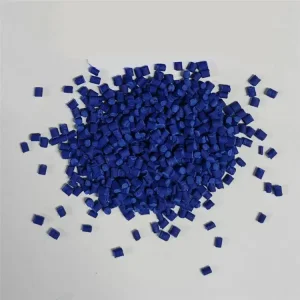
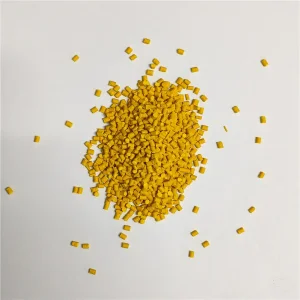
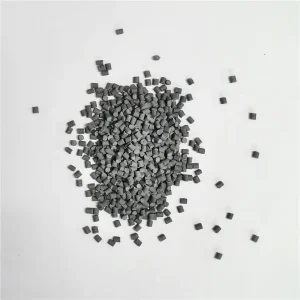
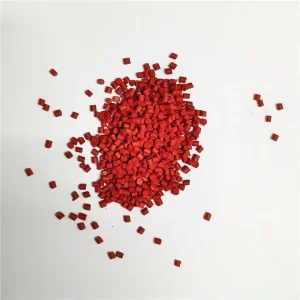
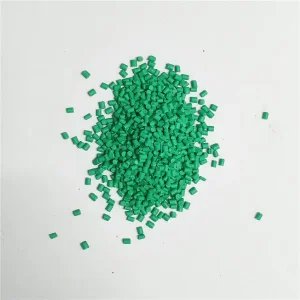
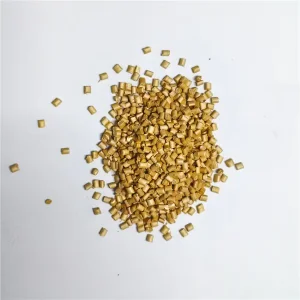
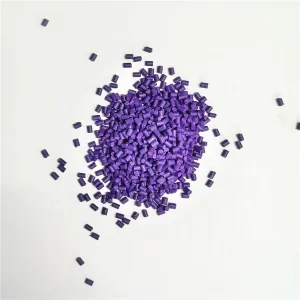
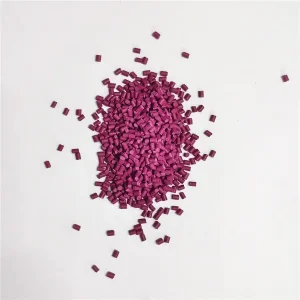
High-concentration, heat-stable, and eco-compliant PE color concentrates manufactured by Changzhou Jiazhou Plastic Products Co., Ltd. for international blow molding, film extrusion, and injection processors.
Why true cost-efficiency in Polyethylene (PE) dye masterbatch manufacturing is governed by micro-dispersion mechanics, pigment loading density, and Total Cost of Ownership (TCO) rather than simple price-per-kilogram metrics.
In the global polymer processing ecosystem, procurement teams searching for "cheap PE dye masterbatch factories & manufacturers" often face a critical paradox. Purchasing low-cost color masterbatch based strictly on upfront price per metric ton frequently results in inflated operational expenses. Substandard masterbatch formulations with poor pigment dispersion lead to frequent filter pack clogging, elevated melt pressure spikes, screen pack changeover downtime, high scrap rates from pinholes, and color drift (spectrophotometer ΔE > 1.5).
At Changzhou Jiazhou Plastic Products Co., Ltd. (operating with over 16 years of compounding expertise across a 6,000 m² modern manufacturing hub in Jiangsu, China), we redefine commercial viability. Genuine economy is engineered through ultra-high pigment concentration, optimal carrier Melt Flow Index (MFI) matching, and proprietary dispersion wax matrix technology. By increasing active pigment content up to 50%–70%, plastic converters can reduce their Let-Down Ratio (LDR) from a typical 4%–5% down to 1%–2%. This dramatically decreases the landed cost per finished ton of colored PE plastic while protecting machinery throughput.
Analyzing the multi-dimensional technical specifications required by multinational OEM buyers, packaging converters, and industrial molders.
Polyethylene remains the world's most widely processed thermoplastic polymer across Low-Density (LDPE), Linear Low-Density (LLDPE), and High-Density (HDPE) variants. Enterprise procurement departments evaluate PE dye masterbatch manufacturers against rigorous technical parameters to ensure seamless line integration:
High tinting power demands micro-milled organic pigments (Phthalocyanine Blues/Greens, Quinacridone Reds, Isoindolinone Yellows) and micronized rutile titanium dioxide (TiO2). High loading allows converters to achieve full hiding power at ultra-low addition rates.
Carrier resin compatibility is essential. The masterbatch carrier PE matrix must possess a slightly higher MFI than the virgin base resin to ensure rapid melt homogenization during short extruder dwell times without causing viscosity drops.
Formulations must withstand melt processing temperatures up to 260°C–300°C without thermal degradation, color shifting, or pigment sublimating. Non-migration properties prevent color bleed in multi-layer co-extrusion films.
| Masterbatch Grade Type | Pigment Content (%) | MFI (190°C / 2.16kg) | Heat Stability (°C) | Filter Pressure Value (FPV) | Primary Industrial Application |
|---|---|---|---|---|---|
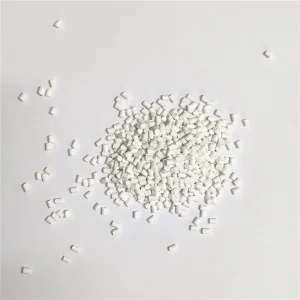
| PE White Series (TiO2) | 50% – 75% Rutile | 12 – 25 g/10min | 280°C – 300°C | < 0.8 bar/g | Blown Milk Film, Lamination, Injection Caps |
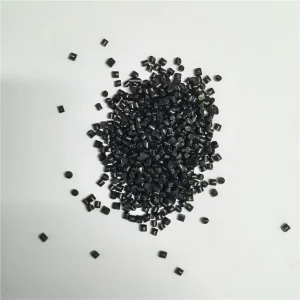
| PE Black Series (Carbon Black) | 30% – 50% High Jetness | 8 – 20 g/10min | 260°C – 280°C | < 1.0 bar/g | HDPE Pipes, Geomembranes, Dripper Tapes |
| PE Color Series (Organic/Inorganic) | 25% – 45% Organic Chromophores | 15 – 30 g/10min | 240°C – 260°C | < 1.2 bar/g | Courier Bags, Toys, Household Containers |
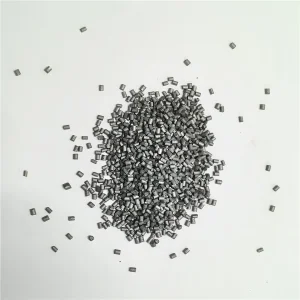
| PE Specialty Effect (Silver/Gold) | 20% – 35% Coated Mica/Aluminum | 20 – 35 g/10min | 220°C – 250°C | < 1.5 bar/g | Personal Care Bottles, Decorative Profiles |
Tailored masterbatch formulation strategies engineered for specific polymer conversion technologies.
In ultra-thin LDPE/LLDPE blown film lines (agricultural greenhouse films, express courier bags, shopping bags), pigment agglomerates larger than 5 microns cause film tearing and web breaks. Jiazhou's high-concentration PE masterbatches utilize multi-stage twin-screw shearing to achieve sub-micron dispersion. This prevents bubble instability, eliminates pinholes, and guarantees uniform opacity down to 10-micron film thickness.
Industrial crates, pallets, caps, and closures demand color masterbatches that do not induce differential shrinkage or warpage in large molded HDPE parts. Our optimized formulations eliminate organic nucleation effects, maintaining dimensional stability across fast injection cycle times while providing vivid, streak-free surface aesthetics.
HDPE water and gas pressure pipes require masterbatches containing high-purity P-type Carbon Black (particle size 20–25 nm) or stabilized color pigments that guarantee a 50-year service life under hydrostatic pressure and soil chemical exposure. Jiazhou masterbatches deliver flawless surface smoothness and superior UV resistance.
Advancing masterbatch compounding through surface functionalization, bio-based carriers, and dynamic rheology optimization.
The masterbatch industry is undergoing a technological shift driven by environmental regulations and high-performance processing demands. Modern PE dye masterbatch factories must evolve beyond crude mechanical blending. Changzhou Jiazhou's R&D department focuses on four key pillars:
Using specialized hyper-dispersants and silane coupling agents, pigment primary particles are encapsulated during high-shear compounding. This eliminates agglomerate formation, maximizes light scattering efficiency, and lowers pigment consumption per unit area.
To support circular economy initiatives, Jiazhou has commercialized masterbatches using Sugarcane-based Bio-PE carriers and Post-Consumer Recycled (PCR) HDPE matrices, enabling converters to meet ESG goals without compromising mechanical toughness.
For automotive interiors and sensitive food packaging, masterbatches undergo vacuum degasification during extrusion to extract residual monomers, low-molecular-weight waxes, and volatile organic compounds (VOCs).
Using advanced computer color matching (CCM) software and Datacolor spectrophotometers, custom Pantone/RAL shade formulations are developed within 3 to 5 business days, guaranteeing tight color tolerance (ΔE < 0.3).
How B2B procurement managers can evaluate Chinese PE masterbatch suppliers for long-term supply chain reliability.
Navigating the global supply chain for "cheap masterbatch" requires auditing production facilities to ensure long-term stability. The cost structure of masterbatch production is heavily dependent on raw material fluctuations: TiO2 powder, Carbon Black pigments, organic dye intermediates, and virgin PE carrier resins account for over 75% of total manufacturing costs.
When evaluating PE Masterbatch Factories in China, procurement teams should verify the following core capabilities:
Ensuring strict adherence to international safety standards, food contact approvals, and chemical control directives.
Exporting plastic products to North America, Europe, and Southeast Asia requires full compliance with global chemical safety regulations. Changzhou Jiazhou Plastic Products Co., Ltd. provides complete documentation packages for international shipments:
All raw pigment powders and additive packages are screened to confirm absence of Substances of Very High Concern (SVHC) per EU Regulation (EC) No 1907/2006.
Strict heavy metal limits: Lead (Pb), Cadmium (Cd), Mercury (Hg), and Hexavalent Chromium (Cr6+) levels are tested via ICP-OES to guarantee sub-10ppm levels for electronics packaging.
Specific non-toxic PE color masterbatches are formulated exclusively with food-grade ingredients approved for direct contact with foodstuffs, beverages, and cosmetics.
Direct technical answers to common questions asked by plastics plant engineers and procurement teams.
Higher pigment concentration increases the color intensity per granule. This allows converters to run at lower Let-Down Ratios (e.g., 1.5% instead of 4%), drastically reducing masterbatch consumption per ton of virgin polymer, saving freight costs, and reducing machine inventory handling.
When stored in sealed moisture-barrier bags in a dry, cool warehouse away from direct sunlight, Jiazhou PE masterbatches retain full tinctorial strength and physical property stability for up to 24 months from the production date.
While low levels of PE carrier (1%–2%) can often be processed in PP injection molding, for high-clarity PP films or fine-denier fiber extrusion, a dedicated PP carrier masterbatch is recommended to avoid minor haze or phase separation issues.
Color streaks indicate incomplete melting or poor pigment dispersion. Solutions include slightly increasing extruder backpressure, raising barrel zone temperatures by 5–10°C, or switching to a Jiazhou masterbatch grade with higher MFI and lower Filter Pressure Value (FPV).
Explore our complete range of specialized color masterbatches engineered for maximum color opacity and processing efficiency.