Cheap Sapphire Blue PE Masterbatch Factories & Suppliers

Technical Procurement White Paper & Global Industrial Sourcing Guide

⚙️ Premium Masterbatch Series Showcase

Direct Factory Supply | High Concentration | Superior Dispersion & Weather Resistance

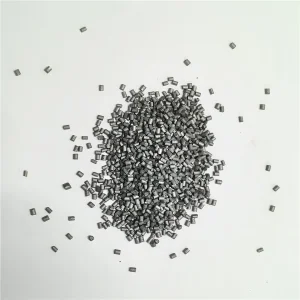
PE Silver Masterbatch
Custom High Concentration PE Silver Masterbatch Anti-fading
View Product Details
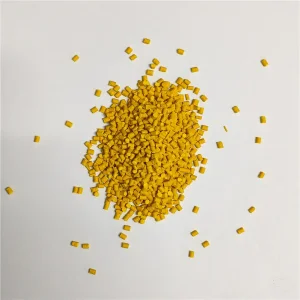
PE Yellow Masterbatch
Cheap High Concentration PE Yellow Masterbatch Non-toxic
View Product Details
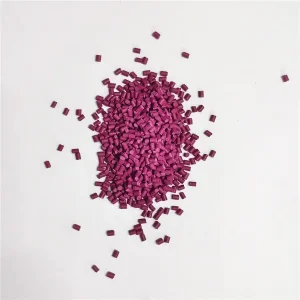
PE Rose Red Masterbatch
Cheap High Concentration PE Rose Red Masterbatch Heat Resistant
View Product Details
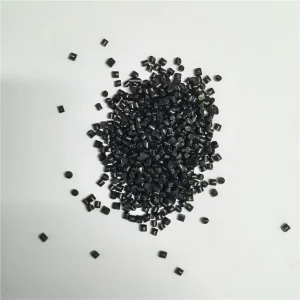
PE Black Masterbatch
High-Quality High Concentration PE Black Masterbatch 260°C
View Product Details
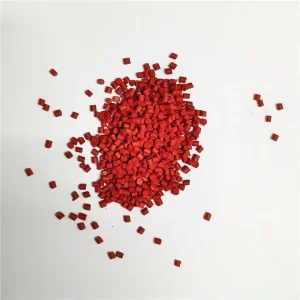
PE Red Masterbatch
China High Concentration PE Red Masterbatch Bright Color
View Product Details
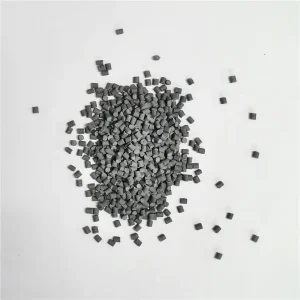
PE Grey Masterbatch
Custom High Concentration PE Grey Masterbatch Non-migration
View Product Details
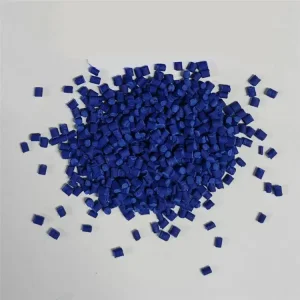
PE Blue Masterbatch
High-Quality High Concentration Blue Masterbatch PE Carrier
View Product Details
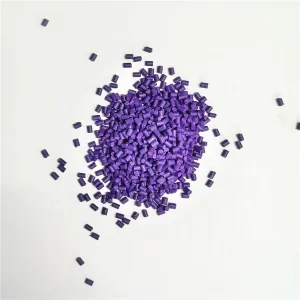
PE Purple Masterbatch
China High Concentration PE Purple Masterbatch Anti-fading
View Product Details
Executive Technical Summary

Demystifying Sourcing: Cheap Sapphire Blue PE Masterbatch Manufacturing Excellence

In the global polymer processing domain, procurement officers and plastics engineers frequently navigate a complex trade-off: balancing strict cost constraints with uncompromised color consistency and processing performance. The term "Cheap Sapphire Blue PE Masterbatch" often raises questions regarding chemical purity, pigment loading efficiency, and long-term thermal stability. However, modern polymer compounding in specialized Chinese industrial clusters has revolutionized cost-efficiency. "Cheap" no longer denotes inferior quality; rather, it reflects scalable chemical supply chain integration, automated continuous twin-screw processing, and direct access to primary Phthalocyanine Blue (Pigment Blue 15:3 / PB 15:1) production.

This industrial white paper provides an authoritative, technical analysis of Sapphire Blue Polyethylene (PE) masterbatches. From sub-micron pigment dispersion dynamics and carrier matrix matching (LDPE, LLDPE, HDPE) to thermal processing envelopes up to 280°C, this guide serves global OEMs, blow-molding operations, film extruders, and injection molders seeking optimal price-to-performance ratios without sacrificing structural integrity or color accuracy (CIELAB ΔE < 0.5).

45% - 55%
Pigment Loading Concentration
≤ 0.4
CIELAB ΔE Color Tolerance
280°C
Thermal Degradation Resistance
1:50 / 1:100
Recommended Let-Down Ratio

🧪 Formulation Architecture & Chemical Composition

Understanding the molecular dynamics of Phthalocyanine pigments within Polyethylene matrices.

💎

Phthalocyanine Pigment PB 15:3

Utilizing high-purity copper phthalocyanine blue pigments engineered for zero crystal phase transition under elevated processing temperatures. Particle sizes are micronized below 0.3 µm to maximize color strength and surface opacity.

🧬

Virgin PE Carrier Resin System

Formulated using high-melt-flow index (MFI 20–40 g/10min) Low-Density Polyethylene (LDPE) or Linear Low-Density Polyethylene (LLDPE) to guarantee rapid melting, zero rheological resistance, and instant wet-out in host polymers.

Advanced Dispersant Technology

Incorporating low-molecular-weight polyethylene waxes (PE wax) and synthetic zinc stearate coupling agents that coat pigment agglomerates, preventing filter screen pack clogging during high-speed film blowing.

Technical Parameter Industrial Grade Sapphire Blue PE Premium Blown-Film Grade Budget/Filler Hybrid Grade
Pigment Content (%) 35% - 40% Phthalo Blue 45% - 50% High-Purity PB 15:3 20% Pigment + 30% CaCO3 Filler
Carrier Base LDPE / LLDPE Composite 100% Virgin LLDPE (High MFI) Recycled PE / Wax Matrix
Heat Resistance (°C) 240°C - 260°C 260°C - 280°C 200°C - 220°C
Light Fastness (Blue Wool Scale) Level 7 Level 7 - 8 (Maximum UV) Level 5 - 6
Filter Pressure Value (FPV) < 1.5 bar/g < 0.8 bar/g (Ultra-clean) > 3.0 bar/g
Target Applications Injection crates, buckets, pipes Thin agricultural film, multilayer packaging Thick utility sheet, disposable items

🏭 Why China Factories Offer Unmatched Price-to-Performance

Analyzing the macro-economic and industrial infrastructure behind affordable high-grade masterbatch supply.

🌐

Vertical Raw Material Integration

Leading Chinese masterbatch manufacturers in Jiangsu and Zhejiang provinces are co-located near major petrochemical refineries and phthalocyanine pigment synthetic plants. This spatial clustering eliminates cross-regional logistics surcharges and bulk purchasing premiums.

🤖

High-Shear Twin-Screw Automation

Modern Chinese factories utilize multi-zone continuous co-rotating twin-screw extruders equipped with loss-in-weight gravimetric feeders. Automated processing minimizes labor overhead, maximizes hourly throughput (up to 3 tons/hour per line), and drastically cuts energy consumption per kilogram.

⚖️

Scale Economies & Flexible LDR

By producing thousands of metric tons of standardized colors like Sapphire Blue monthly, factories achieve operational scale. Buyers benefit from low unit costs while obtaining formulas optimized for ultra-low Let-Down Ratios (LDR 1% to 2%), lowering overall production expenses.

🌱 Macro Industry Trends & Future-Proof Solutions

Adapting to global environmental mandates, circular polymer economies, and regulatory demands.

1. Post-Consumer Recyclate (PCR) Color Enhancement

As global regulations enforce mandatory PCR content in plastic packaging, processors face challenges with yellowing and graying recycled resins. Custom Sapphire Blue masterbatches act as optical correctors, neutralizing muddy undertones and restoring high visual vibrancy to recycled PE compounds without compromising structural integrity.

2. Regulatory & Food Contact Compliance

International buyers require strict adherence to environmental safety protocols. Top-tier Chinese masterbatch suppliers engineer Sapphire Blue formulations to comply with FDA 21 CFR 178.3297, EU No 10/2011, RoHS 3.0, and REACH SVHC standards, eliminating heavy metals (lead, cadmium, hexavalent chromium) and aromatic amines.

Global Compliance Standard Checklist

  • REACH SVHC: Zero restricted substance contamination
  • RoHS Directive: Heavy-metal-free pigment synthesis
  • FDA 178.3297: Food-contact safe polyolefin colorants
  • EN 71-3: Safety compliance for toy manufacturing
  • ISO 9001:2015: Total quality management in extrusion

📦 Localized Application Scenarios & Manufacturing Guides

Optimizing Sapphire Blue PE Masterbatch across diverse conversion technologies.

🎈

Blown Film Extrusion

Use Cases: Agricultural greenhouse films, industrial shopping bags, courier bags, stretch packaging.
Key Benefit: Ultra-fine filtration prevents micro-pinholes and bubble breakage during high-speed, thin-gauge film blowing down to 12 microns.

🧱

Injection Molding

Use Cases: Beverage crates, caps & closures, household containers, automotive trim.
Key Benefit: Excellent dimensional stability with minimal isotropic shrinkage. Maintains rich Sapphire Blue depth without warping structural ribs.

🍼

Blow Molding & Bottles

Use Cases: Industrial chemical drums, cosmetic bottles, detergent packaging.
Key Benefit: Outstanding environmental stress crack resistance (ESCR) compatibility and uniform wall opacity preventing product discoloration.

🛠️ Enterprise Troubleshooting & Process Optimization

Addressing common processing defects with engineering-level masterbatch solutions.

⚠️ Issue: Color Streaking & Agglomerate Specks in Blown Film
Root Cause: Inadequate pigment dispersion or incompatible MFI between masterbatch carrier and host LLDPE resin.
Masterbatch Solution: Switch to a high-dispersion Sapphire Blue masterbatch utilizing twin-screw high-shear mixing with a carrier MFI matching or exceeding the host resin by 5–10 g/10min. Ensure Filter Pressure Value (FPV) is below 1.0 bar/g.
⚠️ Issue: Thermal Degradation & Color Drift at High Molding Temperatures (>260°C)
Root Cause: Low-cost organic pigments degrading thermally, causing the rich blue hue to shift dull or greenish.
Masterbatch Solution: Deploy heat-stabilized Phthalocyanine Blue (PB 15:3) formulations combined with secondary antioxidant additives (Irgafos 168 / Irganox 1010) that preserve structural pigment integrity up to 280°C.
⚠️ Issue: Surface Bloom, Migration, or Mold Plate-Out
Root Cause: Excessive use of low-grade waxes or incompatible dispersion lubricants.
Masterbatch Solution: Transition to non-migratory synthetic dispersants and high-purity virgin PE carriers that bind pigments tightly within the solidifying polymer matrix.

📋 B2B Sourcing Playbook: Evaluating Suppliers

A structured audit framework for international procurement officers.

4-Step Audit Checklist for Sapphire Blue PE Masterbatch Suppliers

  1. Laboratory Testing Verification: Demand spectrophotometric data sheets displaying CIELAB color values (L*, a*, b*) and ΔE tolerances relative to Pantone/RAL standards (e.g., RAL 5003 Sapphire Blue).
  2. Rheological & MFI Consistency: Verify melt flow index matching to ensure seamless incorporation into your specific extrusion or injection process without screw slip.
  3. Packaging Integrity: Confirm moisture-barrier packaging (25kg heavy-duty PE inner lined bags or 1000kg aluminum-foil lined jumbo bags) to prevent moisture absorption during maritime transit.
  4. Batch-to-Batch Traceability: Ensure suppliers maintain retained samples from every batch for a minimum of 24 months alongside automated COA (Certificate of Analysis) generation.

Frequently Asked Questions (FAQ)

Expert answers to critical technical and commercial procurement inquiries.

Q1: What defines "Sapphire Blue" in plastic masterbatch color standards?
Sapphire Blue is a deep, rich, high-chroma blue shade typically aligned with RAL 5003 or Pantone 2748C/288C. Formulated using Phthalocyanine Blue pigments (PB 15:3), it offers high opacity, clean undertones, and outstanding lightfastness.
Q2: How does a factory keep Sapphire Blue PE Masterbatch "cheap" without sacrificing quality?
Cost optimization is achieved through raw material vertical integration, continuous automated twin-screw extrusion, high-volume batch processing, and sourcing carrier resins directly from regional petrochemical refineries, minimizing overheads while enforcing ISO quality standards.
Q3: What is the recommended Let-Down Ratio (LDR) for Sapphire Blue PE Masterbatch?
Standard LDR ranges from 1% to 4% (1:100 to 1:25), depending on product wall thickness and opacity requirements. High-concentration formulas (40-50% pigment) allow processors to achieve full opacity at 1% to 2% LDR, reducing unit coloring costs.
Q4: Can PE-carrier Sapphire Blue masterbatch be used in PP or PS polymers?
PE-carrier masterbatches possess broad compatibility with Polypropylene (PP) at low addition rates (1-2%). However, for Polystyrene (PS) or Engineering Plastics (ABS, PET), a universal carrier or resin-specific carrier is recommended to prevent interfacial tension issues or mechanical property drop.
Q5: Does Sapphire Blue PE Masterbatch affect the recyclability of end products?
No. High-quality Sapphire Blue masterbatch formulated with organic Phthalocyanine pigments and virgin PE carrier is fully compatible with standard mechanical recycling streams (HDPE/LLDPE recycling loops).
Q6: What is the typical shelf life and storage requirement for PE masterbatch?
When stored in original sealed moisture-proof bags away from direct sunlight and moisture at temperatures below 35°C, PE color masterbatch has an official shelf life of 24 months.
Q7: How do Chinese masterbatch suppliers ensure color consistency across separate batches?
Factories utilize computer-controlled spectrophotometers (e.g., Datacolor/X-Rite) to measure CIELAB color values. Every batch must fall within a strict Delta E (ΔE) tolerance of less than 0.5 to pass final quality assurance.
Q8: Is Sapphire Blue PE Masterbatch safe for food contact packaging?
Yes, provided the manufacturer formulates it using FDA-compliant pigments and heavy-metal-free dispersants. Buyers should request FDA 21 CFR 178.3297 and EU 10/2011 compliance certificates.
Q9: What causes pinholes in blown film when using color masterbatches, and how is it fixed?
Pinholes stem from moisture in the masterbatch or poor pigment dispersion (large agglomerates). Ensure the masterbatch is pre-dried if exposed to air, or upgrade to a fine-filtered grade with FPV < 0.8 bar/g.
Q10: What is the typical lead time and MOQ for custom factory orders from China?
Standard Minimum Order Quantity (MOQ) ranges from 500 kg to 1,000 kg for standard shades. Production lead time is generally 7 to 12 working days, followed by sea freight shipping.

🏬 Complete Color Masterbatch Product Catalog

Explore our full spectrum of specialized polyolefin colorants and functional masterbatches.

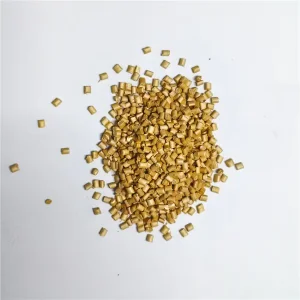
PE Gold Masterbatch
Custom High Concentration PE Gold Masterbatch Anti-fading
View Product Details
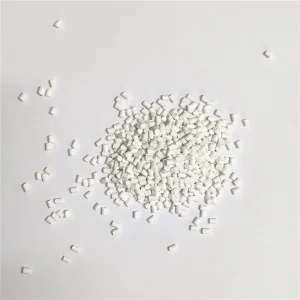
PE White Masterbatch
High-Quality High Concentration PE White Masterbatch Non-toxic
View Product Details
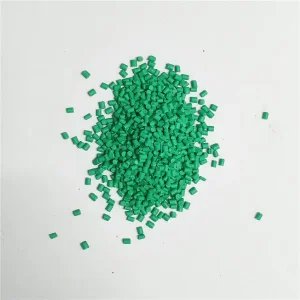
PE Green Masterbatch
China High Concentration PE Green Masterbatch Heat Resistant
View Product Details
PE Blue Masterbatch
High-Quality High Concentration Blue Masterbatch PE Carrier
View Product Details
PE Black Masterbatch
High-Quality High Concentration PE Black Masterbatch 260°C
View Product Details
PE Red Masterbatch
China High Concentration PE Red Masterbatch Bright Color
View Product Details
PE Grey Masterbatch
Custom High Concentration PE Grey Masterbatch Non-migration
View Product Details
PE Silver Masterbatch
Custom High Concentration PE Silver Masterbatch Anti-fading
View Product Details