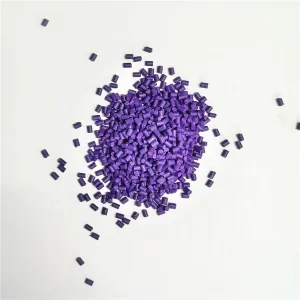
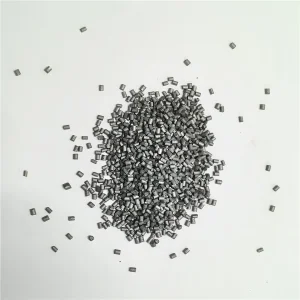
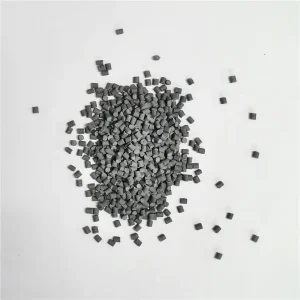
Engineered for ultra-thin shopping bag blown film lines, injection molding, and continuous pipe extrusion. Offering 260°C thermal stability, high tinting strength, and optimized dispersion.
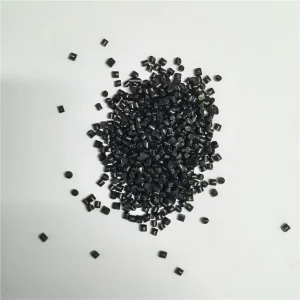
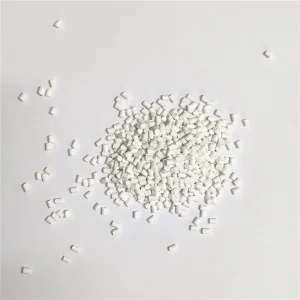
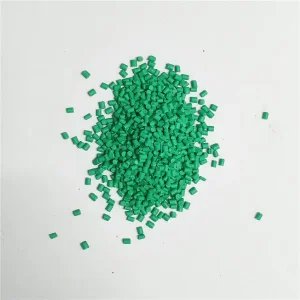
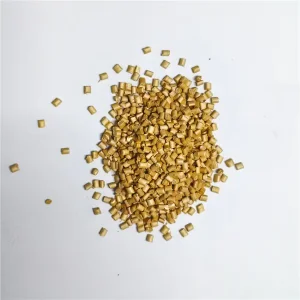
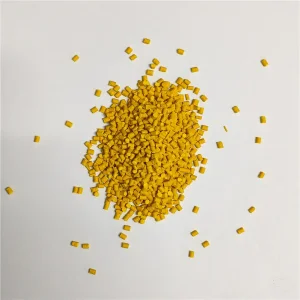
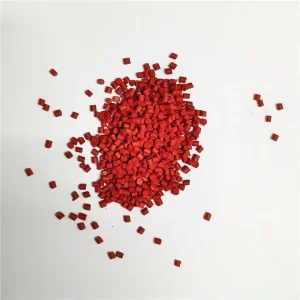
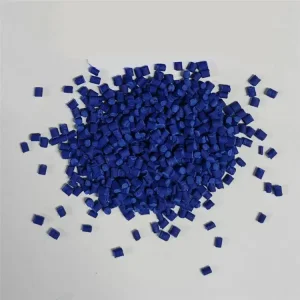
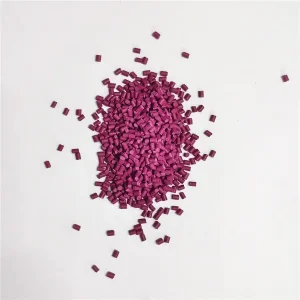
In high-speed blown film manufacturing of commercial shopping bags, T-shirt bags, and retail flexible packaging, cost efficiency must not compromise mechanical integrity. Global polymer converters constantly face a dual challenge: lowering raw material expenditure while avoiding extrusion bubble instability, die build-up, surface pinholes, or reduced dart impact strength. This technical white paper analyzes the structural mechanics and financial benefits of sourcing from specialized cheap shopping bag blown film PE masterbatch companies & factories.
At the core of high-performance polyethylene (PE) color and filler masterbatch compounding lies the precise engineering of carrier resin melt flow index (MFI) and pigment/additive particle dispersion. Polyethylene blown film processes—utilizing HDPE, LLDPE, or LDPE matrices—require carrier resins whose rheological behavior matches or slightly exceeds the flow characteristics of the base polymer substrate. Mismatched carrier MFIs lead to phase separation, melt fracture (sharkskin effect), and non-uniform pigment distribution across thin film gauges ranging from 8 to 25 microns.
Changzhou Jiazhou Plastic Products Co., Ltd. integrates advanced twin-screw co-rotating extrusion tech to ensure pigment agglomerates are broken down below critical particle thresholds. This meticulous dispersion control prevents physical weakness in shopping bag handles and bottom seals during dynamic load-bearing conditions.
The global retail and e-commerce expansion has driven exponential demand for polyolefin shopping bags. However, volatile virgin resin costs (LLDPE/HDPE spot prices) force extruders to optimize their total cost of ownership (TCO). Procurement officers are no longer searching merely for "low-cost pigments"; they demand high-concentration masterbatches that allow lower let-down ratios (LDR) without loss of opacity or mechanical strength.
By leveraging high pigment loading—up to 50% for specialty colors and up to 80% for fine-particle CaCO3 filler masterbatches—factories can achieve nominal LDRs as low as 1% to 3%. This drastically reduces logistics freight costs per metric ton of active coloring agent and reduces storage footprint in processing plants across North America, Europe, Southeast Asia, and the Middle East.
| Masterbatch Type | Pigment/Filler Content (%) | Carrier Type | Thermal Stability (°C) | Recommended LDR (%) | Primary Application |
|---|---|---|---|---|---|
| High-Concentration PE Black | 40% - 50% Carbon Black | LLDPE / LDPE | 260°C - 280°C | 1.0% - 2.5% | Shopping Bags, Courier Bags, Trash Liners |
| Opaque White Masterbatch | 60% - 70% Rutile TiO2 | PE Universal | 260°C | 1.5% - 3.0% | Retail Packaging, Milk Films, T-shirt Bags |
| Vibrant Color Masterbatch | 20% - 40% Organic Pigment | PE / PP Compatible | 240°C - 260°C | 2.0% - 4.0% | Boutique Bags, Promotional Film Extrusion |
| CaCO3 Nano-Filler Masterbatch | 75% - 85% Micronized CaCO3 | LLDPE Matrix | 260°C | 5.0% - 25.0% | Cost Reduction, Anti-Blocking for HDPE/LDPE Bags |
Furthermore, sourcing directly from audited Chinese manufacturers like Jiazhou provides structural cost advantages due to direct access to raw material chemical corridors, automated mass-scale compounding lines, and optimized export logistics from Jiangsu coastal ports.
Blown film processing operates under complex thermal and shear stress parameters. When masterbatch pellets enter the extruder hopper, they undergo solid-conveying, melting, mixing, and pumping zones. High-quality masterbatches must exhibit exact melt temperature alignment to prevent un-melted gel formation (fisheyes) in the final bubble.
Mitigating Extrusion Flaws:
The global transition toward a circular plastics economy requires masterbatch solutions capable of operating with Post-Consumer Recyclate (PCR) and Post-Industrial Recyclate (PIR). Recycled PE resins frequently exhibit inconsistent base color, variable melt flow indices, and residual thermal history. Specialized masterbatch formulations act as compensating agents, restoring tinting uniformity, opacity, and thermal resilience to PCR-blend shopping bags.
For biodegradable film initiatives, Jiazhou also engineers specialized carrier systems compatible with PBAT, PLA, and starch blends, enabling fully compostable shopping bag production that satisfies European EN 13432 standards without sacrificing line speed or coloration clarity.
Located in Changzhou, Jiangsu Province, Changzhou Jiazhou Plastic Products Co., Ltd. represents 16 years of compounding expertise. Operating a modern 6,000 m² facility with multi-line high-torque co-rotating twin-screw extruders, the factory delivers a monthly capacity exceeding 2,500 metric tons of masterbatch.
Our OEM/ODM operations feature integrated spectrophotometric color matching labs capable of formulating precise Pantone, RAL, or customer-provided physical sample matches within 3 to 5 working days. Computerized loss-in-weight gravimetric feeders ensure that every batch of masterbatch maintains an ultra-tight Delta E (ΔE < 0.5) variance, eliminating color shading across massive multi-container orders.
When selecting a long-term partner among cheap shopping bag blown film PE masterbatch companies & factories, procurement managers should evaluate suppliers against a structured multi-point technical matrix:
Expert answers to technical challenges faced by plant managers, blown film engineers, and polymer buyers.
Poorly dispersed pigments or large filler particles act as mechanical stress concentrators in thin-gauge films, severely weakening the dart impact resistance and tearing strength along the machine direction (MD) and transverse direction (TD). By choosing a high-dispersion PE masterbatch with micronized particles and an LLDPE carrier, the masterbatch integrates seamlessly into the polymer matrix, preserving tear elongation and handle load-bearing integrity.
Modern high-speed blown film extruders operate under high shear and temperature conditions to achieve high output rates. Lower-quality colorants degrade thermal stability under 200°C–220°C, causing off-gassing, yellowing, streak formation, or loss of color intensity. A 260°C heat-resistant rating ensures pigment chemical stability throughout the extruder barrel, melt pump, and die header.
Yes. Extruders frequently combine 1%–3% color masterbatch with 10%–20% calcium carbonate (CaCO3) filler masterbatch in HDPE/LLDPE shopping bags. CaCO3 acts as an effective cost-reducer while simultaneously accelerating bubble cooling, improving film stiffness, and providing anti-blocking benefits. Care must be taken to ensure both masterbatches utilize compatible LLDPE carrier resins to avoid phase boundary defects.
For standard color formulations (Black, White, Blue, Red, Yellow, Green), standard stock or rapid production runs allow shipping within 7 to 10 days. For custom Pantone/RAL matches, sample color matching takes 3 to 5 business days, followed by commercial production. Standard MOQ starts at 500 kg for custom colors and 1,000 kg for standard bulk masterbatches.
Masterbatches should be stored in original sealed moisture-barrier bags in a clean, dry, ventilated warehouse at ambient temperatures below 35°C, away from direct sunlight. Once opened, unused bags should be tightly re-sealed immediately. If exposed to high ambient humidity, pre-drying the masterbatch at 70°C–80°C for 2 hours prior to extrusion is recommended.
Explore our full range of weather-resistant, non-migration, metallic, and high-opacity masterbatch series engineered for global plastic manufacturing excellence.