Precision Rheological Control · High-MFI Carrier Formulations · Sub-Micron Pigment Dispersion
Engineered by Changzhou Jiazhou Plastic Products Co., Ltd. for ultra-high speed thin-wall injection molding, packaging films, and technical extrusion applications worldwide.
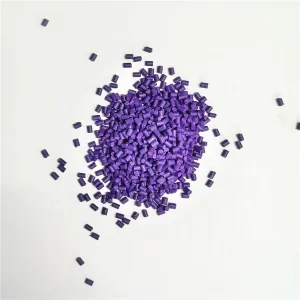
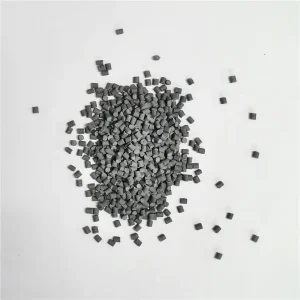
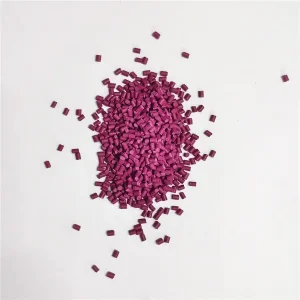
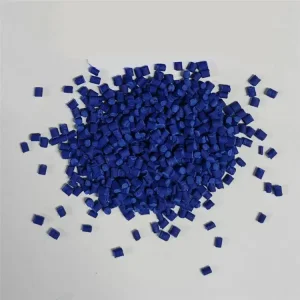
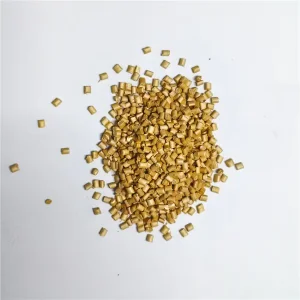
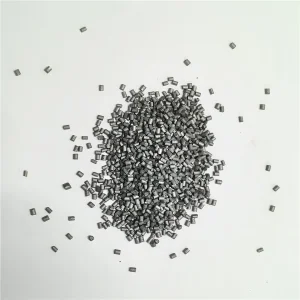
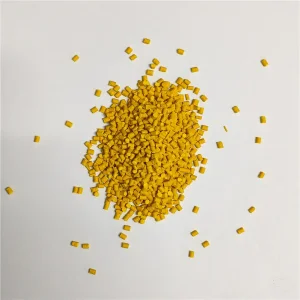
Why sourcing low-cost, high-performance masterbatch requires sophisticated polymer rheology and micronized pigment stabilization.
Thin Wall Injection Molding (TWIM) operates under extreme injection pressures (often exceeding 180 to 240 MPa) and rapid cycle times (< 3 seconds). Standard PE color masterbatches frequently experience shear degradation, pigment agglomeration, and severe melt-fracture. High-concentration PE masterbatch formulations must utilize tailored carrier resins with Melt Flow Indexes (MFI) spanning from 20 g/10min to over 50 g/10min (at 190°C/2.16kg) to guarantee frictionless mold filling without increasing clamp tonnage demands.
When wall thicknesses drop below 0.4 mm to 0.8 mm, pigment agglomerates larger than 5 microns act as structural stress concentrators, causing premature container cracking, pinhole defects, or color streakiness. Formulations from direct factory manufacturers employ multi-stage twin-screw extruders operating at 600+ RPM with specialized shear elements to break pigment particles down to under 1 micron, ensuring flawless opacity, mechanical resilience, and non-migration properties under thermal stress up to 260°C – 280°C.
Analyzing global demand drivers, cost-performance ratios, and manufacturing challenges across fast-growing industrial sectors.
The global shift toward lightweight, disposable food containers, dairy tubs, and tamper-evident caps has triggered an unprecedented surge in Thin Wall Injection Molding (TWIM) adoption. Global manufacturers demand high-pigment-loading PE masterbatch that minimizes additive dosage down to 1%–2% while preserving total container rigidity, impact strength, and organoleptic compliance (food-contact safety).
In the medical device packaging and disposable diagnostic sector (pipette tips, micro-centrifuge tubes, thin-wall specimen cups), PE masterbatch manufacturers must guarantee non-migratory, non-toxic pigment systems certified against heavy metal leaching (RoHS, REACH, FDA CFR 177.1520). Low-cost sourcing strategies must align with absolute chemical purity.
Industrial molders operating multi-cavity hot runner molds (e.g., 32-cavity to 64-cavity tooling) cannot afford flow imbalances caused by inconsistent masterbatch viscosity. By sourcing directly from established China factories like Changzhou Jiazhou, molders achieve over 25% raw material cost reduction while securing consistent melt index integrity across batch shipments.
| Technical Parameter | Standard PE Color Masterbatch | Thin Wall Injection Grade PE Masterbatch | Industrial Benefit for Molders |
|---|---|---|---|
| Carrier Resin MFI (190°C/2.16kg) | 4 – 12 g/10min | 20 – 50+ g/10min | Eliminates short shots and flow line defects in ultra-thin walls. |
| Pigment Particle Dispersion Size | < 10 – 15 Microns | < 1 – 3 Microns (Micro-filtered) | Prevents stress cracks, pinholes, and pigment streakiness. |
| Thermal Resistance Limit | 200°C – 220°C | 260°C – 280°C | Resists severe heat degradation inside high-speed hot runners. |
| Recommended Addition Rate | 3% – 5% | 1.0% – 2.5% (High Concentration) | Dramatically reduces material unit cost per finished part. |
| Carrier Compatibility | PE / Generic Universal | Narrow MWD LLDPE / HDPE Matrix | Maintains mechanical toughness & prevents warping. |
How cutting-edge polymer engineering is transforming cheap PE masterbatch into high-value functional additives.
As circular economy mandates tighten across the European Union and North America, thin-wall injection molders are forced to incorporate 30% to 70% PCR Polyethylene. Advanced PE masterbatch formulations are incorporating dual-action functional additive packages: combining hyper-dispersents with anti-oxidants and odor-scavenging compounds. This allows cheap masterbatch to re-stabilize degraded PCR resin chains during high-shear injection cycles without sacrificing color brightness.
Future thin-wall masterbatches utilize nano-coated inorganic pigments and hyper-branched polymeric flow aids. These additives dynamically reduce the melt viscosity of the host PE matrix under high shear stress inside the injection nozzle, while immediately recovering structural modulus upon mold cooling. The result: reduced clamp force requirement by up to 15% and cooling cycle acceleration by 8% to 12%.
Conventional cheap black masterbatches based on carbon black absorb NIR radiation, rendering plastic packaging invisible to automated recycling sorting sensors. Next-generation eco-friendly black and dark color masterbatches developed by leading manufacturers utilize specialized organic pigments that reflect NIR spectrums, enabling 100% sortability in municipal recycling facilities.
Moving toward zero-carbon manufacturing, leading masterbatch suppliers are substituting fossil-fuel-derived LLDPE carriers with bio-based Polyethylene derived from sugarcane ethanol. This shift allows global consumer packaging OEMs to achieve carbon-neutral status while retaining identical melt processing, color dispersion, and mechanical specs.
Real-world manufacturing integration across high-volume plastic conversion processes.
Processing: High-speed hydraulic/electric injection molding machines with melt speeds > 500 mm/s.
Challenge: Wall thickness 0.45 mm. High risk of flow marks, short shots, and color banding.
Solution: High Concentration White (PE Carrier, 60%–70% TiO2 loading) or vibrant color masterbatch with MFI > 35 g/10min. Ensures high opacity, food-grade compliance, and zero structural drop-impact weakness.
Processing: Compression molding & high-cavitation injection molding.
Challenge: Severe torque requirements, stress-cracking resistance (ESCR), dimensional consistency.
Solution: Custom Non-migration PE Blue, Red, and Yellow masterbatches formulated with organic pigment complexes that prevent slip-additive absorption and preserve tight seal tolerances.
Processing: Multi-layer co-extrusion blown film lines (ABA / ABC configurations).
Challenge: Film thickness 20 to 50 microns. High opacity needed in core layer to obscure inner contents.
Solution: High-Concentration Black & Grey PE Masterbatch featuring fine channel carbon black and calcined filler combinations. Delivers 100% light blockage and high tensile puncture resistance.
16 years of compounding expertise delivering certified masterbatch solutions worldwide.
Changzhou Jiazhou Plastic Products Co., Ltd. operates a state-of-the-art color laboratory equipped with Datacolor spectrophotometers, computer-aided color matching systems, and pilot twin-screw compounding extruders. OEM clients can submit target plastic samples, Pantone, or RAL codes. Our engineering team delivers color-matched PE masterbatch samples within 3 to 5 working days, certified for thermal stability and lightfastness (Grade 7–8).
Operating out of a 6,000 m² modern manufacturing plant in Zouqu Town, Changzhou, Jiangsu, China, Jiazhou maintains rigid ISO 9001:2015 quality control systems. Every batch of color masterbatch undergoes Melt Flow Index testing, ash content analysis, filter pressure value (FPV) testing, and thermal gravity analysis (TGA). All products fully comply with RoHS directives, REACH standards, and FDA food contact regulations.
In-depth answers to common engineering questions regarding cheap thin-wall injection PE masterbatches.
In thin-wall injection molding (wall thickness < 1.0 mm), plastic melt must travel long flow paths within fractions of a second. If the masterbatch carrier has a lower Melt Flow Index (MFI) than the host resin (e.g., host resin MFI 40 vs masterbatch carrier MFI 4), the masterbatch will create high-viscosity localized pockets. This causes flow lines, incomplete mold filling (short shots), high injection pressure drops, and visible pigment swirl. A dedicated thin-wall masterbatch uses a high-MFI carrier (MFI 20–50 g/10min) to guarantee perfect rheological blending.
Cost efficiency ("cheap price") is achieved through high pigment loading concentration and raw material economy-of-scale, not by using unrefined fillers or low-grade pigments. By increasing pigment loading to 40%–70%, molders use significantly lower addition ratios (e.g., 1% to 1.5% instead of 4%), drastically lowering overall cost-per-part. Furthermore, direct factory manufacturing from Changzhou Jiazhou eliminates middleman markups, optimizing logistics directly from Shanghai/Ningbo ports.
Warpage in semi-crystalline polymers like PE and PP is heavily influenced by organic pigments (such as Phthalocyanine Blue or Green), which act as micro-nucleating agents. These pigments accelerate crystallization in specific directions, creating differential shrinkage. Premium thin-wall PE masterbatches utilize non-nucleating organic or inorganic pigment grades combined with specialized anti-warping dispersants to maintain uniform volumetric shrinkage across complex mold cavities.
Yes, PE-carrier masterbatches are widely used in Polypropylene (PP) thin-wall applications provided the carrier resin consists of low-molecular-weight LLDPE or metallocene PE with ultra-high flow properties. Because PE and PP are polyolefins, low dosage levels (1%–2%) allow complete mechanical incorporation without causing delamination or cloudiness in translucent grades.
Modern thin-wall molding hot runner systems operate at melt temperatures between 240°C and 280°C to minimize melt viscosity. Masterbatches must possess a heat stability rating of at least 260°C for 5 minutes (tested according to EN 12877-2 standards). Lower-rated pigments break down thermally, resulting in color shift, gas discolored specks, and volatile odor emission.
Well-dispersed, high-MFI masterbatches reduce the internal friction (shear resistance) of the polymer melt during the injection phase. This lowers the required injection pressure and hydraulic/electric power draw of the machine motor. Additionally, consistent color dispersion leads to faster cycle times and fewer rejected parts, optimizing energy usage per ton of finished product.
Preserving precise color consistency, thermal endurance, and anti-fading properties across all industrial processing techniques.