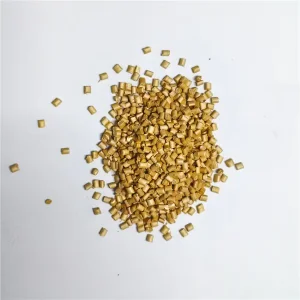
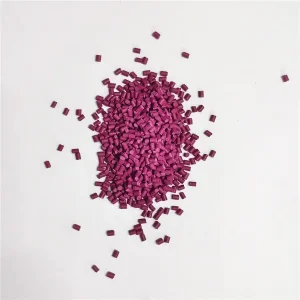
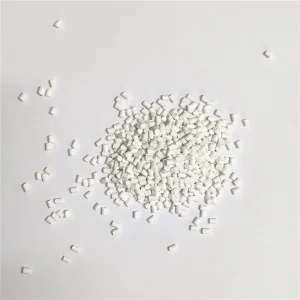
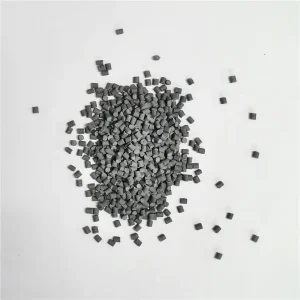
Directly engineered for agricultural mulch films, blown film extrusion, and high-durability plastic processing. Certified for global export standards.
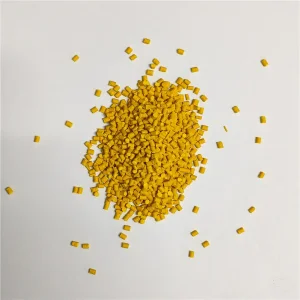
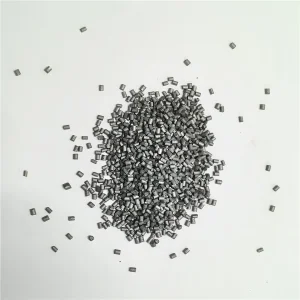
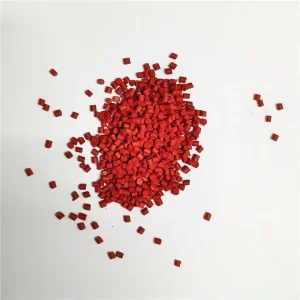
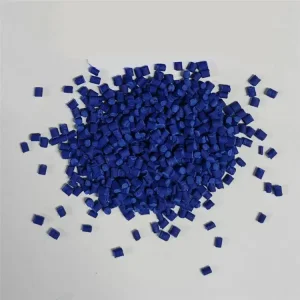
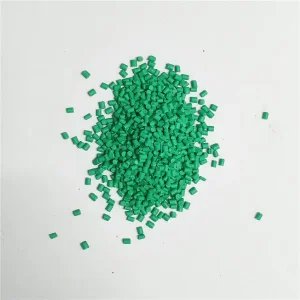
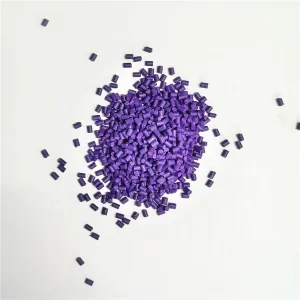
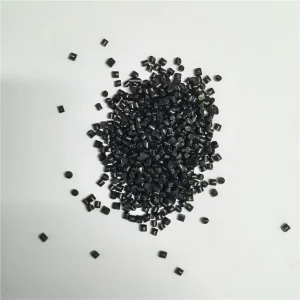
Understanding the chemistry, light barrier mechanics, and polymer carrier dispersion required to manufacture high-longevity agricultural mulching films.
Weed suppression relies strictly on blocking Photosynthetically Active Radiation (PAR) in the 400nm–700nm wavelength range. Premium agricultural weed film PE masterbatch incorporates fine-particle P-type carbon black (18nm–25nm particle size) to ensure complete light blockage at ultra-thin gauge extrusion (down to 6–10 microns), preventing weed germination without chemical herbicides.
Achieving defect-free, pinhole-free film extrusion requires precise Melt Flow Index (MFI) matching between the carrier resin (virgin LLDPE/LDPE) and the target resin matrix. Specialized masterbatches utilize high-flow PE carrier resins combined with advanced fluoropolymer processing aids (PPA) to lower melt pressure and eliminate shark-skin surface defects during high-speed blown film processing.
Agricultural films face aggressive solar UV radiation coupled with agrochemical exposure (sulfur, chlorine, pesticides). Standard HALS (Hindered Amine Light Stabilizers) deactivate quickly under acidic pesticide environments. Agricultural weed film masterbatches integrate non-interacting NOR-HALS chemistry alongside UV absorbers to guarantee multi-season field service life.
A quantitative comparison showcasing why generic industrial black masterbatch fails under field exposure, while specialized weed film formulations excel.
| Performance Parameter | Generic Commercial Black Masterbatch | China Agricultural Weed Film Special PE Masterbatch | Agronomic Advantage |
|---|---|---|---|
| Carbon Black Content (%) | 20% – 30% Low Grade | 40% – 50% High-Purity (P-Type) | Higher tinting strength; lowers required dosing ratio down to 2%-4%. |
| Mean Particle Size (nm) | 35nm – 60nm (Coarse) | 15nm – 22nm (Super-Fine Dispersion) | Maximizes UV absorption and structural film tensile integrity. |
| Filter Pressure Value (FPV) | > 5.0 bar/g (High Impurities) | < 0.8 bar/g (EN 13900-5 Standard) | Prevents filter screen clogging and bubble breakage on ultra-thin film lines. |
| Pesticide Resistance (Sulfur/Cl) | Deactivates within 30-60 days | Deactivation Resistant (NOR-HALS Synergy) | Withstands heavy greenhouse and open-field chemical spraying routines. |
| Thermal Stability (OIT at 200°C) | < 15 Minutes | > 60 Minutes (ASTM D3895) | Prevents thermal oxidative degradation during high-temperature extrusions. |
| Film Tensile Retention (1000h QUVA) | < 40% Retention | > 85% Retention | Film remains elastic, facilitating mechanical recycling or post-harvest retrieval. |
China's masterbatch compounding ecosystem combines raw material integration, high-capacity twin-screw extrusion, and competitive cost structures.
Chinese manufacturers operate in close proximity to world-class petrochemical refining hubs (Sinopec, PetroChina) and specialized additive producers. This vertical integration secures low-cost polymer carriers (LLDPE 7042/218W), high-structure carbon black, and advanced antioxidant compounds, providing international buyers with unmatchable price-performance ratios.
Leading Chinese masterbatch suppliers utilize co-rotating twin-screw extruders with high L/D ratios (up to 48:1 or 52:1) equipped with multi-stage side feeders, vacuum degassing units, and underwater pelletizing systems. This ensures zero agglomeration, uniform pellet geometry, and dust-free handling for downstream film blowers.
Tier-1 factories enforce end-to-end quality control protocols including Melt Flow Rate (MFR) testing, thermogravimetric analysis (TGA) for carbon loading, colorimetric spectrophotometry, and RoHS/REACH environmental compliance. Every batch undergoes real-time film blowing trial runs to guarantee zero gel formation.
Whether your agricultural application requires black-white reflective weed mulch, silver-black pest-repelling film, or fully bio-based PBAT/PLA carrier weed film masterbatch, Chinese suppliers offer agile formulation adjustments with minimum lead times and custom packaging options (25kg moisture-proof bags, octabins, or bulk container liners).
How global environmental regulations, sustainable farming, and functional multi-layer extrusion are shaping the next generation of PE masterbatches.
Global environmental mandates targeting micro-plastic soil pollution are accelerating the adoption of biodegradable weed mulches. Leading Chinese suppliers now offer functional black masterbatches utilizing PBAT, PLA, or PPC carrier matrices, ensuring full soil breakdown without compromising weed suppression efficiency.
Modern agronomy demands multi-functional mulches. Co-extruded Silver-Black films use a special silver masterbatch on the outer layer to reflect sunlight (cooling root zones and repelling aphids/thrips) combined with a black weed masterbatch layer facing the soil to block PAR light completely.
With plastic waste regulations requiring thinner films without mechanical tear failures, high-concentration PE masterbatches with extreme dispersion allow film blowers to down-gauge weed mulch thickness from 15 microns to 6–8 microns while maintaining 100% opacity and tear resistance.
Optimizing Masterbatch Dosing and Additive Chemistry for Regional Crop Requirements.
Extreme UV radiation indexes require high loadings of UV-326 absorbers combined with heavy NOR-HALS packages. The PE masterbatch ensures that black weed mulch maintains structural integrity for up to 24 months despite heat soil interface temperatures exceeding 65°C.
In high-humidity cash crop farming (banana, pineapple, vegetable plantations), masterbatches are combined with anti-fungal and thermal insulation additives to suppress soil-borne pathogens while suppressing dense tropical weed growth under rainfed conditions.
Organic fruit and vegetable growers utilize non-toxic, eco-friendly certified PE black masterbatch mulch films to completely bypass chemical weedkiller application, complying with strict FDA/EU food-contact and environmental soil purity standards.
A step-by-step technical framework for plastic factory managers and procurement officers when sourcing masterbatch from China suppliers.
Ensure the masterbatch supplier formulates the carrier using identical base polymer families. For LLDPE/LDPE agricultural blown film lines, the masterbatch carrier must be pure LLDPE with a slightly higher Melt Flow Index (MFI 15–20 g/10min) than the substrate resin (MFI 0.5–2.0 g/10min) to achieve seamless mixing.
Request Thermogravimetric Analysis (TGA) reports to confirm carbon black loading (typically 40%–50%). Demand transmission electron microscopy (TEM) or ASTM D5596 dispersion test certificates to guarantee carbon black aggregates are below 5 microns, eliminating film tear points.
Verify Oxidation Induction Time (OIT) at 200°C according to ASTM D3895. Higher OIT values (>45 minutes) indicate robust secondary antioxidant protection (Irganox 1010 + Irgafos 168), preventing resin degradation during processing and outdoor deployment.
Before placing full-container orders (FCL), run sample trials using standard 50-mesh screen packs. Measure Filter Pressure Value (FPV). Low FPV values (<1.0 bar/g) ensure smooth continuous extrusion without frequent downtime for screen changes.
Expert answers to critical technical and procurement questions regarding agricultural weed film special PE masterbatch.
Engineered for maximum color stability, processing ease, and long-term weather resistance across global agricultural and industrial applications.