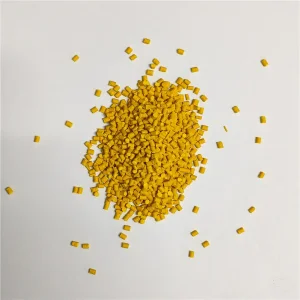
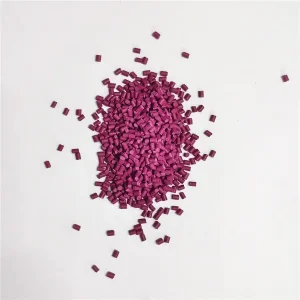
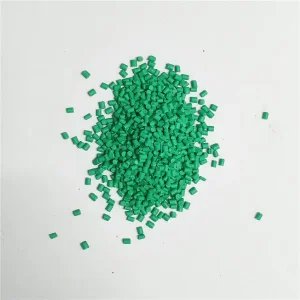
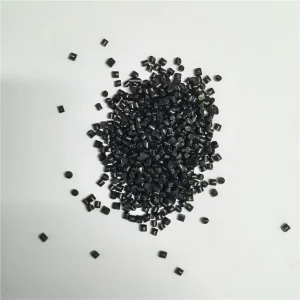
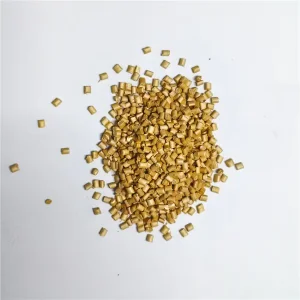
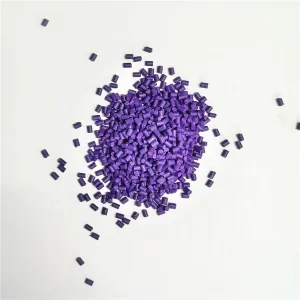
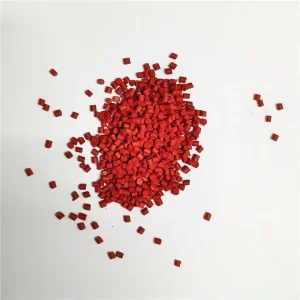
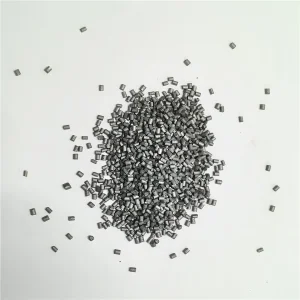
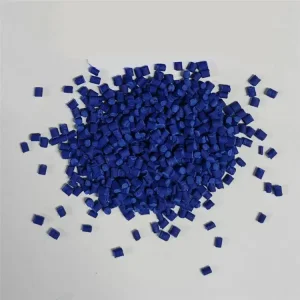
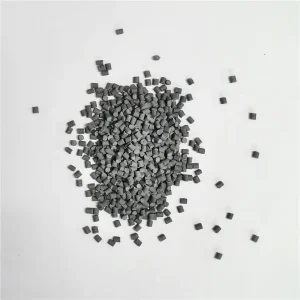
Engineered with premium carrier resins, optimized melt flow indices, and advanced anti-fading UV defense matrixes for maximum outdoor durability.
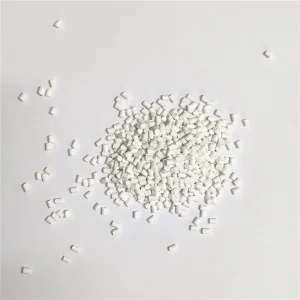
Understanding photo-oxidation kinetics, hydroperoxide decomposition, and how leading Chinese anti-aging PE masterbatch companies optimize thermal and light stability.
Polyethylene (PE)—whether Low-Density (LDPE), Linear Low-Density (LLDPE), or High-Density (HDPE)—is intrinsically susceptible to degradation when exposed to solar radiation and atmospheric oxygen. Solar radiation in the ultraviolet spectrum, specifically UV-A (315–400 nm) and UV-B (280–315 nm), delivers photon energy that exceeds the carbon-carbon ($C-C$) and carbon-hydrogen ($C-H$) bond energies of the polymer backbone. This initiates photochemical degradation via a self-propagating free-radical chain reaction known as the Bolland-Gee Mechanism.
Without high-performance stabilizer concentrates engineered by an authoritative China anti-aging PE masterbatch company, this radical chain leads to chain scission, cross-linking, surface chalking, micro-cracking, severe loss of tensile strength, and color fading within months of outdoor installation.
Modern industrial anti-aging masterbatch formulations rely on a synergistic matrix combining multiple active stabilizers dispersed homogeneously in a carrier polymer:
Hindered Amine Light Stabilizers (HALS) act through the famous Denisov Cycle. HALS do not absorb UV light directly; instead, they scavenge alkyl and peroxyl radicals, converting into stable nitroxyl radicals ($R_2N-O^\bullet$) that continuously regenerate, offering long-term multi-year outdoor protection.
Sterically Hindered Phenols (such as Irganox 1010/1076) function as hydrogen donors to intercept reactive peroxyl radicals ($ROO^\bullet$) during high-temperature melt processing (extrusion or injection molding), forming unreactive phenoxy radicals and halting immediate thermal oxidation.
Organophosphites & Thioesters react with unstable polymer hydroperoxides ($ROOH$), converting them into stable, non-radical alcohols before they undergo homolytic cleavage, preserving the Melt Flow Index (MFI) and color integrity during severe thermal stress up to 260°C.
The table below provides a comparative analysis of key additive classes integrated by top Chinese manufacturers:
| Additive Class | Chemical / Active Base | Target UV Absorption Range | Primary Application Area | Thermal Stability Limit |
|---|---|---|---|---|
| High-MW Polymeric HALS | Hindered Amine (e.g., Chimassorb 944 / 622) | Radical Quenching (Non-absorber) | Agricultural Greenhouse Film, HDPE Pipes | 280°C |
| Low-MW Oligomeric HALS | Bis(2,2,6,6-tetramethyl-4-piperidyl) sebacate | Radical Quenching (Fast Migration) | Injection Molded Products, Thick Sections | 230°C |
| Benzotriazole UV Absorber | 2-(2'-Hydroxy-5'-methylphenyl)benzotriazole | 290 nm – 360 nm (UV-B & UV-A) | Outdoor PE Packaging, Water Tanks | 260°C |
| Benzophenone UV Absorber | 2-Hydroxy-4-octyloxybenzophenone (UV-531) | 270 nm – 340 nm | LLDPE Stretch Film, Agricultural Mulch Film | 240°C |
| Synergistic Antioxidant Package | Hindered Phenol + Phosphite Blend (1010 + 168) | Melt Processing Thermal Stabilizer | High-Speed Extrusion & Injection Molding | 300°C |
How China's advanced compounding infrastructure, petrochemical integration, and rigorous testing labs deliver unparalleled value to global polymer converters.
Leading Chinese masterbatch manufacturers operate in close proximity to massive petrochemical clusters in Eastern China (e.g., Jiangsu, Zhejiang). Direct integration with virgin resin suppliers (Sinopec, PetroChina) ensures exact Melt Flow Index (MFI) matching between carrier resins and end-use PE substrates, maximizing dispersion efficiency.
Utilizing high-torque, multi-zone twin-screw extruders with controlled temperature profiling (precision within $\pm 1^\circ C$), Chinese factories prevent premature thermal decomposition of sensitive active UV additives during masterbatch pelletization. This ensures 100% active additive potency upon delivery.
State-of-the-art Chinese companies employ Differential Scanning Calorimetry (DSC) to test Oxidative Induction Time (OIT) in accordance with ISO 11357-6 and QUV Accelerated Weathering Chambers (ASTM G154), guaranteeing predictable lifespan performance under harsh UV irradiance.
How market demands for sustainability, circular economy compliance, and extreme environmental durability are driving next-generation masterbatch R&D.
As global regulations enforce mandatory recycled plastic content in packaging, recycled PE (rPE) undergoes multiple thermal cycles that consume original antioxidants. Innovative Chinese masterbatch manufacturers have engineered specialized PCR Upcycling Anti-Aging Masterbatches that restore depleted OIT levels and repair broken polymer chains.
Traditional basic HALS are easily deactivated by sulfur, chlorine, and acidic pesticides sprayed on agricultural crops. The industry shift toward NOR-HALS (Alkoxyamine HALS) allows agricultural greenhouse films to withstand up to 3,000 ppm of sulfur accumulation without losing UV stabilizing performance over 3 to 5 years.
Instead of dosing separate color masterbatches, UV masterbatches, and processing aids, global buyers increasingly demand All-in-One Multifunctional Masterbatches. Combining organic/inorganic pigments with non-migrating UV defense mechanisms eliminates dosing errors and stream separation during extrusion.
From high-altitude agricultural films to heavy-duty civil infrastructure, tailored masterbatches ensure catastrophic degradation prevention across demanding environments.
Exposed to severe sun solar radiation (up to 220 KLY/year in tropical or arid zones) and chemical sprays. Masterbatches with high polymeric HALS loadings maintain film elongation at break and puncture resistance for 36+ months.
HDPE liners used in waste landfills, mining tailing ponds, and water reservoirs demand 50+ year service lives. Specialized masterbatches offer high OIT retention under continuous immersion in chemical leachate.
Outdoor storage containers require high Environmental Stress Cracking Resistance (ESCR). Anti-aging masterbatch systems prevent surface micro-fissures and chalking caused by photo-oxidation and thermal expansion.
Water distribution pipes and telecommunication cable sheathings exposed to sun during logistics storage. PE anti-aging masterbatch protects physical structural strength during outdoor weathering prior to underground burial.
A rigorous engineering framework for procurement directors to specify, test, and verify masterbatch quality prior to mass import.
Ensure the masterbatch carrier resin matches your primary substrate (e.g., LLDPE carrier for blown film, HDPE for pipe/injection). The Melt Flow Index (MFI) of the masterbatch must be slightly higher than or equal to the virgin resin to prevent viscosity mismatches and pinholes.
Evaluate the active additive concentration percentage (typically 10% to 40%). Calculate the exact Let-Down Ratio (LDR)—usually between 1.0% and 4.0%—required to meet the KLY (Kilo Langley) radiation requirements of your target installation region.
Verify global compliance certifications: REACH SVHC, RoHS Directive 2011/65/EU, and FDA 21 CFR 177.1520 for food-contact packaging. Reliable Chinese factories supply full SDS and RoHS lab audit reports per batch.
Established in 2010, Changzhou Jiazhou Plastic Products Co., Ltd. is a premier 16-year expert in high-concentration color and functional masterbatch manufacturing. Operating out of a modernized 6,000 m² production facility in Changzhou, Jiangsu, Jiazhou integrates automated compounding lines with advanced spectrophotometry labs. Serving buyers across 100+ countries, Jiazhou specializes in custom anti-fading, heat-resistant (up to 260°C), and non-migrating PE color and anti-aging masterbatch systems tailored to blown film, injection molding, and pipe extrusion.
Detailed engineering answers to critical questions surrounding PE masterbatch stabilization, testing standards, and field performance.
Explore our extensive range of specialized PE carrier color masterbatches optimized for extrusion, injection molding, and film blowing.