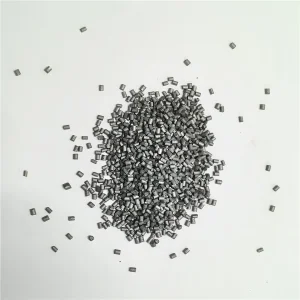
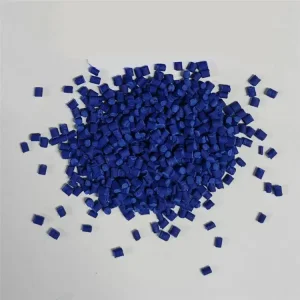
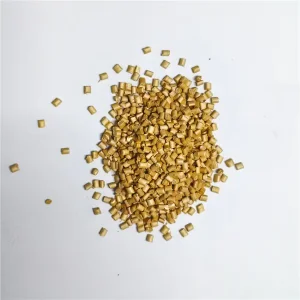
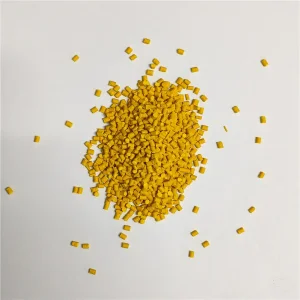
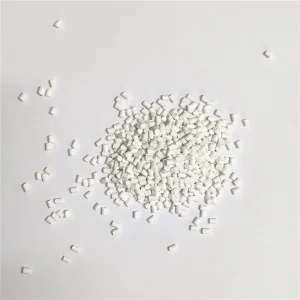
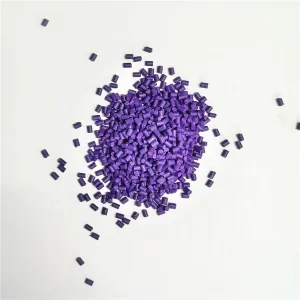
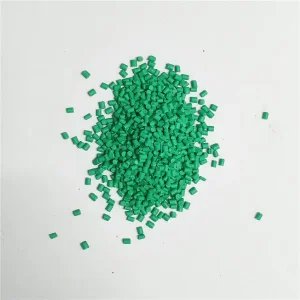
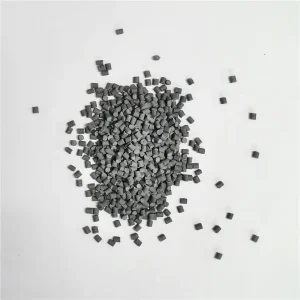
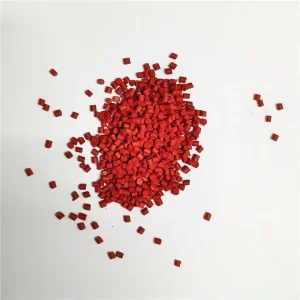
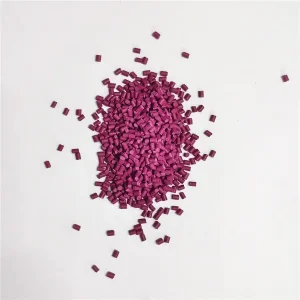
Explore our core portfolio of high-concentration PE masterbatches engineered for blown film extrusion, injection molding, and custom OEM film applications.
An in-depth whitepaper on polyolefin surface dynamics, electrostatic attraction, van der Waals forces, and additive engineering in high-speed blown film converting.
Polyethylene (LDPE, LLDPE, HDPE) films exhibit strong intrinsic self-adhesion when extruded and wound under tension into tight rolls. This physical phenomenon, known as "blocking," is governed by microscopic surface smoothness, residual process heat, physical pressure, and van der Waals intermolecular forces between smooth polymer layers. Without intervention, films become permanently fused, rendering converting, bag-making, and packaging unviable.
Anti-block masterbatch operates by dispersing microscopic mineral or synthetic particles uniformly throughout the polymer matrix. During film extrusion and cooling, these inorganic/organic micro-particles create controlled surface asperities (microscopic bumps). This mechanical separation lowers contact area between adjacent film layers, dramatically decreasing van der Waals adhesion while maintaining target optical clarity and sealability.
Achieving low Coefficient of Friction (COF < 0.25) requires a balance between anti-blocking agents (such as synthetic silica or natural talc) and primary slip additives (Erucamide or Oleamide). While slip additives migrate to the film surface to provide lubrication, anti-block particles create structural clearance that accelerates slip migration efficiency, prevents die buildup, and eliminates "chatter" during high-speed Form-Fill-Seal (FFS) operations.
Selecting the optimal anti-block carrier matrix based on optical clarity targets, film gauge, shear stability, and downstream converting requirements.
| Additive Chemistry | Particle Diameter (d50) | Refractive Index Match | Haze Impact (%) | Best Suited Application |
|---|---|---|---|---|
| Synthetic Amorphous Silica (SAS) | 2.5 µm - 4.5 µm | High (n = 1.45 - 1.46) | Very Low (< 1.2%) | Ultra-clear LLDPE food packaging, optical lamination film |
| Natural Diatomaceous Earth (DE) | 3.0 µm - 7.5 µm | Moderate (n = 1.42 - 1.48) | Moderate (1.5% - 3.0%) | General purpose agricultural film, industrial liners, carrier bags |
| Synthetic Aluminosilicates / Glass Beads | 2.0 µm - 5.0 µm | Very High (n = 1.49 - 1.52) | Ultra Low (< 1.0%) | BOPP films, medical stretch wrap, multi-layer co-extrusion |
| Natural Micronized Talc | 4.0 µm - 10.0 µm | Low (n = 1.54 - 1.59) | High (> 3.5%) | Heavy-duty shipping sacks (FFS), opaque garbage bags, cost reduction |
| Organic Anti-Blocking Amides | N/A (Migratory) | N/A (Soluble in melt) | Zero Haze Impact | Sensitive optical films, cold-storage stretch wraps, barrier foils |
In high-end polyolefin film manufacturing, matching the refractive index of the anti-block additive to the PE carrier resin (approx. 1.51 for LLDPE) is critical to prevent light scattering at phase boundaries. Changzhou Jiazhou Plastic Products Co., Ltd. utilizes surface-treated synthetic silica masterbatches with narrow particle size distributions (PSD), ensuring that clarity and gloss remain uncompromised even at addition rates up to 3.0% masterbatch loading.
Key criteria global buyers evaluate when sourcing PE Masterbatch from leading Chinese manufacturers and export factories.
Global film converters running micro-thin blown films (10–25 µm) demand masterbatch with exceptionally low Filter Pressure Value (FPV < 0.5 bar/g). Poorly dispersed agglomerates lead to bubble breaks, filter screen clogging, and pinholes. Top Chinese manufacturers employ high-torque twin-screw extruders equipped with continuous melt filtration.
Extrusion stability requires melt flow index (MFI) matching between the carrier matrix and base polyolefin resin. Jiazhou Masterbatch formulates products using high-purity LLDPE/LDPE carriers (MFI 10–20 g/10min), ensuring rapid shear dispersion without causing melt fracture or interfacial voiding.
Water moisture levels exceeding 0.05% (500 ppm) cause lamination voids, bubble instability, and fish-eyes during high-temperature extrusion. Premium suppliers perform continuous loss-in-weight feeding control and vacuum degassing during pelletization.
Customized masterbatch formulations engineered to satisfy specific processing parameters in diverse global industries.
In heavy-duty petrochemical and fertilizer bagging (Form-Fill-Seal), films require immediate slip performance and thermal anti-blocking at sealing stations. Solutions combine non-migratory organic slip with micronized synthetic silica to ensure robust heat sealing without seam failure.
Greenhouse films face aggressive UV radiation and pesticide exposure. Anti-block masterbatches formulated for agricultural use utilize non-interacting natural minerals that do not deactivate HALS (Hindered Amine Light Stabilizers), preserving UV longevity.
By placing high-concentration anti-block masterbatch exclusively in the outer skin layers (skin layer 10-15% thickness ratio), film converters save material costs while eliminating blocking without compromising inner tie-layer adhesion or barrier integrity.
Next-generation anti-blocking chemistry driving eco-friendly packaging and circular economy compliance.
Global environmental regulations (REACH, US EPA) are phasing out fluoropolymer-based polymer processing aids (PPA). Chinese masterbatch leaders are pioneering non-PFAS anti-block/slip synergistic masterbatches using spherical silica and silicone-based technologies to reduce melt fracture without environmental persistence.
Recyclate streams (rPE, rPP) contain impurities and inconsistent gels that exacerbate film blocking. Advanced anti-block formulations incorporate surface-treated micro-fillers that neutralize gel tackiness, enabling up to 50% PCR loading in blown film applications.
To align with global carbon-neutral mandates, next-gen masterbatches use bio-based PE carriers derived from sugarcane ethanol, providing identical chemical compatibility with traditional fossil resins while reducing scope 3 carbon footprints.
Guaranteeing global food contact safety, chemical compliance, and international manufacturing standards.
Fully compliant for direct food packaging applications, including dry food liners, frozen food bags, and beverage shrink overwraps.
Certified for overall migration limits (OML) and specific migration limits (SML), compliant with European plastic food contact legislation.
Free from SVHCs (Substances of Very High Concern), heavy metals (Pb, Cd, Hg, Cr VI), phthalates, and restricted aromatic amines.
End-to-end quality tracking from raw material spectro-analysis to automated loss-in-weight extrusion and lot-specific COA generation.
16 Years of Industry Leadership: Established in 2010, Changzhou Jiazhou Plastic Products Co., Ltd. is a premier Chinese manufacturer specializing in high-concentration color masterbatches, filler masterbatches, and functional additive masterbatches for plastic film blowing, injection molding, and pipe extrusion.
Located in Changzhou, Jiangsu Province, our 6,000 square meter production center houses multi-twin-screw extrusion lines, precise computer color-matching systems, and melt flow testing equipment. We deliver tailored OEM solutions to buyers across 100+ countries with short lead times and continuous batch consistency.
Expert engineering answers to common challenges in blown film processing, additive dosage, and visual haze management.
Explore our extended range of customized plastic masterbatch formulations for injection, blown film, and compounding applications.