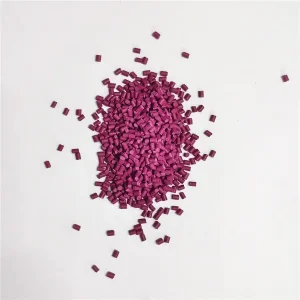
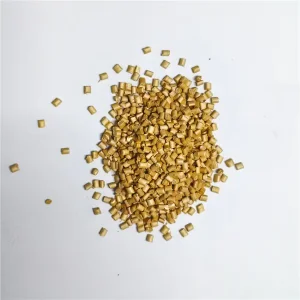
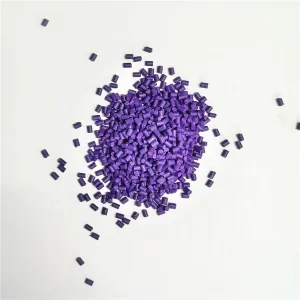
Direct factory supply of high-concentration PE, PP, and universal carrier masterbatches engineered for maximum dispersion and color fastness.
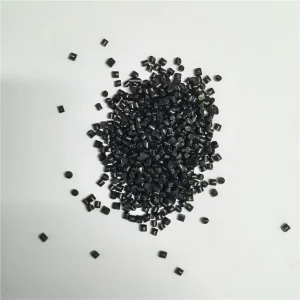
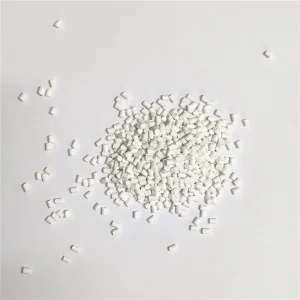
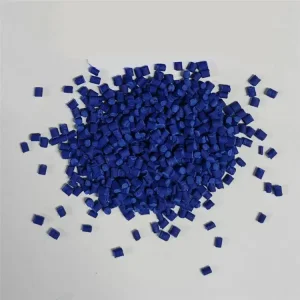
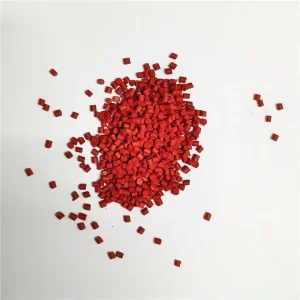
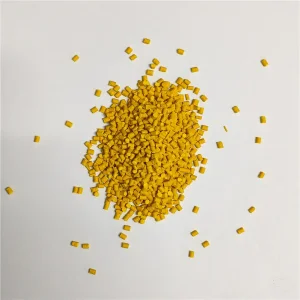
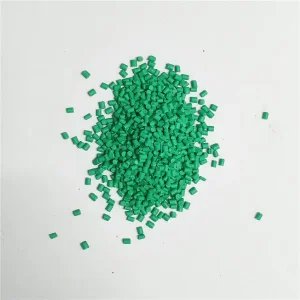
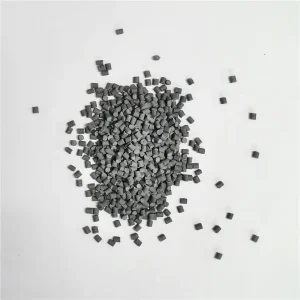
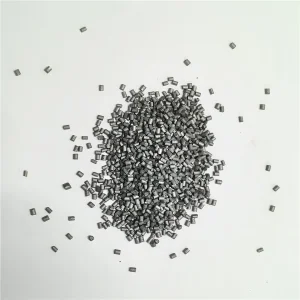
As global polymer processors encounter stricter regulatory standardizations, escalating aesthetic requirements, and demands for heightened UV endurance, evaluating a tier-one China Black Masterbatch Company & Factory becomes a key strategic leverage point. Black masterbatch is far more than a basic colorant; it is a complex chemical disperse phase consisting of specialized Carbon Black pigments (ranging from 15% up to 55% loading), carrier resins (LLDPE, LDPE, HDPE, PP, EVA, SAN, PET), dispersants, processing aids, and heat stabilizers. The physical and mechanical properties of the end-product—whether blown agricultural films, pressure-rated HDPE pipes, automotive components, or geotextiles—depend profoundly on particle-level dispersion homogeny, shear rate optimization, and rheological matching.
The core performance of industrial black masterbatch originates from the morphology of Carbon Black (CB) chosen during compounding. Carbon black is manufactured via controlled incomplete combustion or thermal decomposition of hydrocarbons. Key parameters governing pigment performance include:
A frequent point of failure in low-grade masterbatches is the mismatch between the masterbatch carrier MFI and the base polymer MFI. If the carrier resin exhibits a significantly lower MFI (higher viscosity) than the host resin, macro-agglomerates fail to break apart during extrusion, leading to surface roughness, pinholes in blown film, and premature mechanical fracture under tensile strain. Advanced Chinese factories utilize co-rotating twin-screw extruders with specialized screw profiles featuring intense kneading blocks and reverse-flight shearing zones to ensure aggregate breakup down to sub-micron scales.
Modern plastics processing demands targeted masterbatch engineering suited to specific processing methods and environmental exposures. As a leading manufacturer, Changzhou Jiazhou Plastic Products Co., Ltd. customizes matrix formulations across key global industry verticals:
Engineered with low-VOC, low-fogging carrier resins. Delivers high heat deflection, scratch resistance, and UV stability for under-the-hood enclosures, trim parts, and interior dashboards compliant with OEM standards.
Formulated with P-type carbon black (particle size ≤ 25nm) to guarantee UV protection and Oxidative Induction Time (OIT) exceeding 100 minutes. Essential for drip irrigation pipes and landfill liners.
Ultra-fine dispersion with Filter Pressure Values (FPV) < 0.2 bar/g. Eliminates fish-eyes and pinholes in ultra-thin agricultural mulch films and express courier bag co-extrusion layers down to 10 microns.
Selecting the optimal masterbatch specification requires matching technical metrics to end-use requirements. The following matrix illustrates key parameters managed in specialized production facilities:
| Technical Parameter | Standard Commercial Grade | Pipe & Cable Special Grade (P/E Type) | High-Jetness Packaging Film Grade |
|---|---|---|---|
| Carbon Black Content (%) | 30% – 40% | 40% – 45% | 45% – 50% |
| Primary Particle Size (nm) | 35 nm – 55 nm | 18 nm – 25 nm | 15 nm – 20 nm |
| Carrier Base Polymer | Recycled LLDPE / Universal PE | Virgin HDPE (MFR 0.05 - 0.2 g/10min) | Virgin LLDPE / LDPE (High MFR) |
| Filter Pressure Value (FPV) | > 1.5 bar/g | ≤ 0.5 bar/g | ≤ 0.15 bar/g |
| Heat Resistance Temperature | 200°C – 220°C | 260°C – 280°C | 240°C – 260°C |
| UV Resistance / Weatherability | Basic (1 - 2 years outdoor) | Exceptional (> 10-50 years outdoor) | Moderate to High |
| PAH & Food Contact Status | Non-compliant / General industrial | EN 71-3, RoHS 3.0, REACH SVHC | FDA 21 CFR 178.3297 / EU 10/2011 |
The global polymer additive landscape is undergoing a systemic transition toward circularity and decarbonization. Leading Chinese manufacturers are driving chemical innovation across three key technical frontiers:
Standard black masterbatches utilize furnace carbon black pigments that absorb Near-Infrared (NIR) radiation emitted by optical sorting sensors at Material Recovery Facilities (MRFs). Consequently, conventional black plastics are classified as non-recyclable residue and diverted to landfills or incineration. Innovations in NIR-detectable black masterbatch employ proprietary organic dark pigments and modified black formulations that reflect NIR wavelengths, enabling automated optical sorting machines to categorize post-consumer black HDPE, PP, and PET packaging accurately.
In alignment with EU Directive 2019/904 and global ESG metrics, masterbatch formulations are incorporating up to 80% PCR/PIR polymer carriers without degrading tensile strength or melt stability. Achieving uniform pigment dispersion inside fluctuating PCR feedstocks demands dual-screw side-feeders, vacuum degassing ports, and custom antioxidant stabilization packages.
Stringent REACH restrictions (Annex XVII entry 50) and German GS Specification (AfPS GS 2019:01 PAK) mandate ultra-low PAH concentrations in consumer products and toys coming into direct skin contact. Specialized gas-phase thermal treatment processes now allow Chinese chemical suppliers to supply black masterbatches with total PAH levels under 1 ppm.
Expert guidance on masterbatch selection, addition ratios, dispersion diagnostics, and international compliance standards.
The let-down ratio typically ranges between 1% and 4% by weight, depending on the carbon black concentration in the masterbatch and the target film thickness or opacity requirement. For standard injection molding, a 1.5% to 2% dosage of 50% carbon black masterbatch is sufficient. For agricultural blown film (< 20 microns) or pipe extrusion requiring UV protection, dosages of 3% to 6% may be specified to achieve an absolute carbon black level of 2.0% to 2.5% in the final article.
To prevent delamination, reduced impact strength, or surface hazing, the carrier resin should match or be chemically compatible with the matrix resin. LLDPE carrier masterbatch is versatile for Polyethylene (PE) grades (HDPE, LDPE, LLDPE). Universal carriers (such as EVA or optimized low-MW resins) allow broader compatibility across engineering polymers, but dedicated polymer-specific carriers (PP, PS, ABS, SAN, PET) are recommended for technical components where structural integrity and high heat deflection are non-negotiable.
Filter Pressure Value (EN 13900-5) measures the rate of pressure buildup caused by un-dispersed pigment agglomerates clogging a standardized mesh screen during extrusion testing. A lower FPV (e.g., < 0.2 bar/g) indicates exceptionally high dispersion quality. For thin-film extrusion, high FPV leads to frequent bubble breaks, continuous screen pack clogging, and surface pinholes that compromise barrier properties.
Yes. Specialized food-grade black masterbatches are formulated with high-purity carbon black grades compliant with FDA 21 CFR 178.3297 and EU Commission Regulation No 10/2011. These grades limit heavy metals, primary aromatic amines, and Polycyclic Aromatic Hydrocarbons (PAHs) to ensure safety in direct food packaging, drinking water pipes, and kitchen appliances.
Masterbatch should be stored in original moisture-proof heavy-duty PE or aluminum foil bags in a cool, dry, well-ventilated warehouse away from direct sunlight and heat sources. Standard shelf life under ambient conditions (< 35°C) is 24 months. Hygroscopic carriers (such as PET, PA, or ABS masterbatches) should be pre-dried in a dehumidifying hopper dryer for 2–4 hours at recommended temperatures prior to processing.
Explore our full range of color masterbatch solutions manufactured by Changzhou Jiazhou Plastic Products Co., Ltd. for global OEM applications.