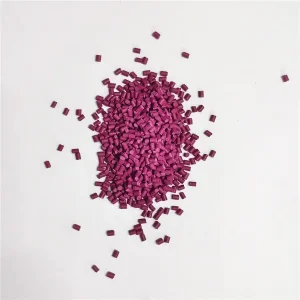
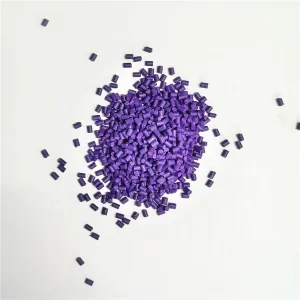
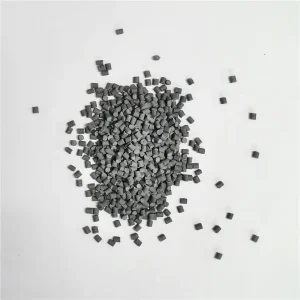
Comprehensive Analysis of High-Concentration Carrier Engineering, Pigment Dispersion Rheology, and Global Industrial Supply Chain Dynamics
Engineered for maximum pigment concentration, ultra-high melt stability, and defect-free film processing.
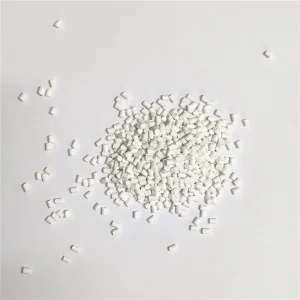
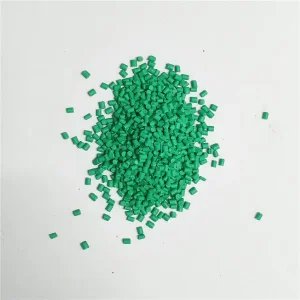
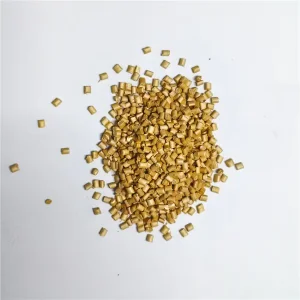
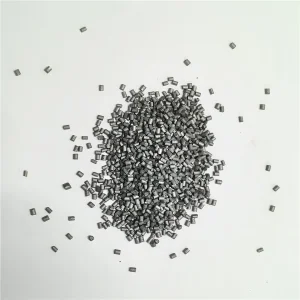
Analyzing supply chain concentration, market expansion drivers, and Chinese manufacturing leadership.
The global polyethylene (PE) blown film masterbatch industry occupies a pivotal node within the international plastics manufacturing ecosystem. As flexible packaging, agricultural geomembranes, high-speed logistics envelopes, and medical barrier films scale globally, the demand for specialized color masterbatch and functional additive concentrates has reached unprecedented heights. Blown film extrusion—a process requiring intense thermal stability, uniform melt rheology, and precise pigment dispersion—demands masterbatches formulated to microscopic tolerances.
China has solidified its position as the world's primary hub for color masterbatch innovation and high-volume production. Driven by robust upstream petrochemical integration, state-of-the-art twin-screw compounding infrastructure, and deep technical expertise, Chinese manufacturers supply over 45% of the worldwide demand for polyolefin-based masterbatches. Companies located in major manufacturing clusters like Changzhou, Jiangsu, lead this global transformation by combining cost efficiencies with strict quality management system protocols (ISO 9001:2015, REACH, RoHS, and FDA compliance).
Scientific selection of polymer carriers, organic/inorganic pigments, and interfacial dispersion chemistry.
The foundational component of any premium blown film masterbatch is the matrix carrier resin. Premium manufacturers utilize virgin Low-Density Polyethylene (LDPE) or Linear Low-Density Polyethylene (LLDPE) carriers with carefully tailored Melt Flow Indexes (typically between 10 g/10min to 45 g/10min at 190°C/2.16kg). Matching the melt viscosity of the masterbatch carrier to the base substrate resin (LDPE, LLDPE, HDPE, or metallocene mLLDPE) prevents phase separation and ensures rapid, homogeneous dispersion within the extruder barrel.
Color strength, opacity, and weather resistance depend heavily on primary pigment particle size and shear stress breakdown during twin-screw compounding. Premium grade titanium dioxide ($TiO_2$ rutile structure) for white masterbatches, fine-particle furnace carbon blacks (15–25 nm) for black masterbatches, and high-performance organic pigments (phthalocyanines, quinacridones, isoindolinones) undergo specialized surface treatments with coupling agents (titanates, silanes, or stearic acid derivatives).
| Masterbatch Category | Active Loading (%) | Carrier Type | Thermal Stability (°C) | Lightfastness (Blue Wool) | Primary Industrial Applications |
|---|---|---|---|---|---|
| High-Opacity White | 60% – 70% Rutile $TiO_2$ | LDPE / LLDPE | 280°C | 7 – 8 | Milk Pouches, Lamination Film, Diaper Backsheet |
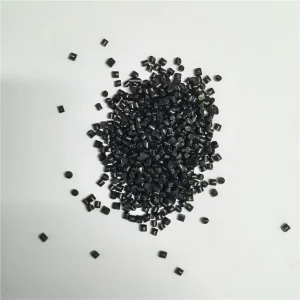
| High-Jetness Black | 40% – 50% Carbon Black | LLDPE / HDPE | 260°C – 300°C | 8 | Geomembranes, Agricultural Mulch, Silage Film |
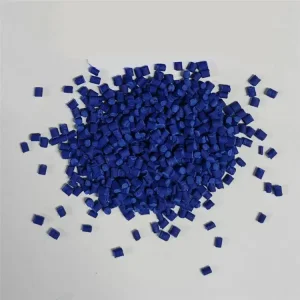
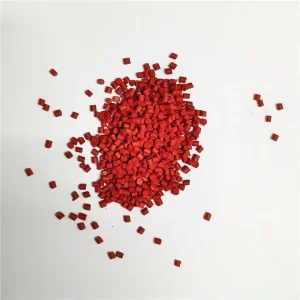
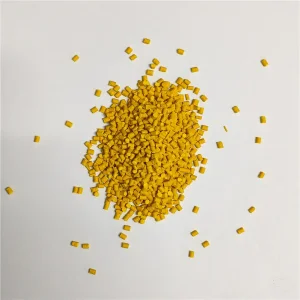
| Vibrant Color Series | 20% – 40% Organic/Inorganic | Universal PE | 240°C – 260°C | 6 – 7 | Shopping Bags, Courier Mailers, Shrink Film |
| CaCO3 Filler Masterbatch | 75% – 85% Fine $CaCO_3$ | LLDPE | 240°C | N/A | Cost Reduction, T-shirt Bags, Garbage Liners |
16 years of expertise, 6,000m² advanced compounding plant, serving 100+ global export markets.
In the global market for PE masterbatches, Changzhou City in Jiangsu Province, China, stands out as an international hub for polymer technology. Among top-tier manufacturers, Changzhou Jiazhou Plastic Products Co., Ltd. (founded in 2010) represents industrial reliability, technical precision, and modern customer service.
Spanning a state-of-the-art 6,000 m² manufacturing facility, Changzhou Jiazhou operates high-torque co-rotating twin-screw extrusion lines equipped with loss-in-weight gravimetric feeders, underwater pelletizing systems, and inline optical sorters. With an annual production capacity exceeding tens of thousands of metric tons, Jiazhou satisfies the demanding quality benchmarks of overseas buyers across North America, Europe, Southeast Asia, the Middle East, and South America.
Tailored masterbatch solutions across agriculture, logistics, packaging, and industrial processing.
Innovations in bio-based carriers, smart color-matching, and circular economic recycling integration.
The polyolefin masterbatch sector is entering a era driven by sustainability regulations, digital compounding, and nano-filler enhancements. Leading Chinese masterbatch manufacturers are actively advancing four core technological tracks:
Actionable solutions for film processors to eliminate common extrusion defects linked to masterbatch selection.
| Observed Defect | Root Cause Analysis | Masterbatch Formulation Solution |
|---|---|---|
| Pinholes & Micro-bubbles | Moisture absorption in masterbatch or incompatible low-boiling volatile additives. | Pre-dry masterbatch; switch to hydrophobic surface-treated pigments and vacuum-degassed masterbatch grades. |
| Color Streaking & Specks | Insufficient melt shear or high MFI delta between masterbatch carrier and base resin. | Select masterbatch with carrier MFI closely matched to base polymer; utilize twin-screw disperse-grade masterbatch. |
| Extrusion Die Lip Buildup (Drool) | Low molecular weight wax additives blooming and degrading at the die exit. | Transition to high-molecular polymer processing aids (PPA) and optimized binder systems. |
| Film Bubble Instability | Excessive low-viscosity filler masterbatch altering melt strength during blowing. | Incorporate high-melt-strength (HMS) PE carriers and reduce coarse inorganic filler loading. |
Expert insights on masterbatch selection, dosing ratios, compliance, and international ordering.
Standard let-down ratios typically range between 1% to 4% depending on pigment concentration, target opacity, and film thickness. High-concentration masterbatches (e.g., 60-70% titanium dioxide white or 40-50% carbon black) achieve full opacity at dosing levels as low as 1% to 2%, reducing raw material shipping costs and maintaining melt strength.
The carrier resin must match or complement the base resin's polymer class and melt index. Using an mismatched carrier (e.g., high-density PE carrier in ultra-thin LLDPE packaging film) creates micro-phase separation, causing haze, reduced dart-impact resistance, and tensile failure along seal lines. Premium masterbatches use LLDPE or universal polyolefin carriers to ensure seamless compatibility.
Yes. Changzhou Jiazhou produces food-grade masterbatch series compliant with US FDA 21 CFR, EU No 10/2011, RoHS 2.0, and REACH SVHC standards. Heavy metal content (lead, cadmium, mercury, hexavalent chromium) is strictly controlled below 100 ppm, making them safe for food wraps, milk bags, and pharmaceutical packaging.
Absoltely. Changzhou Jiazhou offers professional OEM/ODM color matching. Utilizing computerized spectrophotometers, our R&D lab matches physical target samples or Pantone/RAL codes within 3 to 5 business days, delivering trial samples alongside certified Melt Flow Index and dispersion data.
Changzhou is located at the center of East China's chemical and polymer processing corridor. This proximity to major ports (Shanghai and Ningbo) ensures seamless logistics, while access to reliable raw materials and specialized technical talent enables manufacturers like Changzhou Jiazhou to deliver high-performance masterbatches at competitive global price points.
Explore our full catalog of high-concentration colorants and functional additives for blown film extrusion.