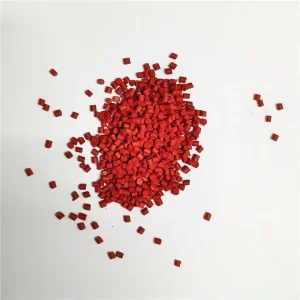
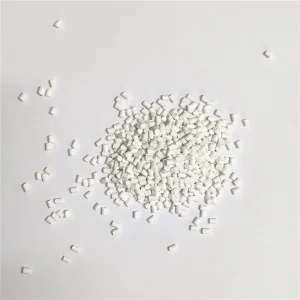
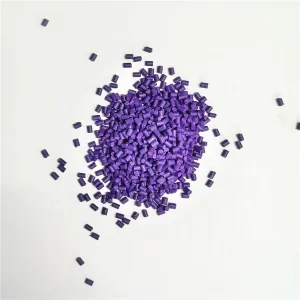
Explore high-concentration color and functional masterbatches engineered for injection molding, blown film co-extrusion, and industrial pipe profiles.
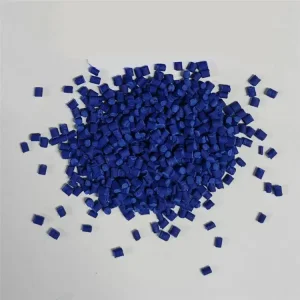
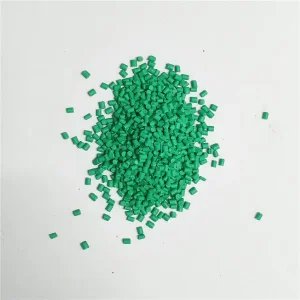
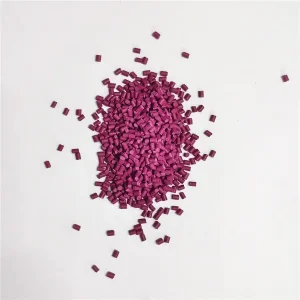
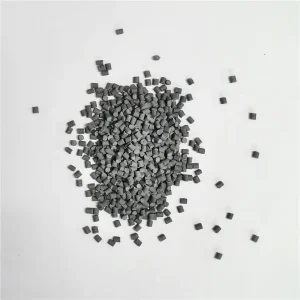
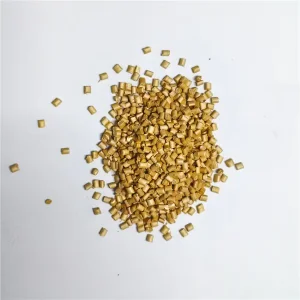
Analyzing structural demand, pigment thermodynamics, and material science shifts across worldwide polymer processing markets.
The global consumption of Polyethylene (PE) color concentrates has witnessed exponential expansion, with Blue PE Masterbatch maintaining a primary market share. Key drivers include high-density polyethylene (HDPE) pressure piping systems, industrial containment drums, agricultural shade nets, and flexible packaging films. Blue colorants function not merely for aesthetic branding but serve as crucial optical markers for pipe classification (water vs. gas lines) and light-blocking protective packaging.
High-performance blue color concentrates rely on organic Phthalocyanine complexes (specifically Pigment Blue 15:1, 15:3, and 15:4). Chinese chemical synthosizer hubs have optimized the crystal lattice phase of Alpha and Beta Phthalocyanine Blue, achieving exceptional tinting strength, chemical inertness, and thermal stability up to 280°C to 300°C without structural degradation or color shifting during melt extrusion.
Global environmental mandates (including EU REACH, RoHS 3.0, and US FDA 21 CFR) have driven the complete removal of heavy-metal-based pigments such as Cobalt Blue and Lead chromates. Advanced Chinese masterbatch manufacturers lead the industry in carrier-matrix stabilization, deploying bio-based low-density polyethylene (LDPE) and linear low-density polyethylene (LLDPE) carriers that ensure 100% recyclability of end-use polyolefin materials.
Deep-dive analysis of melt rheology, interfacial shear mixing, and future compounding innovations from leading Chinese factories.
The operational efficiency of a masterbatch depends heavily on the Melt Flow Index (MFI) match between the carrier resin and the target virgin polymer. Premium Chinese suppliers utilize low-molecular-weight LLDPE or metallocene PE carriers with high MFI (e.g., 20–50 g/10min at 190°C/2.16kg). This guarantees rapid encapsulation and homogeneous shear distribution within the extruder barrel, preventing filter-pack clogging and melt fracture.
Leading Chinese compounding facilities employ co-rotating twin-screw extruders featuring high length-to-diameter ratios (L/D from 44:1 to 52:1). Segmented screw elements—incorporating specialized kneading blocks, reverse-pitch flight elements, and vacuum degassing zones—ensure complete breaking of pigment agglomerates down to sub-micron primary particles. This eliminates specks and pinholes in ultra-thin film blowing (down to 10 microns).
Raw organic phthalocyanine pigments possess high surface energy and natural hydrophobic agglomeration tendencies. Modern formulations integrate high-purity polyethylene waxes (PE wax), secondary alkane sulfonates, and hyperdispersants. These additives reduce interfacial tension between the pigment surface and the polyolefin matrix, enhancing wetting properties and color yield per mass unit.
The 2025–2035 technological roadmap focuses on Post-Consumer Recycled (PCR) compatible color concentrates. Novel blue masterbatch grades feature built-in odor-scavenging additives, anti-oxidants (Irganox 1010/1076 combinations), and chain extenders to restore melt strength in recycled PE resins while maintaining vibrant blue chromaticity (L*a*b* values precision matching).
Tailored masterbatch performance parameters optimized for specific downstream converting processes.
Used extensively in agricultural silage films, heavy-duty shipping sacks, and express courier mailer bags. Masterbatch requires zero moisture content (<0.05%), high opacity, and non-blooming behavior to ensure printability and seal integrity.
Designed for beverage bottle closures, industrial crates, household containers, and automotive components. Demands zero dimensional warpage, high thermal stability (260°C+), and food-contact compliance.
Essential for water distribution pipes (PE 80 / PE 100 identification blue lines) and corrugated cable conduits. Demands supreme outdoor weatherability, resistance to stress cracking (ESCR), and hydrostatic pressure stability.
Why leading global plastics processors partner with established Chinese masterbatch companies for large-scale procurement.
China hosts the world's largest integrated polyolefin production ecosystem (Sinopec, PetroChina, Hengli Petrochemical). Masterbatch manufacturers in regions such as Jiangsu, Zhejiang, and Guangdong benefit from direct pipeline and localized access to virgin PE carrier resins and phthalocyanine chemical precursors. This eliminates raw material supply bottlenecks and reduces input cost volatility.
Top-tier factories operate fully automated continuous compounding lines with computerized gravimetric loss-in-weight feeders. This automation minimizes human margin-of-error, ensuring batch-to-batch color consistency (ΔE < 0.3) across 100-ton bulk orders while keeping production conversion costs significantly lower than European or North American competitors.
Armed with advanced dual-beam spectrophotometers (e.g., X-Rite Ci7800) and lab-scale test extruders, Chinese technical centers offer custom color matching (Pantone, RAL, or customer-supplied plaque) within 48 to 72 hours. Free sample pellets are dispatched rapidly via international air express, drastically accelerating customer product development cycles.
Strategic factory locations near major deep-water ports (Shanghai port, Ningbo-舟山 port, Shenzhen port) allow flexible export shipping options (FCL, LCL, ISO-containers). Streamlined export customs clearance processes enable typical order lead times of 10 to 15 business days from order placement to vessel loading.
Technical evaluation criteria for selecting optimal Blue PE Masterbatch formulations based on industrial target applications.
| Parameter / Grade | Standard Injection Grade | High-Concentration Film Grade | Weatherable Outdoor Grade | Food-Contact Certified Grade |
|---|---|---|---|---|
| Carrier Polymer | Recycled / Virgin PE | 100% Virgin LLDPE (MFI 20) | Metallocene PE / HDPE | Virgin LDPE (FDA Compliant) |
| Pigment Content (%) | 20% - 30% | 40% - 50% | 35% - 45% | 30% - 40% |
| Heat Resistance (°C) | 220°C - 240°C | 260°C - 280°C | 280°C - 300°C | 260°C |
| Lightfastness (Blue Wool Scale) | Grade 5 - 6 | Grade 7 | Grade 8 (Maximum) | Grade 7 - 8 |
| Dispersion Rating (Mesh Screen) | 100 Mesh Filter | 200 - 320 Mesh Filter | 200 Mesh Filter | 250 Mesh Filter |
| Heavy Metal & Phthalates | RoHS Compliant | RoHS / REACH SVHC Free | RoHS / REACH Free | FDA 21 CFR / EU 10/2011 |
| Primary Application | Crates, Buckets, Toys | Multi-layer blown film, Bags | PE Pipes, Cable Jackets, Netting | Food Trays, Milk Bottles, Caps |
Ensuring seamlessly integrated international logistics, regulatory peace of mind, and technical field support.
International buyers require strict adherence to chemical safety protocols. Certified Chinese masterbatch manufacturers provide comprehensive documentation packages for every production batch, including:
Every shipment undergoes stringent laboratory quality control (QC) testing prior to dispatch. QC retention samples are archived for a minimum of 24 months to ensure 100% batch-to-batch traceability.
Extending beyond supply logistics, top Chinese suppliers maintain dedicated technical support units to resolve processing bottlenecks at customer factories globally:
Expert insights addressing common procurement inquiries and processing technicalities.
The standard let-down ratio typically ranges between 1% and 4%, depending on the pigment concentration within the masterbatch (usually 20% to 50%) and the wall thickness of the final product. For high-concentration film grades (40% pigment), a 1% to 2% LDR is generally sufficient to achieve full opacity and intense color saturation, whereas injection molding of thick-walled items may utilize 2% to 3% LDR.
Color streaks are prevented by matching the Melt Flow Index (MFI) of the masterbatch carrier precisely with the virgin PE resin, and maintaining primary pigment agglomerate size below 0.5 microns. Furthermore, the incorporation of specialized hyperdispersants during twin-screw extruding ensures that pigment particles disperse uniformly under shear without re-agglomerating prior to die exit.
While PE carrier masterbatches exhibit acceptable universal compatibility with Polypropylene (PP) in non-critical injection molding applications at low addition rates (1-2%), it is recommended to use a dedicated PP-based carrier or a universal polyolefin carrier for high-stress applications. Mismatched carriers can subtly alter crystalline domain structures, leading to minor reductions in impact strength.
When stored in original unopened heavy-duty moisture-barrier bags, away from direct sunlight, UV exposure, and excessive humidity at ambient temperatures below 35°C, high-quality PE masterbatches have an official shelf life of 24 months. Desiccant pre-drying (at 70°C for 2 hours) is recommended if bags have been exposed to high atmospheric humidity prior to processing.
Outdoor lightfastness is rated on the International Blue Wool Scale from Grade 1 (poor) to Grade 8 (outstanding). High-grade outdoor blue masterbatches manufactured in China utilize stabilized Phthalocyanine Blue PB 15:3 co-formulated with Hindered Amine Light Stabilizers (HALS) and UV absorbers (such as UV-531 or UV-326), yielding maximum Grade 8 lightfastness and preventing chalking or fading for years under severe solar radiation.
Standard industrial MOQs from premier Chinese compounding factories range from 500 kg to 1,000 kg for standard grades, and 1,000 kg to 3,000 kg for specialized custom color matches. Production lead time for standard batches is typically 7 to 10 working days, with expedited custom matching completed in as little as 3 days.
Browse our extensive lineup of high-performance color concentrates certified for global plastics manufacturing markets.