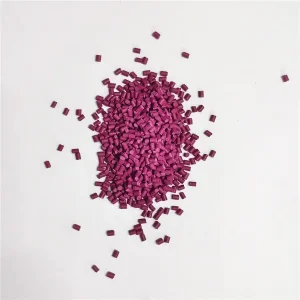
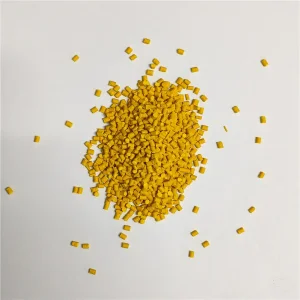
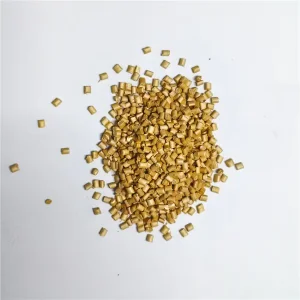
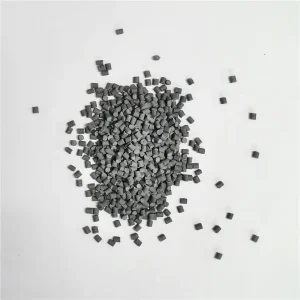
Engineered for pipe extrusion, blown film, and heavy-duty industrial application. Certified anti-fading, heat-resistant, and non-migration properties.
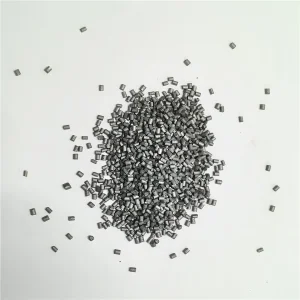
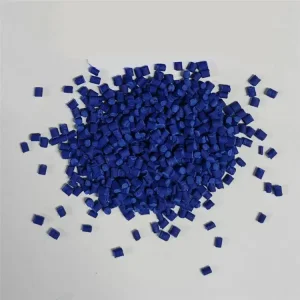
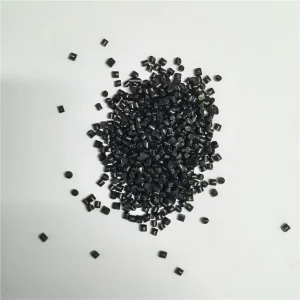
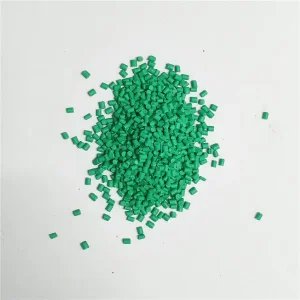
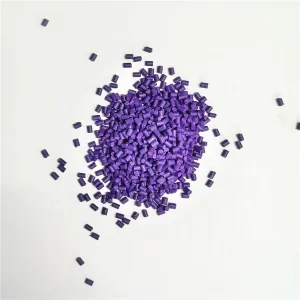
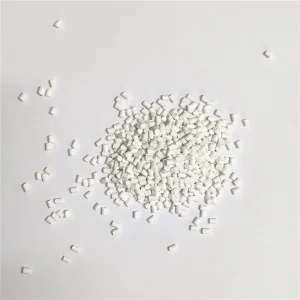
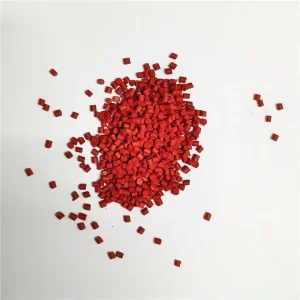
Understanding the molecular architecture, pigment dispersion mechanisms, and thermal stabilization required for heavy-duty industrial pipe extrusion.
In high-pressure chemical transmission lines and 3-Layer Polyethylene (3LPE) steel pipe coatings, carrier polymer compatibility is critical. Leading Chinese chemical anti-corrosion pipe PE masterbatch manufacturers utilize virgin LLDPE or HDPE carriers with narrow molecular weight distribution (MWD). Matching the MFI of the masterbatch precisely to the host resin (typically between 0.25 g/10min to 0.85 g/10min at 190°C/2.16kg according to ISO 1133) eliminates phase separation and structural void formation during continuous extruder barrel residence.
For outdoor industrial pipelines exposed to aggressive UV radiation and chemical ambient soil, masterbatch formulations must achieve a Carbon Black Dispersion rating of ≤2.0 per ISO 18553. Incorporating high-purity furnace black (average particle size 20–25 nm) at concentrations of 40% to 50% guarantees complete opacity and blocks photo-oxidative degradation. The inclusion of Hindered Amine Light Stabilizers (HALS) and phenolic primary antioxidants (e.g., Irganox 1010/168) extends service lifetimes beyond 50 years under ISO 4427 parameters.
Chemical anti-corrosion pipes face severe mechanical stress combined with surfactant-rich fluids. Poorly dispersed filler particles or low-grade pigments act as stress concentrators, leading to premature brittle failure. Premier Chinese factories utilize advanced twin-screw co-rotating extrusion systems operating at high shear rates (300–500 RPM) to ensure micro-homogenization. This processing integrity preserves the host polymer's ESCR rating (tested per ASTM D1693 / ISO 16770), guaranteeing compliance with demanding industrial mining, slurry, and acid-conveyance requirements.
A critical benchmark for global procurement teams evaluating Chinese PE masterbatch suppliers is the Oxidation Induction Time (OIT) value measured via Differential Scanning Calorimetry (DSC) under ISO 11357-6 at 200°C. Standard color masterbatches yield OIT values of under 20 minutes. In contrast, specialized chemical anti-corrosion masterbatches manufactured by Changzhou Jiazhou Plastic Products Co., Ltd. achieve OIT values exceeding 60 to 100 minutes, providing an extraordinary thermal-oxidative buffer during hot-melt pipe joint welding and long-term hot fluid transportation.
| Property / Characteristic | Testing Protocol (ISO/ASTM) | Standard Masterbatch | Anti-Corrosion Pipe Grade (Jiazhou) |
|---|---|---|---|
| Carrier Resin Base | ISO 1183 | Generic Recycled PE / Universal | 100% Virgin Pipe-Grade HDPE / LLDPE |
| Pigment / Active Content Loading | ISO 3451-1 | 20% – 35% | 40% – 55% High Concentration |
| Melt Flow Index (190°C/2.16kg) | ISO 1133 | 2.0 – 10.0 g/10min (Unmatched) | 0.3 – 0.9 g/10min (Precisely Matched) |
| Moisture Content (ppm) | ASTM D6869 (Karl Fischer) | < 1200 ppm | ≤ 300 ppm (Vacuum Sealed) |
| Oxidation Induction Time (OIT at 200°C) | ISO 11357-6 | 15 – 30 Minutes | ≥ 60 – 100+ Minutes |
| Carbon Black Dispersion Grade | ISO 18553 | Grade 3.5 – 4.5 | Grade ≤ 1.5 (Micro-Dispersed) |
| Thermal Stability Range | TGA Analysis | Up to 220°C | Up to 260°C – 280°C Continuous |
Changzhou Jiazhou Plastic Products Co., Ltd. combines 16 years of polymer compounding mastery with continuous international delivery capabilities.
Exploring the strategic cluster benefits, cost-performance ratios, and technical agility of Chinese masterbatch production hubs like Changzhou, Jiangsu.
China's Yangtze River Delta industrial belt, specifically Changzhou, provides direct access to world-class petrochemical refineries producing pipe-grade HDPE (Sinopec, PetroChina, Sabic joint ventures). This proximity guarantees consistent raw material resin lots and ultra-competitive base costs. By bypassing multiple intermediary distributors, Chinese factories pass substantial cost savings to international buyers without compromising pigment quality or carrier purity.
Global infrastructure projects frequently require exact brand or color coding for utility pipes—such as yellow for natural gas, blue for potable water, black with color striping for mining chemical lines, and green for industrial waste. Factories like Changzhou Jiazhou operate computerized Datacolor spectrophotometer labs, providing precise Pantone and RAL custom masterbatch matching within 3 to 5 business days, backed by trial batch samples for extrusion testing.
Modern Chinese masterbatch factories adhere strictly to global regulatory frameworks. Products exported to Europe, North America, and Southeast Asia fully comply with EU REACH regulations, Heavy Metal Restriction directives (RoHS 2.0), and international contact standards such as FDA 21 CFR for potable water pipelines. Comprehensive documentation, including SDS (Safety Data Sheets) and Certificate of Analysis (COA) per batch, is standard protocol.
From subsea oil pipelines to hazardous chemical processing plants, specialized PE masterbatch formulations deliver operational safety across harsh environments.
Industrial mining operations transport abrasive copper, gold, and coal tailings mixed with acidic or alkaline leaching agents. Standard PE pipes suffer premature abrasion and chemical embrittlement. Incorporating anti-corrosion PE black or grey masterbatch formulated with high-molecular-weight carriers and surface-modified carbon black increases surface smoothness, reduces frictional drag, and prevents chemical permeation through the pipe matrix.
Subsea oil and gas transmission pipelines rely on 3LPE systems consisting of an epoxy primer, a adhesive layer, and an outer high-density polyethylene protective jacket. Masterbatches engineered for 3LPE outer layers must provide extreme UV stability, resistance to marine cathodic disbondment, and high tear strength to resist mechanical impact during pipe laying from offshore barges.
For municipal drinking water networks, blue PE masterbatch or black PE masterbatch must guarantee zero heavy metal leaching and prevent organoleptic degradation (taste/odor alteration of water). Jiazhou's non-toxic, food-contact compliant PE masterbatches prevent chlorine disinfectant oxidation and resist root penetration and microbial bio-fouling in buried sewage installations.
Emerging innovations driving the next generation of smart, eco-friendly, and ultra-durable plastic pipe colorants and additives.
Incorporating functionalized graphene nanoplatelets and carbon nanotubes into PE anti-corrosion masterbatches creates an impermeable physical barrier against micro-gas migration and chemical ion diffusion. Early field trials indicate a 300% improvement in barrier efficiency against aggressive acids (sulfuric, hydrochloric) in industrial chemical ducting.
To align with global circular economy directives (such as the EU Packaging and Packaging Waste Regulation), forward-thinking factories are perfecting masterbatches using upcycled PCR-HDPE carriers. Through specialized compatibilizers and odor-neutralizing additives, PCR-based masterbatches meet strict pipe structural standards while reducing net carbon footprint by up to 40%.
Next-generation anti-corrosion pipe masterbatches are embedding photo-reactive pigments and fluorescent tracers. These intelligent formulations allow field inspectors using portable UV spectroscopy scanners to nondestructively assess pipe wall degradation, stress accumulation, and oxidation levels before structural leaks develop.
Direct answers to crucial technical, logistical, and quality control questions raised by enterprise procurement officers and polymer extrusion engineers.
The standard let-down ratio (LDR) for high-concentration chemical anti-corrosion PE masterbatch ranges between 2.0% and 4.0% by weight, depending on the wall thickness of the pipe and the required pigment concentration. For 3LPE steel pipe outer coatings or heavy-wall chemical drainage pipes, a 3.0% LDR ensures a minimum 2.5% active carbon black content in the final extruded layer, fulfilling ISO 4427 and DIN 8074 corrosion protection standards.
Poor pigment or filler dispersion creates micro-agglomerates inside the polymer matrix. Under internal hydrostatic pressure, these agglomerates induce stress concentration points where micro-cracks originate, dramatically lowering the Minimum Required Strength (MRS) and Hydrostatic Design Basis (HDB) of the pipe. Utilizing high-dispersion masterbatches with a dispersion rating ≤1.5 maintains structural homogeneity and ensures long-term pressure ratings (e.g., PN16, PN25).
If a factory uses a low-grade or mismatched carrier resin (such as PP or EVA carrier inside an HDPE pipe host resin), the refractive indices and melt crystallization rates will mismatch. This results in delamination, void formation, poor thermal welding, and compromised chemical corrosion resistance. Responsible manufacturers like Changzhou Jiazhou formulation-match the carrier resin (e.g., PE100 or PE80 compatible grade) directly to the buyer's virgin resin specs.
Every production lot undergoes rigorous laboratory testing before export: Melt Flow Index (MFI) verification, moisture content analysis via Karl Fischer titration (≤300 ppm target), screen pack filtration pressure value (FPV) test for dispersion purity, color spectrophotometer evaluation (ΔE < 0.8), and high-temperature thermal stability testing up to 260°C.
Yes. Leading manufacturers offer multi-functional composite masterbatches. In a single masterbatch pellet, buyers can combine color pigments with anti-oxidants, UV absorbers, anti-static agents, and processing aids (fluoroelastomer PPA). This eliminates the need for plastic converters to dose multiple separate additives, lowering dosing error rates and optimizing extrusion processing times.
Standard masterbatch orders are produced and dispatched within 7 to 15 days. Packaging options include 25kg moisture-proof heavy-duty PE valve bags, aluminium foil vacuum-sealed bags, or 1,000kg industrial jumbo palletized bags. All shipments are shrink-wrapped on export pallets complying with ISPM 15 phytosanitary standards for ocean and air freight logistics.
Premium colorants and additive masterbatches designed for blown film, injection molding, and continuous pipe profile extrusion.