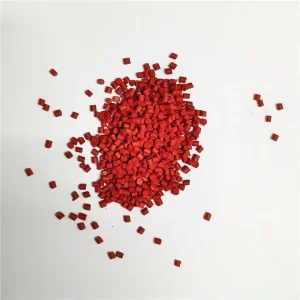
Direct from premier Chinese masterbatch compounding facilities: engineered for high dispersion, strict resistivity compliance, and exceptional thermal stability.
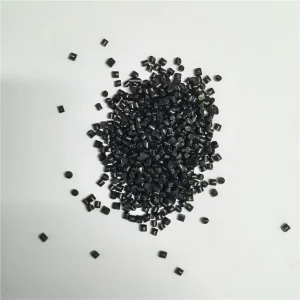
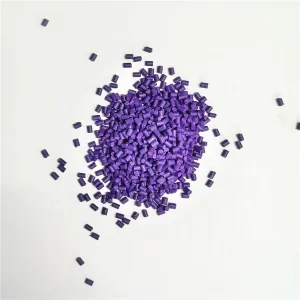
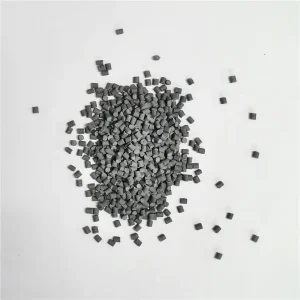
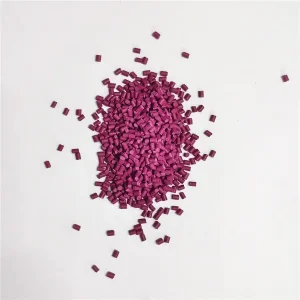
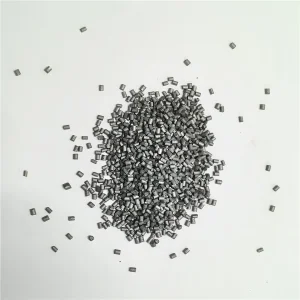
An in-depth evaluation of how conductive black PE masterbatch factories optimize conductive network formation without sacrificing mechanical integrity.
Electrons flow through a polymer matrix via quantum tunneling when conductive carbon black filler reaches its critical volume fraction (Percolation Threshold). Chinese specialized factories utilize highly structured carbon black with high BET surface area (>800 m²/g) to achieve percolation at dosages as low as 15%–22% LDR, preserving PE ductility.
By precisely controlling shear rates and carrier resin crystalline dynamics, masterbatch formulations yield adjustable electrical performance. Surface resistivity can be fine-tuned from ESD levels (106 – 109 Ω/sq) down to true conductive levels (102 – 105 Ω/sq) for critical EMI shielding or ground path applications.
Optimal dispersion requires matching the Melt Flow Index (MFI) of the PE carrier (LDPE, LLDPE, HDPE, or EVA) with the host virgin resin. Advanced twin-screw compounding lines in Changzhou and Jiangsu polymer hubs ensure homogeneous wetting of carbon black aggregates to eliminate agglomerate hotspots.
Engineered conductive black PE masterbatch grades vary significantly based on functional classification. Below is the standardized performance benchmark across leading Chinese factories.
| Performance Classification | Surface Resistivity (Ω/sq) | Volume Resistivity (Ω·cm) | Typical Carbon Black Loading | Primary Processing Methods | Key Application Focus |
|---|---|---|---|---|---|
| Anti-Static (Dissipative) | 109 – 1011 | 108 – 1010 | 10% – 15% | Blown Film, Sheet Extrusion | Cleanroom Packaging, Dust Mitigation |
| Electrostatic Discharge (ESD) | 106 – 109 | 105 – 108 | 18% – 25% | Thermoforming, Injection Molding | IC Carrier Tapes, Electronics Trays |
| Fully Conductive Grade | 103 – 105 | 102 – 104 | 25% – 35% | Profile Extrusion, Pipe Extrusion | ATEX Mining Pipes, Fuel Hoses |
| Ultra-Conductive / EMI Shielding | 101 – 103 | 100 – 102 | 35% – 45% (Hybrid CNT) | Specialty Injection Molding | Automotive Sensors, Battery Casing |
From microelectronics protection to explosive atmosphere infrastructure, explore how precision masterbatches deliver localized functional protection.
Integrated Circuits (ICs) and surface-mount components demand zero static accumulation. Conductive PE black masterbatch is extruded into high-precision carrier tapes and thermoformed IC trays, preventing sudden electrostatic discharges (ESD) during automated SMT pick-and-place assembly.
In underground mining operations and chemical processing plants, friction from fluid or granular flow can build up dangerous static charges. Conductive HDPE pipe extrusions formulated with specialized masterbatch safely bleed off charges to ground, complying with EU ATEX anti-explosion directives.
Modern automotive plastic fuel filler necks and EV battery management system (BMS) housings require electrical conductivity to prevent static sparks near volatile fuels or high-voltage electronic control modules. Our masterbatch provides non-fading resistivity under aggressive fuel vapor exposure.
Extruded conductive geomembranes prevent electrostatic arcing in agricultural chemical containment reservoirs. Simultaneously, high-voltage power cables utilize semi-conductive PE masterbatch layers for uniform stress distribution across power transmission insulation shields.
Discover how China's conductive polymer research institutes and top masterbatch compounding facilities are advancing next-generation carbon hybrid systems.
Moving beyond conventional highly-structured carbon black, forward-looking Chinese compounding facilities are integrating multi-walled carbon nanotubes (MWCNTs) and graphene nanoplatelets. This hybrid network drops the percolation threshold to under 3% LDR, maintaining 95%+ of original virgin PE tensile strength and impact resistance.
In response to global sustainability directives (EU Green Deal & Circular Economy Action Plan), masterbatch research is focusing on bio-allocated polyethylene and PCR (Post-Consumer Recycled) PE carriers. Advanced coupling agents neutralize impurities in PCR feedstocks while retaining precise volume resistivity.
For cleanroom wafer packaging and medical device housings, masterbatch processing lines are introducing continuous vacuum degassing extruders. This removes volatile organic compounds (VOCs) and low-molecular-weight oligomers, delivering spherical non-dusting masterbatch pellets.
Why sourcing from Changzhou and the Yangtze River Delta masterbatch manufacturing hubs guarantees unmatched cost-efficiency and lead-time security.
Chinese factories are located within immediate proximity to premier specialty chemical hubs in Jiangsu, Shandong, and Zhejiang. Direct pipeline and bulk supply of conductive carbon black (e.g., Ketjenblack equivalents, acetylene black) and virgin PE resins lower raw material procurement costs by 15%–25% compared to Western compounders.
State-of-the-art facilities operate high L/D ratio (44:1 to 52:1) co-rotating twin-screw extruders equipped with gravimetric loss-in-weight feeders. This guarantees microscopic carbon black dispersion free from un-melted gels or pinholes in thin blown films (<20 microns).
Unlike rigid global chemical conglomerates requiring multi-ton minimum order quantities (MOQs), Chinese specialized masterbatch plants offer rapid color and conductivity matching. Custom lab samples are formulated, tested for surface resistivity, and dispatched within 3 to 5 business days.
An economic evaluation for plastic processors deciding between purchasing expensive pre-compounded conductive resins or utilizing high-concentrate masterbatch let-down systems.
Utilizing high-concentration Conductive Black PE Masterbatch at a 20%–30% Let-Down Ratio (LDR) with virgin natural PE reduces overall raw material freight costs by up to 40% while preventing thermal degradation caused by re-melting fully compounded plastics.
| Evaluation Parameter | Pre-Compounded Conductive Resin | Conductive Black PE Masterbatch System | Processor Benefit / Information Gain |
|---|---|---|---|
| Raw Material Unit Cost | High (Includes compounding margin on 100% volume) | Optimized (Compounding margin applied only to 20%-30% concentrate) | Substantial cost-per-ton savings on bulk resin purchases |
| Logistics & Storage Footprint | Requires warehousing 100% finished conductive resin volume | 70% Space Reduction (Store natural PE + compact masterbatch bags) | Dramatically reduces overseas sea container shipping costs |
| Resistivity Versatility | Fixed electrical property per lot | Fully Adjustable (Tweak LDR by ±3% to hit exact target resistivity) | Enables single masterbatch stock for multiple client specs |
| Thermal Degradation Risk | Resin undergoes 2 full heat histories (compounding + molding) | Minimal Heat History (70%+ natural resin melted only once during final molding) | Preserves impact strength and elongation at break properties |
Navigating environmental directives, customs compliance, and technical implementation for global polymer converters.
All conductive black PE masterbatch grades undergo strict laboratory testing. Formulations comply fully with EU RoHS 3.0 (2015/863), REACH SVHC heavy metal restrictions, and FDA non-contact packaging criteria.
Every production lot is validated using surface resistivity meters (ANSI/ESD STM11.11), melt flow indexers, and filter pressure value (FPV) testing to ensure consistent screen pack performance during client extrusions.
Experienced technical service engineers provide customized trial support. We assist clients in optimizing temperature profiles, screw configuration designs, and let-down ratios on their specific injection molding or blown film machinery.
Direct technical answers from senior masterbatch engineers regarding conductive PE masterbatch selection and processing.
The standard Let-Down Ratio ranges between 15% and 35%, depending on the target surface resistivity and the base resin used. For basic anti-static requirements (109 Ω/sq), an LDR of 15%–20% is typical. For true ESD packaging (106 – 108 Ω/sq) or conductive applications (<105 Ω/sq), an LDR of 25%–35% is recommended.
Conventional carbon black masterbatches can cause embrittlement at high loading. However, advanced Chinese factories utilize high-structure specialty carbon blacks with superior dispersion aids. This allows the masterbatch to achieve percolation at lower filler concentrations, preserving over 90% of the virgin resin’s tensile, tear, and impact strength.
Yes. Our conductive PE masterbatch is formulated for broad compatibility with standard single-screw blown film lines, sheet extruders, and injection molding machinery. We recommend maintaining melt temperatures between 180°C and 230°C and using a screw design with sufficient distributive mixing elements.
Unlike migratory chemical anti-static agents (which rely on ambient moisture absorption to dissipate charge), carbon black forms a permanent physical conductive network within the polymer matrix. Consequently, its surface resistivity remains completely independent of relative humidity and will not degrade over time.
Every export batch is accompanied by a Certificate of Analysis (COA), RoHS 3.0 & REACH SVHC compliance test reports, SDS (Safety Data Sheet), and surface resistivity test charts recorded prior to shipment.
Select from our comprehensive range of high-stability color, black, white, and additive masterbatches engineered in China.