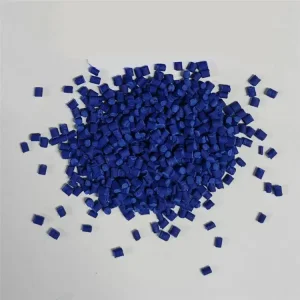
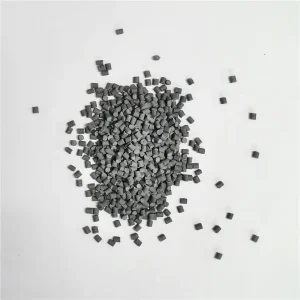
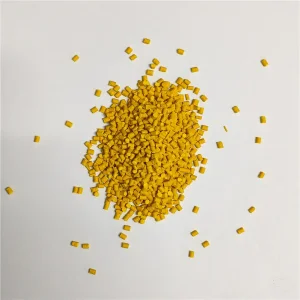
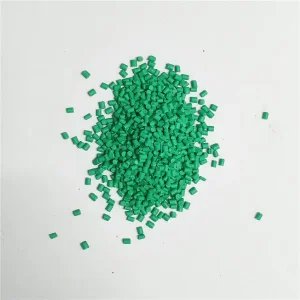
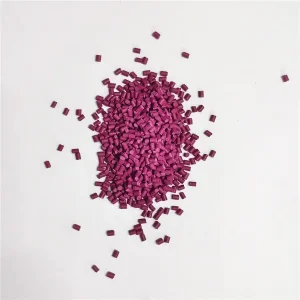
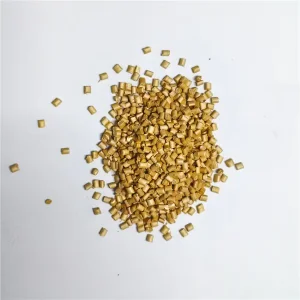
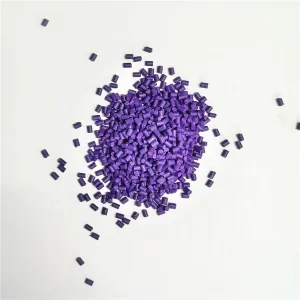
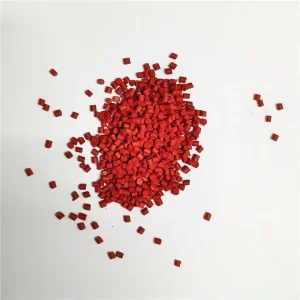
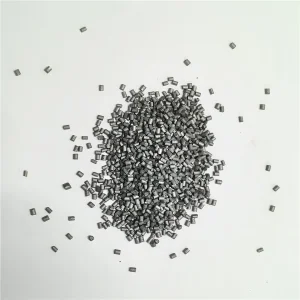
Directly sourced from certified Chinese compounding facilities, designed for optimal dispersion, zero migration, and high heat resistance (up to 260°C) in daily household plastics.
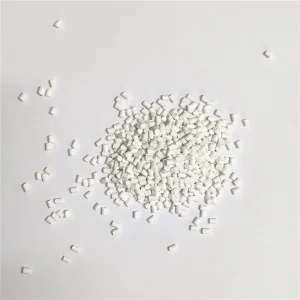
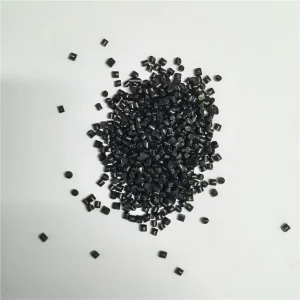
Understanding the shift in global plastic processing: How Chinese compounding facilities leverage advanced twin-screw extruders and localized supply chains to supply high-purity colorants globally.
China manufactures over 45% of the world’s Polyethylene (PE) carrier-based color and additive masterbatches. By clustering petrochemical feedstocks in industrial hubs like Jiangsu, Chinese factories deliver unprecedented scale, reducing raw material procurement costs while assuring consistent melt viscosity across multi-ton production batches.
Modern daily consumer goods manufacturing demands ultra-fast cycle times on high-tonnage injection molding machines (e.g., Engel, Haitian, Sumitomo). Masterbatches must display instantaneous dispersion without agglomeration, preventing pinholes, streaking, or nozzle clogging under high shear pressures.
With consumer plastics coming into direct contact with food, cosmetic formulations, and children's skin, global regulations (FDA 21 CFR, EU No 10/2011, REACH SVHC, RoHS 3.0) dictate strict non-heavy-metal pigment loadings and non-migratory carrier wax additives.
The performance of daily goods injection molding relies heavily on the physical-chemical matching between the PE masterbatch carrier resin and the matrix polymer substrate.
In daily goods injection molding—such as storage buckets, food containers, caps, and cosmetic closures—pigment agglomeration leads to surface defects, micro-fractures, and color inconsistency. Leading Chinese suppliers utilize co-rotating twin-screw extruders with Length-to-Diameter (L/D) ratios of 40:1 to 48:1.
During compounding, pigments (such as Rutile Titanium Dioxide $\text{TiO}_2$, Phthalocyanine Blue/Green, or Carbon Black) undergo intense shear stress. Wetting agents (polyethylene wax with molecular weight between 1,000–3,000 g/mol) lower interfacial tension, ensuring primary pigment particles (< 0.5 microns) are thoroughly dispersed throughout the virgin LDPE or LLDPE matrix resin.
The Melt Flow Index (MFI) of the masterbatch carrier must be equal to or slightly higher (typically 2 to 5 g/10min higher at 190°C/2.16kg) than the matrix injection grade resin (HDPE/PP/LDPE). If the carrier MFI is too low, masterbatch pellets will fail to melt completely during the brief plasticizing phase of injection molding, resulting in visual "speckles" or un-melted streaks.
Injection molding of daily consumer goods often operates at temperatures ranging from 200°C to 260°C. Organic pigments with weak thermal resistance tend to break down, resulting in dull color shifts or severe discoloration. High-grade PE masterbatches incorporate hindered amine light stabilizers (HALS) and primary antioxidants (Irganox 1010/Irgafos 168) to prevent heat degradation during molding cycles.
Furthermore, non-migration properties are paramount. In daily plastic containers holding fatty foods or oil-based cosmetics, low-quality dyes can migrate through the polymer matrix to the surface. Certified Chinese factories employ high-molecular-weight organic pigments and inorganic oxides that bind permanently within the crystalline lattice of Polyethylene.
| Masterbatch Type | Carrier Resin Base | Pigment Loading (%) | MFI Range (190°C/2.16kg) | Max Heat Stability | Primary Injection Applications |
|---|---|---|---|---|---|
| PE White Masterbatch | LLDPE / LDPE | 40% - 70% Titanium Dioxide | 15 - 35 g/10min | 280°C | Thin-wall food containers, caps, dairy tubs |
| PE Black Masterbatch | LDPE / HDPE | 20% - 50% Carbon Black | 10 - 30 g/10min | 260°C | Crates, trash bins, agricultural buckets |
| PE Color Masterbatch | PE / Universal Wax Carrier | 25% - 45% Organic/Inorganic | 20 - 45 g/10min | 240°C - 260°C | Toys, kitchenware, cosmetics bottles |
| Special Effect (Gold/Silver) | Low MW Polyethylene | 15% - 30% Metallic Flakes | 25 - 50 g/10min | 230°C | Luxury packaging, personal care caps |
How technical masterbatch formulation reduces operational costs, minimizes scrap rates, and accelerates cycle times in high-volume daily plastic goods production.
By integrating inorganic nucleating agents into PE masterbatch formulations, injection molders achieve higher crystallization temperatures ($\text{T}_c$). This enables faster polymer solidification in the mold cavity, cutting overall cooling times by 8% to 15% and increasing daily unit throughput.
High pigment concentration (up to 50%) allows injection molders to operate at low Let-Down Ratios (LDR) of 1% to 3%. Precise control of granule size (2.0–2.5mm uniform spherical pellets) guarantees steady gravimetric dosing, eliminating color drift between batch runs.
Masterbatches engineered with fluoropolymer-based processing aids (PPA) reduce internal melt friction against screw walls. This lowers barrel pressure, cuts electrical power usage on injection hydraulic pumps, and eliminates melt fracture defects.
From food-grade kitchenware to heavy-duty storage containers, explore how specialized PE masterbatch grades solve specific manufacturing challenges.
Target Resins: Food-grade HDPE, LLDPE.
Key Requirements: Non-toxic, odor-free, non-migratory pigment formulations complying with FDA 21 CFR 177.1520 and EU No 10/2011.
Masterbatch Solution: High-opacity PE White (TiO2 rutile grade) combined with primary antioxidant packages that prevent yellowing during repeated microwave exposure and dishwashing cycles.
Target Resins: PP, Polyethylene (HDPE).
Key Requirements: High aesthetic appeal, glossy finish, zero flow-lines, micro-dispersion for fine thread molding.
Masterbatch Solution: Metallic Gold, Silver, and Custom Grey PE Masterbatches formulated with ultra-fine aluminum and mica pearlescent flakes treated with organosilanes to prevent flake agglomeration.
Target Resins: High Density Polyethylene (HDPE recycled/virgin blends).
Key Requirements: Extreme weather resistance, UV stabilization (UV-842/770), high impact strength maintenance.
Masterbatch Solution: PE Black & Dark Color Masterbatches loaded with 40% high-jetness Carbon Black (particle size < 20nm), shielding matrix polymers against photo-oxidative degradation for 5+ years of outdoor usage.
Target Resins: Soft-touch LDPE, EVA, PP.
Key Requirements: EN 71-3 (Safety of Toys - Migration of Certain Elements) compliance, non-fading vivid colors.
Masterbatch Solution: Bright Red, Yellow, Green, and Purple PE Masterbatches manufactured using heavy-metal-free (Lead/Cadmium/Chromium-free) organic pigments with high tinting strength.
As global carbon neutrality targets approach, Chinese PE masterbatch manufacturers are integrating circular economy principles and smart compounding technologies.
Developing masterbatches using 100% Post-Consumer Recycled (PCR) Polyethylene as carrier resins without sacrificing mechanical tensile strength or melt elasticity. Compatibility with PCR host resins is ensured via reactive chain extenders.
Traditional carbon black absorbs Near-Infrared radiation, preventing automated optical sorting in recycling plants. Next-gen NIR-detectable black masterbatches utilize specialized organic pigments allowing plastic crates and bottles to be easily identified and sorted by polymer type.
Implementation of online spectrophotometry and AI-driven thermal feedback loops during compounding. Real-time automatic adjustment of feeder speeds guarantees $\Delta E < 0.30$ consistency across multi-ton production batches.
A structured evaluation checklist for global buyers sourcing masterbatch for high-speed injection molding lines.
Expert technical responses to common questions regarding daily goods PE masterbatch selection and injection processing.
Premium color solutions engineered for injection molding, blown film extrusion, and specialty daily consumer goods manufacturing.