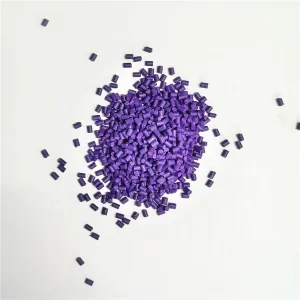
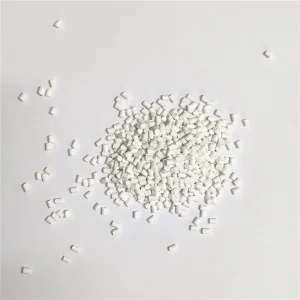
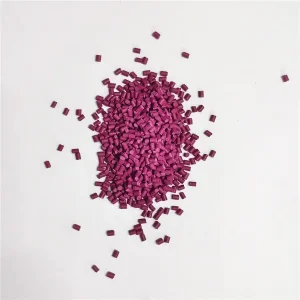
Engineered for high dispersion, thermal stability up to 260°C, and maximum cost optimization across blown film, injection molding, and extrusion processing.
The global polymer conversion industry operates under continuous cost compression and environmental scrutiny. As virgin polymer resin prices experience persistent volatility driven by petrochemical feedstocks, global plastic converters in packaging, agriculture, construction, and automotive sectors are turning to advanced mineral-based fillers. Among global supply hubs, China Filler Master Batch Companies & Manufacturers have established an undisputed benchmark in micro-dispersion compounding, raw material integration, and high-efficiency scale.
Modern **Filler Masterbatch** (predominantly composed of ultra-fine Calcium Carbonate $\text{CaCO}_3$, Talc, or Barium Sulfate suspended in PE, PP, or EVA carrier resins) has evolved from a primitive cost-reduction additive into a highly sophisticated **functional modifier**. When formulated with precision particle size distributions (PSD) and advanced coupling chemistry, filler masterbatches enhance thermal conductivity, reduce molding cooling cycles by 10% to 25%, elevate flexural modulus, and lower carbon footprints across the plastic lifecycle.
This industrial whitepaper serves as an authoritative guide for corporate procurement managers, polymer engineers, and factory operational directors. It provides rigorous data on micro-dispersion mechanics, China's Smart Factory 4.0 advantages, total cost of ownership (TCO) modeling, and actionable implementation guidelines across blown film, injection molding, and pipe extrusion.
Understanding the physics of interface bonding, particle size distribution, and carrier melt flow index (MFI) matching.
Uncoated calcium carbonate is naturally hydrophilic, whereas polyolefins (PE/PP) are non-polar hydrophobic polymers. Leading Chinese manufacturers utilize titanate or stearic acid surface treatment (1.0–1.5 wt%) to convert the mineral surface, preventing agglomeration and ensuring seamless wetting during twin-screw shear extrusion.
Particle distribution dictates mechanical integrity. Premium filler masterbatches utilize nano-scale to micro-scale heavy calcium carbonate (GCC) or precipitated calcium carbonate (PCC) with D50 values ranging from 1.2µm to 2.5µm (1250–3000 mesh), eliminating screen pack clogging and maintaining film elongation at break.
To avoid phase separation during high-speed blown film or injection molding, the carrier resin's Melt Flow Index (MFI) must match or slightly exceed the matrix polymer (e.g., LLDPE carrier MFI 7–20 g/10min for blown film). Precise viscosity matching ensures homogenously dispersed mineral networks.
Selecting the optimal mineral filler depends on the final application requirements: cost reduction, opacity, stiffness, transparency, or impact strength. Below is an engineering comparison of primary filler types produced by premier Chinese manufacturers:
| Filler Mineral Type | Primary Mineral Formula | Typical Mesh Size | Key Performance Benefit | Target Plastic Processing Method |
|---|---|---|---|---|
| Ground Calcium Carbonate (GCC) | $\text{CaCO}_3$ | 800 – 3000 Mesh | Maximum cost reduction, high thermal conductivity, white opacity | PE Blown Film, T-shirt Bags, Garbage Bags, Rigid Injection Crates |
| Talc Filler Masterbatch | $\text{Mg}_3\text{Si}_4\text{O}_{10}(\text{OH})_2$ | 1250 – 5000 Mesh | Exceptional flexural modulus (stiffness), dimensional stability, heat deflection (HDT) | PP Automotive Trim, Household Appliances, Thin-wall Thermoforming |
| Sodium Sulfate Filler ($\text{Na}_2\text{SO}_4$) | $\text{Na}_2\text{SO}_4$ (Transparent) | 2000 – 4000 Mesh | High optical transparency, anti-blocking effect, minimal refractive index mismatch | High-Transparency LLDPE Packaging Films, Shrink Films, Agricultural Film |
| Barium Sulfate ($\text{BaSO}_4$) Filler | $\text{BaSO}_4$ | 3000 – 6000 Mesh | Super high gloss, high density, radiation shielding, superb surface smoothness | High-End Cosmetics Packaging, High-Gloss Injection Components, Medical Tubing |
China's dominance in the global plastics additives sector is rooted in localized supply chains, state-of-the-art compounding equipment, and dense industrial infrastructure. Leading enterprises like **Changzhou Jiazhou Plastic Products Co., Ltd.** represent the pinnacle of this industrial ecosystem.
Modern Chinese plants employ multi-component continuous loss-in-weight (gravimetric) dosing systems. High-torque co-rotating twin-screw extruders (L/D ratios from 44:1 to 52:1) ensure intense dispersive and distributive mixing under vacuum degassing, removing microscopic moisture pockets.
Situated in Changzhou, Jiangsu Province, manufacturers benefit from direct access to high-purity limestone quarries in Anhui and Zhejiang, alongside top-tier petrochemical refining complexes (Sinopec, PetroChina). This proximity secures raw material consistency and competitive pricing.
Founded in 2010, **Changzhou Jiazhou Plastic Products Co., Ltd.** operates a 6,000 m² state-of-the-art compounding facility with over 16 years of specialized engineering in color masterbatches and filler masterbatches. Exporting to more than 100 countries across Europe, Southeast Asia, South America, and the Middle East, Jiazhou guarantees strict quality compliance, batch-to-batch color stability, and fast lead times within 15 days.
Detailed guidelines on dosage ratios, thermal behavior, and processing optimization across key plastic converting methods.
Typical Addition Rate: 10% – 35%
Applied in HDPE/LDPE courier bags, shopping bags, and agricultural films. High-dispersion $\text{CaCO}_3$ stabilizes the blown bubble, enhances printing ink adhesion, prevents static cling, and reduces film tearing under tensile loads.
Typical Addition Rate: 15% – 45%
Used in industrial crates, pallets, buckets, and auto parts. Calcium carbonate acts as an internal heat sink, dramatically lowering cooling cycle times by up to 25%, preventing mold shrinkage, and dampening acoustic vibration.
Typical Addition Rate: 10% – 30%
Widely integrated into HDPE corrugated drainage pipes, PVC conduits, and architectural profiles. Incorporating coated $\text{CaCO}_3$ or Talc enhances ring stiffness, flexural modulus, and impact resistance under thermal stress.
Procurement decisions should not rest solely on per-ton masterbatch purchase price. A comprehensive Total Cost of Ownership (TCO) framework factors in primary resin displacement, processing energy consumption, cycle time reductions, and shipping efficiency:
The masterbatch industry is undergoing rapid innovation to align with global carbon-neutrality mandates and plastic recycling frameworks. Key market vectors shaping China's export manufacturing standard include:
Incorporating ultra-fine $\text{CaCO}_3$ into compostable carrier resins such as PBAT, PLA, or PBS. Calcium carbonate accelerates mechanical degradation under soil exposure while maintaining high eco-toxicity safety standards.
Compounding filler masterbatches specifically for Post-Consumer Recycled (PCR) polyolefin streams. Specialized maleic anhydride grafted PE/PP (MAh-g-PE) additives stabilize recycled polymer contamination and restore mechanical properties.
Advancements in high-torque triple-screw extruders enable filler masterbatches with upwards of 85% mineral content, offering extreme transport density and minimizing global freight costs per active ton of mineral modifier.
Expert technical answers addressing common buyer inquiries, dispersion problems, quality assurance, and processing parameters.
For standard shopping bags and T-shirt bags, a loading of 15% to 30% is typical using a 1.5–2.0 micron treated $\text{CaCO}_3$ filler. Higher-grade nano-fillers with specialized titanate coupling agents can reach up to 35-40% addition rates without causing bubble instability or pinholes, provided the extruder melt temperature and filter pack mesh are optimized.
Extruder wear is governed by particle hardness and purity. Pure ground calcium carbonate ($\text{CaCO}_3$) has a low Mohs hardness of approximately 3.0, which is non-abrasive to bimetallic barrels and nitrided screws. Severe screw wear only occurs if low-grade filler containing silica ($\text{SiO}_2$) impurities is used. Premier Chinese suppliers ensure silica content remains below 0.05%.
Yes. Filler masterbatches formulated with virgin carrier resins, food-grade calcium carbonate (FDA 21 CFR 177.1520 compliant), and heavy-metal-free surface treatment agents are fully certified for direct food contact under EU No 10/2011 and FDA regulations.
Calcium carbonate is hygroscopic. If moisture content exceeds 0.2%, processing can suffer from silver streaks, bubbles, and void formation in injection molded parts, or film blowing tears. Premium manufacturers maintain moisture levels below 0.08% via continuous vacuum degassing and moisture-proof aluminum foil packaging.
$\text{CaCO}_3$ has spherical/cubic particle morphology, ideal for cost reduction, whitening, and cooling efficiency in both PE and PP. Talc has a platy micro-structure, making it superior for increasing flexural modulus, heat deflection temperature (HDT), and creep resistance, particularly in Polypropylene (PP) automotive and appliance applications.
Select any high-concentration masterbatch grade below to request specifications, technical datasheets (TDS), safety data (MSDS), and factory-direct quotation.