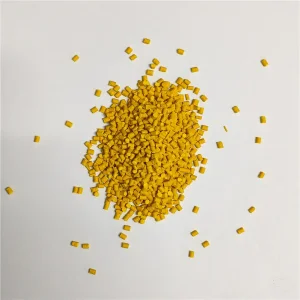
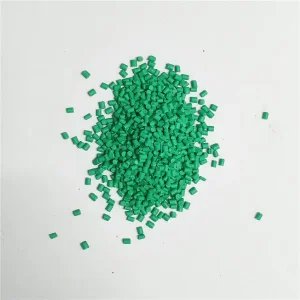
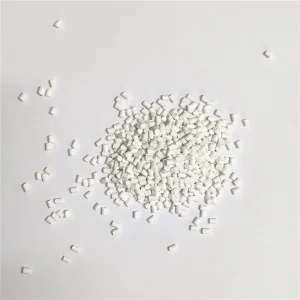
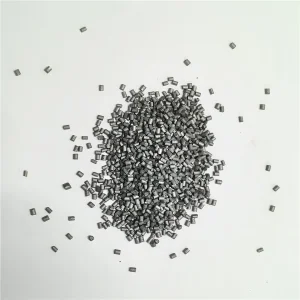
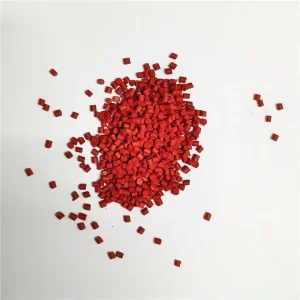
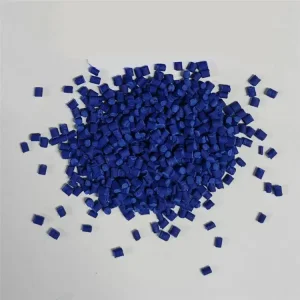
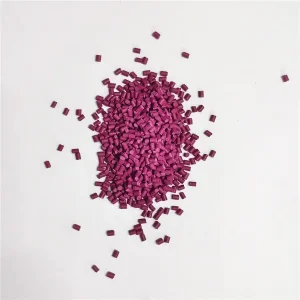
Engineered by Changzhou Jiazhou Plastic Products Co., Ltd. for extreme extrusion temperature stability, minimal melt pressure variance, and non-fading optical brilliance across tape yarn drawing and film processing lines.
An authoritative analysis on market dynamics, supply chain centralization in China, and technical demands driven by modern high-speed water-bath and hot-plate drawing lines.
The global polyolefin woven fabric market—encompassing Polyethylene (PE) and Polypropylene (PP) flat yarn, raffia tapes, Flexible Intermediate Bulk Containers (FIBC), woven sacks, and geotextiles—has grown to surpass $45 Billion annually. Driven by intensive agricultural logistics, industrial bulk packaging, infrastructure geotextiles, and global freight requirements, tape yarn extrusion demands absolute mechanical consistency. In flat yarn production, polymer chains are melted, extruded into thin films, water-quenched, slit into narrow tapes, and orientation-stretched under high temperature ratios (typically 1:5 to 1:8). The inclusion of color masterbatch or filler masterbatch must not impair this delicate orientation process.
China accounts for over 55% of global masterbatch production and polyolefin processing output. Chinese manufacturing clusters—specifically in Jiangsu province where specialized producers like Changzhou Jiazhou Plastic Products Co., Ltd. operate—benefit from vertically integrated supply chains, immediate access to high-purity linear low-density polyethylene (LLDPE), high-density polyethylene (HDPE), and virgin titanium dioxide (TiO2). This industrial ecosystem allows Chinese factories to deliver advanced flat yarn drawing PE masterbatches engineered for ultra-high speed extrusion lines (such as Starlinger, Windmöller & Hölscher, and Lohia) at unmatched economies of scale.
Understanding why standard masterbatches fail on high-speed flat yarn drawing lines, and how precise carrier selection resolves yarn breakage and die-lip build-up.
Extruding flat yarn differs fundamentally from blown film or injection molding. During flat yarn drawing, slit film tapes undergo extreme uniaxial tension while passing through hot-air ovens or heated godets. If the masterbatch contains agglomerated pigment particles larger than 5 microns, localized stress concentrations develop along the polymer chain axis. This causes immediate ribbon splitting, micro-fibrillation, or complete tape snapping (filament breakage), leading to costly line shutdowns.
To prevent line stoppage, modern PE masterbatches engineered for flat yarn drawing utilize a carefully tailored polymer matrix. The carrier resin must feature a Melt Flow Index (MFI) precisely matched to the base polyolefin resin—typically between 4 to 12 g/10min (190°C/2.16kg) for PE carriers. Using low-grade wax carriers or mismatched melt indices results in phase separation, poor dispersion, and lower ultimate tensile tenacity (measured in cN/dtex).
Industrial specifications for premium Flat Yarn Drawing PE Masterbatch formulations produced by top-tier Chinese factories.
| Technical Parameter | Standard Masterbatch | Flat Yarn Grade PE Masterbatch (Jiazhou Standard) | Testing Protocol |
|---|---|---|---|
| Carrier Resin Compatibility | Recycled LDPE / Mismatched Wax | 100% Virgin LLDPE / HDPE Matrix | ISO 1133 / ASTM D1238 |
| Filter Pressure Value (FPV) | > 2.5 bar/g (High clogging risk) | ≤ 0.3 - 0.5 bar/g (Ultra-clean) | EN 13900-5 (14µm mesh pack) |
| Pigment Particle Dispersion | Agglomerates > 10 μm present | D99 < 2.0 μm (Sub-micron dispersion) | Microscopic Transmitted Light Test |
| Thermal Stability Limit | 200°C - 220°C | 260°C - 280°C (Zero discoloration) | TGA / ISO 305 Thermal Endurance |
| Volatile Matter Content | > 0.35% (Causes moisture marks/voids) | ≤ 0.08% (Zero Water Carry Over) | Karl Fischer Titration @ 180°C |
| Tenacity Loss After Coloration | 12% - 18% reduction | ≤ 3% - 5% (Maintains high cN/dtex) | ISO 2062 Tensile Strength Test |
| Light Fastness (Blue Wool Scale) | Grade 4 - 5 | Grade 7 - 8 (High Outdoor UV Resistance) | ISO 105-B02 Xenon Arc Exposure |
How specialized PE Masterbatch formulations resolve water carry-over, die deposit build-up, and UV degradation in high-speed raffia manufacturing.
The Challenge: During water-bath quenching of extruded PE/PP sheets, poor additive dispersion or hydroscopic carrier additives drag water into the slitting line. Moisture droplets vaporize during hot-plate stretching, creating micro-voids, split tapes, and bubble breaks.
Engineering Solution: Jiazhou’s PE Masterbatch incorporates hydrophobic hydrophobic surfactant chemistry and low-moisture organo-clay/pigment surface treatments, ensuring zero water drag out across 400 m/min quench baths.
The Challenge: Low molecular weight polymers, paraffin waxes, and un-coated inorganic fillers plate out around the extrusion die mouth. Accumulations drop onto the moving sheet, burning and causing catastrophic line snaps.
Engineering Solution: Formulated with narrow molecular weight distribution (MWD) linear PE carriers and fluoropolymer Polymer Processing Aids (PPA), suppressing melt fracture and completely eliminating die lip deposition.
The Challenge: Woven sacks, container bags, and agricultural shading tapes are exposed to harsh solar ultraviolet radiation, causing photo-oxidative degradation, polymer embrittlement, and loss of tensile load capacity.
Engineering Solution: Masterbatch formulations can be co-extruded with Hindered Amine Light Stabilizers (HALS 944 / HALS 622) and UV Absorbers (UV-326), guaranteeing over 300 KLY outdoor service life in equatorial climates.
Tailored masterbatch solutions for demanding global end-use applications across agriculture, logistics, construction, and consumer packaging.
FIBC bags require exceptional tensile load resistance (Safety Factor ratios of 5:1 or 6:1) to hold up to 2,000 kg of industrial chemicals, minerals, or agricultural goods. Coloration must be perfectly uniform across body fabric, lifting loops, and spout fabrics. Jiazhou PE Color Masterbatches ensure zero drop in yarn tenacity, superior weave density, and anti-static compatibility for Type C and Type D electrostatically safe bulk bags.
Knitted flat yarns used in greenhouse shading, anti-bird netting, and crop protection require long-term colorfastness and heat resistance. Our high-concentration green, black, and blue PE masterbatches feature chemical resistance against agrochemical sprays (sulfur and chlorine exposure), maintaining structural integrity under high UV radiation over multi-season deployments.
Woven polypropylene and polyethylene bags undergo severe abrasion, dropping stresses, and outdoor storage. Incorporating custom PE masterbatch guarantees high opacity (blocking sunlight to preserve bag contents), excellent printability for high-definition gravure flexographic inks, and non-bleeding migration resistance during hot thermal sealing.
Civil engineering geotextiles demanding sub-surface soil stabilization demand inert, non-leaching carbon black PE masterbatches. Formulated with high-purity P-type furnace carbon black (20nm particle size), these masterbatches offer environmental stress crack resistance (ESCR) and long-term chemical durability in acidic or alkaline soils.
Ensuring full international compliance for food-contact packaging, chemical safety, and environmental stewardship.
All masterbatch products manufactured by Changzhou Jiazhou Plastic Products Co., Ltd. undergo strict XRF spectroscopy and ICP-OES screening. They are 100% free of heavy metals (Lead, Cadmium, Mercury, Hexavalent Chromium), Polybrominated Biphenyls (PBBs), Phthalates, and SVHC candidate substances.
For woven bags utilized in sugar, flour, rice, and food-grade powder packaging, formulations utilize pigments and carrier resins strictly compliant with US FDA 21 CFR 177.1520 and European Union Regulation (EU) No 10/2011 for overall migration limits (OML).
Operating a modern 6,000 m² production facility, every batch undergoes automated gravimetric dosing, twin-screw compounding, Datacolor spectrophotometer color matching (dE < 0.5), and retention sampling for 100% supply chain traceability.
Pioneering sustainable, intelligent polymer coloration technologies for the global circular plastics economy.
Developing high-purity recycled PE carrier matrices derived from ocean-bound plastics and post-industrial raffia waste, matching virgin polymer performance while reducing Scope 3 carbon emissions by up to 45%.
Eliminating per- and polyfluoroalkyl substances (PFAS) in accordance with emerging EU/US EPA regulations by pioneering organo-silicon and bio-based melt processing lubricants for high-speed extrusion lines.
Replacing traditional furnace carbon black with Near-Infrared (NIR) reflective pigments, enabling automated optical sorting sensors in recycling facilities to detect and sort black PE/PP woven fabrics.
Expert engineering insights addressing common process anomalies, dosage optimization, and supplier evaluation.
Tape breakage (filament snapping) is primarily caused by poor pigment dispersion, oversized filler particles (>5 microns), or high Filter Pressure Values (FPV). When slit films are stretched at high ratios (1:6 to 1:8), large pigment agglomerates create localized stress points, causing the tape to rupture. Using a specialized flat yarn grade PE masterbatch with an FPV under 0.5 bar/g and sub-micron particle dispersion completely resolves this issue.
The standard addition rate for high-concentration PE masterbatch ranges between 1.0% to 3.0% by weight, depending on the required opacity, pigment concentration, and target color shade. For white masterbatches with high TiO2 concentration (up to 70%), a 1.5% to 2.5% dosage provides complete hiding power without reducing tape tenacity.
Yes. Linear Low-Density Polyethylene (LLDPE) based masterbatches are widely used in PP flat yarn extrusion at low dosages (1% - 3%). The LLDPE carrier acts as an internal lubricant, reducing melt pressure and improving tape flexibility without reducing the overall melting point of the PP matrix. However, carrier MFI must be properly engineered to avoid phase separation.
Water carry-over occurs when hydrophilic additives or un-coated filler surfaces pull water droplets from the cooling bath onto the slitting unit. High-grade PE masterbatches utilize hydrophobic surface-treated pigments and moisture-resistant waxes that repel water, allowing high-speed lines to operate cleanly at over 400 meters per minute.
Global purchasers should verify ISO 9001:2015 Quality Management compliance, REACH (EU chemical safety), RoHS 3.0 heavy metal test reports from third-party labs like SGS or Intertek, and FDA food contact compliance certificates (if manufacturing food packaging bags).
High-performance colorants, white, black, and functional masterbatches ready for worldwide dispatch from our Changzhou factory.
Changzhou Jiazhou Plastic Products Co., Ltd. brings 16+ years of specialized compounding expertise, offering custom color matching within 3-5 days, flexible MOQs, and reliable ocean export logistics.
Request Technical Datasheet & Free Samples