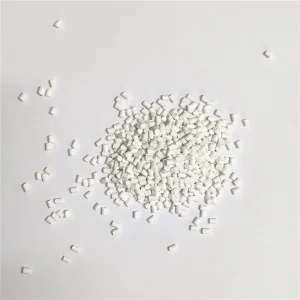
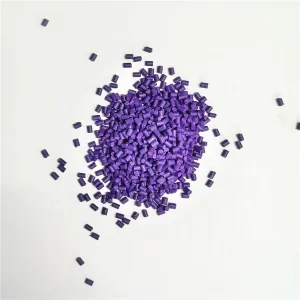
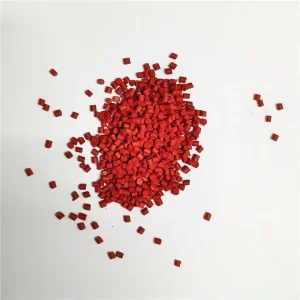
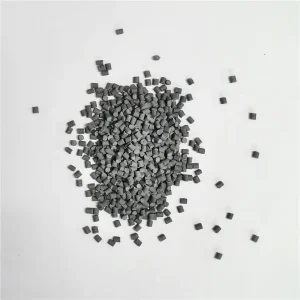
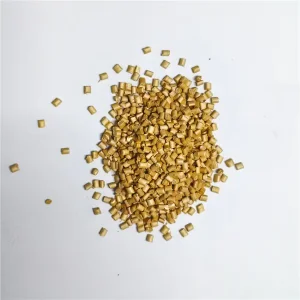
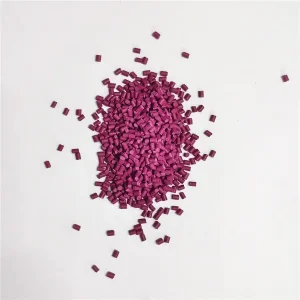
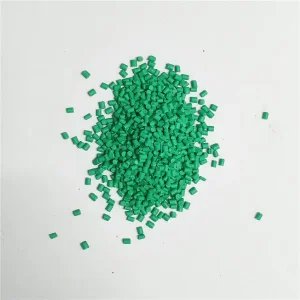
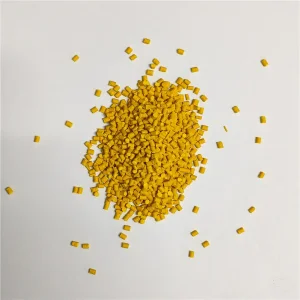
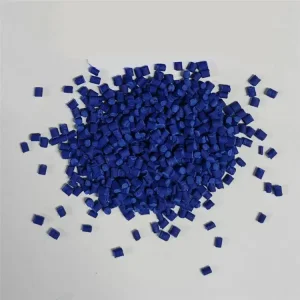
Certified for food contact compliance, extreme thermal stability (260°C), and non-migration properties across blown film, injection molding, and extrusion processes.
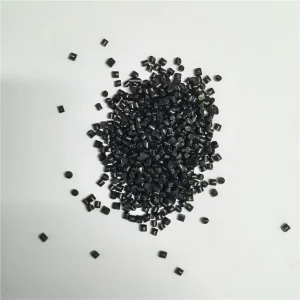
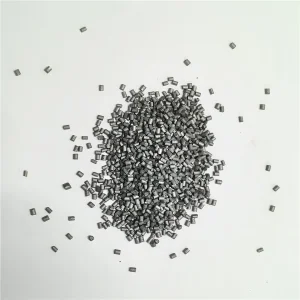
An exhaustive analysis of global regulatory pressure, raw material integration, and why leading FMCG brands source food-grade colorants from China.
The global rigid and flexible food packaging market is undergoing a massive shift toward strict non-toxic compliance. International buyers require Polyethylene (PE) color masterbatch that not only provides superior tinting strength and dispersion but also strictly complies with non-migration protocols under variable heat and acidity conditions.
China has evolved into the premier manufacturing center for high-concentration food-contact masterbatches. Backed by fully integrated petrochemical upstream supply chains (HDPE, LLDPE, LDPE carriers) and precision continuous compounding equipment, Chinese suppliers offer unparalleled Total Cost of Ownership (TCO) advantages without sacrificing quality assurance.
Modern buyers demand more than off-the-shelf pigments. Superior masterbatch solutions integrate processing aids, anti-static agents, and heat stabilizers into a unified carrier matrix. This eliminates multi-dosing inconsistencies and dramatically reduces melt-fracture rates in continuous high-speed film blowing extrusion lines.
Navigating complex international directives: FDA 21 CFR 177.1520, EU Regulation (EU) No 10/2011, and China National Standard GB 4806 / GB 9685.
Food contact grade PE masterbatch is subjected to strict global toxicological testing. When polymer compounds are exposed to aqueous, acidic, or fatty foods, trace organic components or low-molecular-weight additives may migrate from the packaging substrate into foodstuff. Qualified food-contact suppliers utilize organic and inorganic pigments that strictly avoid heavy metals (Lead, Cadmium, Mercury, Hexavalent Chromium), Primary Aromatic Amines (PAA), and harmful halogenated compounds.
| Regulatory Standard | Jurisdiction | Core Testing Metrics & Thresholds | Compliance Assurance Mechanism |
|---|---|---|---|
| FDA 21 CFR 177.1520 | United States / Global | Maximum extractable fraction in n-hexane & soluble fraction in xylene for Polyolefin polymers. | Positive list pigment screening; strict carrier purity verification (virgin LLDPE/LDPE). |
| EU No 10/2011 (PIM) | European Union | Overall Migration Limit (OML < 10mg/dm²) & Specific Migration Limit (SML) for heavy metals & monomers. | Simulant testing (Simulant A, B, D2), NIAS (Non-Intentional Added Substances) mass spectrometry screening. |
| GB 4806.1 & GB 9685 | China (National) | Sensory test, overall migration, consumption of potassium permanganate, heavy metals (as Pb), decolorization. | Strict usage limits per polymer type; comprehensive raw material batch certificates. |
| EN 71-3 / RoHS / REACH | Global / Toy & Packaging | Restriction of Hazardous Substances, SVHC candidate list check (< 0.1% w/w), 19 heavy metal migration limits. | ICP-OES / GC-MS analytical validation for every masterbatch production lot. |
Specific Migration Limits (SML) dictate that colorant additives must remain immobilized within the Polyethylene matrix. High-concentration PE masterbatch formulations leverage specialized surface-treated pigments and high molecular weight carrier resins to minimize diffusion coefficients, ensuring zero pigment leaching under high-temperature processing or prolonged shelf-life storage.
From sub-micron pigment deagglomeration to shear-stress thermal optimization in co-rotating twin-screw extruders.
Pigment agglomerates must be thoroughly broken down during processing. Poor dispersion leads to pinholes, filter clogging, and mechanical weakness in blown packaging films. By utilizing high-shear co-rotating twin-screw extruders with optimized L/D ratios (40:1 to 48:1), our masterbatch achieves sub-micron primary pigment dispersion, maximizing tinting strength while maintaining high melt filtration values (FPV < 0.5 bar/g).
The choice of matrix carrier resin determines the processing compatibility. Using virgin low-density polyethylene (LDPE) or linear low-density polyethylene (LLDPE) with tailored Melt Flow Rates (MFR from 10 g/10min to 45 g/10min at 190°C/2.16kg) guarantees rapid dispersion when blended with base polymers. This prevents streaking, optical blemishes, or phase separation during injection molding or blown film processes.
Food-grade pigments undergo severe thermal degradation during high-speed extrusion. Our color masterbatches incorporate specialized antioxidant packages (hindered phenols and phosphite processing stabilizers), preventing yellowing, color shift, or resin degradation up to 260°C.
Outdoor agricultural films and food transport crates require lightfastness ratings of 7–8 on the Blue Wool Scale and weatherability ratings of 4–5 on the Grey Scale. We integrate high-durability inorganic pigments (TiO2, Iron Oxides) and UV stabilizer masterbatches.
Plastisols and flexible food wraps require non-blooming formulations. Our proprietary pigment surface modification technology ensures zero migration, preventing chalking, surface haze, or dye transfer to adjacent packaged goods.
Engineered colorant systems optimized for blown film extrusion, thin-wall injection molding, blow-molded containers, and pipe profiles.
Designed for high-speed multi-layer co-extrusion packaging films, food wraps, milk packaging pouches, and heavy-duty agricultural film. Provides high opacity, uniform color distribution, excellent heat-sealing properties, and low die-buildup performance.
Formulated for dairy packaging, beverage bottle closures, cutlery, thin-wall food containers, and reusable crates. Guarantees dimensional stability without triggering warpage or shrinkage in semi-crystalline PE polymers.
Delivers exceptional surface gloss, wall-thickness uniformity, and ESCR (Environmental Stress Crack Resistance) for blow-molded edible oil bottles, sauce containers, and dairy jugs.
High thermal stability prevents degradation during paper extrusion coating, corrugated pipe manufacturing, and municipal potable water pipe extrusion compliant with NSF/ANSI standards.
Detailed quantifiable performance metrics proving the operational and safety benefits of engineered food contact masterbatches.
| Performance Characteristic | Standard Industrial Masterbatch | Food Contact Grade PE Masterbatch | Operational Impact on Processing |
|---|---|---|---|
| Carrier Purity | Recycled or off-spec PE resin | 100% Virgin Prime LLDPE/LDPE | Eliminates polymer gels, fish eyes, and volatile organic odors. |
| Heavy Metal Limits | < 1000 ppm combined | Undetectable (< 5 ppm heavy metal trace) | Guarantees total toxicological compliance with FDA & EU Directives. |
| Pressure Filter Value (FPV) | > 2.5 bar/g (coarse particles) | < 0.5 bar/g (micro-dispersed) | Extends extruder screen pack lifespan by 300% to 500%. |
| Heat Resistance | 180°C - 220°C | 240°C - 280°C | Prevents color bleaching or discoloration during thermal processing. |
| Migration & Blooming Risk | High migration potential in fat simulants | Zero migration (Passes Simulant D2 testing) | Prevents color leaching into packaged foods and consumer products. |
Empowering global packaging manufacturers to achieve carbon neutrality through eco-friendly masterbatch technologies.
Integrating Post-Consumer Recycled (PCR) PE resins often introduces dark discoloration, odor, and melt instability. Our specialized color correction masterbatches neutralize yellowing and masking off-shades in PCR streams, enabling up to 70% PCR inclusion while retaining food-grade aesthetic appeal.
Traditional carbon black masterbatches absorb Near-Infrared (NIR) light, preventing automated optical sorting systems at recycling facilities from identifying PE containers. We formulate carbon-free NIR-detectable black masterbatches, ensuring rigid food packaging can be successfully sorted and recycled.
To align with global plastic reduction mandates, we offer masterbatches using bio-based polyethylene derived from sugarcane feedstocks. These carriers reduce carbon footprint while maintaining 100% mechanical and food-contact equivalence to fossil-based PE resins.
Rigorous batch-to-batch quality management workflows ensuring seamless international procurement and production reliability.
Color consistency is critical for multi-site brand packaging. Using Datacolor computer-matching spectrophotometers under standard light sources (D65, TL84, CWF, A), every production batch is checked against standard color retains. We guarantee tight color tolerance limits with Delta E values strictly under 0.5.
Every export container is backed by a comprehensive Certificate of Analysis (CoA). Tests include Melt Flow Index (MFI), Moisture Content (Karl Fischer method < 0.05%), Density, Ash Content, and Granule Size Uniformity (30–40 pellets per gram) to prevent feeding bridge issues in extruders.
To ensure moisture resistance during long ocean freight transit, masterbatch granules are packaged in 25kg multi-layer moisture-proof aluminum-foil woven bags or 1000kg heavy-duty bulk jumbo bags on fumigated pallets. Standard lead times for standard color formulations are maintained within 10 to 15 business days.
Expert technical responses to common questions regarding food contact grade masterbatch procurement, processing, and regulatory compliance.
A food-contact grade PE masterbatch requires virgin, high-purity carrier resins (LDPE/LLDPE) combined with pigments listed on approved global positive lists (such as FDA 21 CFR 177.1520 or EU Regulation No 10/2011 Annex I). Furthermore, the complete formulation must pass migration limits (OML/SML), contain zero heavy metals, and yield no organoleptic odor or taste changes in the packaged food product.
The standard recommended Let-Down Ratio (LDR) ranges from 1% to 4% depending on pigment concentration, film gauge, and target opacity. For thin-gauge blown films (e.g., 15–25 microns), a 2% to 3% addition of a high-concentration masterbatch typically yields complete opacity and color uniformity without causing bubble instability or melt fracture.
Yes. Polyethylene carrier masterbatches possess broad rheological compatibility with Polypropylene substrates, especially in injection molding and film extrusion applications. However, for specialized high-temperature PP applications requiring extreme stiffness or transparency, custom PP-carrier masterbatches can also be engineered to match thermal properties perfectly.
Certain organic pigments (such as phthalocyanine blues and greens) act as nucleating agents in semi-crystalline polymers like HDPE, causing uneven shrinkage during mold cooling, leading to cap distortion. Food-contact grade low-warpage masterbatches utilize special non-nucleating organic or inorganic pigment formulations, ensuring dimensional stability and leak-proof sealing.
We provide comprehensive regulatory dossiers for global compliance audits, including Statement of Compliance (SoC) for FDA and EU No 10/2011, Heavy Metal Analysis Reports (RoHS/EN71-3), REACH SVHC Declarations, and Technical Data Sheets (TDS) detailing physical rheological parameters and batch-specific CoA.
When stored in original sealed moisture-proof packaging in a cool, dry, ventilated area away from direct sunlight, PE masterbatch maintains optimal performance for 24 months. For hygroscopic functional additive masterbatches, pre-drying at 80°C for 2 hours before processing is recommended if exposed to ambient humidity.
Premium color consistency, high dispersion, and non-toxic formulations for international plastic converters.