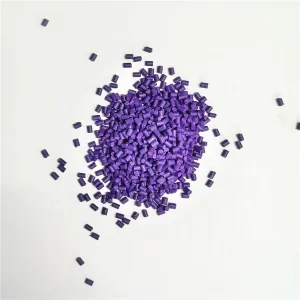
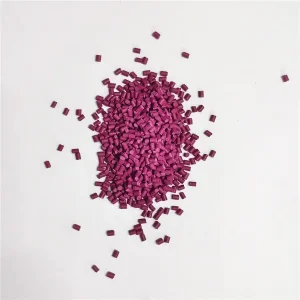
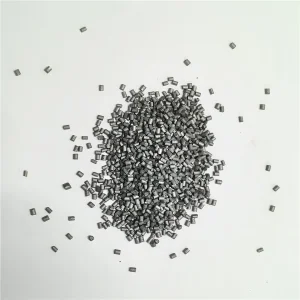
Explore our featured industrial-grade Polyethylene (PE) masterbatches formulated for blown film extrusion, injection molding, profile pipe extrusion, and specialized outdoor grass-green applications.
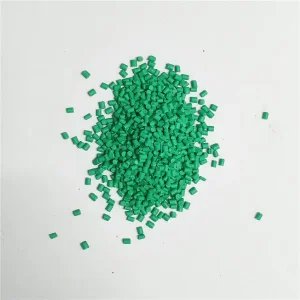
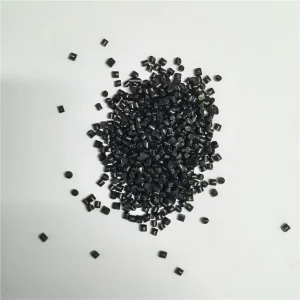
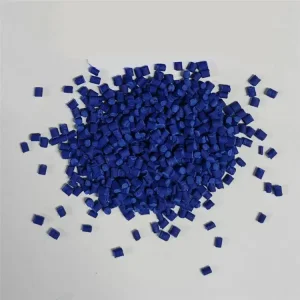
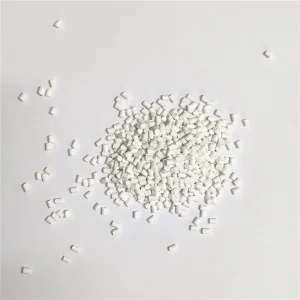
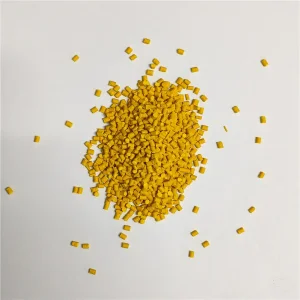
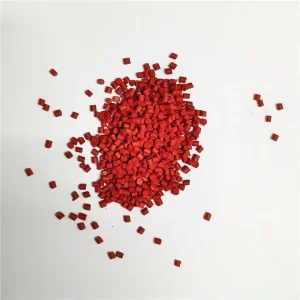
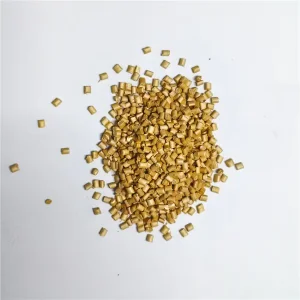
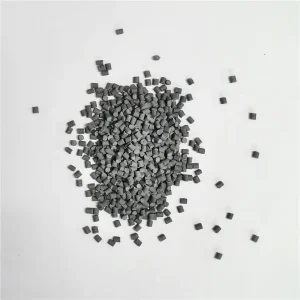
In the global plastics manufacturing landscape, sourcing high-performance polymer colorants requires more than selecting a color tone. Procurement teams, chemical engineers, and plastics processors evaluating China Grass Green PE Masterbatch Suppliers are seeking technical reliability, carrier compatibility, pigment loading efficiency, and long-term weatherability. Grass green masterbatch—specifically formulated on Polyethylene (PE) carriers including LLDPE, LDPE, and HDPE—serves as the critical coloring medium for artificial turf monofilaments, agricultural shade netting, outdoor plastic furniture, landscape piping, and protective film extrusions.
As global sustainability mandates tighten and outdoor application lifespans are expected to reach 8 to 15 years under high UV exposure, the engineering behind grass green masterbatch has evolved dramatically. A premier Chinese masterbatch supplier must master the intricate balance between organic pigment selection (such as Phthalocyanine Green G / Pigment Green 7 blended with Isoindoline Yellow or Pigment Yellow 138), Hindered Amine Light Stabilizers (HALS), and precise carrier melt flow index (MFI) matching. This technical document outlines the critical parameters, supply chain dynamics, quality metrics, and technological innovations shaping China's leadership in plastic masterbatch manufacturing.
Achieving authentic "Grass Green" (resembling natural botanical green hues such as RAL 6010 Grass Green, RAL 6018 Yellow Green, or Pantone 368C) requires multi-component pigment synergy. Pure green pigments like Phthalocyanine Green G tend to exhibit a bluish undertone. To mirror natural grass, masterbatch chemists formulate precise binary or ternary blends using high-heat yellow organic pigments (Pigment Yellow 138/150/180) and inorganic titanium dioxide (TiO2) for opacity tuning.
Beyond aesthetics, pigment particles must be reduced down to sub-micron sizes (< 1-3 micrometers) during compounding. Poorly dispersed pigment agglomerates act as stress concentrators during blown film or monofilament extrusion, causing fiber breakage, filter mesh clogging, and surface streaks.
The choice of virgin Polyethylene carrier resin dictates the processing performance in downstream extrusion and injection equipment. A common error among buyers is selecting a generic masterbatch without considering melt flow index (MFI) compatibility.
For high-speed artificial turf monofilament extrusion, carrier resins with an MFI of 12 to 20 g/10min (190°C/2.16kg) are utilized to guarantee laminar flow and uniform draw ratios. For heavy injection molding, an MFI of 20 to 45 g/10min ensures rapid cavity filling without warping. Advanced Chinese suppliers employ twin-screw compounding extruders with multi-stage liquid injection to homogenize low-density carriers with dense pigment cakes.
| Performance Characteristic | Standard Commercial Grade | Premium Outdoor / Turf Grade | Testing Protocol / Standard |
|---|---|---|---|
| Pigment Content (%) | 20% - 30% | 35% - 50% High Concentration | GB/T 9345.1 Ash Content Method |
| Heat Resistance (°C) | 200°C - 220°C | 260°C - 300°C Thermal Stability | DIN EN 12877-2 Standard |
| Light Fastness (Grade) | Grade 5 - 6 | Grade 7 - 8 (Max Resistance) | ISO 105-B02 Blue Wool Scale |
| Weathering Lifespan | 1 - 3 Years Outdoor | 8 - 12+ Years UV Protected | ASTM G154 Accelerated Weathering |
| Heavy Metal Compliance | RoHS Standard | RoHS, REACH, FDA, Halogen-Free | ICP-OES / XRF Spectroscopy |
| Moisture Content (%) | < 0.15% | < 0.05% Ultra-Dry Vacuum Packed | Karl Fischer Titration (ISO 15512) |
The global masterbatch industry is experiencing a paradigm shift toward sustainability. Future technical roadmaps focus heavily on integrating post-consumer recycled HDPE/LDPE resins (PCR) as carrier bases without sacrificing color brilliance or tensile strength. Leading Chinese manufacturers are developing high-efficiency compatibilizers and anti-yellowing antioxidant packages (Irganox 1010 / Irgafos 168 blends) that neutralize thermal degradation during re-processing.
Furthermore, bio-based carriers such as PLA, PBAT, and bio-PE are being introduced for fully compostable agricultural mulch films and green packaging products. Formulating stable grass-green pigment dispersions in bio-resins requires ultra-low temperature twin-screw extrusion to prevent polymer chain scission.
Grass green PE masterbatch is utilized across diverse industrial sectors, each requiring distinct chemical additives, melt index matching, and weather resistance profiles.
Extruded PE monofilament fibers for sports stadiums, landscaping, and residential lawns require extreme tensile strength and UV durability. Masterbatches designed for turf fibers feature heavy UV stabilizer loading (HALS 944 / Lowilite 62) to resist photodegradation in arid and tropical climates, passing 3,000+ hours of QUV accelerated weathering tests.
In agricultural horticulture, grass-green shading nets and specialized multi-layer greenhouse films regulate photosynthetic active radiation (PAR). PE green masterbatch provides precise optical density while incorporating anti-fogging and thermal insulation additives to maximize crop yield and film elasticity.
Blow-molded garden toolboxes, lawnmower housings, flower pots, and decorative fences demand robust impact strength and scratch resistance. High-concentration PE green masterbatches deliver high color strength at low let-down ratios (1% to 3%), optimizing unit production costs.
PE gas pipes, cable conduits, and agricultural irrigation pipes use green color striping or full-body green coloration for underground identification. Masterbatches formulated for HDPE pipe grade resins ensure no degradation of Hydrostatic Design Basis (HDB) or Long-Term Hydrostatic Strength (LTHS).
Blown film packaging lines require pinhole-free dispersion. Green masterbatches tailored for LLDPE co-extrusion films provide smooth surface finish, high opacity for light-sensitive goods, and flawless sealing characteristics in automated pouch-making machinery.
Combining color with functional properties, combo-masterbatches integrate grass-green pigments with anti-static, flame retardant, anti-microbial, or slip additives into a single pelletized product, eliminating multi-dosing errors on the factory floor.
Exporting plastic products to North America, the European Union, East Asia, and Australia requires strict adherence to international safety and environmental directives. Modern Chinese masterbatch manufacturers have established dedicated quality assurance labs equipped with state-of-the-art analytical testing instruments.
To guarantee color consistency across batch shipments, suppliers utilize Datacolor or X-Rite benchtop spectrophotometers under standard illuminants (D65, A, CWF, F12). Color deviation is held to strict tolerances of ΔE < 0.5 to 0.8 against master standard plagues.
Furthermore, Melt Flow Index (MFI) testers, Filter Pressure Value (FPV) testing according to EN 13900-5, and Moisture Determination Balances ensure that every batch delivered overseas meets exact customer processing parameters.
China’s masterbatch manufacturing sector has undergone a massive transformation from traditional labor-intensive compounding to automated Industry 4.0 smart factories. Centered in major industrial polymer hubs like Changzhou, Jiangsu Province, manufacturers like Changzhou Jiazhou Plastic Products Co., Ltd. leverage integrated industrial supply chains, strategic port proximity (Shanghai & Ningbo), and continuous technological upgrading.
Loss-in-weight gravimetric feeders dynamically control pigment, additive, and resin ratios with +/- 0.2% accuracy, eliminating manual mixing errors and ensuring long-run batch stability.
Advanced co-rotating twin-screw extruders operating with specialized screw element profiles (kneading blocks, reverse conveyers) provide intense shear and distributive mixing without thermal degradation.
With annual capacities exceeding tens of thousands of metric tons, standard orders are processed and containerized within 10 to 15 days, backed by sea freight logistics to major global ports.
Selecting the right Chinese supplier for Grass Green PE Masterbatch requires evaluating operational capabilities beyond price per kilogram. Procurement officers and chemical engineering teams should execute the following technical audit checklist during vendor evaluation:
While cheap masterbatch may lower initial raw material cost, low-grade filler content or poor pigment dispersion increases total cost through higher scrap rates, frequent filter screen changes, machine downtime, and premature outdoor fading claims.
Partnering with a high-concentration masterbatch manufacturer allows plastic converters to lower Let-Down Ratios (LDR) from 4% down to 1% - 2%, significantly reducing freight costs, storage footprint, and overall cost per finished plastic unit.
Select from our standard color lines or contact our engineering team for custom color development, functional anti-fading additives, and bulk export pricing.