Direct factory supply engineered for film blowing, injection molding, profile extrusion, and recycling compounders worldwide.
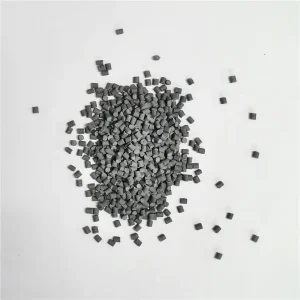
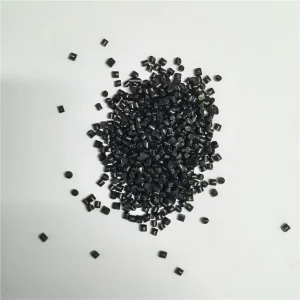
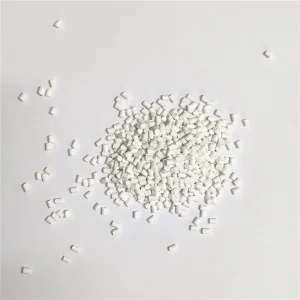
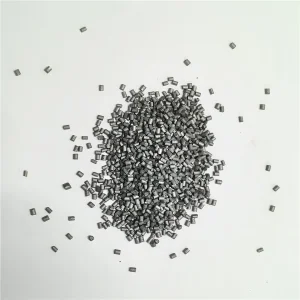
Analyzing the pivotal role of polyethylene grey masterbatches across modern polyolefin processing, sustainable packaging, and industrial infrastructure.
Polyethylene (PE) Grey Masterbatch has emerged as one of the most commercially critical functional additives within the global polymer manufacturing sector. Driven by rapid growth in agricultural geomembranes, municipal pipe networks, automotive sub-assemblies, and e-commerce packaging, demand for high-performance grey color concentrates continues to outpace standard pigments.
Unlike basic off-white or solid black additives, grey masterbatch requires precise multi-pigment blending—combining micronized TiO2, high-jetness furnace carbon black, and specialized inorganic oxides—to maintain strict color space coordinates ($L^*a^*b^*$) without tint variation across high-volume extrusion runs.
With global environmental mandates driving the adoption of Post-Consumer Recycled (PCR) resins, grey masterbatch has become the industry standard for masking yellowing, variable oxidation hues, and residual impurities inherent in recycled polyolefins.
In-depth technical breakdown of pigment chemistry, carrier resin matrix selection, rheology matching, and thermal performance parameters.
The carrier resin serves as the dispersion vehicle for active pigments. High-quality China Grey PE masterbatch relies on virgin Low-Density Polyethylene (LDPE) or Linear Low-Density Polyethylene (LLDPE) carriers with a higher Melt Flow Index (MFI) than the target base polymer (typically 15 g/10min to 30 g/10min at 190°C/2.16kg).
Proper MFI matching prevents agglomeration, reduces melt fracture during high-speed film blowing, and guarantees total interfacial wetting between pigment particles and matrix polymer chains.
Achieving stable grey shades requires synergistic pigment loading:
During extrusion and injection molding, masterbatch components undergo intense thermal shear. Formulations from top China suppliers incorporate heat stabilizers (hindered phenols and phosphites) that preserve thermal endurance up to 260°C–300°C.
Additionally, specialized non-migration additives prevent pigment blooming or phase separation under pressure or prolonged direct sunlight exposure.
| Technical Parameter | High-Concentration Grey PE Masterbatch | Standard Commercial Grade | Test Standard / Method |
|---|---|---|---|
| Pigment Content (%) | 40% – 60% Active Pigment Load | 20% – 30% Active Pigment Load | ISO 3451-1 (Ash Content Test) |
| Carrier Resin Type | Virgin LLDPE / LDPE / HDPE Carrier | Recycled or Universal Wax Base | FTIR Spectroscopy Analysis |
| Melt Flow Index (MFI) | 12 – 25 g / 10 min (190°C, 2.16 kg) | 2 – 8 g / 10 min | ISO 1133 / ASTM D1238 |
| Heat Resistance (°C) | 260°C – 300°C (No Color Shift) | 180°C – 220°C | DIN EN 12877-2 Thermal Stability |
| Color Tolerance ($\Delta E$) | $\Delta E \le 0.5$ (Batch-to-Batch) | $\Delta E \le 1.5 – 2.0$ | CIE $L^*a^*b^*$ Spectrophotometer |
| Light Fastness (Blue Wool) | Grade 7 – 8 (Exceptional outdoor resistance) | Grade 4 – 5 | ISO 105-B02 Sunlight Resistance |
| Dispersion Value (DF) | $\le 0.8 \text{ bar/g}$ (Pressure Filter Test) | $\ge 3.0 \text{ bar/g}$ | EN 13900-5 Filter Value Test |
Why sourcing Grey PE Masterbatch from specialized Chinese manufacturers provides unparalleled Total Cost of Ownership (TCO) benefits.
China accounts for over 45% of total global masterbatch compounding capacity. Concentrated plastic manufacturing clusters in provinces like Jiangsu (Changzhou) benefit from immediate physical proximity to major petrochemical complexes (such as Sinopec and PetroChina) for prime carrier resins, as well as synthetic inorganic pigment manufacturers.
This structural supply integration eliminates international raw material freight delays and insulates buyers from global resin price volatility.
Leading Chinese supplier factories utilize state-of-the-art continuous compounding equipment:
Founded in 2010, Changzhou Jiazhou Plastic Products Co., Ltd. operates a modern 6,000 m² production facility in Zouqu Town, Zhonglou District, Changzhou, Jiangsu, China. Operating under rigorous ISO quality control frameworks, Jiazhou specializes in high-concentration PE color masterbatches, filler masterbatches, and functional additive masterbatches trusted by over 100 enterprise clients across Europe, Southeast Asia, the Middle East, and North America.
With an annual production capacity exceeding tens of thousands of metric tons, Jiazhou provides full OEM/ODM color matching services backed by computer-controlled spectrophotometer labs. Standard orders are dispatched within 15 working days, ensuring dependable supply chain continuity for global plastic converters.
Comprehensive engineering breakdown of Grey PE Masterbatch across major plastic processing sectors.
Used extensively in civil engineering geomembranes and agricultural soil covers. The grey coloration provides thermal reflection properties, mitigating heat buildup under direct sunlight while delivering high opacity to suppress weed germination. Enhanced with HALS UV stabilizers for multi-year field lifespan.
Multi-layer ABC blown film extrusion lines utilize grey masterbatch in the core (B) or inner layer to provide total light barrier protection and opacity for logistics mailer bags. Ensures high contrast, zero migration for pressure-sensitive hot melt adhesives, and high tear strength.
For municipal water drainage, electrical conduit sleeving, and gas distribution pipes. Grey PE masterbatch provides clean visual identification, strict UV resistance against outdoor storage degradation, and maintains high hydrostatic stress rating compliance (ISO 4427 / EN 12201).
Automotive OEMs mandate precise low-VOC grey shades for under-the-hood fluid reservoirs, battery cases, and interior clips. High-heat PE grey masterbatch resists continuous environmental heat up to 120°C without discoloring or outgassing VOCs.
From industrial detergent jugs to lubricant oil bottles, grey masterbatch delivers premium aesthetic gloss, streak-free surface finishes, and complete chemical resistance against aggressive surfactants and hydrocarbon liquids.
Compounding recyclers blend grey masterbatch into post-consumer HDPE bottle flakes or post-industrial film scrap to standardize color variance across variable scrap feedstocks, outputting high-value grey pelleted regrind.
A step-by-step buyer qualification framework for international procurement directors and quality assurance managers.
When importing PE Masterbatch into European, North American, or Asia-Pacific markets, technical buyers must verify the following regulatory safety standards from the Chinese factory supplier:
To eliminate color discrepancy upon arrival, global buyers should follow a structured trial process with the manufacturer:
Next-generation advancements reshaping the Polyethylene Masterbatch manufacturing landscape over the coming decade.
Traditional carbon black pigments absorb Near-Infrared (NIR) light, making black/dark grey plastics un-sortable in automated material recovery facilities (MRF). Next-generation grey masterbatches utilize special NIR-reflective black and inorganic pigments, allowing automated optical sorters to detect and recycle grey polyolefin waste stream packaging.
As global brand owners target zero net carbon footprints, masterbatch factories in China are developing bio-PE carrier formulations derived from sugarcane ethanol. These bio-carriers deliver identical MFI and tensile properties while significantly reducing embodied carbon emissions.
Incorporating solar-reflective inorganic pigments into outdoor grey PE masterbatch products reduces solar heat absorption in agricultural films and building materials by up to 15°C, preventing heat degradation and extending product durability in desert climates.
Expert engineering answers to common challenges in masterbatch dosing, carrier selection, pigment migration, and global logistics.
The standard let-down ratio (LDR) ranges between 1% and 4% by weight, depending on target wall thickness, opacity requirements, and base resin clarity. For high-opacity blown film applications (20–40 microns), a 2% to 3% dosage is typically ideal. For thick-walled injection molding, 1% to 2% provides complete, uniform color coverage.
While a PE carrier resin exhibits good physical compatibility with PP in minor dosage rates (<2%), using a PE carrier in engineering polymers like ABS, PS, or PET can cause phase separation, surface delamination, or reduced impact strength. We strongly recommend specifying custom PP carrier masterbatch or universal carrier systems for non-polyolefin polymers.
Jiazhou employs strict statistical process control (SPC). Raw raw pigments undergo incoming quality control (IQC) via X-ray fluorescence and spectrophotometry. Our automated twin-screw extruders feature loss-in-weight gravimetric feeders, and every finished production lot is tested via injection sample molding, ensuring $\Delta E \le 0.5$ against the standard retain sample.
Streakiness and fish-eyes typically stem from incomplete pigment dispersion or moisture absorption in the masterbatch pellets. Jiazhou resolves this by utilizing micro-milled pigments coated with specialized dispersants, extruded through high-shear compounding screws, and double-vacuum desiccated before packaging. Ensure masterbatch is stored in dry conditions.
Yes. We manufacture food-grade masterbatch series formulated exclusively with US FDA 21 CFR and EU No 10/2011 compliant pigments, carrier resins, and antioxidants. Heavy metal content is strictly controlled to well beneath RoHS and EN 71-3 toy safety thresholds.
When formulated with virgin high-MFI LDPE carriers and optimized surface-treated pigments, masterbatch additions at 1%–3% have negligible impact on tensile or flexural properties. In blown film, high pigment dispersion actually prevents stress concentration points, maintaining film dart impact resistance.
Standard packaging consists of 25kg heavy-duty moisture-proof PE valve bags or aluminum-foil lined bags, stretch-wrapped on ISPM-15 heat-treated wooden or plastic pallets (1,000kg to 1,250kg per pallet). Bulk 1-ton jumbo bags are also available for automated pneumatic conveying systems.
Yes! Our R&D optical laboratory matches target colors within 3 to 5 business days. Customers can supply a Pantone/RAL code or ship physical plastic samples to our Changzhou plant. We generate match reports and dispatch 1kg trial samples for customer sign-off.
When stored in its original unopened, moisture-proof packaging in a cool, dry, ventilated warehouse away from direct sunlight and heat sources, PE masterbatch has a shelf life of at least 12 to 24 months without degradation of color strength or flow properties.
Our standard MOQ for stock color formulations is 500 kg, while custom color match formulations start at 1,000 kg. We offer flexible commercial payment terms, including T/T (Telegraphic Transfer) and Irrevocable L/C at sight for international enterprise buyers.
Select high-concentration masterbatch products from Changzhou Jiazhou Plastic Products Co., Ltd. for instant factory quotes.
No. 4-3, Shengli Road, Buyi, Zouqu Town, Zhonglou District, Changzhou, Jiangsu, China.