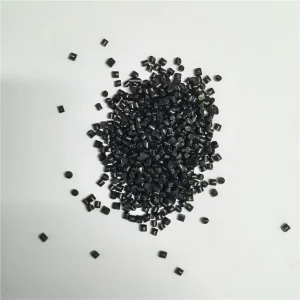
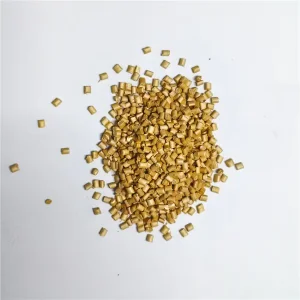
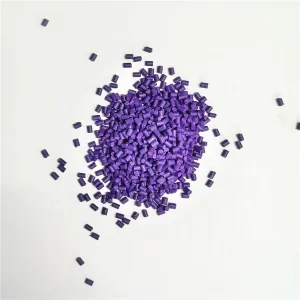
Explore our core product series featuring ultra-high pigment loading, stable thermal resistance, and exceptional dispersion characteristics.
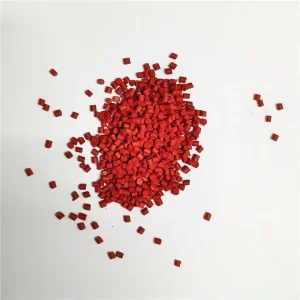
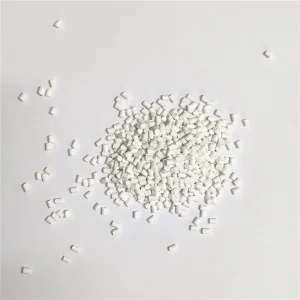
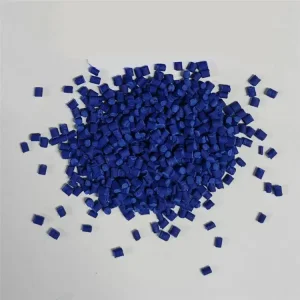
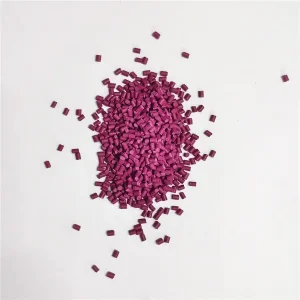
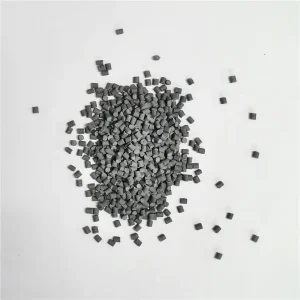
Analyzing carbon black dispersion dynamics, polymer carrier compatibility, and macro-economic demand across international processing markets.
In modern industrial plastics manufacturing, High Dispersion Black PE Masterbatch serves as the benchmark colorant and protective additive for polyethylene-based processing systems. Polyethylene (PE)—encompassing Low-Density Polyethylene (LDPE), Linear Low-Density Polyethylene (LLDPE), and High-Density Polyethylene (HDPE)—requires precise, microscopic integration of carbon black particles to achieve intense jetness ($L^*$ opacity), UV protection, dielectric insulation, and thermal degradation prevention.
The global demand for high-dispersion black masterbatches has surged, driven by aggressive infrastructure expansion, advanced agricultural irrigation networks, subsea cable jacketing, and heavy-duty industrial film packaging. Standard carbon black compounding often suffers from agglomeration, leading to surface defects, filter screen clogging, micro-pinholes in blown films, and premature stress cracking in pressure pipes. Achieving optimal dispersion requires deep rheological engineering, precise shear-rate tuning during twin-screw compounding, and meticulous surface treatment of carbon black aggregates.
The optical performance and mechanical preservation of a black masterbatch depend on three main structural variables: primary particle size (measured in nanometers), aggregate structure (dibutyl phthalate absorption - DBPA), and surface chemistry (volatile content and oxygen complexes). High-performance black masterbatches utilize furnace carbon blacks with primary particle sizes ranging between 15 nm and 25 nm. While smaller primary particles yield higher jetness and stronger UV absorption, their high surface area creates immense cohesive forces that form tight agglomerates.
China's leading manufacturers overcome these cohesive forces by utilizing specialized low-molecular-weight polyethylene waxes, titanate coupling agents, and multi-stage intermeshing co-rotating twin-screw extruders. The resulting masterbatch achieves a microscopic dispersion classification of Category 1 to 2 under ISO 18553 standards, ensuring that carbon black aggregates are thoroughly de-agglomerated down to sub-micron dimensions. This microscopic homogeneity prevents mechanical notch sensitivity, enabling extruders to process thin-walled agricultural films down to 6 microns without film breakage.
How Chinese masterbatch manufacturers combine raw material integration, continuous compounding technologies, and unmatched scale to deliver global competitive value.
Direct integration with domestic petrochemical refineries provides China manufacturers with continuous access to high-purity virgin PE carriers (LLDPE 7042, HDPE 5000S) and premium furnace black grades at optimized cost structures.
Factory floors feature continuous co-rotating twin-screw extruders operating at L/D ratios of 48:1 to 56:1, achieving maximum melt shear, uniform heat distribution, and volatile degasification without polymer chain degradation.
Every production batch undergoes standardized testing, including Filter Pressure Value (FPV) per DIN EN 13900-5, Melt Flow Index (MFI) verification, moisture titrations, and spectrophotometric jetness quantification ($L^*a^*b^*$).
The table below provides a detailed technical comparison of performance metrics for high-dispersion black PE masterbatches manufactured by leading Chinese suppliers against global enterprise procurement requirements:
| Technical Test Parameter | Testing Standard | Standard Commercial Grade | China High Dispersion Premium Grade | Target Industrial Application |
|---|---|---|---|---|
| Carbon Black Content (%) | ASTM D1603 / ISO 6964 | 30% - 40% | 45% - 50% (±0.5%) | Blown Film & Pipe Extrusion |
| Primary Particle Size | TEM Micrography | 35 nm - 55 nm | 18 nm - 22 nm | High-Jetness UV Geomembranes |
| Filter Pressure Value (FPV) | DIN EN 13900-5 (100 mesh) | > 5.0 bar/g | ≤ 1.2 - 1.8 bar/g | Ultra-thin Agricultural Drip Tapes |
| Melt Flow Index (MFI) | ASTM D1238 (190°C / 21.6kg) | 5 - 15 g/10min | 15 - 35 g/10min (Tailored) | High-Speed Injection Molding |
| Moisture Content | ASTM D6980 (Karl Fischer) | < 0.15% | ≤ 0.03% (300 ppm) | Pinhole-Sensitive Packaging Films |
| Heat Stability | DIN EN 12877 | 220°C | 260°C - 300°C | Engineering Extrusion & Cable Coating |
From agricultural drip tapes in arid regions to municipal PE100 pressure pipes, discover how high dispersion black masterbatch ensures long-term mechanical survival.
Irrigation tapes require pinhole-free wall integrity at thicknesses down to 0.15 mm. High dispersion black PE masterbatch prevents micro-voids, ensuring smooth fluid dynamics, anti-clogging emitter channels, and 3+ years of intense outdoor UV stabilization.
In water and gas distribution pipelines, carbon black must be homogeneously dispersed to prevent localized stress concentration. Masterbatch formulated to ISO 4427 guidelines guarantees an Oxidation Induction Time (OIT) exceeding 100 minutes at 200°C.
Landfill containment and mining tailing ponds demand extreme environmental stress crack resistance (ESCR). Premium black PE masterbatches provide a UV barrier, preventing photo-oxidative degradation under extreme environmental exposure.
Formulated for multi-layer co-extrusion (ABA / ABC configurations), black PE masterbatch delivers high opacity, UV protection, and static dissipation for chemical packaging bags, preventing UV-induced degradation of contained goods.
Low ionic impurity carbon black masterbatches provide high insulation resistance and weather protection for overhead drop wires and subsea telecommunication cable jackets without compromising electrical breakdown strength.
Engineered with heat-stabilized PE and PP matrix compatibility, delivering surface finish, low volatile organic compound (VOC) fogging emissions, and thermal durability in automotive engine covers and wheel arch liners.
How Chinese technical manufacturers are shaping the future of plastic colorants through sustainable chemistry, food-contact compliance, and circular economy integration.
The global shift toward a circular plastic economy has placed stringent demands on masterbatch formulations. Processing Post-Consumer Recycled PE (PCR-PE) or Post-Industrial Recycled PE (PIR-PE) introduces significant structural challenges, including fluctuating melt flow indices, cross-contamination, residual moisture, and thermal degradation history. Modern masterbatch compounding addresses this by integrating active chain extenders, radical scavengers, and custom compatibilizers directly into the black masterbatch matrix.
By using specialized dispersants, these advanced masterbatches homogenize uneven PCR melt flows, mask color contamination from recycled feedstocks, and restore tensile toughness. This enables masterbatch users to incorporate up to 70% PCR resin into non-critical products without sacrificing mechanical integrity or processability.
Polycyclic Aromatic Hydrocarbons (PAHs / PNAs) are natural byproducts of carbon black manufacturing processes. Stringent global environmental regulations—such as REACH Annex XVII, EU Regulation 10/2011 for food contact, and FDA 21 CFR—enforce strict upper limits on total PAH content (often requiring < 1 ppm total PAH for sensitive applications).
Leading Chinese exporters have responded by developing specialized food-grade and medical-grade black masterbatches formulated with post-treated carbon blacks subjected to controlled secondary oxidation. These specialized grades undergo continuous gas chromatography-mass spectrometry (GC-MS) testing to verify zero migration of harmful aromatic compounds, making them fully compliant for food packaging, caps and closures, toy manufacturing, and potable water distribution pipes worldwide.
A comprehensive technical roadmap for plastic converters, extruders, and OEM procurement heads when auditing masterbatch manufacturers.
The Melt Flow Index (MFI) of the masterbatch carrier must equal or exceed that of the base polymer matrix. Mismatching carrier viscosity causes phase separation, surface melt fracture ("shark skin"), and uneven color distribution.
Jetness ($L^*$) measures absolute darkness, while the $b^*$ parameter indicates blue or yellow undertones. High-end cosmetic packaging requires a deep blue undertone (negative $b^*$), achieved through nano-scale carbon black particle selection.
For fine-denier fiber spinning or thin blown films, buyers should enforce a maximum FPV threshold of 1.5 bar/g (tested per DIN EN 13900-5 using a 14-micron screen). Lower FPV directly translates to longer filter screen pack life and reduced downtime.
Expert engineering answers to common processing challenges, dosage ratios, carrier resin selections, and quality control queries.
The standard let-down ratio (LDR) typically ranges between 1.0% and 4.0% by weight, depending on film thickness, target carbon black concentration in the final product, and required opacity. For standard packaging blown film (30–50 microns), a 2.0% addition rate of a 50% carbon black masterbatch yields a final 1.0% active carbon black content, providing complete opacity and UV protection. For thick-walled HDPE pressure pipes, an addition rate of 4.0% to 5.0% is utilized to meet international standards requiring a minimum 2.0% to 2.5% final carbon black content.
Polymer compatibility is governed by thermodynamic miscibility and melt rheology. Using a Low-Density Polyethylene (LDPE) carrier masterbatch in Polypropylene (PP) or Engineering Plastics (such as ABS or Polyamide) can cause phase separation, surface peeling (delamination), and reduced impact strength. A specialized PE carrier masterbatch is fully compatible with LDPE, LLDPE, HDPE, and EVA resins. For non-PE matrices, custom universal carriers or matrix-matched carriers (e.g., PP-based, PS-based) should be specified to maintain original mechanical properties.
Film pinholes and specks stem from two primary causes: moisture absorption by the masterbatch and un-dispersed carbon black agglomerates. High quality black masterbatch addresses both issues: first, by vacuum-degassing during twin-screw compounding to keep moisture levels below 300 ppm (≤ 0.03%); and second, by using optimized shear geometry to break down carbon black aggregates to under 5 microns. This eliminates un-melted gel clusters and filter-blocking agglomerates during fine film extrusion.
Carbon black acts as an efficient UV absorber and free-radical trap by absorbing harmful ultraviolet radiation (290–400 nm wavelengths) and dissipating it as harmless thermal energy. However, if carbon black is poorly dispersed, regions devoid of carbon black remain vulnerable to photo-oxidation, leading to polymer chain scission, embrittlement, and surface cracking. Homogeneous micro-dispersion ensures an uninterrupted protective shield throughout the polymer matrix, extending outdoor product lifespan up to 10–20 years in high-actinic sun zones.
P-Type (Pipe Grade) carbon black masterbatch is specially formulated to meet strict international drinking water and pressure pipe standards (such as ISO 4427 and EN 12201). P-Type carbon black features controlled chemical purity, low ash content (< 0.1%), low volatile content, and an extremely fine primary particle size (typically ≤ 25 nm). Standard commercial grades are designed for opacity and general coloring where long-term hydrostatic strength and chemical purity tolerances are less critical.
Polyethylene masterbatch pellets should be stored in a cool, dry, well-ventilated warehouse away from direct sunlight, open flames, and heat sources. Bags should remain sealed until use to prevent moisture absorption. If masterbatch is exposed to high ambient humidity, pre-drying in a desiccant hopper dryer at 70°C to 80°C for 2–3 hours is recommended to restore moisture content to ≤ 0.03% prior to extrusion.
Review our specialized high-concentration masterbatches, tailored for blowing film, injection molding, profile extrusion, and custom compounding applications.