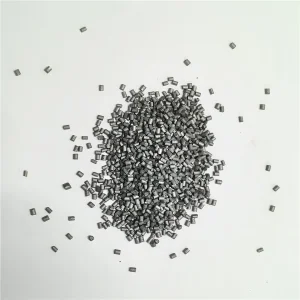
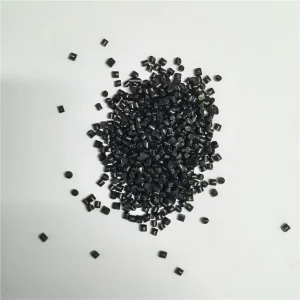
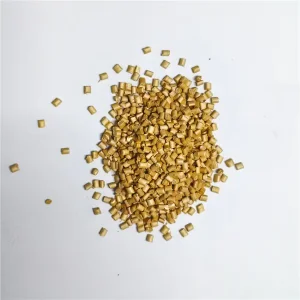
Engineered for extreme shear stability, ultra-fine filterability, and consistent tinting strength across blown film, injection molding, and profile extrusion.
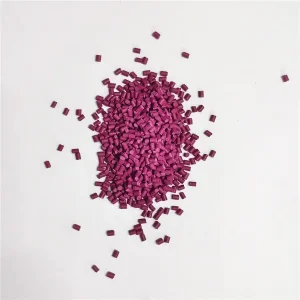
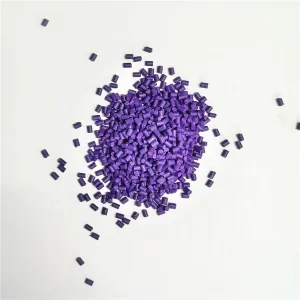
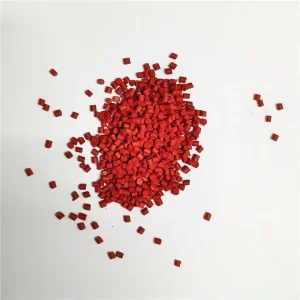
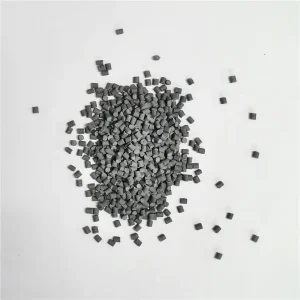
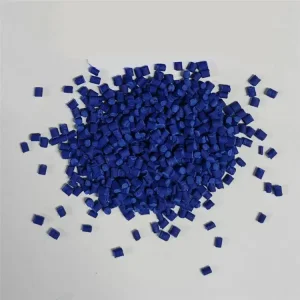
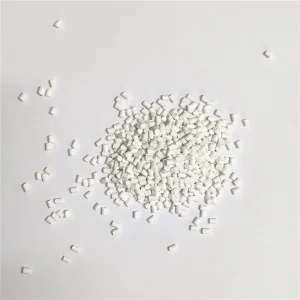
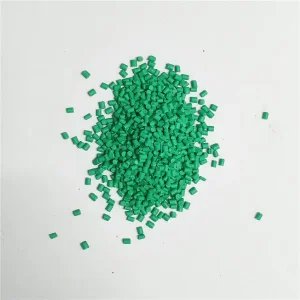
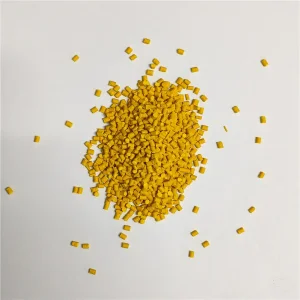
Understanding the thermodynamic forces, shear stress requirements, and interfacial tension during high-speed plastic extrusion.
In modern industrial polymer processing, the quality of a polyolefin finished product—whether it is a 10-micron ultra-thin agricultural film, a heavy-duty pressure pipe, or a high-aesthetic consumer housing—is intrinsically linked to the dispersion quality of colorants and additives within the matrix polymer. Polyethylene (PE), encompassing Low-Density Polyethylene (LDPE), Linear Low-Density Polyethylene (LLDPE), and High-Density Polyethylene (HDPE), exhibits distinct melt rheology and viscoelastic characteristics during processing.
When raw organic or inorganic pigments are directly incorporated into melt streams, their natural tendency is to form dense agglomerates due to van der Waals forces and surface energy imbalances. Without specialized processing dispersion technology, these agglomerates cause catastrophic failure modes in downstream processing: high filter pressure buildup, frequent film blowing bubble breakage, mechanical stress concentrations, and severe color streaking.
Information Gain Insights: High Processing Dispersion PE Masterbatches eliminate pigment agglomeration by employing low-molecular-weight hyperdispersants combined with carrier resins engineered to perfectly match the Melt Flow Index (MFI) and viscosity curves of the host polyolefin. This lowers the Filter Pressure Value (FPV) to under 0.1 bar/g, ensuring zero screen pack clogging during continuous 24/7 extrusion.
Primary pigment particles (10–50 nm) form secondary aggregates that must be ruptured through high-shear twin-screw kneading elements (KB45/5/28) into uniform sub-micron distributions.
Surfactants and polar waxes decrease the surface tension between inorganic pigments (e.g., TiO2, Carbon Black) and non-polar PE chains, encapsulating particles completely.
Steric hindrance layers created by specialized PE wax carriers prevent pigment re-flocculation during cooling and solidification stages in molding dies.
Changzhou Jiazhou Plastic Products Co., Ltd. delivers high-throughput manufacturing backed by strict ISO quality assurance and global compliance standards.
Quantitative comparison demonstrating the engineering advantage of Jiazhou high-processing masterbatch solutions.
| Performance Parameter | Jiazhou High Dispersion PE Masterbatch | Standard Market Masterbatch | Testing Protocol / Standard |
|---|---|---|---|
| Pigment Content Concentration | Up to 75% TiO2 / 50% Color | 35% - 50% Concentration | ISO 3451-1 Ash Content |
| Filter Pressure Value (FPV) | < 0.10 bar/g (Ultra-clean) | 0.8 - 2.5 bar/g | EN 13900-5 Screen Pack Test |
| Pigment Dispersion Rating | Grade 1 (ISO 18553 < 1.5 ratio) | Grade 3 - 4 (Visible specks) | ISO 18553 Microscopic Assessment |
| Heat Resistance Temperature | 260°C - 300°C (No dis-coloration) | 200°C - 220°C | DIN EN 12877-2 Thermal Stability |
| Melt Flow Rate Impact (MFI) | Matched to Matrix Polyolefin (±5%) | Severe MFI suppression (-30%) | ASTM D1238 / ISO 1133 |
| Migration & Bleeding Resistance | Grade 5 (Zero Bleed) | Grade 2 - 3 (Surface bloom) | ISO 105-X12 Rubbing Fastness |
| Environmental Compliance | RoHS, REACH, Food Contact FDA | Basic RoHS Only | SGS / TÜV Rheinland Audited |
Engineered solutions tailored to strict processing windows across extrusion, injection, and blow molding processes.
In agricultural mulch films, express courier mailer bags, and multilayer food barrier films, undispersed particles lead to pinholes and bubble collapses. Jiazhou PE Masterbatch guarantees flawless film transparency, high tensile strength, and zero die-drool, allowing film thickness down to 8 microns without tearing.
PE100 municipal water pipes, gas lines, and corrugated conduits require complete carbon black dispersion (ISO 18553) to prevent stress cracking under hydraulic pressure. Our specialized black and color masterbatches impart long-term UV resistance (OIT > 100 mins at 200°C) and structural stability.
Complex geometric injection parts (automotive interior trim, industrial logistics crates, caps & closures) demand rapid cycle times and zero dimensional distortion. Jiazhou masterbatches minimize mold shrinkage variance and eliminate weld-line color separation through controlled crystal nucleation.
Why global polymer converters and multinational chemical traders rely on Changzhou Jiazhou Plastic Products Co., Ltd.
Located in Changzhou, Jiangsu Province—the heart of China's advanced polymer processing cluster—Changzhou Jiazhou Plastic Products Co., Ltd. has operated as an industry pioneer since 2010. Over 16 years of dedicated R&D in polyolefin colorants and mineral fillers has earned the company a reputation for uncompromising quality and batch-to-batch consistency.
Our 6,000 m² modern manufacturing plant houses high-torque, co-rotating twin-screw extruder compounding lines equipped with gravimetric loss-in-weight feeders. This guarantees precise feed ratios of pigments, carrier resins, and processing aids within a ±0.2% tolerance margin. The screw profile design features specialized shearing, kneading, and distribution zones specifically calculated for high-viscosity polyethylenes.
Seamless export management serving polymer converters in North America, the European Union, Southeast Asia, and Latin America.
Navigating international polymer regulations requires strict chemical safety compliance. Jiazhou PE Masterbatches undergo independent testing by SGS, Intertek, and TÜV. Our formulations comply with EU REACH Annex XVII, SVHC candidate lists, RoHS Directive 2011/65/EU, and US FDA 21 CFR 177.1520 for indirect food contact packaging materials. Heavy metals (Pb, Cd, Hg, Cr VI) are guaranteed below 10 ppm total concentration.
To support global supply chains, we offer tailored packaging options including moisture-proof 25kg PE bags, 1.0-ton aluminum-lined jumbo bags, and custom private labeling. Situated near Shanghai Port and Ningbo Port, Jiazhou provides optimized freight logistics, rapid sample dispatch within 72 hours, and flexible payment terms (L/C, T/T, D/P) to ensure uninterrupted production schedules for our partners.
Pioneering sustainable compounding, bio-based carriers, and circular economy compatibilizers.
As the global plastic industry transitions toward circular economy paradigms, masterbatch technology must evolve beyond standard color matching. Jiazhou's dedicated R&D division is driving innovation across three core strategic pillars:
Formulating high-dispersion masterbatches incorporating reactive compatibilizers (PE-g-MAH) that bridge phase boundaries in Post-Consumer Recycled (PCR) HDPE/LDPE resins, restoring original impact strength and melt ductility.
Developing masterbatches based on Sugarcane PE and PLA/PBAT biodegradable carriers to achieve 100% renewable bio-content without compromising dispersion quality or heat resistance.
Replacing carbon black with Near-Infrared (NIR) reflective pigments, allowing automated optical sorting equipment in municipal recycling plants to identify and sort black PE containers efficiently.
Expert technical answers regarding masterbatch dispersion, carrier selection, and extrusion troubleshooting.
Filter Pressure Value (measured according to EN 13900-5) quantifies the buildup of pressure behind a standardized melt filter screen pack when a masterbatch melt stream passes through. A low FPV (< 0.1 bar/g) indicates exceptionally fine dispersion of sub-micron pigment particles. High FPV values lead to frequent screen mesh clogging, extruder pressure spikes, die lines, and film blowing bubble rupture.
The carrier resin must have a slightly higher Melt Flow Index (MFI) than the substrate resin to ensure rapid melt integration, while maintaining chemical compatibility. Using an incompatible carrier (e.g., PP carrier in PE film) causes phase separation, surface cloudiness, poor heat sealability, and reduced dart impact strength. Jiazhou formulates PE masterbatches using prime LLDPE/LDPE carrier matrices.
Color streaks usually stem from poor pigment dispersion within the masterbatch pellet itself, incorrect back-pressure settings on the injection molding screw, or mismatched melt viscosity between masterbatch and base resin. Switching to Jiazhou High Processing Dispersion Masterbatch provides uniform pigment release even under low back-pressure and fast injection speed cycles.
Due to our high pigment loading (up to 75% for white and 50% for standard colors), typical let-down ratios range between 1% and 4% depending on application thickness and opacity requirements. For thin films, a 2% to 3% addition is standard, while heavy-walled injection molded containers may only require 1% to 2%, offering substantial raw material cost savings.
Explore our full range of color and specialized masterbatch solutions manufactured by Changzhou Jiazhou Plastic Products Co., Ltd.