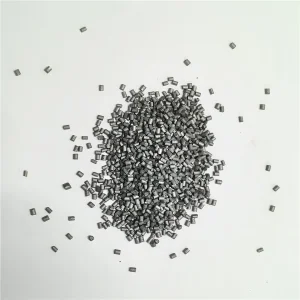
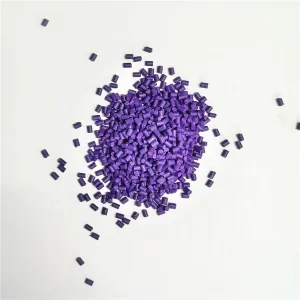
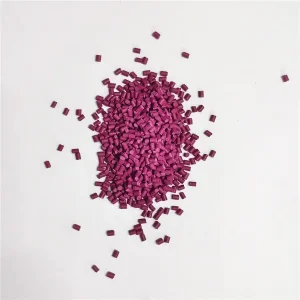
Explore our high-concentration, weather-resistant carrier masterbatches optimized for film blowing, injection molding, and profile extrusion.
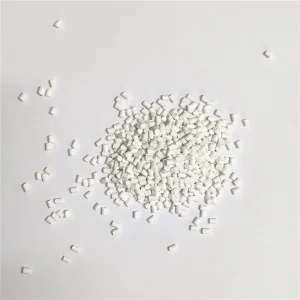
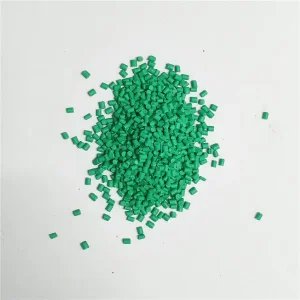
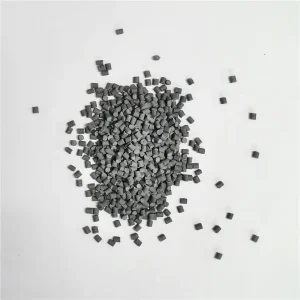
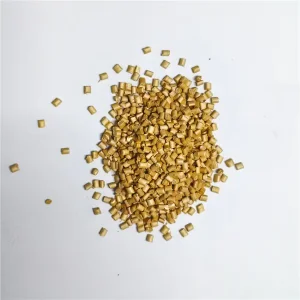
In the global polymer manufacturing sector, Titanium Dioxide (TiO2) stands as the primary white pigment due to its exceptional refractive index (2.73 for Rutile), high tinting strength, and unmatched opacity. However, volatile raw material pricing, stringent environmental regulations surrounding TiO2 refining, and tight global supply chains have forced plastic processors to seek optimized alternatives. This dynamic has catalyzed the rise of specialized China Low Titanium Dioxide White PE Masterbatch Companies that leverage state-of-the-art compounding technology to lower TiO2 loading without sacrificing visual opacity, mechanical integrity, or UV stabilization.
Historically, plastic converters relied on high-pigment white masterbatches containing 50% to 70% virgin Rutile TiO2 to achieve high opacity in thin packaging films, blow-molded containers, and injection-molded components. While effective, this heavy dependence on pure TiO2 incurs excessive unit production costs. Modern chemical engineering demonstrates that by combining micronized Rutile TiO2 with synergistic mineral extenders (such as ultra-fine treated Calcium Carbonate or Barium Sulfate) and advanced surface-active dispersing additives, compounders can achieve identical light-scattering properties (opacity grade) at significantly reduced TiO2 concentrations.
Chinese masterbatch manufacturing hubs, particularly in industrial corridors like Changzhou, Jiangsu, have emerged as global leaders in this specialized technological shift. By combining automated twin-screw extrusion systems, precision spectrophotometer color-matching labs, and direct access to high-purity inorganic raw materials, leading suppliers offer international buyers an optimal cost-to-performance ratio.
Reducing TiO2 content in Polyethylene (PE) masterbatch requires rigorous molecular-level physical chemistry. Simply cutting the titanium dioxide percentage results in translucent, streaky plastics with poor weather resistance and compromised physical properties. Premier Chinese manufacturers utilize a three-part scientific strategy to engineer low-TiO2 formulations:
Rutile TiO2 achieves maximum light scattering efficiency when crystal sizes are controlled strictly between 0.20 and 0.30 microns. Micro-milling ensures optimal refractive performance across visible wavelengths.
Incorporating surface-modified, sub-micron Calcium Carbonate (CaCO3) or synthetic Barium Sulfate (BaSO4) prevents TiO2 agglomeration, creating ideal particle spacing for maximum opacity.
Advanced stearic acid coatings, silane coupling agents, and polyethylene waxes reduce melt viscosity, guaranteeing seamless dispersion during high-speed film extrusion.
By maintaining optimal particle spacing (preventing TiO2 particles from touching and losing light-scattering capacity), a low-TiO2 PE white masterbatch with 30-40% titanium dioxide can achieve up to 90-95% of the hiding power of a traditional 60% TiO2 masterbatch. Furthermore, carrier resin selection (virgin LLDPE or LDPE with controlled Melt Flow Index) ensures complete thermal stability up to 260°C without gas bubbling, die buildup, or plate-out.
Comprehensive performance matrix evaluating key mechanical, optical, and processing parameters.
| Performance Parameter | Standard High-TiO2 Masterbatch | Low TiO2 Optimized PE Masterbatch | Technical Benefit for Buyer |
|---|---|---|---|
| Titanium Dioxide Concentration | 50% - 70% Rutile TiO2 | 25% - 40% Rutile TiO2 + Synergist | Reduces overall raw material procurement cost by 15-30%. |
| Carrier Resin Compatibility | LDPE / LLDPE Base | Engineered LLDPE / Universal PE | Ensures smooth resin fusion across blow film and injection molding. |
| Heat Resistance (°C) | 260°C - 280°C | 240°C - 260°C | Maintains thermal stability under standard processing temperatures. |
| Filter Pressure Value (FPV) | < 0.8 bar/g | < 1.2 bar/g | Prevents screen pack clogging during continuous film extrusion. |
| Visual Opacity (at 50µm Film) | 98% - 99% Hiding Power | 93% - 96% Hiding Power | Sufficient opacity for shipping bags, mulch films, and containers. |
| Weathering / UV Stability | High Outdoor Life (3-5 Years) | Standard Outdoor Life (1-3 Years) | Ideal for short-to-medium term packaging applications. |
Global buyers searching for China Low Titanium Dioxide White PE Masterbatch Suppliers & Factories benefit from an unparalleled ecosystem of industrial integration. Specialized manufacturing facilities in Changzhou, Jiangsu province, embody key structural advantages that enable high quality at competitive price points:
Equipped with high-torque, co-rotating twin-screw compounders, modern Chinese facilities maintain automated gravimetric loss-in-weight feeders. This guarantees strict batch-to-batch consistency with minimal color deviation (ΔE < 0.5).
Proximity to major chemical refining hubs and domestic mineral processing centers minimizes transportation overhead for raw PE resins, titanium dioxide pigments, and functional additives, transferring savings directly to buyers.
From custom Melt Flow Indices (MFI: 2 to 20 g/10min) to integrated functional additives (such as anti-static, anti-block, or optical brightener OB-1), Chinese engineering teams customize masterbatches to target processing equipment.
Leading exporters strictly adhere to international directives including ISO 9001 quality management, RoHS heavy-metal restrictions, REACH SVHC standards, and food-contact compliance (FDA / EU 10/2011).
Low TiO2 White PE Masterbatch is versatile across multiple thermoplastic processing operations. Proper down-stream addition ratios (typically 1.5% to 5.0%) yield optimal visual results across key market sectors:
When sourcing low titanium dioxide white masterbatch from China, international procurement directors should implement a structured quality verification protocol to ensure long-term stability and supply chain efficiency:
Request verified TDS documentation specifying pigment content, inorganic ash residue (ISO 3451-1), density (g/cm³), moisture content (<0.15%), and Melt Flow Index.
Ensure the supplier conducts EN 13900-5 filter pressure testing. Low FPV values guarantee that pigment agglomerates have been fully homogenized during compounding.
Conduct sample extrusion trials (10kg-25kg bags) to measure visual opacity under CIE L*a*b* color space. Ensure ΔE variance remains below 0.5 compared to master reference samples.
The masterbatch sector is undergoing rapid evolution driven by global sustainability initiatives. Looking toward 2030, several macro trends are defining the roadmap for China Low Titanium Dioxide White PE Masterbatch companies:
Expert answers to common queries regarding low titanium dioxide PE masterbatch selection, dosing, and international ordering.
Browse through our complete catalog of color masterbatches, metallic pigments, and specialty formulations engineered for global export.