Explore our high-concentration, ultra-dispersed masterbatches engineered for PE, PP, and engineering thermoplastics. Heat resistant up to 260°C with non-migration certification.
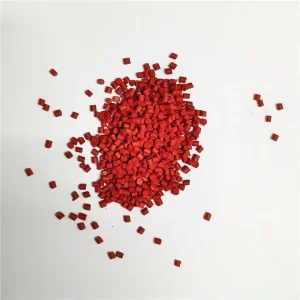
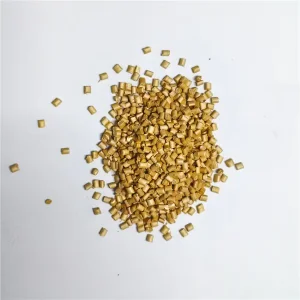
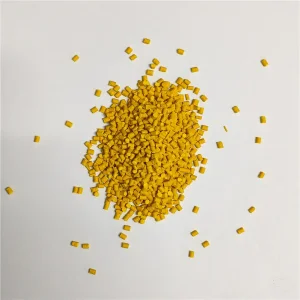
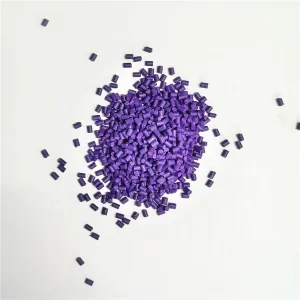
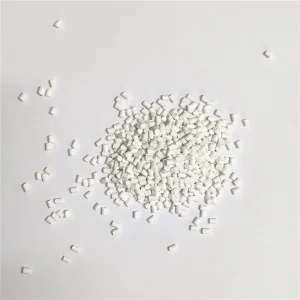
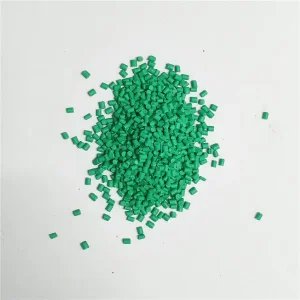
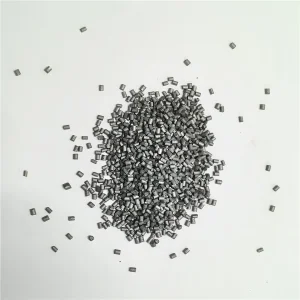
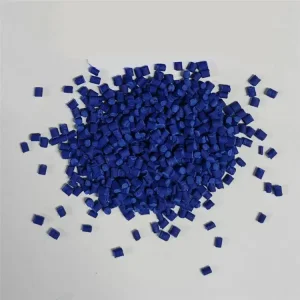
The global masterbatch market is experiencing a profound paradigm shift. As plastic converters in North America, Europe, and Asia-Pacific demand higher let-down ratios (LDR), narrower particle size distributions, and stricter chemical safety compliance, searching for the right China Master Batches Suppliers & Supplier networks has evolved from simple cost-procurement to complex technical co-engineering.
The global plastic colorants and additive masterbatch sector is projected to cross USD 16.5 Billion by 2030, driven by rapid expansion in flexible packaging, automotive lightweighting, construction pipe systems, and non-woven hygiene materials. China remains the production epicenter, accounting for over 45% of global output capacity.
Modern converters are transitioning from standard color compounds to ultra-high concentration masterbatches (up to 70% pigment loading for White TiO2 and 50% for Black Carbon). This shift minimizes freight footprint, lowers energy requirements during extrusion, and preserves the mechanical integrity of the base virgin polymer.
With REACH SVHC updates, RoHS 3 directive restrictions, and FDA food-contact standards becoming universal benchmarks, Chinese manufacturers like Changzhou Jiazhou Plastic Products Co., Ltd. have upgraded raw pigment synthesis and heavy-metal-free carrier matrices to guarantee total compliance for global export.
A masterbatch is not merely a mixture of dye and resin; it is a thermodynamically stabilized dispersion system engineered through high-shear twin-screw compounding. Understanding carrier-pigment rheology is crucial for achieving zero-streak processing.
During twin-screw extrusion, organic and inorganic pigment agglomerates must be broken down below 1 to 5 microns. Insufficient shear rate leads to aggregate clusters, resulting in film puncture during high-speed blowing or color specks in injection-molded parts.
By utilizing optimized co-rotating twin-screw profiles with specialized kneading blocks, Changzhou Jiazhou ensures a Filter Pressure Value (FPV) compliant with EN 13900-5 standards, guaranteeing seamless filtration even at mesh screens down to 20 microns.
Thermal degradation of organic pigments causes color shifts (delta E > 1.5) and gas generation (foaming/voids). Advanced masterbatch formulations integrate thermal antioxidants (Hindered Phenols and Phosphites) to shield both the pigment chromophore and carrier resin.
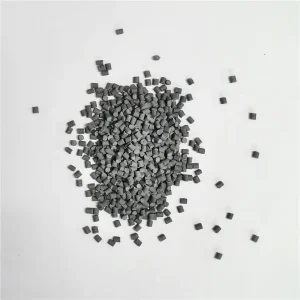
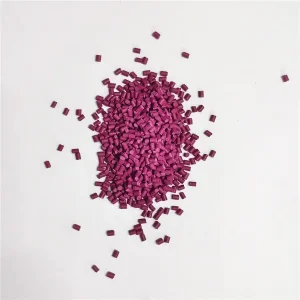
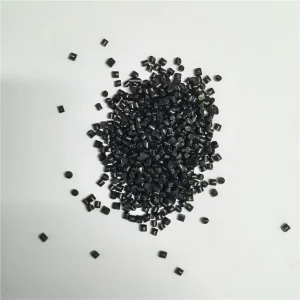
Products like our PE Red and PE Black Masterbatch series withstand continuous thermal stress up to 260°C without color fading or polymer chain degradation, making them suitable for long-dwell-time injection molding cycle times.
High-speed intensive mixer homogenizes pigments, wax dispersants, and coupling agents for uniform particle surface coating.
Controlled shear stress inside co-rotating twin screws shears particle bundles down to sub-micron primary grains.
Multi-stage vacuum vents strip moisture, low-molecular-weight volatiles, and entrapped micro-air pockets to prevent pinholes.
Die-face pelletizing yields uniform spherical or cylindrical granules with zero dust for automated volumetric dosing.
Selecting a masterbatch with an incompatible carrier polymer leads to phase separation, delamination, reduced impact strength, and severe surface haze. Review our engineering matrix below for optimal let-down mixing.
| Masterbatch Carrier | Primary Target Polymers | Melt Flow Index (MFI range) | Processing Temp (°C) | Key Industrial Applications |
|---|---|---|---|---|
| LLDPE (Linear Low-Density) | LDPE, LLDPE, HDPE, PP blend | 15 – 45 g/10min | 150°C – 240°C | Agricultural mulch film, blown shopping bags, courier sacks. |
| HDPE (High-Density) | HDPE, PP, Recycled R-PE | 8 – 20 g/10min | 180°C – 260°C | Crater boxes, blow-molded drums, corrugated water pipes. |
| PP Homo / Copolymer | PP, TPO, EPDM, Talc-filled PP | 25 – 60 g/10min | 190°C – 280°C | Automotive bumpers, non-woven spunbond fabric, food containers. |
| EVA (Ethylene-Vinyl Acetate) | PE, PP, PS, ABS (Universal) | 18 – 35 g/10min | 130°C – 220°C | Footwear soles, multi-layer co-extrusion tie layers, rubber compounds. |
| SAN / ABS Carrier | ABS, HIPS, PC/ABS blends | 10 – 30 g/10min | 200°C – 270°C | Home appliance housings, electronic enclosures, automotive interior parts. |
Sourcing from leading Chinese masterbatch suppliers offers unparalleled industrial scalability, raw material integration, and economic resilience against global market volatile spikes.
Located in Changzhou, Jiangsu Province, Changzhou Jiazhou Plastic Products Co., Ltd. benefits from direct proximity to East China's massive refining and petrochemical hubs (Sinopec, PetroChina). This grants immediate access to high-purity PE/PP base resins and TiO2 pigment feedstocks, neutralizing raw material shortages.
Our plant features multi-component gravimetric feeders that deliver feeder precision up to ±0.2%. Combined with Datacolor spectrophotometers for computerized color matching, every batch matches target Pantone or RAL color codes with zero color variance between shipments.
While western compounders often require 6 to 8 weeks lead time for custom color matching, our in-house lab completes sample matching within 3 to 5 business days, delivering full container load (FCL) orders to Shanghai/Ningbo ports within 12 to 15 days.
Masterbatches must perform under specific shear, temperature, and environmental stresses depending on the end-use plastic transformation process.
Challenge: Bubble instability, tear lines, pinholes in 15-micron HDPE/LLDPE shopping bags and express mail bags.
Solution: High-opacity PE White & PE Black Masterbatches formulated with nano-dispersed TiO2 and carbon black, enhanced with fluoroelastomer PPA processing aids to eliminate melt fracture.
Challenge: Warping, sink marks, differential shrinkage, and flow mark streaks in thin-walled daily crates and containers.
Solution: Custom PE/PP Color Masterbatches (Red, Blue, Yellow, Green) incorporating nucleating agents that promote rapid crystallization, reducing cycle times by up to 12%.
Challenge: Long-term outdoor UV degradation, thermal oxidation, stress cracking in PE100 municipal water pipes and cable conduit lines.
Solution: Carbon Black PE Masterbatch with average primary particle size < 20nm, paired with HALS (Hindered Amine Light Stabilizers) ensuring 20+ year weatherability.
As global legislation drives the circular plastic economy, Changzhou Jiazhou is investing heavily in eco-friendly carrier systems, biodegradable color solutions, and NIR-detectable black masterbatches.
Post-Consumer Recyclate (PCR) often suffers from residual odors, gel contamination, and color fluctuations. Our next-generation functional filler and masterbatch series incorporate odor-scavengers, chain extenders, and intense tinting formulations that neutralize off-color recycled feedstocks, restoring original mechanical strength and cosmetic appeal.
Traditional Carbon Black absorbs Near-Infrared (NIR) spectrum signals in automated material recovery facility (MRF) sorting lines, causing black plastic packaging to end up in landfills. Our NIR-sortable black masterbatches utilize specialty organic black pigments, allowing automated optical sorters to detect and recycle black PE/PP containers effortlessly.
Navigating international import regulations requires stringent quality documentation. We provide seamless compliance files with every batch shipment.
Free of Substances of Very High Concern as per ECHA regulation guidelines.
Zero heavy metals (Pb, Cd, Hg, Cr VI) or restricted phthalate plasticizers.
Select formulations certified for direct food contact under 21 CFR standards.
Audited quality management system from raw material intake to final delivery.
Review our complete spectrum of color and functional formulations. Contact our engineering team for sample testing and custom let-down ratio optimizations.
Direct answers from our senior compounding engineers regarding masterbatch selection, let-down ratios, troubleshooting, and global procurement.