Strategic Insights into Modern Polymer Compounding, High-Concentration Color Masterbatch Engineering, and Next-Generation Supply Chain Resilience.
Engineered for high dispersion, thermal stability up to 260°C, and superior opacity. Explore direct OEM product solutions from Changzhou Jiazhou Plastic Products Co., Ltd.
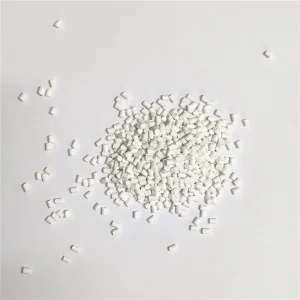
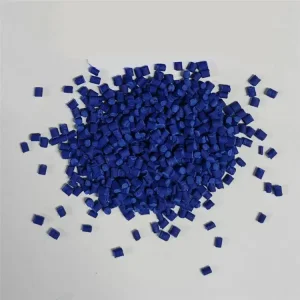
Navigating Supply Chain Dynamics, Regulatory Compliance, and Advanced Material Engineering in 2026 and Beyond.
In the contemporary global manufacturing ecosystem, sourcing managers, plastic processors, and OEM purchasing executives face unprecedented pressures. The global shift toward lightweight automotive structures, eco-friendly rigid packaging, durable agricultural film extrusions, and high-performance electronic housings has driven demand for specialized raw materials to historical highs. At the center of this structural shift is the global demand for reliable China OEM products factories & supplier networks capable of delivering compounding precision, batch-to-batch color stability, and rigorous international certification adherence.
Modern plastics manufacturing no longer relies solely on standard virgin resins. To maintain profitability and achieve exact mechanical and visual properties, polymer converters utilize high-concentration masterbatches—solid additives containing pigments or functional additives encapsulated within polymer carrier resins. Sourcing high-purity masterbatches directly from experienced OEM manufacturing hubs in China provides multinational corporations with a decisive competitive advantage in material performance, unit production cost, and lead-time stability.
Strategic Sourcing Insight: Procurement efficiency in plastic colorants is governed by pigment loading ratios and dispersion quality. Partnering with a specialized Chinese OEM factory that uses co-rotating twin-screw compounding ensures maximum tinting strength at lower let-down ratios (LDR), directly reducing raw material consumption for global buyers.
How Changzhou's Chemical & Polymer Industrial Clusters Deliver Unmatched Agility for Overseas Buyers.
The global manufacturing paradigm has transitioned from basic low-cost labor sourcing to advanced industrial automation, technological agility, and localized supply chain integration. China's transformation into an Industry 4.0 powerhouse is particularly visible in Jiangsu Province—specifically the city of Changzhou—which has emerged as an epicenter for advanced chemical synthesis, polymer compounding, and precision plastic masterbatch engineering.
At Changzhou Jiazhou Plastic Products Co., Ltd. (founded in 2010), Industry 4.0 principles are embedded directly into the production floor. Operating across a modern 6,000 square meter facility, the plant utilizes automated gravimetric dosing systems, micro-computerized temperature controllers, and continuous twin-screw extrusion lines. This integration minimizes human error, optimizes energy efficiency, and guarantees consistent dispersion of organic/inorganic pigments within Polyethylene (PE) and Polypropylene (PP) matrix carriers.
Loss-in-weight feeders guarantee micro-gram accuracy for pigment-to-carrier ratios, ensuring consistent opacity and hue retention batch after batch.
In-house spectrophotometer labs generate precise match reports against Pantone, RAL, or physical target samples within 3 to 5 working days.
Every lot undergoes rigorous testing for Melt Flow Index (MFI), thermal stability, moisture content, and RoHS/REACH chemical compliance.
Understanding Pigment Shear Dynamics, Carrier Rheology, and Anti-Migration Physics.
The manufacturing of premium color masterbatch is an exacting discipline of chemical physics and rheology. When plastic processors encounter surface defects—such as agglomeration specks, color streaking, dielectric breakdown in cable jackets, or premature UV degradation—the root cause is almost always poor pigment dispersion during compounding.
During twin-screw extrusion at Changzhou Jiazhou's facility, high-shear forces break down pigment agglomerates into primary particles (often smaller than 1 micron). These micro-particles must be thoroughly wetted by low-molecular-weight dispersants and encapsulated within the primary Polyethylene (PE) matrix resin. Proper wetting prevents re-agglomeration when the masterbatch is melted again by the end customer during blown film extrusion or injection molding.
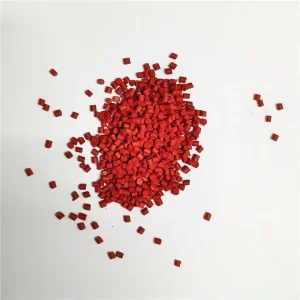
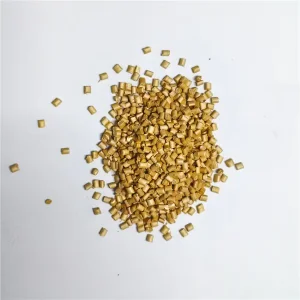
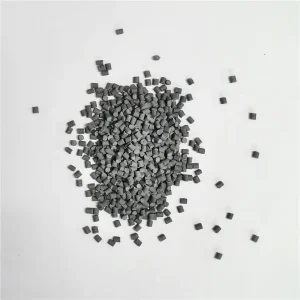
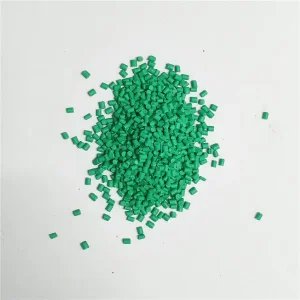
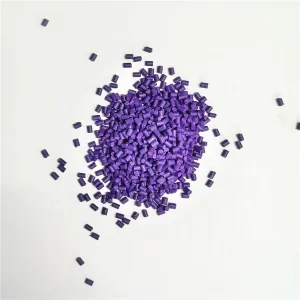
Industrial processing of high-density polyethylene (HDPE) and polypropylene (PP) often reaches elevated temperatures between 220°C and 260°C. Standard low-grade colorants degrade under these heat levels, leading to color shift, gas generation (foaming), and structural weakening. Jiazhou's high-concentration PE masterbatch series (such as our China High Concentration PE Red Masterbatch Bright Color 260°C Heat Resistant) incorporates specialized heat-stabilizer systems and thermal-resistant organic pigments that retain tinting vibrancy under severe melt temperatures.
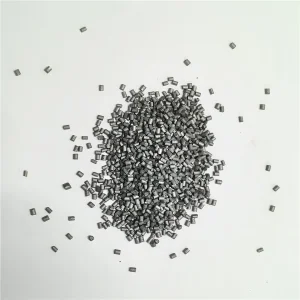
Outdoor plastic applications—including agricultural mulch films, municipal drainage pipes, and outdoor utility crates—face severe exposure to ultraviolet (UV) radiation and atmospheric oxidation. Jiazhou incorporates photo-stabilizers (HALS) and primary/secondary antioxidants into custom formulations (such as our Custom High Concentration PE Silver Masterbatch Anti-fading High Weather Resistance), extending product lifespans up to 5–10 years under intense sunlight exposure.
Technical Superiority: By maintaining a narrow particle size distribution and optimal carrier viscosity matching, Jiazhou masterbatches eliminate filter clogging (mesh screen blockages) on high-speed blown film machines, ensuring seamless continuous production.
Data-driven comparison illustrating why global buyers choose Changzhou Jiazhou Plastic Products Co., Ltd.
| Performance Metrics | Jiazhou OEM Masterbatch Series | Generic Commodity Masterbatch | Impact on Final Plastic Product |
|---|---|---|---|
| Pigment Concentration | High Concentration (Up to 40% - 70%) | Low Concentration (15% - 30%) | Lower let-down ratios (LDR); lower cost per finished ton. |
| Thermal Stability | Stable up to 260°C without color shift | Degrades above 200°C - 220°C | Prevents color fading and surface streaking in high-heat processing. |
| Dispersion Index (Delta P) | Very Low Filter Pressure Value (< 0.5 bar/g) | High Filter Pressure Value (> 2.0 bar/g) | Eliminates pinholes in blown film; avoids filter mesh clogging. |
| Color Difference (Delta E) | Strict ΔE < 0.3 vs. Approved Master Standard | Loose ΔE > 1.5 (High batch variance) | Guarantees exact color uniformity across multiple production lots. |
| Environmental Compliance | RoHS, REACH, Heavy Metal-Free, Non-Toxic | Unverified raw material sources | Safe for food packaging, toys, and international export markets. |
| Carrier Compatibility | Tailored PE / PP / Universal Carrier Resins | Recycled or mismatched low-tier carriers | Prevents delamination, brittleness, and loss of impact strength. |
Versatile Engineering across Injection Molding, Blown Film, Extrusion, and Packaging.
Essential for shopping bags, express courier bags, agricultural films, and multi-layer food packaging. Offers excellent opacity, smooth surface finish, and puncture resistance without tearing.
Widely applied in home appliances, automotive interior parts, electronic enclosures, and daily consumer goods. Delivers vibrant glossy finishes, zero surface sink marks, and uniform color fill.
Formulated specifically for HDPE water supply pipes, corrugated conduits, and PVC/PE architectural profiles. Ensures high carbon black or pigment loading for long-term weatherability and pressure resistance.
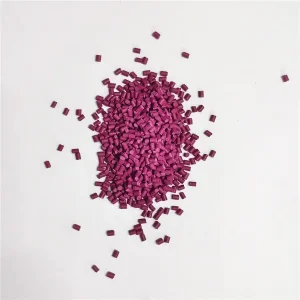
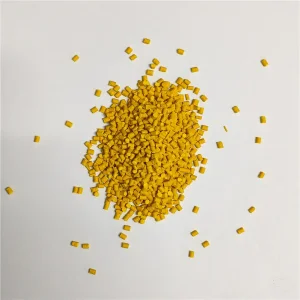
Browse our complete high-concentration PE masterbatch lineup available for global export, custom color matching, and bulk OEM supply.
How Global Sourcing Directors Mitigate Quality Risk and Guarantee Total Cost of Ownership (TCO) Efficiency.
Selecting a masterbatch partner among numerous China OEM products factories & supplier options requires a structured audit methodology beyond price-per-kilogram quotes. A low initial purchase price is easily negated if poor pigment dispersion causes frequent production line stoppages, high scrap rates, or batch color inconsistency.
Ensure the OEM supplier uses carrier resins chemically compatible with your target polymer substrate. A Polyethylene (PE) carrier is ideal for LDPE, LLDPE, HDPE, and PP resins, providing broad compatibility without causing polymer phase separation or reducing mechanical tensile strength.
Request precise technical data sheets (TDS) detailing pigment loading percentage. High-concentration masterbatches allow processors to operate at lower LDRs (e.g., 1% to 3% addition rate vs. 4% to 6% for low-grade alternatives), resulting in significant freight and material cost savings over large production runs.
Insist on spectrophotometer lab verification. Professional OEM suppliers maintain strict color variance tolerances (ΔE < 0.3 - 0.5) against target Pantone/RAL standard references under standard D65 illuminant conditions.
Verify that the masterbatch complies with international environmental mandates—including EU RoHS 2.0, REACH SVHC, FDA food contact regulations (where required), and heavy metal-free standards (EN71-3).
Evaluate the manufacturer's compounding machinery and plant scale. Changzhou Jiazhou's 6,000 square meter facility and multi-line co-rotating twin-screw extruders guarantee consistent lead-times and reliable production capacity exceeding thousands of metric tons annually.
Expert Technical Insights on Masterbatch Selection, OEM Customization, and Sourcing Logistics.
Because Jiazhou utilizes high-concentration pigment loading technologies, our recommended Let-Down Ratio (LDR) typically ranges from 1% to 4%, depending on the specific application thickness and opacity requirement. For blown film extrusion, an LDR of 1%–2% is frequently sufficient, whereas heavy injection-molded parts may utilize 2%–3% for max color saturation.
We enforce ISO 9001 quality management protocols supported by dual computerized spectrophotometers. Every production lot is sampled and tested against a digital master color profile. Production is only released when color variance (Delta E) is strictly within ΔE < 0.3 to 0.5 under standard illumination (D65/TL84).
Yes. Our in-house R&D lab specializes in rapid custom color matching. Customers can provide a Pantone code, RAL number, or a physical target plastic swatch. Our engineers formulate and dispatch custom masterbatch samples for client testing within 3 to 5 working days.
Absolutely. All raw pigments, carrier resins, and additive packages used in our factory are strictly screened to comply with EU RoHS 2.0, REACH SVHC, and heavy metal-free standards (Pb, Cd, Hg, Cr VI free), making them fully suitable for international export to European, North American, and Asian markets.
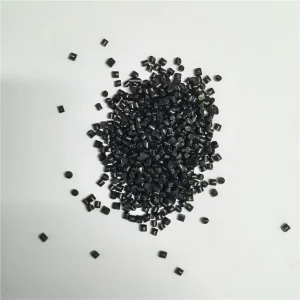
Our high-temperature color masterbatch series—such as our PE Red, PE Black, and PE White masterbatches—is engineered to withstand melt processing temperatures up to 260°C without color thermal degradation, gas generation, or chemical decomposition.
Our standard Minimum Order Quantity (MOQ) for stock color formulations is 1 metric ton (1,000 kg), while custom color formulations carry an MOQ of 1 to 3 tons depending on raw pigment specs. Standard production lead-time is 7 to 15 days upon order confirmation, with direct port logistics access via Shanghai and Ningbo ports.