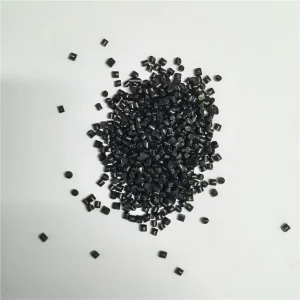
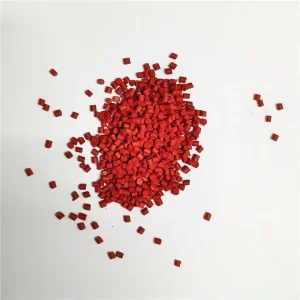
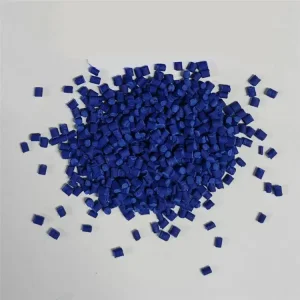
Engineered for high-shear extrusion, pipe profiling, blown film, and demanding industrial applications.
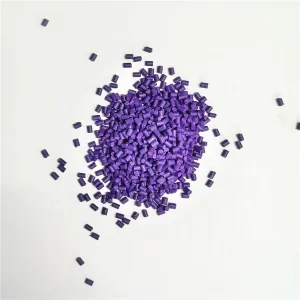
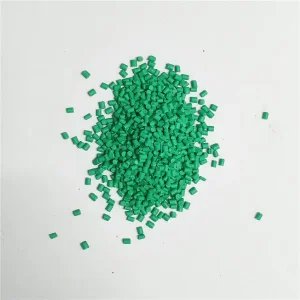
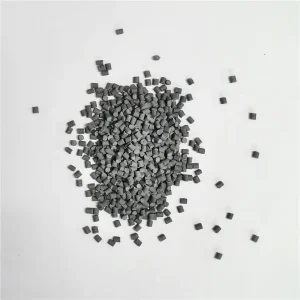
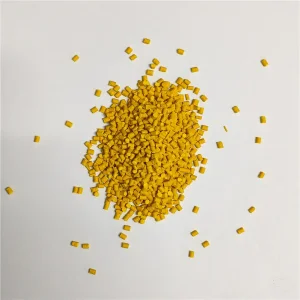
An in-depth analysis of polymer carrier matching, carbon black opacity, and environmental stress cracking resistance (ESCR) in civil infrastructure applications.
Polyethylene (PE) corrugated pipes—encompassing Single-Wall Corrugated (SWC) and High-Density Polyethylene Double-Wall Corrugated (HDPE DWC) systems—represent the backbone of modern municipal drainage, underground sewage networks, electrical conduit protection, and agricultural irrigation. The long-term operational integrity of these piping systems, designed for structural lifespans exceeding 50 to 100 years, relies fundamentally on the chemical quality and dispersion homogenity of the underlying PE Corrugated Pipe Masterbatch.
When selecting a qualified supplier from China’s industrial manufacturing hubs, global procurement teams and polymer processing engineers must look beyond basic pigment loading. The masterbatch formulation acts as a multi-functional additive matrix. It must deliver optical opacity (blocking UV degradation down to 290–400 nm wavelengths), melt rheology alignment with base pipe resins (PE 80 / PE 100 grades), and zero compromise to the pipe's ring stiffness (SN4, SN8, SN16 according to ISO 9969) or Environmental Stress Cracking Resistance (ESCR per ASTM D1693).
Formulated utilizing virgin LLDPE or HDPE carrier matrices matching the Melt Flow Index (MFI) of host pipe polymers (0.2–0.9 g/10min at 190°C/5kg), preventing phase separation and weak weld seams in corrugated profile crowns.
Incorporates P-type Carbon Black (particle size 18nm–25nm) combined with Hindered Amine Light Stabilizers (HALS) and Primary/Secondary Antioxidants (Irganox 1010/168) for long-term outdoor weatherability.
Integrated Fluoropolymer Processing Aids (PPA) eliminate melt fracture (sharkskin effect) during high-speed vacuum corrugated extrusion, ensuring ultra-smooth inner walls for optimal hydraulic flow coefficients.
Understanding regional compliance standards, carbon black loading benchmarks, and economic trade-offs for international buyers.
The global demand for Polyethylene corrugated pipes is experiencing unprecedented growth, driven by massive civil engineering investments in North America, Europe, the Middle East, and Southeast Asia. According to global plastic pipe market studies, HDPE corrugated pipes are rapidly replacing traditional concrete, ductile iron, and clay pipes due to their light weight, flexible resistance to seismic shifts, chemical inertness, and superior total-cost-of-ownership (TCO).
However, the global procurement landscape presents complex technical challenges for pipe manufacturers sourcing masterbatches internationally:
Leading pipe extruders across Germany, the UAE, the United States, and Brazil demand precise quantitative parameters when auditing China PE corrugated pipe masterbatch suppliers:
1. Strict Opacity and Carbon Dispersion Standards: Underground pipes exposed to surface sunlight during storage yards require exact 2.0% to 2.5% elemental carbon black concentration in the final extruded pipe (per ISO 6964). To achieve this efficiently, masterbatch suppliers must supply 40% to 50% high-concentration black masterbatch that distributes flawlessly under low shear without causing pinholes or agglomerate micro-cracks.
2. Regulatory & Chemical Compliance: International buyers demand compliance with REACH (EC 1907/2006), RoHS 3.0, and specific heavy metal limits (Pb, Cd, Hg, Cr VI free). Furthermore, color masterbatches used in co-extruded dual-color pipes (e.g., black outer wall for UV protection with a smooth blue, yellow, or white inner wall for camera inspection) must exhibit zero pigment migration or bleeding into the fluid media.
Why Tier-1 Chinese Masterbatch Manufacturers Lead the Global Market in Cost-Performance and Technological Scale.
Direct supply partnerships with major domestic petrochemical giants (Sinopec, PetroChina) and international pigment producers provide reliable access to prime carrier resins (HDPE, LLDPE) and specialized carbon black grades at scale.
Factory floors equipped with high-torque co-rotating twin-screw extruders featuring L/D ratios of 44:1 to 48:1, multi-stage side feeders, and underwater pelletizing ensure uniform particle geometry and zero dust contamination.
Every production batch undergoes gravimetric loss-in-weight dosing verification, continuous colorimeter spectrometer testing, and lab-scale extrusion filter pressure testing to guarantee absolute lot-to-lot consistency.
Custom masterbatch formulations tailored to specific mechanical, environmental, and regulatory environments.
Black PE Masterbatch with high-structure furnace carbon black provides maximum UV opacity during yard storage and exceptional resistance to soil chemicals, acidic effluents, and microbial attack.
Specialized flame-retardant and anti-static PE masterbatches designed for smooth or corrugated power line conduits, maintaining high dielectric strength and heat deflection stability under electrical load.
Single-Wall Corrugated (SWC) agricultural perforated pipes utilize cost-effective PE masterbatch formulations optimized for high output extrusion speed and flexible bend durability without cracking.
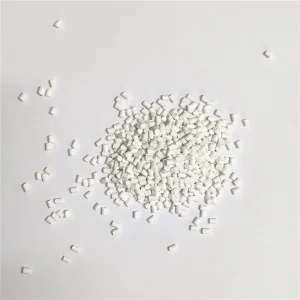
High-opacity White, Blue, or Yellow PE Masterbatches engineered specifically for the thin inner wall layer of DWC pipes, allowing closed-circuit television (CCTV) cameras to easily detect internal pipe flaws.
How sustainable polymer chemistry, circular economy integration, and smart additives are reshaping masterbatch manufacturing.
As international environmental regulations tighten and raw material costs fluctuate, the global plastic pipe manufacturing industry is undergoing rapid technological evolution. Forward-thinking Chinese masterbatch suppliers are at the forefront of these innovations, developing cutting-edge solutions that solve real-world processing challenges:
With global mandates enforcing higher recycled plastic content in non-pressure drainage pipes, incorporating PCR HDPE presents processing challenges such as degraded melt strength, odor, and pigment inconsistency. Advanced masterbatch technology now incorporates reactive chain extenders and block-copolymer compatibilizers directly into the color pellet, restoring mechanical strength and stabilizing processing during pipe extrusion.
In response to global regulatory restrictions on per- and polyfluoroalkyl substances (PFAS), advanced masterbatch R&D has successfully transitioned to PFAS-free processing aids. These novel formulations utilize synthetic organosilicon and polyether technologies to reduce die buildup, eliminate melt fracture, and lower extrusion pressure without regulatory compliance risks.
For above-ground PE piping and exposed cable conduits in tropical climates, specialized IR-reflective color masterbatches prevent heat buildup within the pipe wall, drastically reducing thermal expansion, wall warping, and long-term thermal degradation.
Key technical answers to common questions regarding masterbatch selection, quality assurance, and supply chain logistics.
A: The carrier resin must be fully compatible with the base pipe resin. For HDPE DWC pipes, we recommend a carrier based on LLDPE or HDPE with a Melt Flow Index (MFI) between 0.5 and 2.0 g/10min (190°C/2.16kg). Using a high-MFI carrier (e.g., PP or low-grade LDPE) can cause phase separation, lowering the ring stiffness and ESCR performance of the corrugated profile.
A: For outdoor weatherability and UV absorption, carbon black particle size must be between 18nm and 25nm (P-type carbon black). Coarser carbon black (>35nm) fails to provide adequate UV protection, while excessively fine particles can agglomerate if high-shear extrusion equipment is not used, leading to stress concentration points in the pipe wall.
A: For standard 40% to 50% concentrated Black Masterbatch, the recommended dosage is typically 2.0% to 5.0% by weight, ensuring a final elemental carbon content of 2.0%–2.5% in accordance with ISO 4427 / EN 12201 standards. For bright-colored inner wall layers (blue, yellow, white), addition rates range from 1.5% to 3.0% depending on opacity requirements.
A: PE masterbatch pellets are hygroscopic and can absorb ambient humidity during transit. Tier-1 Chinese suppliers utilize continuous desiccant air drying prior to packaging in moisture-proof heavy-duty aluminum-foil laminated bags or PE valve bags with shrink-wrapped palletization, guaranteeing moisture content under 0.05% (Karl Fischer method) upon delivery.
A: Buyers should request a Certificate of Analysis (COA) containing: 1) Melt Flow Index (ISO 1133), 2) Ash / Carbon Black Content (ISO 3451-1 / ISO 6964), 3) Pressure Filter Value (EN 13900-5), 4) Dispersion Rating (ISO 18553), and 5) Oxidation Induction Time (OIT per ISO 11357-6).
A: Yes. Custom color matching for co-extruded identification stripes (e.g., blue for potable water, yellow for natural gas, green for recycled water) can be precisely formulated using computer spectrophotometry within 3 to 5 working days, guaranteeing Delta E < 0.5 consistency across production runs.
Explore our full range of weather-resistant, non-toxic, high-concentration masterbatches manufactured in Changzhou, China.