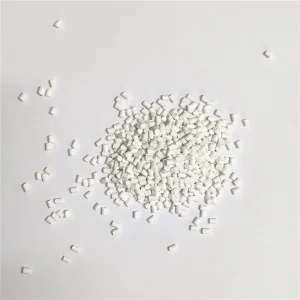
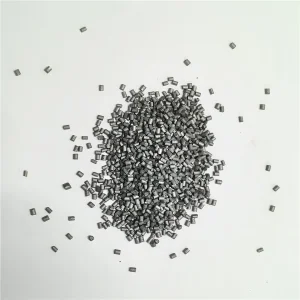
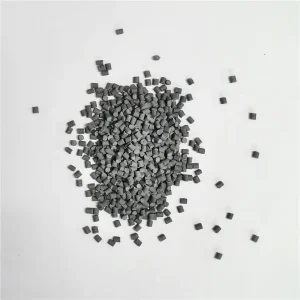
High-dispersion, eco-compatible PE color masterbatches engineered for blown film, injection molding, and continuous pipe extrusion.
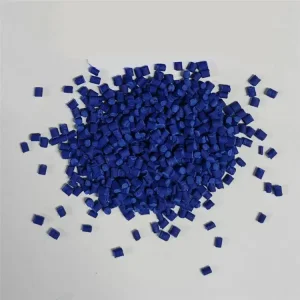
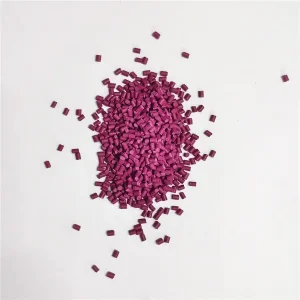
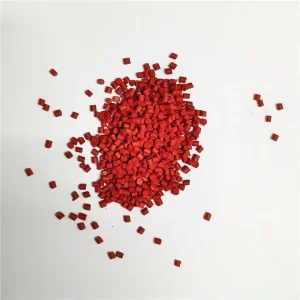
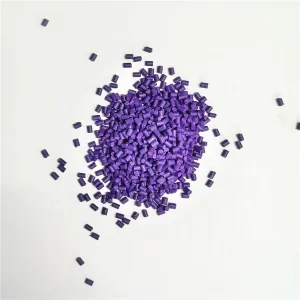
Analyzing the shift in polyethylene (PE) colorant manufacturing, supply chain dynamics, and technological innovation across Asian manufacturing centers.
The global polyethylene (PE) colorant market is undergoing a structural transformation driven by stringent sustainability mandates, heightened expectations for aesthetic consistency, and processing efficiency demands. Polyethylene—encompassing Low-Density Polyethylene (LDPE), Linear Low-Density Polyethylene (LLDPE), and High-Density Polyethylene (HDPE)—remains the most widely used thermoplastic resin globally, spanning applications from ultra-thin packaging films to heavy-duty industrial pipe systems. The performance of these plastic components hinges directly on the quality of color additives and functional carrier systems utilized during melt processing.
China has solidified its position as the premier international hub for PE plastic colorant factories and suppliers. This advantage is not merely based on economies of scale, but on advanced chemical engineering, automated continuous compounding technology, and tightly integrated supply chains for synthetic organic pigments, inorganic oxides, and specialty carrier resins. Modern facilities, such as Changzhou Jiazhou Plastic Products Co., Ltd. (operating over 16 years with a 6,000 m² footprint), represent the high-tier capability of Chinese colorant manufacturing—combining high pigment loadings (up to 50%) with precise rheological matching and zero-defect quality control.
Information Gain Key Insight: Sourcing high-performance PE plastic colorants requires moving beyond basic color matching. Procuring entities must evaluate carrier compatibility (MFI alignment), melt temperature tolerance (up to 260°C - 300°C), filter pressure values (FPV), and heavy metal compliance (RoHS/REACH) to avoid severe processing disruptions such as filter mesh clogging, pinholes, and color drift.
The chemistry of color concentrates: Carrier resin selection, melt flow indices, and thermal stabilization kinetics.
To ensure uniform dispersion without shear degradation, the carrier resin of the color masterbatch must have a slightly higher Melt Flow Index (MFI) than the host resin. Jiazhou formulates virgin LDPE/LLDPE carriers with MFI values precisely calibrated (e.g., 20g/10min to 40g/10min) to guarantee flawless let-down ratios (LDR of 1% to 4%) during high-speed blowing or injection cycles.
High-temperature injection molding (e.g., masterbatch used in engineering PE parts) exposes colorants to temperatures exceeding 260°C to 300°C. Lower-grade pigments undergo molecular thermal splitting, resulting in yellowing or darkening. Jiazhou utilizes heat-stabilized organic pigments (Phthalo Cyanine, Quinacridone) and rutile titanium dioxide to maintain absolute hue fidelity.
Un-dispersed pigment agglomerates severely compromise ultra-thin blown films (e.g., agricultural films or 10-micron packaging), causing film breakage and pinholes. By enforcing strict Filter Pressure Value (FPV) testing according to EN 13900-5 standards, Chinese suppliers ensure pigment particle agglomerates remain under 5 microns.
| Colorant Series | Carrier Resin Grade | Pigment Content (%) | Thermal Stability (°C) | Lightfastness (Blue Wool) | Primary Target Applications |
|---|---|---|---|---|---|
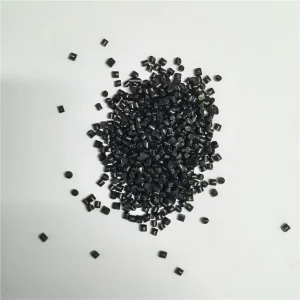
| High-Concentration Black | LLDPE / LDPE Virgin | 40% - 50% Carbon Black | 260°C - 300°C | Class 8 (Maximum) | Geomembranes, Irrigation Pipes, Blown Packaging Film |
| Titanium White Series | LDPE / HDPE Carrier | 60% - 70% TiO2 (Rutile) | 280°C | Class 7 - 8 | Food Contact Bags, Lamination, Milk Pouch Film |
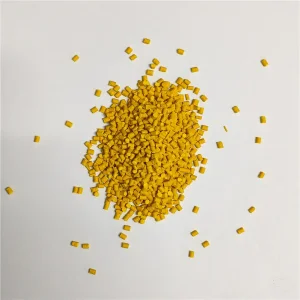
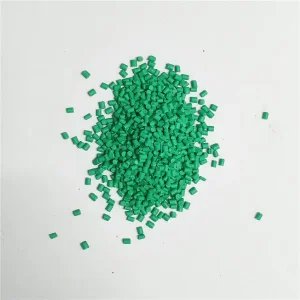
| Chroma Color Series (Blue/Red/Green) | Universal PE Carrier | 25% - 40% Organic Pigments | 240°C - 260°C | Class 6 - 7 | Injection Molded Crates, Household Goods, Toys |
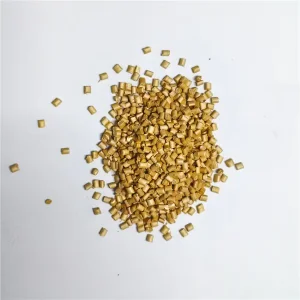
| Specialty Metallic (Gold/Silver) | PE / Wax Matrix | 15% - 30% Coated Mica/Alum | 220°C - 240°C | Class 6 | Cosmetic Bottles, Premium Caps & Closures |
Addressing the core procurement pain points encountered by tier-1 plastic convertors, OEMs, and brand owners worldwide.
Color variation between manufacturing lots leads to high reject rates in automated assembly lines. Enterprise buyers require factory suppliers equipped with computerized spectrophotometers capable of enforcing tight delta-E thresholds (ΔE*ab < 0.5) across multi-ton shipments.
Global distribution requires compliance with international safety standards. Leading Chinese factories must ensure their PE colorants pass heavy metal screenings (Pb, Cd, Hg, Cr VI free), RoHS 2.0 directives, REACH SVHC lists, and FDA 21 CFR 178.3297 for indirect food contact.
Excessive moisture in color masterbatch pellets causes severe steam voiding, bubbles, and streak marks during extrusion. Leading suppliers maintain automated continuous desiccant drying and vacuum aluminum-foil packaging to guarantee moisture levels below 0.15%.
Rapid product development cycles require fast color matching. Chinese manufacturers with in-house compounding pilot lines can formulate custom color samples matching Pantone or RAL codes within 3 to 5 business days, accelerating time-to-market.
Tailored masterbatch chemistry engineered for distinct extrusion, molding, and film blowing operations.
In multi-layer co-extrusion blown film production (such as courier bags, shrink wrap, and agricultural mulch), color masterbatch must offer exceptional dispersion. Poor dispersion causes die buildup, film tearing, and optical non-uniformity. Jiazhou's high-concentration PE color masterbatches (White, Black, Blue, Red) feature ultra-fine pigment particle size distribution, preventing pinholes while allowing film thickness down to 10 microns.
For high-volume injection molding—including crates, household containers, caps, and closures—color masterbatch must balance melt viscosity with rapid cycle times. Formulations using high-density polyethylene (HDPE) carriers ensure high mechanical stiffness, anti-warping properties, and dimensional stability without altering the shrinkage behavior of the base polymer.
HDPE water supply pipes, agricultural drip lines, and telecommunication cable jackets demand long-term weather resistance and UV protection. Specialized PE Black Masterbatches containing 40–50% finely dispersed P-type or P-E-type Carbon Black (particle size 19–25 nm) provide superior UV protection, ensuring a minimum outdoor service life of 50 years.
Pioneering eco-friendly plastic colorants: PCR carrier integration, Near-Infrared (NIR) sorting, and microplastic reduction.
To align with global circular economy goals, next-generation PE masterbatches utilize up to 100% certified PCR-HDPE or PCR-LDPE carrier resins. Advanced filtration systems eliminate legacy impurities, enabling plastic convertors to meet post-consumer recycled content targets without sacrificing physical properties.
Traditional carbon black masterbatches absorb Near-Infrared (NIR) radiation used in automated materials recovery facilities (MRF), causing black plastic waste to end up in landfills. Modern Chinese factories have engineered carbon-free NIR-detectable black masterbatches, allowing automatic optical sorters to easily identify and segregate PE polymers.
By integrating hyper-dispersive waxes and processing aids, new masterbatch formulations lower melt processing temperatures by 10°C to 20°C. This innovation substantially decreases thermal degradation during processing and reduces overall power consumption for plastic molding operations.
Rigorous quality management processes guaranteeing batch-to-batch consistency and international regulatory compliance.
Every production batch undergoes spectrophotometric testing in CIELAB color space. Color values ($L^*, a^*, b^*$) are matched against master digital standards to guarantee a maximum color difference (ΔE) under 0.5, preventing color shifts across production runs.
Thermogravimetric Analysis (TGA) confirms precise pigment loading percentages, while Melt Flow Rate (MFR) testing verifies that the flow behavior aligns perfectly with customer extrusion parameters.
Raw pigment selection undergoes rigorous X-Ray Fluorescence (XRF) screening to ensure compliance with RoHS, REACH, and EN71-3 toy safety standards. Full test reports are provided with every shipment.
Direct technical responses addressing common engineering and procurement inquiries regarding PE color concentrates.
The carrier resin acts as the delivery vehicle for the pigment. If the carrier resin has poor thermodynamic compatibility or mismatched melt flow index (MFI) with the base polymer resin (e.g., using a PP carrier in an LDPE film process), phase separation occurs. This leads to surface hazing, mechanical weakness, streak marks, and severe screw slippage.
For high-concentration PE color masterbatches (pigment loading 30% to 50%), the standard let-down ratio ranges between 1% and 4% by weight, depending on the wall thickness of the final product and the required opacity. High-tinting-strength masterbatches allow lower LDRs, which directly reduces production costs.
Leading manufacturers use high-shear twin-screw extruders combined with specialized hyper-dispersants and surface-treated microscopic pigments. Additionally, continuous Filter Pressure Value (FPV) testing ensures all agglomerates are broken down below critical thresholds prior to pelletization.
Equipped with automated color spectrophotometers and laboratory twin-screw compounders, Chinese supplier Changzhou Jiazhou Plastic Products Co., Ltd. delivers matched color samples within 3 to 5 business days, complete with technical data sheets (TDS) and trial guidelines.
Explore our full range of certified high-concentration PE color masterbatches engineered for worldwide industrial application.