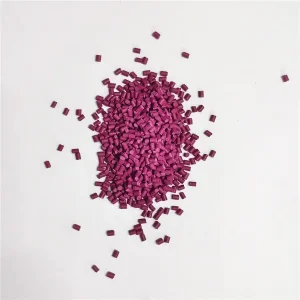
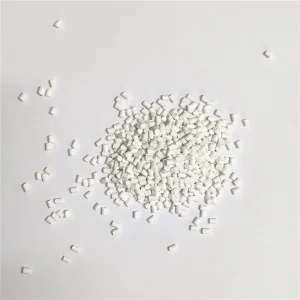
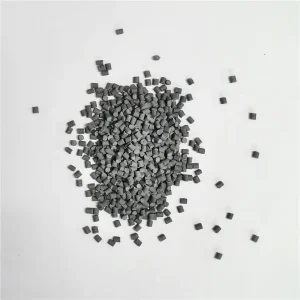
High-concentration pigment dispersions optimized for flat die single-screw and twin-screw polyethylene sheet extrusion processes.
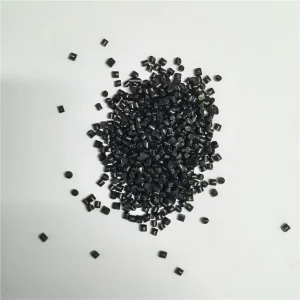
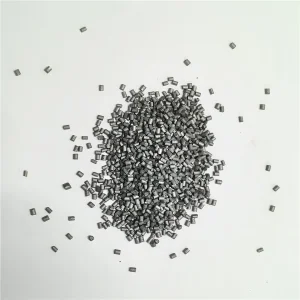
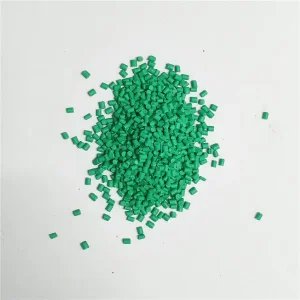
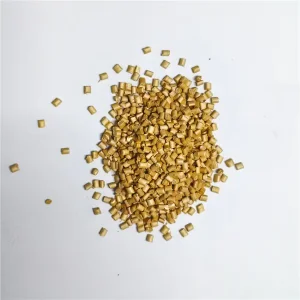
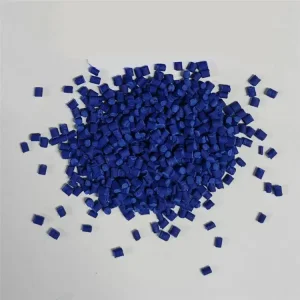
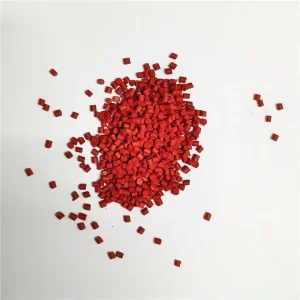
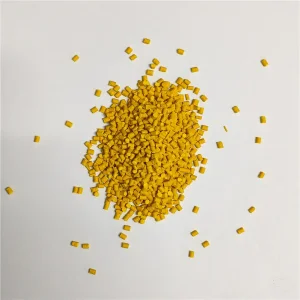
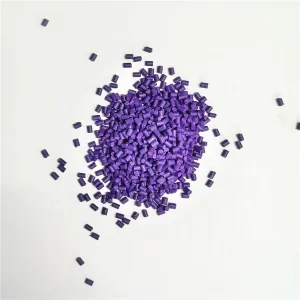
An authoritative engineering breakdown of carrier resin compatibility, shear-induced dispersion, and colorant physics in heavy-gauge and thin-gauge PE sheet production.
In high-throughput sheet extrusion (thicknesses ranging from 0.5mm to 30mm), masterbatch integration dictates surface finish, impact strength, and stress-crack resistance (ESCR). Polyethylene (PE) sheet extrusion requires carrier resins precisely matched in Melt Flow Index (MFI) to the virgin matrix resin (HDPE, LLDPE, or LDPE).
When the masterbatch melt viscosity is mismatched, phase separation occurs inside the T-die, leading to melt fracture, thickness variation across the sheet width, and severe color streaking. Premium Chinese factories utilize low-MW/high-density blended carrier systems ensuring complete plasticization prior to the metering zone of the extruder screw.
Microscopic pigment agglomerates represent primary failure points in thermoformed PE sheets. During secondary heating processes (vacuum thermoforming for automotive liners or packaging containers), poorly dispersed pigments cause localized thinning, dielectric breakdown, and cosmetic pinholes.
Top-tier suppliers measure dispersion efficiency using the Filter Pressure Value (FPV) test (EN 13900-5). Leading Chinese masterbatch formulations guarantee FPV values below 0.5 to 1.0 bar/g (using a 14-micron screen mesh), representing ultra-clean dispersion suitable for demanding geometric draw ratios.
Mapping the shifting sourcing imperatives of enterprise buyers across North America, Europe, Asia-Pacific, and Latin America.
The global polyethylene sheet market—encompassing heavy-gauge HDPE industrial boards, geomembranes, HMWPE wear strips, LLDPE agricultural liners, and thin thermoformable packaging sheets—is undergoing a structural transition. Global procurement directors are no longer purchasing masterbatch solely on per-kilogram pricing; selection algorithms prioritize Information Gain, batch-to-batch repeatability, regulatory compliance, and total cost of ownership (TCO).
Driven by massive municipal infrastructure bills and industrial containment projects, North American buyers demand high-concentration carbon black PE masterbatches containing fine particle size P-type carbon black (19nm - 25nm) to guarantee 25+ years of UV weatherability per ASTM D1603 / ASTM D5596 standard specifications.
European converters focus intensely on sustainability. Sourcing requires masterbatch solutions compatible with Post-Consumer Recyclate (PCR) resin streams. Strict adherence to EU REACH (SVHC inventory), RoHS 3, and FDA 21 CFR food contact regulations is non-negotiable for thermoformed food trays and sanitary wall paneling.
Rapid urbanization and intensive agricultural modernization in Southeast Asia and South America drive huge volumetric demand for cost-effective color masterbatch formulations with excellent thermal stability (260°C+) to withstand continuous flat-die sheet extrusion operating speeds without additive volatilization.
How advanced additive chemistry is re-defining physical properties, anti-aging performance, and processing speeds.
Traditional operations required dosing separate color masterbatches, UV stabilizers, processing aids (PPA), and anti-static agents. Modern extrusion plants now demand single-pellet "Combo Masterbatches". By synergistically blending Rutile TiO2 or organic pigments with Hindered Amine Light Stabilizers (HALS) and fluoroelastomer PPA during high-torque twin-screw compounding, factories eliminate dosing errors and reduce feeder hopper segregation.
Standard carbon black masterbatches absorb Near-Infrared (NIR) radiation, making black PE sheets invisible to automated sorting sensors in recycling facilities. Advanced Chinese suppliers have engineered alternative inorganic black colorants that deliver high jetness (L* color value < 25) while remaining 100% reflective to NIR optical sorters, elevating circular economy compliance.
For electronic component packaging sheets (IC tray thermoforming) and chemical containment liners, masterbatch formulations now incorporate conductive carbon nanotubes (CNT) or permanent migratory anti-static agents. This delivers surface resistivity control in the range of 106 to 109 ohms/sq without humidity dependence.
Extruding wide-width thick HDPE sheets often introduces dimensional distortion upon cooling. Sub-micron surface-treated Calcium Carbonate (CaCO3) or ultrafine Talc filler masterbatches act as nucleating agents. They increase crystallization temperatures, shorten thermoforming cooling cycles by up to 18%, and suppress anisotropic thermal shrinkage.
Why China remains the global epicenter for precision masterbatch compounding and high-volume raw material security.
The global dominance of Chinese PE sheet extrusion masterbatch manufacturers (such as industrial clusters in Changzhou, Jiangsu) rests on three pillars: upstream raw material integration, smart automated compounding infrastructure, and global logistics responsiveness.
China's petrochemical eco-system provides direct pipeline access to virgin PE carrier resins (Sinopec, PetroChina) and domestic pigment titan-producers. This backward integration buffers global buyers against raw material price shocks and guarantees structural supply continuity.
Modern factories deploy high-torque co-rotating twin-screw extruders featuring L/D ratios of 44:1 to 52:1 with gravimetric loss-in-weight feeders. This guarantees exact pigment ratio dosing accuracy to within ±0.1%, eliminating color shade drift across multi-ton production runs.
Every export batch undergoes computer-controlled spectrophotometry (CIELAB color space evaluation), X-ray fluorescence (XRF) heavy metal screening, melt flow indexing (MFI), and thermogravimetric analysis (TGA) for precise ash and pigment content verification.
How tailored PE masterbatches perform under real-world processing and environmental exposure conditions.
PE Sheet Thickness: 1.0mm - 3.0mm HDPE / LLDPE
Masterbatch Selection: High-Concentration Black Masterbatch (40%-50% Carbon Black loading).
Key Requirements: Exceptional OIT (Oxidative Induction Time > 100 mins), high resistance to environmental stress cracking (NCTL test), zero pinholes, and superior dispersion to prevent UV degradation from long-term solar exposure.
PE Sheet Thickness: 2.0mm - 8.0mm HDPE
Masterbatch Selection: Custom Grey, Black, or Metallic Silver Masterbatch.
Key Requirements: Low VOC emissions for cabin interior compliance, high thermal stability (260°C) preventing odor formation, flawless surface texture post-thermoforming draw, and exact OEM color matching (Delta E < 0.3).
PE Sheet Thickness: 0.25mm - 1.2mm LDPE / LLDPE
Masterbatch Selection: High-Opacity White Masterbatch (60%-70% TiO2) / Bright Colors.
Key Requirements: FDA 21 CFR and EU 10/2011 food contact certification, zero pigment migration into fatty food simulants, ultra-high opacity to protect light-sensitive food products.
A quantitative comparison engineered for quality control auditors and polymer plant managers.
| Performance Metric | Commodity Masterbatch | Jiazhou Premium PE Extrusion Masterbatch | Testing Standard / Protocol |
|---|---|---|---|
| Active Pigment / Carbon Loading | 20% - 30% | 40% - 75% High Concentration | TGA Calcination / ISO 247 |
| Filter Pressure Value (FPV) | > 2.5 bar/g (Poor) | < 0.5 bar/g (Ultra-Fine Dispersion) | EN 13900-5 (14μm mesh) |
| Heat Resistance Temperature | 200°C - 220°C | 260°C - 300°C (No Thermal Fade) | DIN EN 12877-2 |
| Light Fastness Rating (Blue Wool) | Grade 4 - 5 | Grade 7 - 8 (Exceptional Weathering) | ISO 105-B02 |
| Melt Flow Index (MFI) Matching | Unregulated (Fixed Carrier) | Tailored to Target Sheet MFI (0.1 - 20 g/10min) | ASTM D1238 / ISO 1133 |
| Heavy Metal & Hazardous Substances | Trace Contaminants Possible | RoHS 3, REACH SVHC, FDA Compliant | ICP-OES / GC-MS Analysis |
Step-by-step verification protocols when qualifying Chinese masterbatch factories for international procurement contract awards.
Expert answers addressing critical questions asked by plastic extrusion engineers and procurement officers.
For high-concentration masterbatches, typical Let-Down Ratios range between 1% to 4% depending on sheet thickness and target opacity. For heavy-gauge sheet (over 3mm), an LDR of 1.5% to 2% is often sufficient due to the longer optical path length. For thin packaging sheets requiring complete opacity, a 3% to 4% LDR is recommended.
Color streaking on single-screw extruders is caused by insufficient distributive mixing. To resolve this: 1) Select a PE masterbatch formulated with a slightly higher MFI carrier than the base HDPE resin; 2) Add a static mixer inline before the T-die adapter; 3) Use micro-pelletized or high-dispersion masterbatches with low Filter Pressure Values (FPV < 0.8 bar/g).
Yes. Premium PE sheet masterbatches are formulated with thermal heat fastness ratings up to 260°C - 300°C (DIN EN 12877-2). During thermoforming, radiant heating elements heat the sheet to 140°C - 180°C; heat-stabilized masterbatches retain exact color coordinates without thermal discoloration or pigment degradation.
Key certifications include ISO 9001:2015 quality management, REACH compliance (EC 1907/2006) for European markets, RoHS 3 directive compliance for electrical/electronic sheet enclosures, and FDA 21 CFR 177.1520 compliance for food-contact packaging applications.
Standard production lead times are 7 to 12 days after order confirmation. Masterbatch pellets packed in heavy-duty 25kg moisture-barrier aluminum foil/PE bags have a shelf life of 24 months when stored in a cool, dry warehouse environment away from direct sunlight.
Explore our full line of weather-resistant, non-migratory colorants optimized for blown film, injection molding, and sheet extrusion.