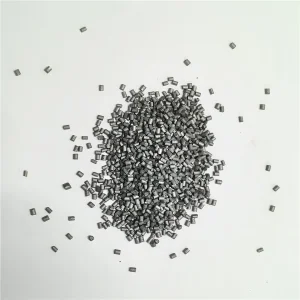
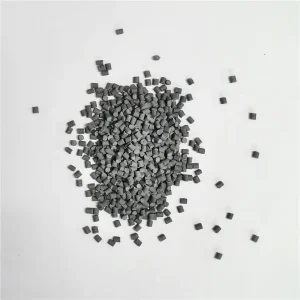
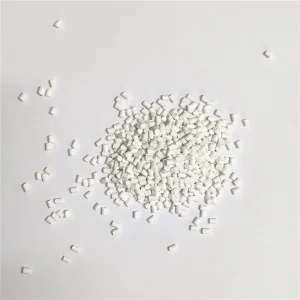
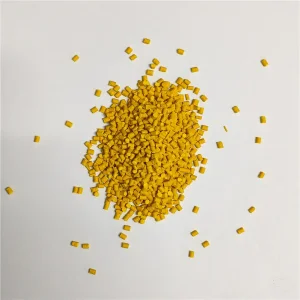
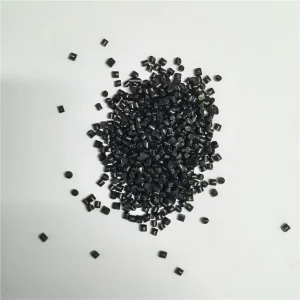
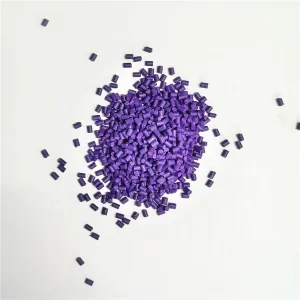
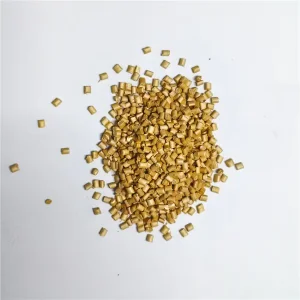
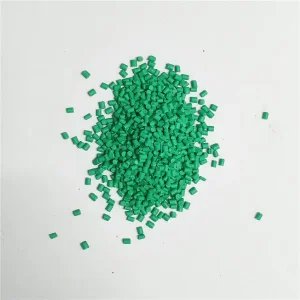
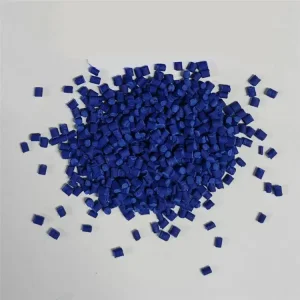
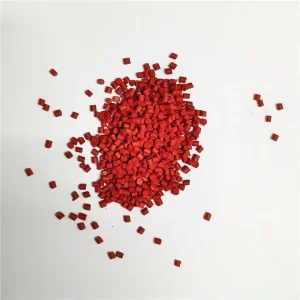
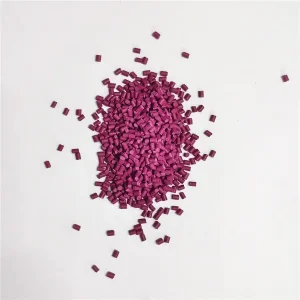
Engineered for extreme thermal stability (up to 260°C–300°C), non-migration performance, and superior tinting strength across blown film, extrusion, and injection molding lines.
The global thermoplastic masterbatch market is undergoing a seismic technical evolution. Driven by stringent environmental regulations (such as REACH, RoHS, and EU Food Contact Frameworks), escalating demands for ultra-thin blown films, and the rapid expansion of high-speed automated injection molding, polymer processors worldwide no longer treat color additives as mere commodities. Instead, masterbatches are evaluated as highly engineered chemical systems that dictate melt rheology, mechanical integrity, processing throughput, and final UV/thermal longevity.
China has solidified its position as the undisputed center of gravity for global pigment masterbatch research, compounding, and manufacturing. Combining complete upstream integration—from titanium dioxide ($\text{TiO}_2$) refining and carbon black synthesis to specialty organic pigment formulation—with cutting-edge co-rotating twin-screw extrusion technology, modern Chinese factories offer global procurement officers an unprecedented combination of scalability, cost optimization, and technical precision.
Leading manufacturers such as Changzhou Jiazhou Plastic Products Co., Ltd. represent the pinnacle of this industrial evolution. Boasting over 16 years of specialized manufacturing experience, operating out of a modern 6,000 m² state-of-the-art facility in Jiangsu province, and exporting to more than 100 nations, Jiazhou exemplifies how Chinese masterbatch enterprises deliver verifiable Information Gain and competitive advantages to international buyers.
Why are global Fortune 500 plastic converters and regional extrusion specialists increasingly shifting their color masterbatch procurement to tier-one Chinese factories? The competitive edge stems from four structural pillars:
China accounts for over 45% of global Titanium Dioxide ($\text{TiO}_2$) production capacity and possesses vast raw material reserves for inorganic oxides, calcium carbonate ($\text{CaCO}_3$), and organic pigments (Phthalocyanines, Quinacridones). Direct access to local pigment synthesis eliminates international freight tariffs on raw materials, driving down masterbatch unit costs without compromising chemical purity.
Top-tier Chinese facilities employ high-torque, co-rotating twin-screw extruders featuring L/D (Length-to-Diameter) ratios up to 48:1 or 52:1. Combined with liquid injection dosing and underwater pelletizing systems, these lines achieve nano-scale pigment particle dispersion, preventing filter-clogging and melt-fracture during high-speed film blowing.
Equipped with advanced spectrophotometers (Datacolor / X-Rite) and computerized color formulation software, Chinese R&D labs like Changzhou Jiazhou can match custom Pantone, RAL, or physical target samples within 3 to 5 working days. This rapid prototyping drastically reduces the time-to-market for OEM packaging and consumer goods launches.
Achieving flawless plastic coloration requires a scientific balance between pigment physics, carrier resin melt flow index (MFI), thermal stabilization, and additive chemistry. Standard masterbatch production involves dispersing high concentrations (20% to 70%) of solid colorants into a host polymer matrix.
The fundamental rule of masterbatch formulation is matching the solubility parameter and melting behavior of the carrier resin to the matrix resin. Using an incompatible carrier leads to delamination, reduced tensile strength, surface hazing, and poor impact resistance.
| Masterbatch Carrier Type | Target Polymer Matrix | Optimal MFI Range (g/10min) | Max Heat Stability (°C) | Primary Industrial Applications |
|---|---|---|---|---|
| PE Carrier (LLDPE / LDPE) | LDPE, LLDPE, HDPE, PP, EVA | 15.0 – 45.0 | 260°C – 280°C | Blown film, agricultural film, courier bags, squeeze bottles |
| PP Carrier (Homo / Random) | PP Raffia, PP Non-Woven, Sheet | 25.0 – 80.0 | 280°C – 300°C | Woven sacks, spunbond non-woven fabric, automotive trim |
| Universal Carrier (SAN / EVA / Low-Mw Wax) | ABS, PS, SAN, PC, PET | 30.0 – 100.0 | 240°C – 260°C | Consumer electronics housing, toys, general injection molding |
| Engineering Plastics Carrier (PA/PBT/PC) | PA6, PA66, PBT, PET, PC | 10.0 – 25.0 | 300°C – 320°C | Under-the-hood automotive parts, electrical connectors, structural industrial parts |
In outdoor applications (such as agricultural mulch films, municipal pipes, and stadium seats), pigments are subjected to aggressive photo-oxidative degradation caused by UV radiation and high processing heat. Premium Chinese factories utilize Hindered Amine Light Stabilizers (HALS) and primary/secondary phenolic antioxidants (e.g., Irganox 1010 / Irgafos 168) combined with high-grade organic pigments (such as Phthalocyanine Blue 15:3 and Pigment Green 7).
Non-migration is another critical quality threshold. Low-quality masterbatches suffer from organic pigment bleeding onto adjacent plastic layers or food packaging surfaces. Chinese high-concentration PE masterbatches employ surface-treated pigment particles coated with specialized dispersants (such as oxidized polyethylene wax), ensuring zero dye migration under long-term thermal stress.
For procurement managers and quality assurance directors in Europe, North America, and Southeast Asia, vetting a Chinese masterbatch supplier requires a systematic verification process. Below is the standard auditing benchmark practiced by tier-one buyers:
Verification of spectral color tolerance ($\Delta E$). Professional factories maintain a strict limit of $\Delta E < 0.5$ against master spectrophotometer standards for batch-to-batch consistency.
Ensuring the Melt Flow Index of the masterbatch matches the buyer's extruder specs to prevent screw slippage, pressure spikes, or uneven color distribution.
FPV testing according to EN 13900-5. Low FPV values (under 1.0 bar/g) confirm fine pigment dispersion without agglomerates that break thin blown films.
Full documentation for RoHS 2.0, REACH SVHC, FDA Food Contact approval, Heavy Metal Free (EN 71-3), and Halogen-free compliance.
Masterbatch formulations are tailor-made based on the end-use plastic transformation process. Chinese factories supply specialized grades for three primary conversion methods:
Used in express courier bags, shopping bags, agricultural greenhouse films, and food pouch laminates. Requirements include ultra-high tinting strength at low addition rates (1% to 3%), smooth film surface without pinholes or "fish eyes," and high opacity (white $\text{TiO}_2$ masterbatch with up to 70% concentration).
Utilized for daily household goods, electrical appliance housings, automotive interior trim, and storage crates. Focuses on rapid cycle times, zero warp/shrinkage distortion, excellent dimensional stability, and high gloss finish across PE, PP, ABS, and PC resins.
Engineered for HDPE municipal water pipes, PP-R hot water piping, corrugated drainage tubes, and corrugated plastic sheets. Demands maximum carbon black dispersion (for UV protection over 50 years lifespan), anti-oxidant protection against oxidative induction time (OIT) failure, and chemical inertness.
As the plastics industry aligns with global circular economy goals, Chinese masterbatch manufacturers are pioneering several groundbreaking technological shifts:
Traditional carbon black absorbs Near-Infrared (NIR) light used in automated recycling plant sorting stations, causing black plastics to be sent to landfills. Modern Chinese factories have engineered specialized non-carbon black infrared-reflecting masterbatches, enabling automated optical sorters to identify and recycle black rigid plastics.
To support compostable packaging initiatives, manufacturers are replacing traditional PE/PP carriers with PBAT, PLA, or PCL resins. Combined with organic non-toxic pigments, these masterbatches allow 100% compostable films to disintegrate fully without leaving microplastic or heavy metal residues.
Combining color with active functional additives (such as Color + Anti-Static + Anti-UV + Processing Aid) into a single masterbatch pellet. This simplifies compounding for converters, reduces dosing equipment complexity, and lowers inventory management overhead.
Below are expert answers to critical questions commonly raised by international procurement managers when sourcing masterbatch products from Chinese suppliers.
Explore our full range of color and functional PE masterbatches, trusted by top polymer converters across 100+ global destinations.