Engineered for extreme thermal stability (up to 260°C+), uniform dispersion, anti-fading durability, and high let-down ratio optimization.
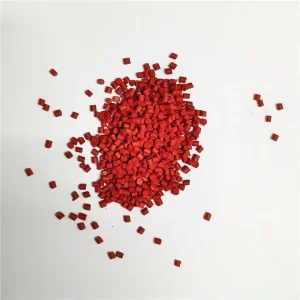
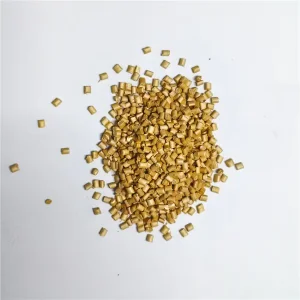
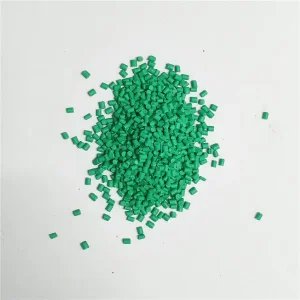
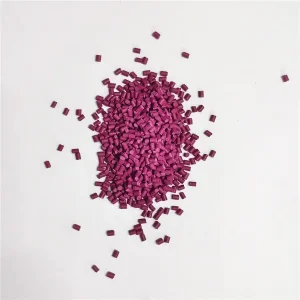
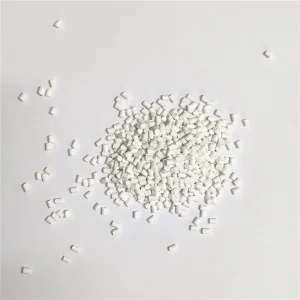
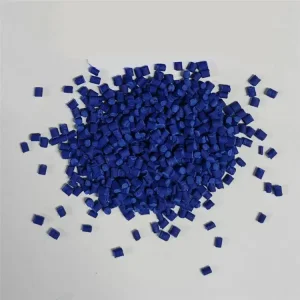
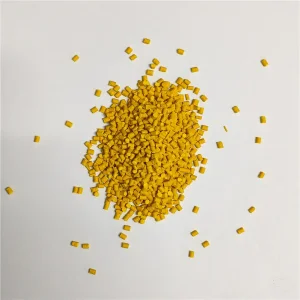
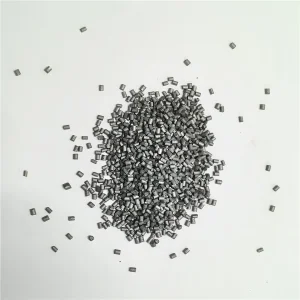
Bridging the gap between raw organic/inorganic colorant chemistry and high-throughput polymer compounding.
In modern industrial manufacturing, the demand for precise color reproduction, mechanical integrity, and operational efficiency in plastic conversion has elevated color compound manufacturing from a simple mixing process to an exact science. As a leading China Plastic Coloring Compound Company & Supplier, Changzhou Jiazhou Plastic Products Co., Ltd. brings 16+ years of specialized compounding expertise to global markets, delivering high-concentration PE, PP, and engineering polymer color masterbatches optimized for blown film, injection molding, sheet extrusion, and pipe manufacturing.
Coloration of synthetic polymers involves uniform dispersion of micro-particulate organic and inorganic pigments inside a compatible carrier resin matrix. Achieving optimal color strength without compromising the mechanical properties (tensile strength, elongation at break, impact resistance) of the base resin requires precise control over polymer rheology, melt flow index (MFI) matching, shear rate during twin-screw extrusion, and interfacial surface energy tuning.
Technical Insight: Information Gain in Masterbatch Compounding: Standard raw dry pigment blending often results in micro-agglomeration, filter clogging, dust pollution, and uneven shade distribution. High-grade concentrated masterbatches overcome this by pre-dispersing pigments down to sub-micron particle sizes inside virgin carrier resins under high shear forces, achieving a Filter Pressure Value (FPV) compliant with EN 13900-5 international standards.
B2B procurement managers and polymer engineers must balance operational throughput, environmental hygiene, color consistency, and total unit manufacturing costs. Below is an engineering evaluation comparing the three primary coloring methodologies:
| Evaluation Parameter | Solid Color Masterbatch (Jiazhou Standard) | Liquid Color Concentrates | Dry Powder Pigments | }
|---|---|---|---|
| Dispersion Uniformity | Exceptional (Pre-dispersed via twin-screw) | Good to Very High | Poor (High risk of agglomeration) |
| Dosing Accuracy & Automation | Seamless (Standard gravimetric/volumetric feeders) | Requires specialized liquid pumps | Difficult, high manual intervention |
| Handling & Plant Hygiene | Clean, dust-free pelletized format | Risk of liquid spills & pump leakage | High airborne dust, hazardous worker exposure |
| Thermal Stability Protection | Protected by carrier resin encapsulation | Medium (Limited by liquid carrier flashpoint) | Exposed to direct thermal degradation |
| Storage & Shelf Life | 24–36 Months (Sealed, room temp) | 6–12 Months (Sedimentation risks) | 24+ Months (Hygroscopic risks) |
From ultra-thin agricultural film blowing to heavy-duty industrial pipe extrusion and automotive components.
Polyethylene (LDPE, LLDPE, HDPE) blown films demand masterbatches with microscopic dispersion levels to prevent pinholes, bubble tears, and gauge variation. Used extensively in food packaging, courier mailing bags, heavy-duty shipping sacks, and agricultural mulch film requiring 260°C heat resistance and UV stabilization.
Injection-molded consumer electronics, medical device housings, caps & closures, and automotive interior panels require high color consistency, minimal shrinkage alteration, and non-warping behavior. Custom PE and PP color compounds ensure high dimensional accuracy across complex multi-cavity molds.
HDPE gas pipes, water supply conduits, corrugated drainage tubing, and outdoor wire/cable jacketing mandate masterbatches formulated with rutile TiO2, high-jetness Carbon Black, or weather-resistant pigments providing 10–25 years of anti-aging and anti-migration durability under intense solar exposure.
As international environmental regulations tighten, global B2B buyers require plastic coloring compounds compliant with international chemical safety standards. Formulations manufactured by Changzhou Jiazhou are engineered to meet strict compliance mandates:
Analyzing the structural supply chain strengths, infrastructure density, and manufacturing integration of Jiangsu's plastics cluster.
Selecting a China plastic coloring supplier offers global buyers significant structural cost and technology advantages. Changzhou Jiazhou Plastic Products Co., Ltd. operates a 6,000 m² state-of-the-art manufacturing facility located in Changzhou, Jiangsu Province—at the center of China’s advanced polymer compounding industrial ecosystem.
Direct supply agreements with major resin producers (Sinopec, PetroChina, Sabic) ensure access to high-purity carrier resins (MFI optimized) at scale, reducing raw material volatility for end buyers.
Equipped with high L/D ratio twin-screw extruders featuring multi-zone temperature control, liquid injection ports, and side feeders for high pigment loading (up to 50–70% concentration).
Utilizing Datacolor and X-Rite CIELAB spectrophotometers, custom color matching matching Pantone, RAL, or customer physical targets is completed within 3 to 5 business days with Delta E < 0.3.
Situated within 200 km of Shanghai and Ningbo deepwater ports, enabling streamlined containerized freight logistics, fast export documentation clearance, and reliable 15-day order turnaround.
Exploring the physics of colorant carrier integration, surface treatment additives, and weatherability stabilization.
A high-performance color masterbatch consists of more than just raw pigment mixed into plastic. It is a multi-component engineered matrix comprising: (1) Primary Colorants, (2) Carrier Resin Matrix, (3) Dispersion Aids & Coupling Agents, and (4) Functional Additives.
Colorants are divided into organic pigments, inorganic pigments, and soluble dyes. Each class exhibits unique performance profiles during plastic extrusion:
To avoid phase separation or degradation of mechanical strength during injection molding or film blowing, the masterbatch carrier resin must be rheologically compatible with the base polymer matrix. For instance, a PE masterbatch utilizing low molecular weight LLDPE carrier allows smooth shear flow and complete homogenization when mixed into HDPE or PP resin batches at 1% to 4% Let-Down Ratios (LDR).
Modern masterbatches frequently combine colorants with multi-functional performance additives within the same pellet:
Hindered Amine Light Stabilizers scavenge free radicals produced by UV radiation, protecting outdoor agricultural films and outdoor furniture against discolouration and embrittlement.
Synergistic blend of primary (hindered phenol) and secondary (phosphite) antioxidants prevents thermo-oxidative degradation during repeated melt processing loops.
Erucamide or Oleamide additive incorporation reduces film-to-film surface friction coefficient (COF), allowing rapid unwinding of blown film rolls without blocking.
Overcoming yellowing, residual odor, and melt variance in Post-Consumer Recycled plastics.
The global shift toward a circular plastic economy has driven demand for high-performance masterbatches engineered specifically for Post-Consumer Recycled (PCR) and Post-Industrial Recycled (PIR) resins. Recycled Polyethylene (rPE) and Recycled Polypropylene (rPP) typically exhibit thermal degradation, gray/yellow baseline hue variations, and fluctuating Melt Flow Index values.
Technical Innovation: Color Masking & NIR-Detectable Black Masterbatches: Traditional carbon black masterbatches absorb Near-Infrared (NIR) radiation emitted by automated sorting sensors at recycling MRF facilities, causing black plastic items to be misidentified as waste. Jiazhou’s NIR-detectable black and dark masterbatches utilize specialized organic pigments that reflect NIR wavelengths, allowing automated optical sorters to easily categorize and recycle black plastic items.
Furthermore, specialized high-opacity White Masterbatches (with up to 70% Rutile TiO2 content) allow plastic recyclers to mask dirty PCR resin baselines, restoring bright, vibrant hues to recycled consumer packaging.
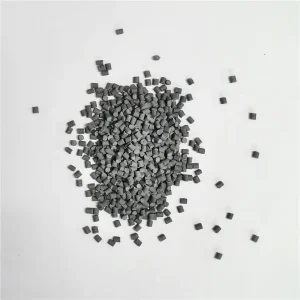
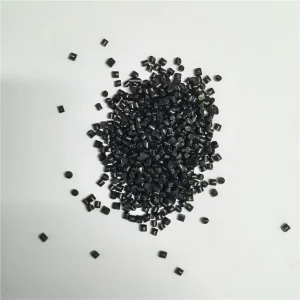
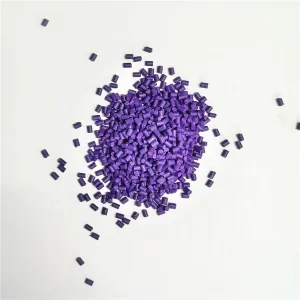
Explore our full line of non-toxic, anti-fading, weather-resistant PE color concentrates for extrusion and injection processing.
Answers to common B2B inquiry parameters regarding let-down ratios, carrier compatibility, MFI matching, and color consistency.
Our standard high-concentration color masterbatches are formulated for a recommended Let-Down Ratio (LDR) of 1% to 4% (1:100 to 4:100), depending on wall thickness, opacity requirements, and processing method. For ultra-thin blown films (below 15 microns), an LDR of 2%–3% ensures high opacity without pinhole formation. For heavy injection molding, an LDR of 1%–2% is generally sufficient.
High thermal resistance (rated up to 260°C–300°C) prevents organic pigment degradation, shade shifting, gas volatilization, and plate-out during elevated processing temperatures. This is crucial for high-speed extrusion lines and engineering plastic molding where barrel residence times are long.
Yes. Low-density PE (LDPE/LLDPE) carrier systems are broadly compatible with Polypropylene (PP) matrices for general injection molding and thick-walled extrusion due to low interfacial energy. However, for high-clarity PP thin-wall containers or PP fibers, we recommend matching with a dedicated PP carrier masterbatch.
Our R&D laboratory utilizes spectrophotometers to match target shades within 3 to 5 working days. We ship physical test pellets and injection-molded color plaques via DHL/FedEx for customer lab approval prior to full-scale commercial compounding.
Filter Pressure Value (measured under EN 13900-5) indicates pigment dispersion quality. Poorly dispersed masterbatches clog extruder screen packs, raising melt pressure and causing machine downtime. Jiazhou masterbatches maintain low FPV (< 1.5 bar/g), allowing continuous production runs without screen clogging.
Yes. Our non-toxic masterbatch formulations are manufactured using food-grade pigments and heavy-metal-free additives compliant with US FDA 21 CFR 178.3297, EU Regulation No 10/2011, and RoHS 2.0/REACH standards.
When stored in original sealed moisture-barrier bags in a cool, dry warehouse away from direct sunlight, our masterbatches have an effective shelf life of 24 to 36 months without loss of color strength or polymer degradation.
Color migration (blooming or solvent bleeding) occurs when pigment molecules dissolve into the polymer matrix and migrate to the surface. We utilize high-molecular-weight organic pigments with low solubility parameter overlap to eliminate migration into packaged goods.
Our standard MOQ for standard masterbatch grades is 500 kg, while custom shade formulations require an initial trial MOQ of 1,000 kg. With multiple twin-screw compounding lines, our total monthly production capacity exceeds 1,500 metric tons.
As an established manufacturer in Changzhou with 16+ years of specialized experience, we offer direct factory pricing, strict lot-to-lot consistency (ΔE < 0.3), custom formulation support, rapid global shipping, and comprehensive technical service.