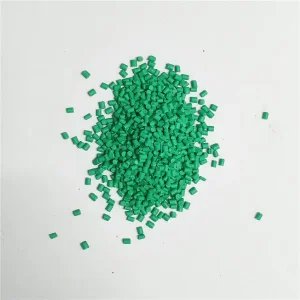
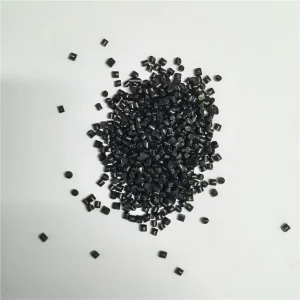
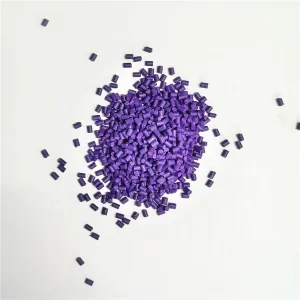
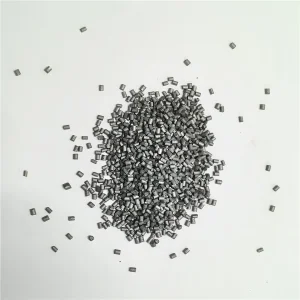
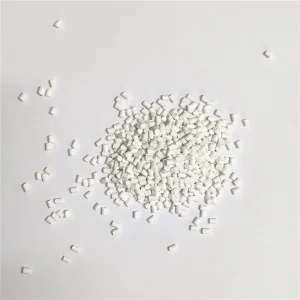
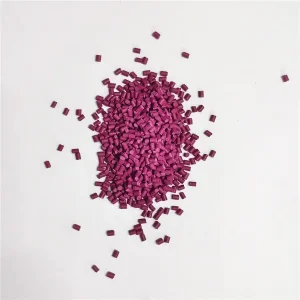
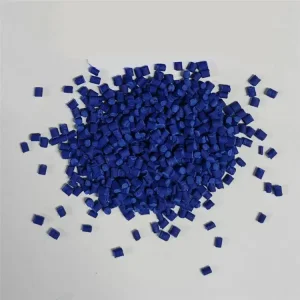
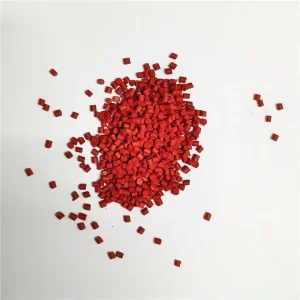
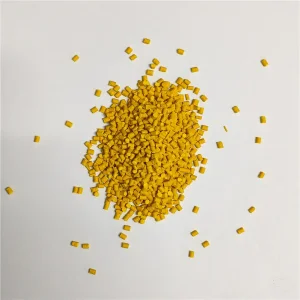
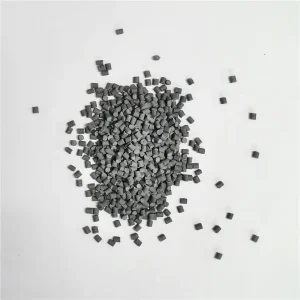
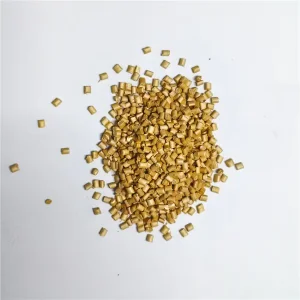
Engineered with high pigment concentration, uniform carrier dispersion, and multi-process compatibility.
The global polymer processing sector is undergoing a profound paradigm shift. As end-use industries—ranging from automotive light-weighting and ultra-thin agricultural film blowing to medical packaging and fast-moving consumer goods (FMCG)—demand stringent aesthetic and mechanical benchmarks, the selection of plastic colouring pellets (commonly termed color masterbatches) has moved from a secondary procurement detail to a central engineering driver.
Modern plastic colouring relies on compounding organic pigments, inorganic oxides, carbon black, and specialized effect dyes into carrier resin matrices compatible with base polymers such as LLDPE, LDPE, HDPE, PP, PET, and ABS. Direct powder pigmentation is rapidly being phased out worldwide due to cross-contamination hazards, dust explosion risks, poor volumetric dosing control, and inconsistent shear de-agglomeration during extrusion.
Optimal masterbatch integration hinges on matching the Melt Flow Index (MFI) of the pellet's carrier matrix with the target resin. A misaligned MFI causes flow instabilities, melt fracture, and localized pigment phase separation during high-speed injection molding or blown film processing.
Achieving absolute color fidelity and mechanical integrity requires advanced melt-kneading mechanics. As a premier China plastic colouring pellets manufacturer, Changzhou Jiazhou Plastic Products Co., Ltd. employs state-of-the-art co-rotating twin-screw extruders featuring L/D ratios of up to 48:1, equipped with multi-stage gravimetric feeders and underwater pelletizing systems.
Raw pigment agglomerates are broken down to sub-micron particle sizes using precise combinations of forward and reverse kneading blocks. This prevents screen pack clogging during fine-denier fiber spinning or thin-film processing.
Our color pellets incorporate secondary antioxidants (phosphites) and hindered phenol primary stabilizers. This dual-action additive network shields both carrier resin and organic chromophores against thermal degradation at process temperatures up to 260°C – 300°C.
By treating inorganic fillers (such as rutile titanium dioxide or ultrafine calcium carbonate) with specific coupling agents and hyperdispersants, interfacial tension between pigment surfaces and matrix polymer is minimized.
| Masterbatch Grade | Pigment Loading (%) | Carrier Base | Thermal Stability (°C) | Light Fastness (Blue Wool) | Primary Processing Target |
|---|---|---|---|---|---|
| PE Black Masterbatch | 40% – 55% Carbon Black | PE / Universal | 260°C – 280°C | Grade 7 – 8 | Blown Film, Geomembranes, Pipe Extrusion |
| PE White Masterbatch | 50% – 70% Rutile TiO₂ | LLDPE / LDPE | 280°C – 300°C | Grade 8 | Food Packaging Film, Injection Containers |
| PE Color Masterbatch | 20% – 45% Pigment/Dye | PE / PP | 240°C – 260°C | Grade 6 – 7 | Daily Commodities, Toys, Industrial Profiles |
| Specialty Metallic Masterbatch | 15% – 30% Metallic Flake | PE / Specialty Polymer | 220°C – 250°C | Grade 6 | Decorative Packaging, Cosmetic Closures |
Plastic colouring pellets manufactured at our Changzhou facility undergo rigorous quality verification to meet exact downstream manufacturing parameters across diverse geographic and industrial environments.
In film blowing (down to 10–15 microns), agglomerated pigments cause micro-pinholes, tearing, and bubble instability. Jiazhou's high-concentration PE White, Green, and Black masterbatches utilize nano-filtered pigments to ensure smooth bubble inflation, excellent opacity, and high puncture resistance in agricultural mulch films and heavy-duty shipping bags.
Fast cycle injection molding of food containers, crates, and caps demands rapid masterbatch melt blending without increasing barrel dwell time. Our color pellets offer low viscosity melt behavior, enabling rapid color diffusion without causing sink marks, warpage, or residual stress concentration in structural ribbing.
For HDPE municipal water pipes and underground cable jacketing, carbon black masterbatch must offer high UV absorption to prevent photo-oxidative degradation over 50-year service lifespans. Jiazhou supplies P-type and P-grade fine particle carbon black pellets (20–25 nm particle size) ensuring uniform UV shielding and minimal moisture absorption.
Coloration of cosmetic packaging and medical disposables requires zero heavy metals, zero primary aromatic amines (PAA), and low volatile organic compounds (VOC). Our non-toxic PE white, blue, and yellow pellets comply strictly with EU 10/2011 and US FDA 21 CFR standards for direct food contact safety.
Sourcing masterbatches directly from a established China plastic colouring pellets supplier unlocks significant structural advantages across the procurement value chain. Situated in Changzhou, Jiangsu Province, Changzhou Jiazhou Plastic Products Co., Ltd. sits at the heart of China’s most concentrated polymer manufacturing cluster.
Direct pipeline and bulk container access to primary petrochemical producers (Sinopec, PetroChina, Sabic China) guarantees uninterrupted availability of high-purity PE, PP, and specialty carrier resins at competitive baseline costs.
With multi-line twin-screw compounding arrays, our factory operates with agility—comfortably handling high-tonnage container loads for global distributors while executing custom-matched small-batch color runs for OEM manufacturers.
Located less than 200 kilometers from Shanghai Port and Ningbo-Zhoushan Port, Jiazhou provides seamless FOB, CIF, or DDP export logistics with standardized export packaging, moisture-barrier lining, and rapid container loading timelines.
As sustainability regulations intensify and artificial intelligence enters factory automation, Jiazhou is advancing next-generation masterbatch research across three primary technology pillars:
Integration of machine-learning spectral algorithms into our lab color-matching workflow reduces match iterations by 60%. Complex target colors (Pantone / RAL) are accurately digitized and converted into precise pigment recipe formulations within hours, maintaining ΔE < 0.3 tolerances.
To support the global shift toward bio-plastics, Jiazhou is expanding its bio-masterbatch range formulated with PLA, PBAT, and recycled PCR polyolefins as carrier resins, enabling 100% compostable or closed-loop recyclable finished products.
Advancing shear-orientation controls during pellet extrusion allows our Silver and Gold Masterbatches to achieve high metallic luster without causing weld-line weakness or optical orientation defects in complex injection-molded parts.
Navigating global compliance frameworks requires strict factory-level quality controls. Every production lot of masterbatch manufactured by Changzhou Jiazhou is subjected to rigorous quality verification before shipment, accompanied by Comprehensive Analysis Certificates (COA).
Our quality assurance laboratory is equipped with X-Rite spectrophotometers, melt flow indexers (MFI), two-roll mills, and laboratory blown film lines. Every batch undergoes sample injection or film extrusion testing to guarantee that tinting strength, color space coords (L*a*b*), and dispersion filter pressure value (FPV) meet agreed specifications.
Engineering answers to common technical queries regarding masterbatch selection, let-down ratios, and polymer processing performance.
Direct supply from Changzhou Jiazhou Plastic Products Co., Ltd. — reliable performance for every plastic processing need.