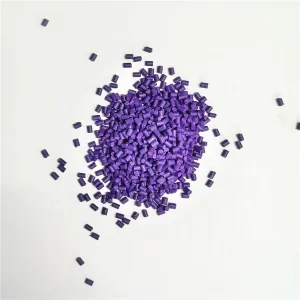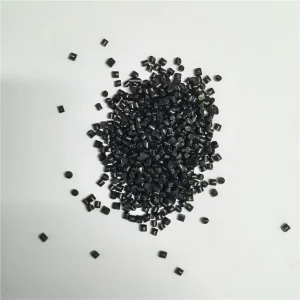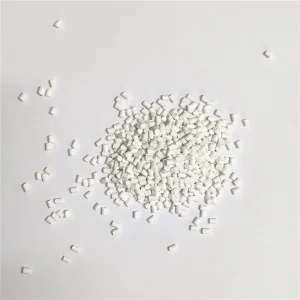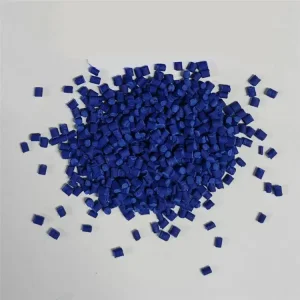
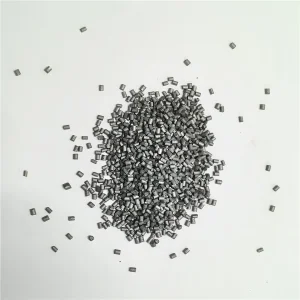
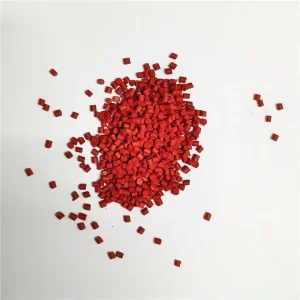
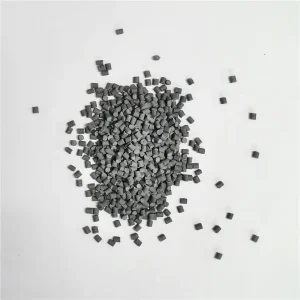
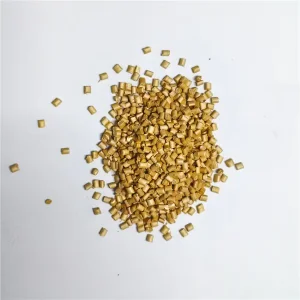
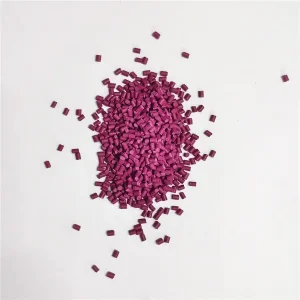
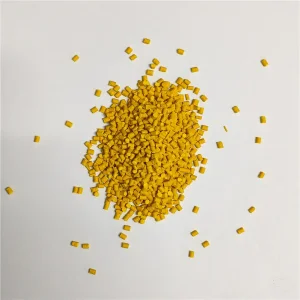
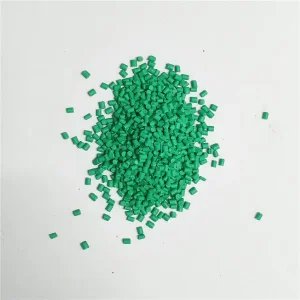
In modern civil engineering, subterranean infrastructure, and commercial roofing systems, synthetic waterproofing membranes—commonly processed as HDPE (High-Density Polyethylene), LLDPE (Linear Low-Density Polyethylene), and EVA (Ethylene-Vinyl Acetate) sheets—demand stringent structural integrity and long-term chemical resilience. The specialized Waterproof Coil Special PE Masterbatch serves as a critical functional constituent during extrusion blowing and flat-die co-extrusion. It does not merely impart pigment opacity; it acts as a carrier vehicle for high-grade active compounds including thermal stabilizers, carbon black nano-dispersions, antioxidant complexes, and UV-inhibiting Hindered Amine Light Stabilizers (HALS).
When selecting a partner among China waterproof coil special PE masterbatch companies, global procurement teams must scrutinize the polymer melt flow compatibility, interfacial shear energy during twin-screw compounding, and long-term oxidation induction time (OIT). Leading Chinese manufacturers, spearheaded by industrial clusters in Jiangsu, utilize co-rotating twin-screw compounding lines with automated gravimetric dosing to ensure pigment agglomerates are broken down below 5 microns. This precision guarantees that waterproofing coils maintain mechanical elongation at break (>600%) without experiencing stress-concentration micro-fractures caused by poorly dispersed filler matrices.
China’s masterbatch manufacturing landscape has evolved from high-volume standardized production into highly specialized, R&D-driven technical centers. For international buyers seeking Waterproof Coil Special PE Masterbatch suppliers, Chinese factories offer an unmatchable ecosystem combining upstream petrochemical raw material integration with downstream processing expertise.
Direct access to primary PE resin producers (Sinopec, CNPC) ensures consistent carrier resin purity, stable Melt Flow Index (MFI matching 2.0 to 20.0 g/10min), and absolute freedom from hazardous post-consumer contaminants.
State-of-the-art multi-zone twin-screw extruders operating with liquid loss-in-weight feeders guarantee precise pigment loading (up to 50% concentration) without carrier degradation or thermal scorching.
Centered in strategic manufacturing zones like Changzhou, Jiangsu, facilities operate in close proximity to major Shanghai/Ningbo ports, enabling containerized export lead times under 15 working days globally.
Enterprise-level sourcing directors and quality assurance managers evaluating China waterproof coil special PE masterbatch companies must enforce strict technical performance benchmarks. The matrix below outlines key engineering criteria and required laboratory validation parameters.
| Performance Parameter | Technical Specification / Standard | Impact on Final Waterproofing Membrane |
|---|---|---|
| Carrier Resin Compatibility | 100% Virgin LLDPE / HDPE Carrier | Prevents phase separation, maintains tensile strength and seam weldability during installation. |
| Thermal Stability | 260°C for 30 minutes (ISO 11358 TGA) | Ensures no color degradation or gas bubble formation during continuous high-temperature sheet extrusion. |
| Pigment Dispersion Quality | Filter Pressure Value (FPV) < 1.5 bar/g | Eliminates pinholes, weak spots, and water permeability pathways across thin-gauge coils. |
| Weathering Resistance | ASTM G154 Xenon Arc Exposure (>3000 hrs) | Protects exposed roof membranes against UV discoloration, chalking, embrittlement, and micro-cracking. |
| Color Tolerance Accuracy | Spectrophotometer ΔE < 0.5 (CIELAB) | Guarantees absolute color batch consistency for multi-thousand square meter construction projects. |
Specialized PE Masterbatch formulations are tailored to meet unique environmental stresses across diverse geotechnical and civil engineering applications.
Exposed roof waterproofing membranes demand high reflectivity (White/Grey PE Masterbatch) to minimize solar heat gain. High loading of titanium dioxide combined with hindered amine light stabilizers prevents thermal degradation under constant UV exposure while improving building energy efficiency.
Subterranean structures encounter severe hydrostatic pressure and microbial attack. Carbon Black PE Masterbatch provides opaque barrier properties, micro-organism resistance, and root-puncture resistance necessary for foundation liners and railway tunnel waterproofing sheets.
Environmental containment applications require non-toxic, non-migratory pigment masterbatches. High-density polyethylene liners treated with specialized color masterbatches enable leak-detection layer separation (dual-color co-extruded membranes) without leaching chemicals into surrounding soil or water tables.
Used as the protective upper release film or surface reinforcement layer in self-adhesive rubberized asphalt waterproofing membranes. The masterbatch guarantees uniform stretch ratios, dimensional thermal stability during bitumen hot-coating, and anti-tack surface release performance.
Top-tier China waterproof coil special PE masterbatch companies strictly adhere to international environmental and safety standards. Operating under ISO 9001:2015 quality management systems, premier manufacturers implement rigorous raw material verification protocols to comply with global regulatory frameworks:
Strictly verified free from heavy metals including lead, cadmium, mercury, and hexavalent chromium (EU Directive 2011/65/EU).
Screened against SVHC (Substances of Very High Concern) candidate lists, ensuring safe deployment in European infrastructure projects.
Full traceability from incoming raw pigment inspection to post-compounding pellet testing and batch retention samples.
Formulated to meet ASTM D3895 (OIT testing) and China GB/T 18173 structural waterproofing material specifications.
Driven by global carbon neutrality goals and stricter civil engineering durability standards, the masterbatch sector is experiencing rapid technological evolution. China’s leading innovation hubs are developing next-generation additives designed for enhanced sustainability and extreme service conditions:
Transitioning from petroleum-derived PE to sugarcane-based or bio-attributed polyethylene carriers to lower the carbon footprint of waterproof sheet production.
Incorporating functional sub-micron silica and modified nano-clays into the masterbatch matrix to boost barrier resistance against water vapor migration and hydrocarbon penetration.
Formulating non-degrading stabilizer packages that allow post-industrial waterproofing membrane trimmings to be 100% re-granulated and re-fed back into extrusion lines without loss of properties.