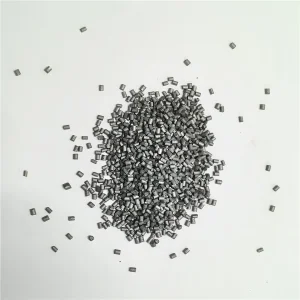
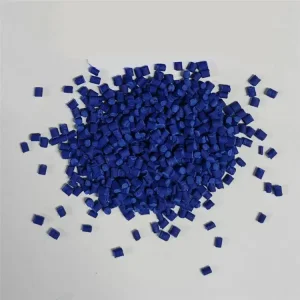
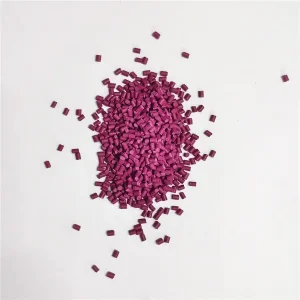
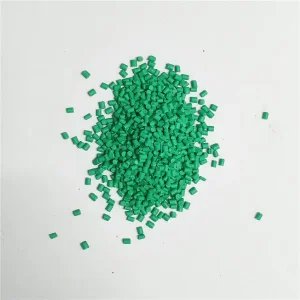
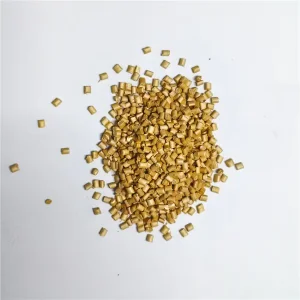
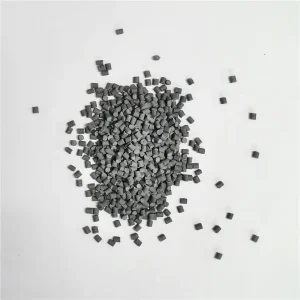
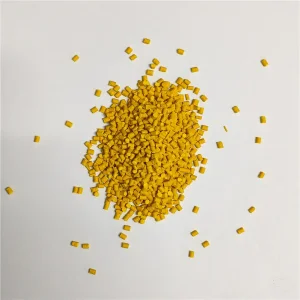
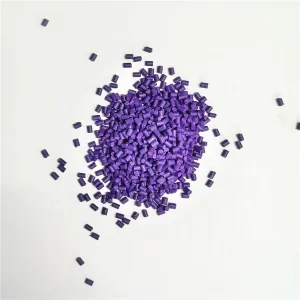
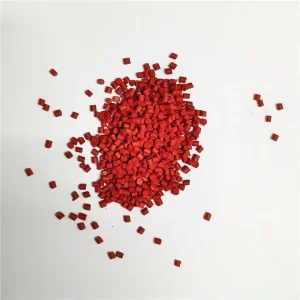
Engineered with premium Polyethylene (PE) carriers, tailored for high-temperature sterilizable film blowing, injection molding, and profile extrusion.
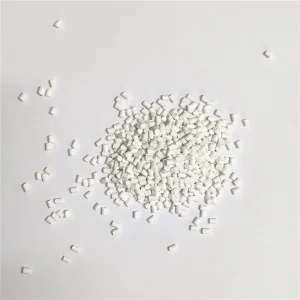
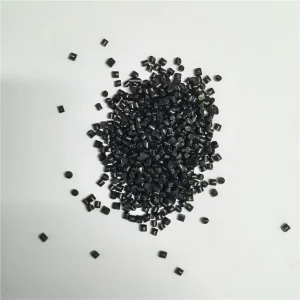
A comprehensive technical breakdown of carrier resin thermodynamics, pigment migration kinetics, and thermal stabilization mechanisms under moist-heat pressure environments ($100^\circ\text{C} - 121^\circ\text{C}$).
Polyethylene matrices (LLDPE, LDPE, HDPE) undergo molecular chain vibration and localized swelling when exposed to prolonged immersion in boiling water ($100^\circ\text{C}$) or high-pressure steam sterilization ($121^\circ\text{C}$). Custom boiling-resistant PE masterbatch compounds integrate ultra-pure carrier resins possessing narrow molecular weight distribution (MWD) and optimized Melt Flow Index (MFI) matching to prevent resin degradation, micro-cracking, and viscosity mismatch during processing.
Standard color concentrates often suffer from organic pigment migration, precipitation, or "blooming" when subjected to hot aqueous media. Boiling-resistant masterbatches incorporate high-heat organic and inorganic pigments (such as Phthalocyanines, Quinacridones, and Rutile Titanium Dioxide) surface-treated with hydrophobic organosilanes. This prevents pigment leaching into food, medical fluids, or ambient condensates.
Thermal-oxidative degradation is severely accelerated by hot moisture. Formulations engineered by specialized factories utilize dual-stage primary (hindered phenol) and secondary (phosphite) antioxidant systems. This synergism neutralizes free radicals produced during high-temperature extrusion (up to $260^\circ\text{C}$) and subsequent boiling cycles, ensuring long-term color integrity and mechanical toughness.
Quantitative empirical evaluation highlighting structural and physical superiority under extreme thermal and aqueous exposure environments.
| Evaluation Parameter | Standard PE Color Masterbatch | Custom Boiling Resistant PE Masterbatch | Test Standard / Method |
|---|---|---|---|
| Heat Resistance Temperature | 160°C - 200°C | 260°C - 300°C Continuous | DIN EN 12877-2 |
| Pigment Migration (Boiling 100°C / 2h) | Visible bleed / Surface blooming (Grade 2-3) | Zero Migration / No Bleed (Grade 5) | ISO 105-E01 / EN 71-3 |
| Dispersibility (Filter Pressure Value) | > 2.5 bar/g | < 0.8 bar/g (High Nano-Dispersion) | EN 13900-5 |
| Heavy Metal & SVHC Content | Trace impurity risks | Strictly Non-Toxic / RoHS & REACH Compliant | ICP-OES Analysis |
| Delamination Risk in Multi-layer Film | Moderate to High | Zero (Optimal Interfacial Adhesion) | ASTM D3359 Cross-Hatch |
Addressing the critical purchasing drivers of multi-national packaging converters, medical supply OEMs, and industrial plastic processors.
For international procurement directors, masterbatch pricing is only a fraction of the cost equation. Masterbatch with poor dispersion causes filter clogging, screen pack changes, bubble instability in film blowing, and high scrap rates. High-concentration boiling resistant masterbatches allow lower let-down ratios (LDR 1% to 3%), drastically decreasing freight footprint and unit formulation costs while maximizing extruder throughput.
Global consumer packaging brands demand identical color reproducibility across different production centers worldwide. Advanced masterbatch suppliers employ computer-controlled spectrophotometers and automated dosing systems. Every production batch of custom boiling-resistant color pellets is validated to ensure tight color space tolerances ($\Delta E < 0.5$), eliminating visual discrepancies in supermarket shelves.
In high-speed liquid packaging, pouch laminates, and retort pouches, agglomerated pigment particles cause micro-pinholes during film orientation. Boiling-resistant PE masterbatch undergoes triple-stage extrusion filtration (down to 15 microns), ensuring ultra-smooth film surfaces capable of enduring severe flexing and thermal shock during autoclaving without dielectric or physical puncture.
How Changzhou Jiazhou Plastic Products Co., Ltd. leverages state-of-the-art compounding technology and integrated logistics to serve global buyers.
Located in Changzhou, Jiangsu, Jiazhou operates within China's primary polymer compounding hub. Direct access to raw polymer synthesis plants and top-tier pigment suppliers ensures uninterrupted material supply and rapid R&D iteration cycles.
Outfitted with co-rotating twin-screw extruders featuring high length-to-diameter (L/D) ratios (44:1 to 48:1). Specialized screw configuration designs yield intense shear forces necessary for fully de-agglomerating pigments down to sub-micron scales.
Every lot undergoes melt flow rate (MFR) testing, moisture content analysis (Karl Fischer titrator), thermogravimetric analysis (TGA), and hot-water immersion testing prior to packaging, backed by full Certificate of Analysis (COA) documentation.
Proximity to Shanghai Port enables streamlined sea, air, and intermodal logistics. Flexible order volumes (custom small-batch matching to multi-container contracts) ensure responsive delivery lead times under 15 working days.
Ensuring full legal safety and environmental alignment with North American, European, and Asia-Pacific market mandates.
Boiling-resistant PE masterbatch formulations intended for food contact (sous-vide packaging, boil-in-bag rice pouches, hot-fill beverage caps) strictly utilize pigments and additives listed under FDA 21 CFR 177.1520 and EU Commission Regulation No 10/2011. Overall Migration Limits (OML) and Specific Migration Limits (SML) are systematically validated via simulants A, B, C, and D2.
Products fully comply with EU RoHS Directive 2011/65/EU and REACH SVHC regulations. Formulations are guaranteed free of lead, cadmium, mercury, hexavalent chromium, polybrominated biphenyls (PBBs), polybrominated diphenyl ethers (PBDEs), and restricted phthalates (DEHP, DBP, BBP, DIBP), protecting converters from regulatory fines and recall hazards.
Understanding regional extruding equipment variances, Jiazhou provides technical customer support for international buyers. Field engineers offer assistance with processing temperature profiles, screw design optimization, and purge compound recommendations to ensure smooth masterbatch switching without line stoppage.
Where custom boiling-resistant PE masterbatch delivers mission-critical functional performance.
Pouches and vacuum bags designed for ready-to-eat meals, meat processing, and culinary cooking require long-term immersion in $100^\circ\text{C}$ boiling water or $121^\circ\text{C}$ steam autoclaves for up to 60 minutes. Custom boiling-resistant PE masterbatch maintains film opacity, color vividness, and structural seal integrity without delamination or color bleed.
Medical tubing, IV fluid bags, and diagnostic containers undergo steam sterilization (autoclaving) post-assembly. Masterbatch additives must not migrate into parenteral nutrition or saline solutions. Our high-purity masterbatch maintains medical-grade biocompatibility standards without affecting fluid purity.
Industrial beverage and condiment bottles filled at temperatures between $85^\circ\text{C}$ and $95^\circ\text{C}$ require heat-stable masterbatches in their PE caps and closures. Prevents thermal distortion, color fading, and torque loss during post-fill cooling showers.
Agricultural solarization and steam soil sterilization films are exposed to severe geothermal heat and moisture. Boiling-resistant masterbatches enriched with UV stabilizers extend film service life under harsh sunlight and soil steam conditions.
Dishwasher-safe plastic kitchenware, food containers, and internal components exposed to high-temperature wash and steam-dry cycles. Resists surface dulling, color leaching, and stress cracking caused by hot water and harsh detergents.
PE-RT (Polyethylene of Raised Temperature Resistance) and PEX piping systems conveying hot water require heat-stable color identification stripes and full-body masterbatches. Ensures non-degradation of pipe burst pressure over decades of use.
Anticipating market shifts toward sustainability, circular polymers, and smart compounding technology.
As the packaging industry moves toward circular economy mandates, factories are reformulating boiling-resistant masterbatches utilizing Post-Consumer Recycled (PCR) PE carriers and bio-derived polyethylene (from sugarcane ethanol). Maintaining high thermal stability and non-migration characteristics on recycled polymer carriers represents the next milestone in sustainable compounding.
Advancements in surface-active dispersants and nano-milling allow pigment loadings up to 60-70% while maintaining low melt viscosity. This innovation allows plastic converters to achieve deep opacity and high tint strength at let-down ratios below 1%, drastically reducing transportation emissions and energy consumption during melting.
Integrating artificial intelligence algorithms into formulation databases enables instant color prediction and recipe adjustment. Automated extruders automatically tweak feeder speeds and thermal zones based on real-time melt temperature, eliminating human error and ensuring flawless batch-to-batch consistency.
Expert answers regarding masterbatch selection, processing conditions, and custom formulation engineering.
From high-opacity whites and deep jet blacks to metallic effects and custom color hues for global plastic processing factories.