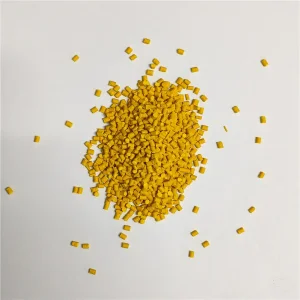
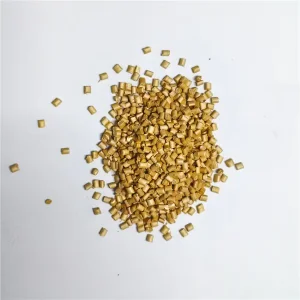
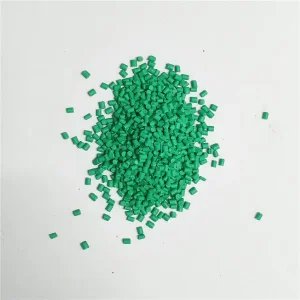
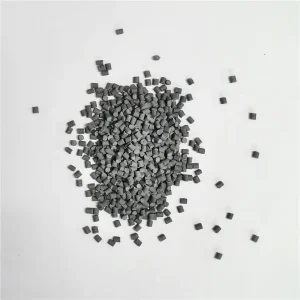
Engineered high-concentration PE masterbatches formulated for cast film co-extrusion, high-heat blown film, and precision injection processing.
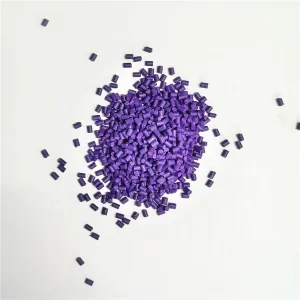
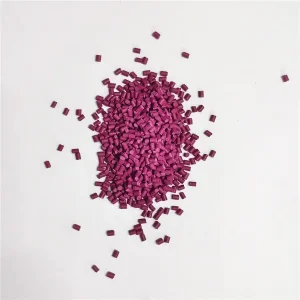
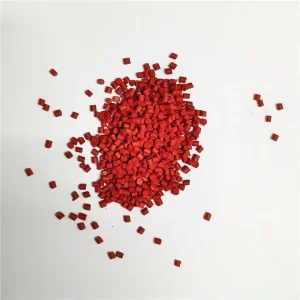
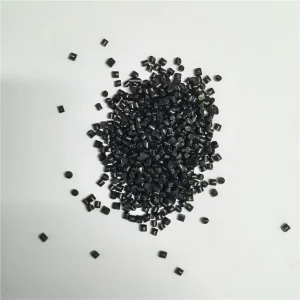
Understanding the rheological, thermal, and optical requirements of high-speed cast polyethylene film extrusion.
Cast film extrusion operates at significantly higher line speeds (300 to 800 meters per minute) and melt temperatures (230°C to 280°C) compared to standard blown film process. Standard masterbatch carriers often introduce melt fractures or neck-in defects.
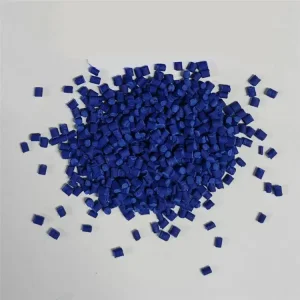
Custom cast film blue PE masterbatch utilizes tailor-made Metallocene LLDPE (mPE) or low-density polyethylene (LDPE) carrier resins matching precise Melt Flow Indices (MFI 10–30 g/10min) to guarantee instantaneous melt blending and zero die build-up.
Agglomerated pigment particles cause pinholes, stress concentration points, and web tears during high-ratio film orientation or vacuum thermoforming. Premium blue masterbatch relies on Phthalocyanine Blue (PB15:3 / PB15:1) processed through continuous twin-screw co-rotating extruders.
By enforcing a strict Filter Pressure Value (FPV < 0.2 bar/gram EN 13900-5), manufacturers achieve crystal-clear optical transparency, high color yield, and flawless structural integrity in thin-gauge films (<12 microns).
Blue colorants in hygiene, medical, and food stretch wrapping must maintain extreme chemical inertness. Thermal degradation during extrusion results in volatile organic compounds (VOCs), plate-out on chill rolls, and off-shade color shifts.
Formulations incorporating heat-stabilized organo-metallic complexes ensure zero color migration under high electrostatic pinning voltages and resist degradation up to 300°C process windows.
Unlike blown film process where cooling relies on ambient air rings, cast film relies on rapid contact cooling via electrostatic pinned chill rolls. Masterbatch additives with poor molecular weight distribution bleed out onto the chill roll surface, causing "ghosting" effects, optical haze, and frequent line shutdowns. Choosing a specialized Cast Film Grade PE Blue Masterbatch eliminates wax accumulation and guarantees continuous 24/7 extrusion runnability.
How macro-economic shifts, sustainability mandates, and high-speed automation are shaping masterbatch formulation requirements.
Modern cast film lines are shifting from 3-layer (A-B-C) to ultra-thin 5-layer, 7-layer, or 9-layer micro-layer structures. Converters selectively concentrate blue masterbatch into specific skin or core layers to minimize overall pigment consumption while maintaining high opacity or vibrant translucent hues.
This micro-layering requires masterbatch granules with narrow particle size distribution (2.0–2.5mm micro-pellets) for precise doser feeding without bridge-building in vacuum loaders.
Global packaging regulations (such as EU Packaging and Packaging Waste Directive) mandate high circular content. Integrating 30% to 50% PCR PE resin into cast films often introduces yellowish tinting and thermal instability.
Custom blue masterbatches now feature active Optical Brightening & Tint-Correction Synergisms. Specifically tuned phthalocyanine blue matrices neutralize yellowing from recycled resins, restoring vibrant aesthetics and clean brand presentation.
Packaging manufacturers continuously down-gauge cast protective films from 25 microns down to 8–10 microns to cut carbon footprint and material costs. In such thin films, any un-dispersed pigment cluster greater than 5 microns results in instant film puncture or air-bubble bursting during stretch wrapping.
Leading global manufacturers utilize hyper-dispersant dispersion aids and specialized twin-screw shear elements to guarantee absolute homogeny.
Evaluating masterbatch engineering properties across different processing grades.
| Performance Attribute | Standard Blow Molding Grade | High-Speed Cast Film Grade (Jiazhou Standard) | Medical/Food Contact Grade (Custom Blue) |
|---|---|---|---|
| Carrier Resin Base | Standard LDPE (MFI 2-4) | Metallocene LLDPE / mPE (MFI 12-25) | Virgin Low-Density PE (FDA Compliant) |
| Pigment Concentration | 20% - 35% Phthalocyanine | 40% - 50% Ultramarine/Phthalo Blue | 30% - 40% Non-heavy metal Blue PB15:3 |
| Filter Pressure Value (FPV) | 1.5 - 3.0 bar/g | < 0.2 bar/g (Ultra-clean) | < 0.15 bar/g |
| Heat Resistance (°C) | 220°C - 240°C | 280°C - 300°C | 260°C - 280°C |
| Chill Roll Plate-Out Risk | Moderate to High | Zero / Non-Bleeding | Zero / Non-Bleeding |
| Color Precision (Delta E) | < 1.5 CIE L*a*b* | < 0.5 CIE L*a*b* | < 0.3 CIE L*a*b* |
| Typical End Applications | Industrial Drums, Garbage Bags | High-Speed Cast Stretch Film, Hygiene Backsheet | Surgical Films, Food Barrier Packaging |
Engineered solutions solving complex manufacturing challenges across global industrial sectors.
Medical backsheet films and baby diaper breathable barrier layers demand pristine color consistency without affecting microporous breathability or mechanical tear strength.
Our custom blue PE masterbatch utilizes low-volatility dispersants that do not block micropores formed by CaCO3 stretch cavitation, preserving air permeability while delivering a soft, non-glare pastel blue appearance preferred by healthcare brands.
Outdoor agricultural cast films require maximum resistance against UV degradation and atmospheric chemical exposure. Blue silage stretch films isolate fodder and protect nutrients from sunlight photo-oxidation.
Formulated with integrated HALS (Hindered Amine Light Stabilizers) and inorganic blue complexes, our masterbatch withstands up to 3000 hours of accelerated weather testing (QUV), preserving opacity and film toughness for over two years of field service.
Protective films applied to glass, stainless steel, and optical display panels require zero residue transfer during film removal. Blue masterbatch used in protection film layers must not contain low-molecular-weight migrating waxes.
Our 100% fully polymerized mPE carrier system ensures that no tackifiers or pigment carriers migrate to the acrylic or rubber adhesive interface, preventing surface contamination on high-value electronic substrates.
Ensuring seamless international procurement, regulatory safety, and local technical dispatch.
Every batch of custom cast film blue PE masterbatch complies with international environmental and health directives:
Equipped with advanced X-Rite Datacolor Spectrophotometers, our R&D laboratory offers rapid custom color matching against physical samples, Pantone, or RAL color codes within 48 to 72 hours.
We provide computer-generated Delta E spectral curves and melt flow reports prior to mass production shipment.
Our application engineering team supports plastic converters worldwide through virtual color calibration, extruder screw profile consultation, and on-site troubleshooting.
We offer tailor-made trial samples in 25kg vacuum-sealed moisture-proof aluminum bags for full-scale factory line testing.
Next-generation innovations driving the future of masterbatch manufacturing.
Replacing traditional fossil-based polyethylene with sugarcane-derived Bio-LDPE carrier resins to reduce carbon footprint by up to 80% without sacrificing melt index or extrusion compatibility.
Conventional blue pigments can blind automated NIR sorting systems in municipal recycling plants. Next-gen NIR-transparent blue masterbatches enable automated optical sorting, enhancing post-consumer plastic recyclability.
Utilizing high-intensity acoustic processing to break pigment aggregates down to sub-100-nanometer dimensions, enabling hyper-translucent blue cast films with unprecedented color saturation and zero film defects.
Expert answers to common engineering, quality control, and sourcing queries.
The standard recommended Let-Down Ratio (LDR) ranges between 1.0% to 3.0% depending on the desired color opacity and film gauge. For thin micro-layer co-extrusion films (<15 microns), a high-concentration 40% pigment loading masterbatch at 1.5% LDR provides optimal tint strength while maintaining cost efficiency and preventing screw slippage.
If the masterbatch carrier resin has a lower MFI (higher viscosity) than the base virgin resin, it will not homogenize fully during the brief residence time of high-speed extruders. This causes localized viscosity differences, gel spots, and micro-pinholes under web tension. Our cast film masterbatches match or exceed base resin MFI (typically 10 to 20 g/10min at 190°C/2.16kg) to ensure instant melt phase integration.
Plate-out is caused by low-molecular-weight additives, low-melting waxes, or un-coated pigments volatilizing and depositing onto cold metal chill rolls. We utilize high-molecular-weight hyper-dispersants and fully reacted polymer carriers with zero low-melting wax fractions. This guarantees clean chill roll surfaces even after 72 hours of uninterrupted high-speed extrusion.
FPV measures the degree of pigment dispersion by recording the pressure rise across a fine screen pack (usually 14 or 25 microns) per gram of pigment passing through (EN 13900-5). An FPV below 0.2 bar/g indicates sub-micron particle dispersion with virtually zero un-dispersed agglomerates, guaranteeing zero filter blinding and minimum film breakage.
Yes. Our food-grade custom blue masterbatches are formulated exclusively using organic Phthalocyanine Blue (PB15:3) pigments that contain zero heavy metals, zero primary aromatic amines (PAAs), and conform fully to FDA 21 CFR 177.1520 as well as European Union Regulation EU No 10/2011.
Moisture contamination causes steam bubbles and void pinholes during extrusion. All masterbatches are vacuum-sealed in 25kg heavy-duty aluminum-foil moisture barrier bags, stacked on heat-treated fumigated pallets, and stretch-wrapped for long-distance ocean freight. Desiccant packs are added inside every packaging unit.
Explore our full line of specialized color and functional concentrates for global industrial manufacturers.
Partner with Changzhou Jiazhou Plastic Products Co., Ltd. for engineered color formulations, consistent batch-to-batch quality, and competitive direct factory pricing.