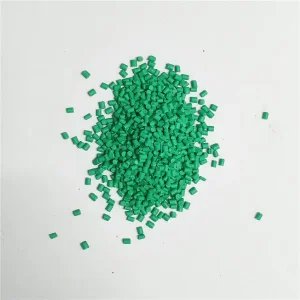
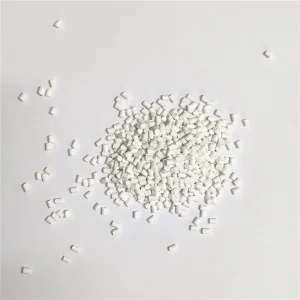
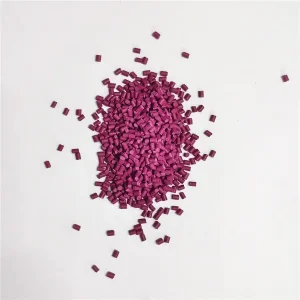
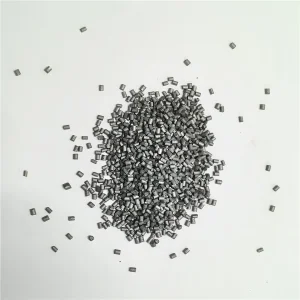
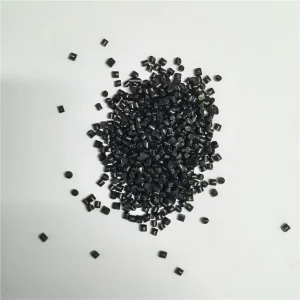
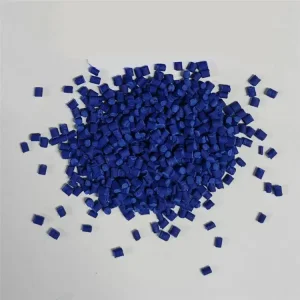
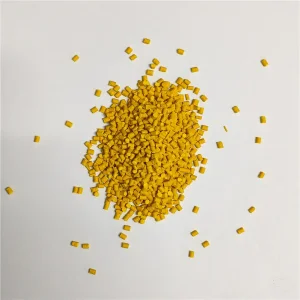
Engineered with low-volatility carrier resins, optimized melt flow indexes, and ultra-low dust profiles for blown film, injection, and pipe extrusion.
Understanding the global transition toward zero-airborne particulate compounding, regulatory compliance, and carbon-optimized polyethylene processing.
The global plastic masterbatch market is experiencing a profound paradigm shift. Industrial buyers across North America, Europe, and Asia-Pacific are increasingly demanding dust-free eco-production PE masterbatches. Traditional micro-powder pigments present significant operational hazards—including airborne particulate contamination, volatile organic compound (VOC) emissions, feeder bridging in gravimetric dosing equipment, and batch-to-batch color variance.
Leading masterbatch manufacturers now utilize underwater strand pelletization and dust-suppression wax encapsulation to manufacture uniform, spherical micro-pellets. This engineering advance eliminates airborne dust below 5 µm, satisfying stringent OSHA, REACH, and EU Directive 2020/852 requirements.
Sourcing managers evaluating custom masterbatch suppliers require technical transparency over generic product claims. True technical leadership involves quantifying parameters such as Melt Mass-Flow Rate (MFR) preservation, Pigment Dispersion Index (PDI), carrier resin compatibility (LDPE vs LLDPE vs HDPE), thermal stability exceeding 260°C–300°C, and heavy metal non-migration guarantees.
By integrating zero-dust closed-loop compounding with bio-based or post-consumer recycled (PCR) PE carrier matrices, eco-focused masterbatch factories lower industrial carbon footprints while safeguarding worker health and maximizing machine throughput.
Deep dive into carrier resin selection, pigment wetting agents, and dust-free micro-pelletization technologies.
To ensure complete compatibility with base polymers (LDPE, LLDPE, HDPE, EVA, or PP), custom masterbatch formulations utilize melt-matched polyolefin carriers. The melt flow index (MFI) of the masterbatch carrier is precisely adjusted to be 20% to 50% higher than the target processing resin. This optimizes dispersion without decreasing mechanical tensile strength.
Dusting occurs when organic or inorganic pigments remain un-bound on pellet surfaces. Premium eco-production processes employ high-shear twin-screw extruders featuring downstream side-feeders and triple-stage wax dispersion systems. Pigments are completely encapsulated within the PE matrix, delivering clean, non-flaking micro-granules.
In thin-film blowing or food-contact injection applications, pigment migration leads to surface chalking and regulatory non-compliance. Eco PE masterbatches use high-molecular-weight primary antioxidants (Irganox 1010/1076) and phosphite secondary stabilizers (Irgafos 168) to lock pigments within the polymer crystal lattice.
| Performance Parameter | Dust-Free Eco PE Masterbatch | Conventional Dry Pigment Powder | Low-Grade Filler Masterbatch |
|---|---|---|---|
| Airborne Particulate Dust (PM 2.5 / PM 10) | Zero / Undetectable | Extreme Hazardous Dust | Moderate Fine Dust |
| Color Dispersion Index (Filter Pressure Test) | < 0.8 bar/g (Ultra-high) | > 5.0 bar/g (Frequent clogging) | 1.8 - 3.0 bar/g |
| Gravimetric Dosing Efficiency | 100% Free-Flowing Pellets | Severe Bridging & Wall Sticking | Occasional Bridging |
| Thermal Stability Range | Up to 300°C Constant | Degrades > 220°C | Up to 240°C |
| Workplace Health & VOC Compliance | OSHA / REACH / ISO 14001 Safe | Requires Full Respirators | Standard PPE Required |
In high-speed blown film machines operating above 220°C, inferior pigments oxidize, shifting color hues (Delta E > 2.0). Eco PE masterbatch manufacturers utilize chemical-grade synthetic inorganic complexes and micro-encapsulated organic pigments that retain structural integrity up to 300°C, holding Delta E below 0.3 across multi-day continuous production runs.
Aligning masterbatch manufacturing with global ESG targets, carbon reduction, and food-grade compliance standards.
With global regulations mandating post-consumer recycled (PCR) content in packaging (such as the EU Packaging and Packaging Waste Directive), masterbatch formulations must perform reliably in contaminated or degraded recycled resin streams. Dust-Free Eco PE Masterbatches feature tailored chain extenders and compatibilizers that bridge interfacial tension between post-industrial recycled (PIR) and virgin resins, restoring impact strength and optical clarity.
Enterprise buyers cannot risk supply chain disruption due to chemical non-compliance. Responsible masterbatch manufacturers implement comprehensive testing protocols ensuring compliance with:
Tailored masterbatch performance across high-speed film blowing, heavy-duty injection molding, and agricultural pipe extrusion.
Target Products: Express courier bags, greenhouse films, food packaging pouches, heavy-duty shipping sacks.
Technical Requirement: Gauge uniformity down to 10 microns without pinholes, bubble instability, or pigment agglomeration streaks.
Solution: Micro-encapsulated dust-free PE white, black, and color masterbatches engineered with melt filtration down to 25 microns (500 mesh).
Target Products: Automotive interior panels, cosmetic caps, crates, home appliance housings.
Technical Requirement: Zero sink marks, minimal mold deposit (plate-out), fast cycle times, and dimensional stability.
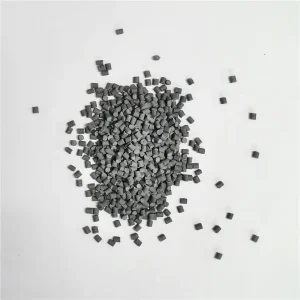
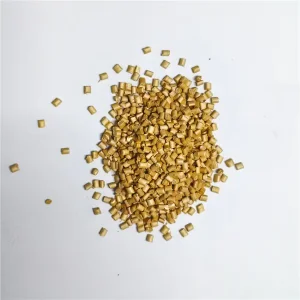
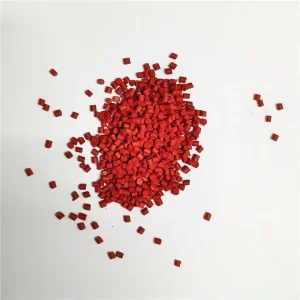
Solution: High-concentration PE grey, silver, gold, and red masterbatches formulated with internal mold release agents and fast-crystallizing carrier polymers.
Target Products: HDPE agricultural irrigation pipes, telecom micro-ducts, power cable jacketing.
Technical Requirement: 50+ year outdoor UV weatherability, carbon black dispersion (Type I/II rating), ESCR protection.
Solution: High-density PE black masterbatch loaded with 40-50% sub-micron P-type Carbon Black and hindered amine light stabilizers (HALS).
A strategic framework for procurement leads auditing custom masterbatch factories and OEM suppliers.
A world-class PE masterbatch manufacturer must operate in-house spectrophotometers (X-Rite Datacolor series) for computer color matching, Melt Flow Indexers (ASTM D1238 standard), Two-Roll Mills for dispersion verification, and TGA/DSC machines for inorganic filler content and thermal oxidation testing.
Evaluating factory infrastructure ensures long-term contract reliability. For instance, enterprise manufacturers like Changzhou Jiazhou Plastic Products Co., Ltd. leverage over 16 years of compounding expertise, operating a 6,000 m² modern manufacturing facility equipped with multi-strand twin-screw compounding lines, automated gravimetric dosing, and certified ISO 9001 quality management systems serving buyers in over 100 countries.
Next-generation innovations shaping smart masterbatch compounding and intelligent material handling.
Integrating machine learning algorithms into lab spectrophotometers reduces color formulation matching cycles from days to minutes, predicting thermal shade shifts before production runs begin.
Transitioning carrier polymers from fossil-based PE to sugarcane-derived bio-PE resin cuts scope 3 embodied carbon emissions while preserving identical physical mixing properties.
Developing multi-functional combination masterbatches that blend dust-free eco pigments with permanent anti-static additives, anti-blocking agents, and infrared heat barriers into a single micro-pellet pellet.
Expert answers to common engineering, procurement, and quality control questions regarding PE masterbatches.
Explore our full line of specialized color and functional masterbatches designed for modern industrial manufacturing.