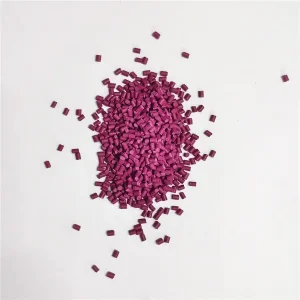
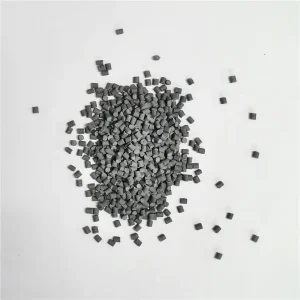
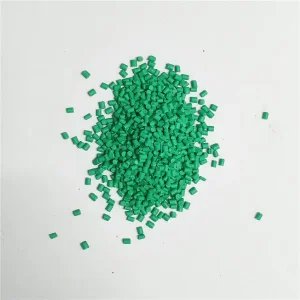
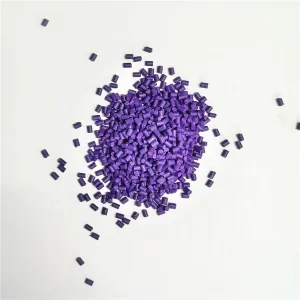
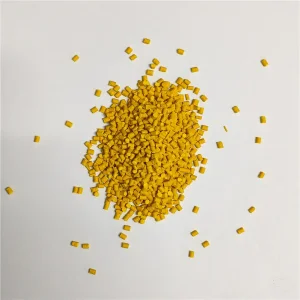
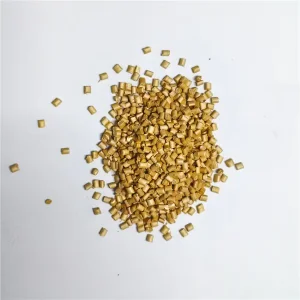
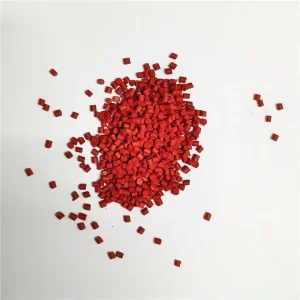
Explore our high-concentration, ultra-dispersed masterbatch formulations engineered for critical processing requirements.
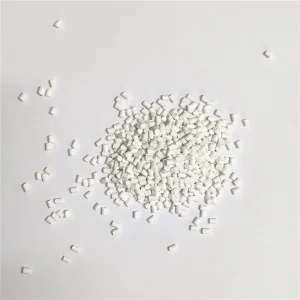
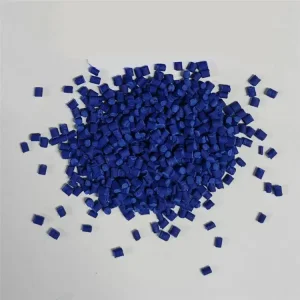
Understanding the critical technical specifications, quality thresholds, and rheological challenges faced by modern plastic converters and global procurement directors.
In the contemporary global plastics manufacturing landscape, the demand for high-performance Custom High Gloss White PE Masterbatch has evolved far beyond simple pigment dispersion. Modern multinational buyers across packaging, consumer electronics, automotive trim, and medical device sectors demand sophisticated polymer formulations that harmonize extreme opacity, high specular reflectance (glossiness), processability, and strict environmental compliance.
White masterbatch represents the largest single volume segment in the global plastic colorant market. However, procuring a masterbatch that delivers a surface gloss exceeding 85 to 90 Gloss Units (GU) while maintaining pigment loadings between 60% and 70% Titanium Dioxide (TiO₂) presents severe technical hurdles. Global enterprise procurement teams face continuous trade-offs between pigment concentration, polymer melt flow index (MFI), dispersion quality, and raw material economics.
Core Procurement Challenge: High pigment concentration inherently increases melt viscosity and micro-surface roughness. Without specialized organo-silane dispersion chemistry and surface-modified carrier resins, high TiO₂ loading reduces surface specular gloss, creating a dull matte finish, dielectric breakdown, or pinhole defects in blown films.
When enterprise clients source white PE masterbatches from international suppliers, they routinely encounter four major manufacturing defects rooted in sub-optimal compounding:
Deconstructing the material science: Pigment selection, surface treatment, carrier matching, and additive synergy for zero-defect production.
Utilizing Chloride-process Rutile TiO₂ with a refractive index of 2.73, providing maximum light scattering efficiency, extreme opacity, and superior UV weather resistance compared to Anatase grades (refractive index 2.55).
Customizing the Melt Flow Index of the Polyethylene carrier resin (LLDPE/LDPE/HDPE) to perfectly align with the matrix polymer, preventing interfacial shear stress and ensuring seamless melt blending.
Surface passivation of TiO₂ particles via inorganic alumina/silica encapsulation combined with hydrophobic organic silanes to prevent photocatalytic degradation and gas fading.
To achieve specular gloss levels exceeding 90 GU at a 60° measurement angle, masterbatch formulators must engineer the micro-surface smoothness of the final molded or extruded article. Specular gloss is governed by Fresnel's law of reflection. When light strikes a polymer surface, any surface irregularity larger than half the wavelength of visible light ($\lambda / 2 \approx 200-350\text{ nm}$) causes diffuse scattering rather than specular reflection.
Our custom white masterbatch manufacturing process utilizes sub-micron particle size distribution (PSD) control. By capping the maximum particle size of Rutile TiO₂ at $d_{99} < 0.5\ \mu\text{m}$ and maintaining a median diameter $d_{50} \approx 0.23\ \mu\text{m}$, we match the optimal optical scattering wavelength while guaranteeing that pigment particles do not protrude through the polymer surface layer.
| Performance Metric | Standard Commercial White Masterbatch | Custom High Gloss Rutile PE Masterbatch | Testing Standard / Protocol |
|---|---|---|---|
| Titanium Dioxide (TiO₂) Loading | 40% – 50% Anatase / Rutile Blend | 60% – 70% Pure Chloride Rutile TiO₂ | ISO 3451-1 (Ash Content) |
| Surface Gloss Level (60° Angle) | 60 – 75 Gloss Units (GU) | 88 – 95 Gloss Units (GU) | ASTM D523 / ISO 2813 |
| Filter Pressure Value (FPV) | 1.5 – 3.0 bar/g (140 mesh) | < 0.38 bar/g (Fine Filter Mesh) | EN 13900-5 Standard |
| Melt Flow Index (MFI @ 190°C/2.16kg) | 5 – 15 g/10min | Tailored: 2.0 to 45 g/10min | ASTM D1238 / ISO 1133 |
| Heat Resistance / Thermal Stability | 220°C – 240°C | 280°C – 300°C Continuous | DIN EN 12877-2 |
| Gas Fading / Yellowing Index ($\Delta YI$) | $\Delta YI > 2.5$ after 48h Exposure | $\Delta YI < 0.5$ (Non-Yellowing) | ASTM L1925 / ISO 105-X12 |
Achieving stable high-concentration masterbatch compounding requires a carefully balanced multi-component additive system:
Tailored masterbatch solutions for demanding processing techniques: Blown film, injection molding, blow molding, and extrusion coating.
Designed for liquid milk packaging, agricultural mulch films, and heavy-duty shipping sacks. Delivers barrier opacity, puncture resistance, and seamless sealing layer compatibility without pigment migration.
Ideal for premium food containers, cosmetic caps, closures, and housewares. High melt flow engineering eliminates weld-line defects, sink marks, and warpage while producing a deep, wet-look glossy mirror finish.
Extensive application in HDPE milk bottles, pharmaceutical vials, and chemical drums. Ensures uniform wall thickness, exceptional ESCR (Environmental Stress Crack Resistance), and complete UV light blocking.
Pioneering circular economy integration, bio-based carriers, micro-granule manufacturing, and smart compounding systems.
As global regulations enforce Post-Consumer Recycled (PCR) content mandates (such as the EU Packaging and Packaging Waste Directive), our R&D roadmap focuses on white masterbatches formulated with 100% bio-based LLDPE carriers (derived from sugarcane ethanol) and universal compatibilizers. These systems allow high-gloss white masterbatch incorporation into rHDPE and rLDPE streams without structural degradation or loss of gloss.
By leveraging advanced twin-screw co-rotating extruders with length-to-diameter ratios ($L/D$) exceeding 48:1 and specialized segment-kneading elements, next-generation masterbatches achieve nano-level dispersion. This allows reduction of overall TiO₂ loading by 15% while achieving identical or superior optical opacity and gloss, significantly lowering raw material mass in final packaging products.
Ultra-high speed extrusion coating lines running at >500 meters per minute generate severe thermo-mechanical stress. Next-generation masterbatch grades incorporate hydrophobic surface passivators that eliminate bound water down to <300 ppm, preventing bubble formation, micro-voiding, and edge-bead lacing at temperatures reaching 315°C.
Integration of spectrophotometric inline color measurement systems linked with AI-driven twin-screw compounding lines allows real-time color adjustment ($\Delta E < 0.15$). This guarantees absolute batch-to-batch color repeatability for global brand owners across multiple international manufacturing sites.
Meeting strict international health, safety, and environmental protocols for food contact, medical devices, and global export packaging.
Full compliance for direct food contact packaging in North American markets.
Certified compliance for heavy metal limits, SVHC substances, and migration limits across Europe.
Zero lead, cadmium, mercury, or hexavalent chromium; stringent batch quality management.
Operating as a primary manufacturer and global supplier, we provide localized technical support teams across North America, Europe, Southeast Asia, and the Middle East. Our technical technical support engineers assist procurement clients with on-site trial optimization, screw profile configuration, temperature profile calibration, and custom masterbatch let-down ratio (LDR) calculations.
Select from our standard and custom-engineered color and functional masterbatch series tailored for global polymer processors.
Expert engineering answers to common procurement, formulation, and processing questions.
The recommended Let-Down Ratio (LDR) typically ranges from 1% to 4%, depending on the target film thickness and required opacity. For ultra-thin packaging films (15–25 microns), a 3%–4% LDR of a 70% TiO₂ masterbatch is recommended to achieve complete opacity. For injection molding thick-walled containers (2–4 mm), an LDR of 1%–2% is sufficient to deliver a specular surface gloss exceeding 88 GU.
The carrier resin must match or possess slightly higher Melt Flow Index (MFI) than the matrix polymer (e.g., LLDPE, LDPE, or HDPE). If the carrier resin has an incompatible MFI or melt temperature, incomplete phase blending occurs, creating microscopic surface ridges that scatter light and lower surface gloss. We custom-tailor the carrier MFI (from 2.0 to 45 g/10min) to guarantee total molecular integration.
Gas fading occurs when unpassivated titanium dioxide reacts with sterically hindered phenolic antioxidants (present in base polymers) and atmospheric $NO_x$ gases during storage. Our high-gloss masterbatches utilize densely coated alumina-silica Rutile TiO₂ combined with phosphite secondary antioxidants that neutralize reactive radicals, keeping $\Delta YI < 0.5$ under standardized warehouse storage tests.
Filter Pressure Value (measured per EN 13900-5) quantifies the dispersion quality of masterbatch. A high FPV (>1.5 bar/g) indicates agglomerated TiO₂ particles that clog screen packs, cause frequent line shutdowns, and induce film tears. Our ultra-dispersed masterbatches achieve an FPV < 0.38 bar/g, ensuring continuous continuous extrusion runs and defect-free film surfaces.
Yes. All raw materials—including Rutile TiO₂, polyethylene carrier resins, hyperdispersants, and optical brighteners—are rigorously selected to comply with US FDA 21 CFR 177.1520, EU Regulation No 10/2011, China GB 4806, and REACH SVHC restrictions. Comprehensive migration test reports are supplied with every OEM delivery.
We offer rapid color matching via spectrophotometry within 3 to 5 business days upon receiving target resin samples or RAL/Pantone color codes. Standard production lead times are 10 to 15 days for full container loads (FCL), backed by dedicated ocean/air freight logistics and complete batch Certificate of Analysis (CoA) documentation.