Explore our high-concentration, weather-resistant Masterbatch series formulated specifically for injection molding, blown film, and pipe extrusion under harsh solar exposure.
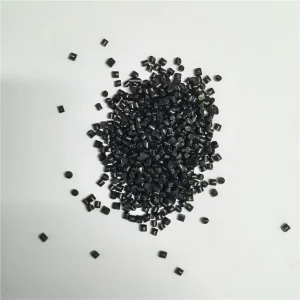
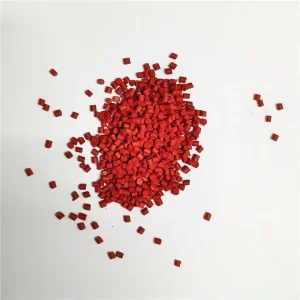
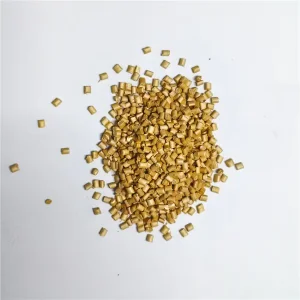
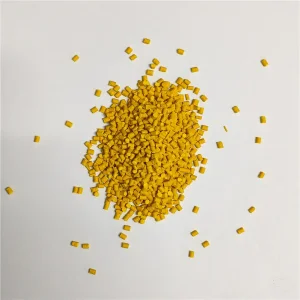
Polyethylene (PE) polymers deployed in exterior environments are exposed to continuous solar ultraviolet radiation (UV-A: 315–400 nm and UV-B: 280–315 nm), thermal oxidation, atmospheric oxygen, and environmental pollutants. Without specialized photo-stabilization and inorganic/organic pigment engineering, virgin PE suffers severe photo-oxidative degradation.
UV photon absorption initiates free radical formation along the PE polymer backbone, generating hydroperoxides (ROOH) that trigger autocatalytic chain scission. This molecular damage leads to surface chalking, micro-cracking, loss of tensile strength, and rapid color fading. Custom outdoor masterbatches incorporate primary antioxidants to halt free radical propagation.
True high light fastness requires colorants to achieve Ratings 7 to 8 on the ISO 105-B02 Blue Wool Scale (measuring pigment resistance to light fading) and Rating 4-5 on the ISO 105-A02 Grey Scale (measuring overall color change after accelerated Xenon Arc weathering ISO 4892-2).
Achieving a 10-to-25-year outdoor service life requires a dual-action mechanism: Hindered Amine Light Stabilizers (HALS) to continuously scavenge alkyl and peroxy radicals, paired with high-purity Titanium Dioxide (TiO₂) or Carbon Black (18-25 nm particle size) acting as physical UV barriers.
As global infrastructure, agricultural automation, and outdoor consumer sectors expand, plastic processors face rising quality standards. Below are the key structural shifts shaping global buyer specifications in 2026 and beyond.
Global brand owners in Europe, North America, and Australia strictly enforce compliance with EU REACH, RoHS 3.0, FDA 21 CFR, and PFAS-free mandates. Modern outdoor masterbatches must be heavy-metal-free (lead, cadmium, hexavalent chromium) and non-migratory to prevent hazardous chemical leaching into soil or groundwater.
Procurement teams are shifting away from low-concentration masterbatches due to high freight costs and inefficient polymer dosing. Premium PE masterbatches feature pigment loadings from 30% up to 70%, allowing lower let-down ratios (LDR of 1% to 3%), reducing thermal energy usage, and speeding up cycle times during extrusion.
Whether for agricultural greenhouse cover films in desert regions (high UV index) or municipal HDPE water pipes exposed to freezing outdoor conditions, buyers require certified performance under accelerated Xenon-Arc testing (ASTM G155 / ISO 4892-2) with zero surface embrittlement for up to 3,000 to 5,000 exposure hours.
Changzhou Jiazhou Plastic Products Co., Ltd. operates a 6,000 m² state-of-the-art facility engineered around Industry 4.0 principles, guaranteeing batch-to-batch color consistency, rapid custom formulation, and cost optimization for high-volume global orders.
Loss-in-weight gravimetric feeders ensure accurate component feeding (error margin < 0.2%), preventing pigment agglomeration and guaranteeing exact concentration ratios across production runs.
Twin-screw compounding extruders with length-to-diameter (L/D) ratios of 44:1 to 48:1 deliver superior shear dispersion, thoroughly breaking down pigment primary particles to sub-micron levels.
In-house Datacolor spectrophotometer labs evaluate color tolerances under illuminants D65, A, and F11, enforcing strict CIELAB color vector limits of ΔE < 0.3 against standard target samples.
Located in Changzhou, Jiangsu, Jiazhou leverages direct raw-material access to premium organic pigments, rutile titanium dioxide, and pristine PE carrier resins, guaranteeing uninterrupted export delivery schedules within 15 days.
Engineered to meet specific mechanical and environmental challenges across major global industries.
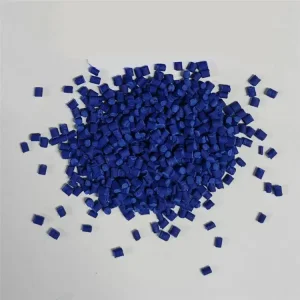
Exposed to severe sun irradiation and agricultural pesticides (sulfur, chlorine), mulch and greenhouse films require high light fastness black, white, or blue PE masterbatch. Formulated with specialized HALS to prevent polymer degradation and extend film lifespan up to 3–5 multi-season harvests.
Used in landfills, mining tailings, and municipal water reservoirs, high-density polyethylene (HDPE) geomembranes depend on Jiazhou High Concentration PE Black Masterbatch. Infused with fine particle carbon black to deliver exceptional environmental stress-crack resistance (ESCR) and long-term oxidative induction time (OIT).
Vibrant aesthetic appeal combined with weatherability is crucial for blow-molded outdoor chairs, playgrounds, and public seating. Our custom color masterbatches (Red, Yellow, Blue, Green, Gold, Silver) ensure vibrant, anti-fading colors that withstand years of direct exposure without yellowing or chalking.
Potable water distribution pipes, gas conduits, and telecommunication ducting require reliable color coding (e.g., Yellow for gas, Blue for water, Black with blue stripes). Jiazhou masterbatches deliver flawless thermal stability during high-temperature pipe extrusion without compromising hydrostatic strength.
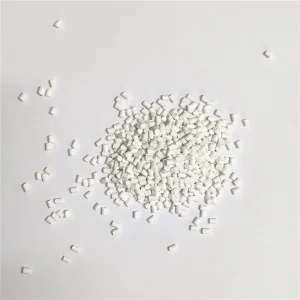
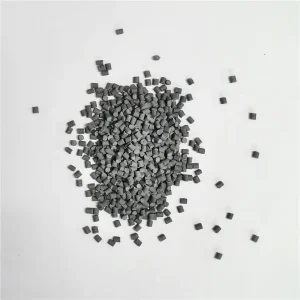
Multi-layer co-extruded packaging films and courier bags demand high opacity, non-toxic formulations, and excellent sealability. Our White and Grey PE masterbatches provide superior hiding power at low let-down ratios, ensuring high opacity even in thin-gauge blown films.
Heavy-duty woven PE fabrics used in freight protection and civil engineering require masterbatches optimized for high-speed tape drawing (orientation). Formulated to prevent die-build up and filament breakage while maintaining intense color coverage.
A technical comparison highlighting how optimized formulation chemistry yields tangible improvements in product longevity, processing ease, and operational cost savings.
| Performance Metrics | Standard Low-Cost Masterbatch | Jiazhou Outdoor High Light Fastness PE Masterbatch | Industry Benefit / E-E-A-T Value |
|---|---|---|---|
| Light Fastness Rating (ISO 105-B02) | Blue Wool Scale 3 – 5 (Fades within 6-12 months) | Blue Wool Scale 7 – 8 | Zero fading for up to 10–25 years outdoor exposure. |
| Weathering Resistance (ISO 4892-2) | Grey Scale 2 – 3 (Severe discoloration) | Grey Scale 4 – 5 | Maintains aesthetic brand integrity under continuous UV flux. |
| Pigment Dispersion Quality | Visible agglomerates, filter clogging | Sub-micron dispersion, Filter Value < 0.2 bar/g | Prevents film pinholes, extrusion blowing rupture, and surface roughness. |
| Thermal Stability (°C) | 180°C – 200°C (Risk of thermal degradation) | 260°C – 300°C | Ideal for high-speed, high-temperature injection & extrusion lines. |
| Migration & Chalking Resistance | Prone to surface bloom & heavy chalking | Non-migratory / Zero blooming formula | Ensures clean contact with secondary layers, printing inks, and adhesives. |
| Recommended Let-Down Ratio (LDR) | 4% – 8% (High usage cost) | 1% – 3% | Significantly reduces raw material storage and freight expenditure. |
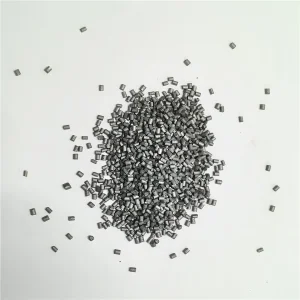
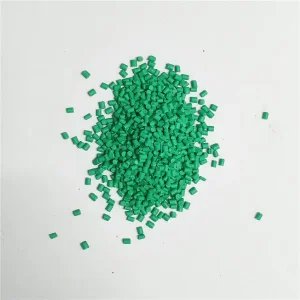
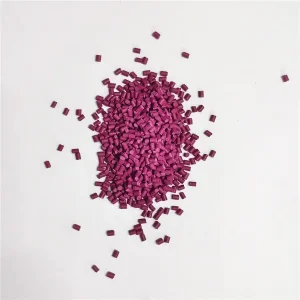
Select from our complete range of anti-fading, eco-friendly masterbatches. Tailored carrier resin melt flow index (MFI) matched to your specific polymer base (HDPE, LLDPE, LDPE, PP).
Detailed technical answers provided by Senior Polymer Chemists at Changzhou Jiazhou Plastic Products Co., Ltd.
Light Fastness specifically refers to the chemical stability of the pigment against degradation caused by solar light (primarily ultraviolet radiation), measured on the 1-8 Blue Wool Scale (ISO 105-B02). Weatherability is a broader parameter that measures the entire polymer system's resistance to combined atmospheric stresses—including UV radiation, moisture, humidity, thermal cycling, and industrial atmospheric gases—evaluated on the 1-5 Grey Scale (ISO 105-A02). Jiazhou formulates outdoor masterbatches to maximize both parameters simultaneously.
Proper carrier resin selection is critical to prevent delamination, micro-cracking, and loss of tensile strength. We match the melt flow rate (MFR/MFI) and density of our masterbatch carrier to your processing method. For blown film, we utilize high-MFI LLDPE carriers; for injection molding, we offer virgin HDPE or universal polyolefin carriers engineered to ensure instantaneous melt dispersion without altering your mold cycle times.
During plastic extrusion or injection molding, local melt temperatures inside the screw cylinder often spike up to 260°C or higher. Standard organic pigments decompose or undergo chemical structure shifts under high heat, leading to color shift before the product even leaves the factory. Our high-heat-resistant masterbatches preserve their exact CIELAB color values, ensuring that the UV-stabilizer package remains fully active inside the finished article.
Thanks to our high-concentration formulation (up to 50%-70% pigment loading), our standard recommended LDR ranges between 1% to 3% depending on wall thickness, opacity requirements, and processing method. For instance, opaque agricultural films usually require a 2% LDR, while thick-walled injection molded containers perform exceptionally well at 1.5% LDR, optimizing overall unit manufacturing costs.
Yes. Our color lab utilizes advanced computer spectrophotometer matching. Customers can provide a Pantone code, RAL number, or a physical plastic sample. Our R&D team formulates a matched masterbatch sample within 3 to 5 working days, complete with spectral reflectance data and accelerated light-fastness test certificates.
Every production batch undergoes mandatory melt flow testing, dispersion filtration testing, and spectrophotometric color verification prior to packaging. Products are packed in moisture-proof 25kg aluminum-foil woven bags or heavy-duty jumbo bags. With our factory situated in Changzhou near Shanghai port, we offer flexible FOB, CIF, or DDP shipping terms with lead times under 15 days for standard container loads.