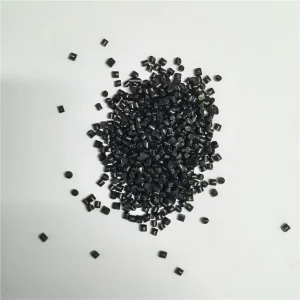
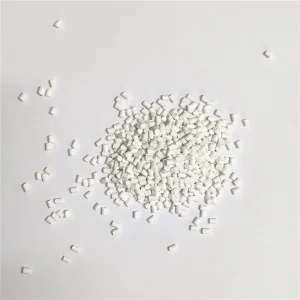
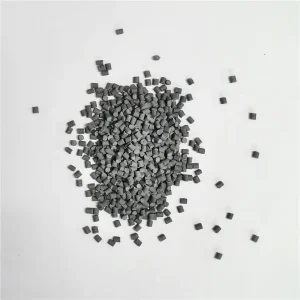
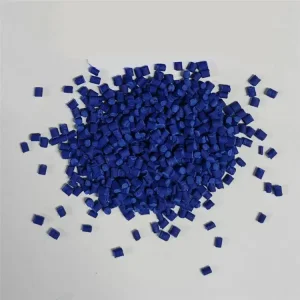
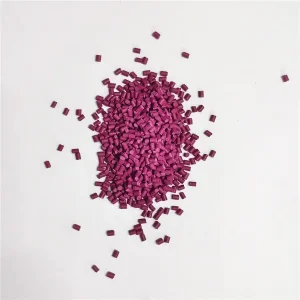
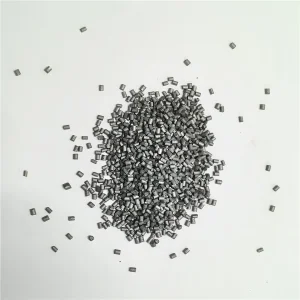
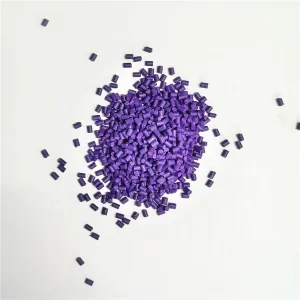
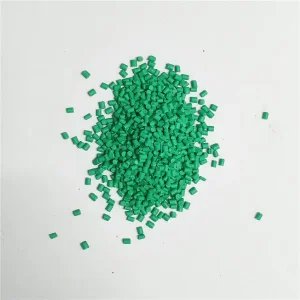
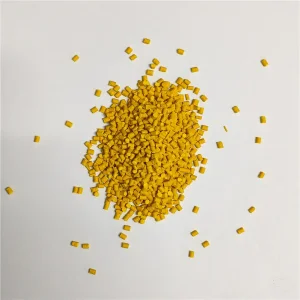
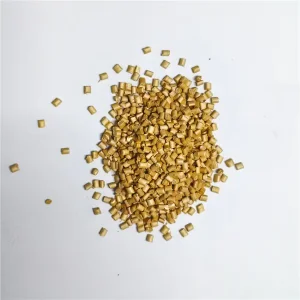
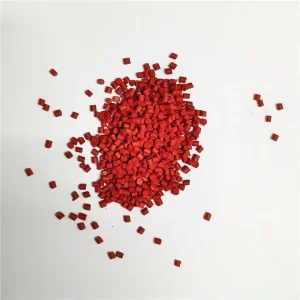
Engineered with precise melt flow indices (MFI) and premium carrier resins for demanding industrial extrusion, blow molding, and technical applications.
In polymer processing, melt rheology dictates both aesthetic uniformity and mechanical integrity. Custom Low Flow PE Color Masterbatch formulations are engineered specifically for applications where standard high-flow carriers fail to provide sufficient melt strength, structural density, or resistance to phase separation. Melt Flow Rate (MFR or MFI), measured under ASTM D1238 conditions (190°C / 2.16 kg), typically falls below 1.0 g/10 min for low-flow Polyethylene (HDPE, LLDPE, or UHMWPE blends). Selecting an incorrect masterbatch with higher melt flow can lead to parabolic velocity profile discrepancies during profile extrusion, resulting in internal voids, pigment streak formation, and severe reduction in environmental stress crack resistance (ESCR).
When custom manufacturing low-flow color masterbatch, pigment dispersion dynamics must be controlled under ultra-high shear conditions. Unlike high-flow polyolefins that melt rapidly and wet out pigments easily, low-flow PE matrix resins exhibit high melt viscosity. Achieving optimal pigment dispersion without inducing molecular chain scission requires advanced twin-screw co-rotating compounding systems with customized screw profiles incorporating kneading blocks, gear mixing elements, and optimized L/D (length-to-diameter) ratios of 40:1 or greater.
| Polymer Melt Index Range (MFI @ 190°C/2.16kg) | Viscosity Profile | Primary Processing Methods | Masterbatch Carrier Matching Strategy |
|---|---|---|---|
| Ultra-Low Flow (< 0.1 - 0.5 g/10 min) | Extreme Melt Viscosity, High Shear Resistance | Thick-walled Pipe Extrusion, Geomembranes, Large IBC Blow Molding | Fractional Melt PE / High-Density Homopolymer Carrier |
| Standard Low Flow (0.5 - 1.5 g/10 min) | Balanced High Viscosity & Melt Strength | Heavy-Duty Shipping Bags, Pressure Pipe Fittings, Profile Extrusion | Matched LLDPE/HDPE Low-Flow Carrier Matrix |
| Medium Flow (2.0 - 10.0 g/10 min) | Moderate Viscosity, Rapid Melt | General Injection Molding, Thin-Film Blowing | Standard LLDPE Universal Carrier Resin |
| High Flow (> 12.0 g/10 min) | Low Viscosity, High Fluidity | Complex Injection Molding, Thin-wall Containers | High Index HDPE/PP Homopolymer Carrier |
Achieving total color homogenization in low-flow regimes demands specialized surface treatment of micro-pigments and inorganic dyes. Raw organic pigments exhibit natural agglomeration tendencies due to van der Waals forces. In low-flow polyethylene, these agglomerates cannot be broken down by low-shear static mixers. Factories specializing in custom low-flow PE masterbatch utilize micro-encapsulation techniques using low-molecular-weight PE waxes, hyperdispersants, and silane coupling agents. This lowers interfacial tension between pigment aggregates and the high-viscosity carrier resin, resulting in a Filter Pressure Value (FPV) benchmark below 1.2 bar/g according to EN 13900-5 standards.
How low-flow color masterbatch technologies power heavy industrial infrastructure, sustainable logistics, and demanding civil engineering projects worldwide.
Gas distribution, potable water supply, and mining slurry transport utilize PE100 and PE80 grade high-density polyethylene. Custom low-flow color masterbatches provide deep tinting (such as blue for potable water, yellow for natural gas, and grey/black for industrial drainage) without compromising long-term hydrostatic strength (MRS 10.0 MPa ratings).
Landfill liners, mining leach pads, and water reservoir covers require continuous blown film extrusion of thick high-density polyethylene sheets. Low-flow masterbatches ensure absolute thermal stability (heat resistance up to 260°C) and uniform UV protection without pinhole defects or localized thinning during high-blow-up-ratio operations.
55-gallon tight-head drums, Intermediate Bulk Containers (IBCs), and heavy-duty shipping sacks rely on high melt strength to prevent parison sag during large-scale blow molding. Custom low-flow PE masterbatch prevents color streak separation along weld lines, preserving top-load stacking strength and chemical resistance.
A professional custom low-flow PE color masterbatch factory must execute stringent control across raw material selection, compounding physics, and automated quality assurance. Low-flow polyethylene resins possess narrow processing temperature windows; excessive heat generation caused by viscous shear dissipation can degrade organic pigments or alter polymer cross-linking.
To overcome viscous heating, state-of-the-art production facilities utilize twin-screw extruders equipped with continuous barrel temperature monitoring across multi-zone heating/cooling blocks. Water-ring pelletizing or underwater strand cutting systems are mandatory to handle high melt strength pellets without causing pellet deformation, tailing, or clump formation.
Leading manufacturers like Changzhou Jiazhou Plastic Products Co., Ltd. enforce structured quality gates throughout the production cycle:
Global regulatory frameworks governing chemical additives in plastic conversion have become increasingly rigorous. When sourcing custom low-flow PE masterbatch, industrial buyers must satisfy regional environmental and health mandates across Europe, North America, and Asia-Pacific.
Full compliance with EU Directive 2011/65/EU (RoHS 3) and REACH Regulation (EC No 1907/2006) for Substances of Very High Concern (SVHC). Formulations are 100% free from cadmium, lead, hexavalent chromium, mercury, and polybrominated biphenyls (PBB/PBDE).
Custom low-flow formulations intended for food storage containers, caps, and water lines comply with US FDA 21 CFR 177.1520 and EU Commission Regulation (EU) No 10/2011, incorporating certified non-toxic organic pigments and virgin food-grade PE carriers.
Engineered to work seamlessly with Post-Consumer Recycled (PCR) HDPE and LLDPE resins. The masterbatch stabilizes viscosity fluctuations in recycled feedstocks while restoring vibrant, uniform coloration to off-color recycled flakes.
Processing low-flow polyethylene masterbatches demands specific melt pressure and temperature management during production. Below is a comprehensive diagnostic matrix designed by senior technical engineers to resolve common industrial processing defects.
| Processing Defect | Root Cause Analysis | Impact on Final Product | Recommended Engineering Remedy |
|---|---|---|---|
| Color Streaking / Specks | Inadequate shear mixing; MFI mismatch between masterbatch carrier resin and main polymer matrix. | Visual non-uniformity; failure of aesthetic quality standards. | Switch to a custom low-flow PE carrier with matched viscosity; increase back pressure or melt temperature by 5–10°C in metering zone. |
| Die Swell & Melt Fracture | Excessive melt viscosity combined with high shear rate at the die land ("shark skinning"). | Rough surface texture; dimensional inaccuracy in extruded pipes or sheets. | Incorporate fluoroelastomer polymer processing aids (PPA) into masterbatch; widen die gap; optimize temperature profile. |
| Screen Pack Clogging | High Filter Pressure Value (FPV); un-dispersed pigment agglomerates or insoluble filler particles. | Frequent machine downtime; erratic extruder pressure fluctuations. | Specify ultra-fine dispersed masterbatch (FPV < 1.2 bar/g); verify supplier micronized pigment grinding protocol. |
| Parison Sag in Blow Molding | Masterbatch melt index is too high, lowering overall melt strength of the parison. | Uneven wall thickness; wall collapse in large 200L drums or tanks. | Utilize fractional melt index (MFI < 0.3 g/10 min) PE carrier masterbatch to maintain parison integrity. |
As smart manufacturing and circular economy initiatives evolve, masterbatch production is shifting from empirical formulation to digital polymer chemistry. Future growth in custom low-flow PE color masterbatches focuses on three core pillars:
Utilizing spectrophotometric machine learning models to instantly formulate exact target colors, reducing physical sampling cycles from days to hours while ensuring optimal pigment loading efficiency.
Integrating nano-scale hindered amine light stabilizers (HALS) and primary antioxidants directly into low-flow PE color masterbatch to provide dual coloring and 25+ year outdoor weathering protection.
Developing black and dark-colored low-flow masterbatches using non-carbon-black pigments that enable automated optical sorting plants to identify and recycle black HDPE packaging streams.
Founded in 2010, Changzhou Jiazhou Plastic Products Co., Ltd. stands as a premier manufacturer of high-concentration color masterbatch and functional filler masterbatch. Operating out of a modern 6,000 m² production complex in Changzhou, Jiangsu Province, China, the company integrates advanced R&D laboratories, twin-screw extrusion compounding units, and automated micro-pelletizing lines.
With over 16 years of polymer masterbatch expertise, Jiazhou supports over 100 industrial clients across Europe, Southeast Asia, the Middle East, and the Americas. The factory provides comprehensive OEM/ODM customization services for low-flow PE masterbatch formulations, offering precise color matching (Pantone, RAL, or customer physical targets), tailor-made carrier resin selection (HDPE, LLDPE, PP, Universal), and flexible minimum order quantities (MOQ) backed by full ISO quality certifications.
Expert engineering answers to common procurement and processing queries regarding custom low-flow PE masterbatches.
Explore our full range of color and functional masterbatch solutions engineered for international plastic processing factories.