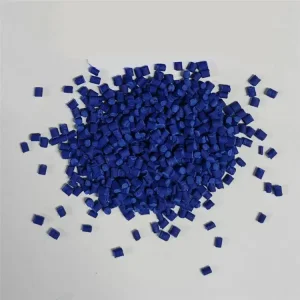
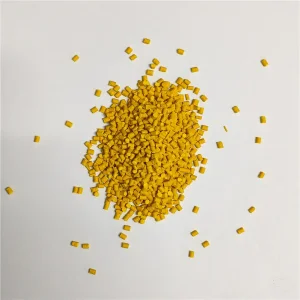
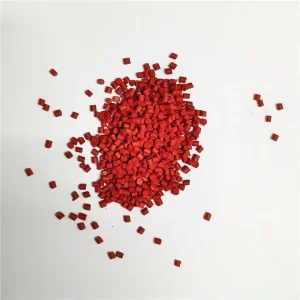
Formulated with high-purity resins, non-migrating additives, and superior pigment loading to eliminate surface precipitation in flexible packaging lines.
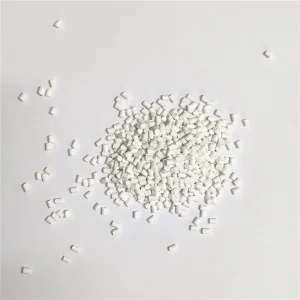
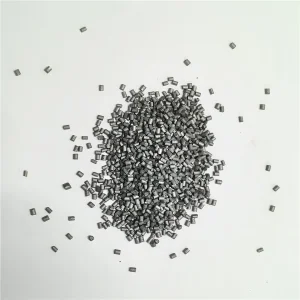
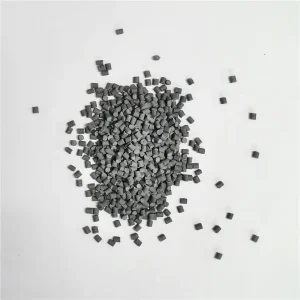
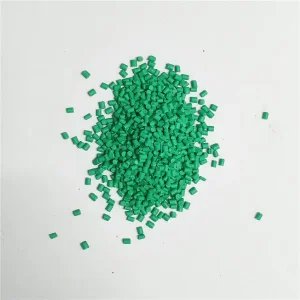
In modern high-speed flexible packaging manufacturing, the migration of low-molecular-weight additives to the polyolefin surface—commonly referred to as additive blooming, precipitation, or exudation—represents one of the most persistent threats to product integrity, brand safety, and regulatory compliance.
When low-grade color masterbatches or conventional pigment dispersions are compounded into Linear Low-Density Polyethylene (LLDPE) or Low-Density Polyethylene (LDPE) matrices, unreacted waxes, low-molecular-weight dispersants, and volatile slip agents migrate out of the polymer matrix over time. This surface haze leads to severe operational defects: compromised heat-seal strength, corona treatment decay, printing ink flaking, optical haziness, and off-flavor or off-odor transfer into food products (organoleptic degradation).
As a leading Custom Low Precipitation Food Packaging PE Masterbatch Company & Supplier, Changzhou Jiazhou Plastic Products Co., Ltd. has developed high-density hyper-dispersant masterbatch formulations that permanently bind functional colorants and additives within the polyolefin backbone, establishing a new global benchmark for clean food packaging production.
Traditional masterbatch manufacturing relies heavily on low-molecular-weight polyethylene waxes (PE wax) or zinc stearate as processing aids to disperse pigments. Under ambient storage or heat lamination, these waxes migrate to the surface due to thermodynamic incompatibility. Jiazhou's Low Precipitation technology replaces low-MW carriers with reactive hyper-dispersants and narrow-MWD metallocene resins.
By utilizing Metallocene Linear Low-Density Polyethylene (mLLDPE) carriers with an exceptionally narrow Molecular Weight Distribution (MWD < 2.2), our masterbatches achieve perfect thermodynamic compatibility with food-grade film resins. The absence of low-MW oligomers prevents phase separation at the polymer interface.
Instead of migratory waxes, our proprietary compounding process uses non-migrating polymeric hyper-dispersants. These anchor directly onto pigment surfaces via multipoint steric stabilization, keeping pigments uniformly separated without micro-agglomerates that could cause pinholes or dielectric breakdown.
Manufactured on triple-degassing high-torque twin-screw extruders, our masterbatch pellets undergo intensive thermal vacuum extraction to strip trace residual monomers, volatile organic compounds (VOCs), and odor-causing aldehyde byproducts before pelletization.
| Performance Characteristic | Standard Commercial PE Masterbatch | Jiazhou Low-Precipitation Food Grade Series | Industry Test Standard / Method |
|---|---|---|---|
| Dispersant System | Low MW Polyethylene Wax / Zinc Stearate | Polymeric Non-Migrating Hyper-Dispersant | FTIR / Gel Permeation Chromatography |
| Surface Blooming (60°C / 30 Days) | Visible White Haze / Powder Accumulation | Zero Blooming / Surface Remains Clear | ASTM D1239 Migration Evaluation |
| Organoleptic Impact (Taste & Odor) | Moderate to High (Paraffinic / Wax Smell) | Neutral (Score < 1.5 on Robinson Scale) | EN 1230-2 Sensorial Analysis |
| Heat-Seal Degradation | 15% - 35% Loss in Seal Strength Over Time | 0% Seal Strength Decay (Consistent Hot Tack) | ASTM F88 / ASTM F2029 |
| Corona Surface Energy Retention | Rapid Decay (< 38 dynes/cm within 14 days) | Stable Surface Energy (> 42 dynes/cm long term) | ASTM D2578 Dyne Test Method |
| Food Contact Compliance | Basic Industrial Standards | FDA 21 CFR, EU 10/2011, GB 4806.6-2023 | GC-MS / Migration Cell Analytical Test |
The global food packaging industry is undergoing a massive transformation driven by stringent food safety regulations, automated packaging machinery requirements, and sustainability mandates. FMCG brand owners and converting factories can no longer tolerate traditional masterbatches that leach additives or foul production lines.
Modern Form-Fill-Seal (FFS) machines operate at speeds exceeding 150 to 300 pouches per minute. Any surface precipitation of wax or slip agent creates sticky residue on sealing bars, leading to uneven temperature transfer, film jamming, micro-leaks, and frequent line shutdowns for cleaning.
With global sustainability initiatives pushing toward full recyclability, multi-material laminates (e.g., PET/PE or BOPA/PE) are being replaced by Mono-material Polyethylene (BOPE/PE or PE/PE) structures. In monolayer and barrier PE films, additive blooming directly affects interlayer adhesion, vacuum lamination integrity, and optical clarity.
EU Regulation 10/2011 imposes strict Specific Migration Limits (SML) and mandates screening for Non-Intentionally Added Substances (NIAS). Low-precipitation masterbatch guarantees compliance under rigorous liquid food simulants.
In liquid packaging (milk, juice, liquid pouch), migrant waxes react with lipids or fats, causing off-flavors and degrading the inner sealing layer. Non-migrating PE colorants ensure 100% organoleptic safety.
Medical and premium food packaging convertors operating ISO Cleanrooms require masterbatches with zero volatile emissions to prevent ambient contamination during film blowing.
Our Custom Low Precipitation PE Masterbatches are engineered to match exact processing equipment specifications, blow ratios, and extrusion temperatures across all primary packaging categories.
Designed for 3-layer, 5-layer, and 7-layer A/B/C film structures. When added to the inner sealing layer or core layer, our masterbatch maintains uniform bubble stability, prevents die-lip buildup, and guarantees bubble clarity without haze formation during cooling.
Formulated for high-speed CPP and CPE cast film lines operating at temperatures up to 280°C. Delivers outstanding thermal stability without smoke generation or volatile outgassing, ensuring flawless adhesion during solventless lamination.
Specifically engineered for beverage bottle caps, edible oil closures, and food container lids. Provides ultra-crisp color matching, precise dimensional stability, and zero migration of slip compounds into liquid contents.
Founded in 2010, Changzhou Jiazhou Plastic Products Co., Ltd. is an industry-leading manufacturer with 16 years of specialized experience in high-concentration PE color masterbatches, filler masterbatches, and functional additive masterbatches.
Located in Changzhou, Jiangsu, China, our modern 6,000 square meter manufacturing plant is equipped with advanced twin-screw extruders, gravimetric dosing systems, and precision color-matching spectrophotometers. We serve over 100 countries across Europe, North America, Southeast Asia, and the Middle East, delivering tailor-made solutions for high-demand food packaging applications.
Quality Control & Laboratory Capabilities:
Every batch of Jiazhou low-precipitation masterbatch undergoes rigorous quality verification, including Gas Chromatography-Mass Spectrometry (GC-MS) for volatile organics, Melt Flow Index (MFI) verification, Filter Pressure Value (FPV) dispersion testing, and 30-day accelerated migration testing in food simulants.
We provide full documentation and compliance certificates with every shipment to ensure seamless customs clearance and regulatory audit compliance for global packaging converters:
As global food packaging requirements evolve toward higher circularity and safer chemistry, Jiazhou's R&D center is actively pioneering next-generation polymer additization platforms.
Developing 100% fluoropolymer-free processing aids that eliminate melt fracture and die lip buildup in LLDPE blown film without using PFAS chemistry, ensuring full alignment with US state and EU PFAS bans.
Formulating low-precipitation color masterbatches utilizing 100% bio-based ISCC Plus certified polyethylene carriers, enabling high-performance food packaging derived from renewable sugarcane feedstock.
Integrating non-migrating nano-clay fillers into PE masterbatches to improve oxygen and water vapor barrier properties in monolayer flexible packaging, extending food shelf life naturally.
Compounding non-leaching active aldehyde and ethylene scavenging agents directly into the polyolefin matrix to preserve fruit, vegetable, and bakery freshness without direct additive release.
Expert answers to common engineering, quality control, and regulatory procurement questions regarding low-precipitation food packaging PE masterbatches.
Precipitation occurs because conventional masterbatches use low-molecular-weight additives (such as PE waxes, zinc stearate, or erucamide slip agents) to facilitate pigment dispersion. Because these low-MW compounds have limited solubility in the polyethylene matrix, they migrate to the surface over time, forming a visible white powder, oily film, or hazy layer that compromises heat sealing and food organoleptic quality.
Jiazhou replaces traditional migratory wax dispersants with specialized polymeric hyper-dispersants and narrow molecular weight distribution metallocene PE carriers. These dispersants form chemical and steric bonds with pigment particles, permanently immobilizing them within the polyolefin backbone. In addition, our vacuum degassing extrusion process removes trace volatiles before pelletization.
Yes. All raw materials, organic/inorganic pigments, and carrier resins used in our food packaging masterbatch series are fully compliant with US FDA 21 CFR 177.1520, EU Regulation No 10/2011 (including specific migration limits SML), Chinese GB 4806.6-2023, and are certified free of heavy metals, phthalates, BPA, and PFAS.
Depending on the required color opacity, film thickness, and application method, the standard let-down ratio ranges between 1.0% and 4.0%. For thin blown films (under 30 microns), a 1.5% to 2.5% addition rate typically yields full opacity and uniform dispersion without affecting melt pressure.
Migratory additives normally bloom to the surface of PE film and lower its surface energy over time, causing corona treatment decay (dropping below 38 dynes/cm) and causing flexographic or rotogravure ink to peel off. Jiazhou's non-migrating formulation leaves the film surface clean, ensuring stable surface tension (> 42 dynes/cm) for long-term print durability.
Absolutely. Our Changzhou laboratory features high-precision spectrophotometers and small-scale pilot twin-screw extruders. We provide custom color matching against Pantone, RAL, or physical target film samples within 3 to 5 working days, accompanied by complete food contact compliance reports.
It significantly improves heat-sealing consistency. By removing migratory waxes that contaminate sealing jaws, our masterbatch maintains consistent hot-tack strength and broad sealing temperature windows, reducing pouch seal defects by up to 98% in automatic packaging lines.
Our standard Minimum Order Quantity (MOQ) is 500 kg for custom colors and 1,000 kg for standard grades. Orders are manufactured, quality certified, and dispatched from our Changzhou plant within 10 to 15 business days, with full logistics support for sea and air freight.
Browse our complete selection of color masterbatches, functional additives, and low-migration PE masterbatches for global food packaging and industrial applications.